How to Untangle a Necklace: Expert Hacks for Stubborn Chain Knots
Learn how to untangle a necklace quickly with expert-approved lubricants, tools, and techniques for delicate gold, silver, and beaded chains.

We have all experienced the sinking feeling of pulling a favorite necklace from a jewelry box, only to find it transformed into a chaotic, impenetrable ball of metal. Learning how to untangle a necklace is not merely an exercise in patience; it is an application of basic physics, friction management, and material science. As we navigate jewelry trends in 2026, the market is saturated with ultra-fine, laser-welded chains and complex micro-pave pendants. The margin for error when fixing a knot is smaller than ever. Yanking or pulling a knot causes 'work hardening,' a metallurgical process where the metal's crystal lattice structure deforms, becoming brittle and ultimately leading to catastrophic snaps.
This comprehensive troubleshooting guide will walk you through the exact techniques, tools, and lubricants used by professional jewelers to safely rescue your most delicate chains without causing microscopic abrasions or structural damage.
The Physics and Anatomy of Chain Knots
Why do necklaces tangle so easily in confined spaces? Physicists attribute this to a phenomenon known as 'spontaneous knotting.' When a flexible string is agitated in a confined space (like a drawer or a travel pouch), its ends weave through the coils, creating complex knots in seconds. However, in jewelry, the geometry of the chain dictates the severity of the tangle.
- Cable and Rolo Chains: These feature simple, round or oval open links. They are the easiest to untangle because their smooth, rounded geometries slide past one another with minimal friction.
- Box and Snake Chains: These are notorious for severe tangling. Their flat, interlocking geometric surfaces act like microscopic hooks, catching on adjacent links and locking together when compressed.
- Herringbone and Omega Chains: These flat, fluid chains do not just tangle; they kink. Once a herringbone chain kinks, the structural integrity is permanently compromised, and it must be hammered flat by a professional jeweler.
Essential Tools and Lubricants for Untangling
Your fingers are the worst tools for the job. The natural oils on your skin can attract dust into the knot, and your blunt fingertips lack the precision needed for micro-links. Instead, gather the following jeweler-approved supplies:
- Straight Sewing Pins (Size 9 or 10): These provide the rigid, ultra-fine point needed to slip between 1mm links.
- Nylon-Tipped Tweezers: Standard steel tweezers will scratch soft 24k gold, sterling silver, and rhodium plating. Nylon tips provide grip without marring the metal.
- Friction Reducers: Johnson's Baby Powder (talc) is ideal for dry lubrication. For severe, multi-strand knots, a drop of mineral oil or extra-virgin olive oil works wonders.
- A Glass or Ceramic Surface: Never untangle a necklace on a towel or carpet. Fabric creates static electricity and friction, while wood grain can catch delicate prongs. A smooth glass cutting board or ceramic plate is mandatory.
Step-by-Step Guide: How to Untangle a Necklace Safely
Before beginning any method, always unclasp the necklace. Leaving the clasp fastened creates a closed loop, which mathematically restricts the chain's degrees of freedom and makes the knot significantly harder to loosen.
Method 1: The Baby Powder Technique (For Fine Metal Chains)
This is the safest method for chains featuring porous gemstones (like turquoise, opals, or pearls) that cannot be exposed to liquid oils.
- Lay the knotted necklace completely flat on your glass or ceramic surface.
- Generously sprinkle baby powder or pure cosmetic talc directly over the center of the knot.
- Gently massage the powder into the knot using your pinky finger. The talc coats the metal links, drastically reducing the coefficient of friction.
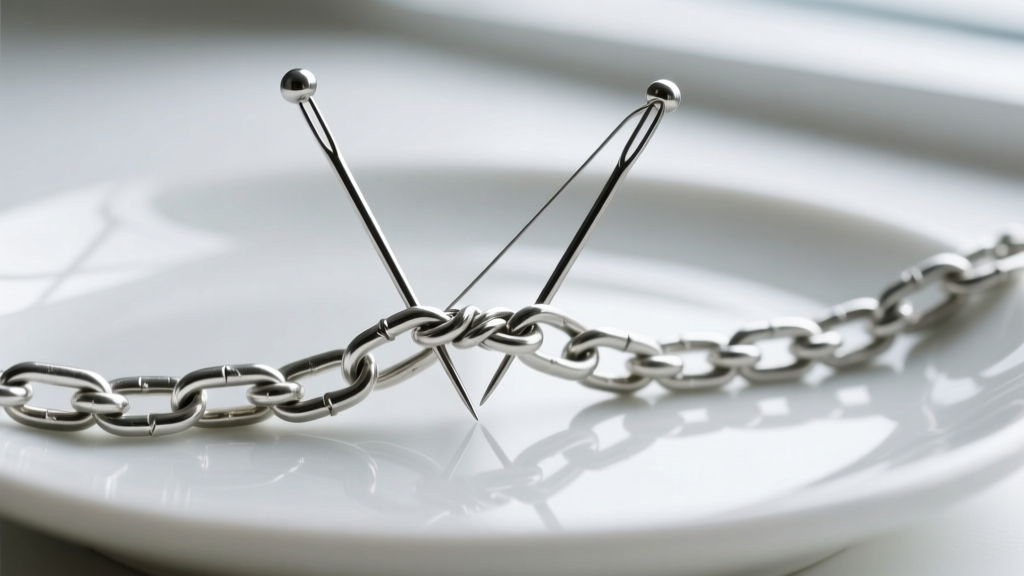
- Take two sewing pins and insert them into the dead center of the knot. Gently push the pins away from each other to create a microscopic gap.
- Work outward from the center, loosening the outer loops one by one until the chain is free.
- Wash the chain in a bowl of warm water with a single drop of mild dish soap (like Dawn) to remove the talc residue.
Method 2: The Olive Oil Soak (For Stubborn, Multi-Strand Knots)
If you are dealing with a severe 'rat's nest' involving multiple layered chains, dry powder will not suffice. Warning: Do not use this method if your necklace contains pearls, emeralds, or opals, as oil will permanently ruin their porous structures.
- Place the knot in a small glass dish and submerge it entirely in mineral oil or olive oil.
- Let it soak for 10 to 15 minutes. The oil penetrates the microscopic gaps between the links, providing deep lubrication.
- Using your nylon-tipped tweezers, gently agitate the knot. You will notice the links sliding apart with almost zero resistance.
- Once untangled, the chain must be thoroughly degreased. Soak it in a solution of warm water and ammonia-free jewelry cleaner for five minutes, then rinse and pat dry with a lint-free microfiber cloth.
Method 3: The Needle and Glass Surface (For Micro-Knots)
For ultra-fine 2026 laser-welded chains (often 0.5mm or thinner), the knot may be too small for pins. Use a single beading needle (size 12) and a 3x jeweler's loupe. Anchor one end of the chain to the glass surface with a piece of painter's tape, pull the chain taut (but not tight), and use the needle to gently lift the overlapping links. The tension helps reveal the 'exit path' of the knot.
Material-Specific Troubleshooting Chart
Different metals and chain constructions require tailored approaches to prevent damage. Refer to this troubleshooting matrix before applying any lubricant or tool.
| Chain Type / Material | Recommended Lubricant | Best Tool | Risk Factor & Warnings |
|---|---|---|---|
| 14k/18k Gold Cable Chain | Baby Powder | Size 9 Sewing Pins | Low risk. Gold is soft; avoid steel tweezers to prevent gouging. |
| Sterling Silver Box Chain | Mineral Oil | Nylon Tweezers | Moderate. Silver tarnishes if oil is left on; requires immediate washing. |
| Platinum Snake Chain | Dry Graphite Powder | Beading Needle | High. Snake chains kink easily. Never pull; only push links apart. |
| Pearl or Beaded Strands | None (Dry Method Only) | Fingers / Wooden Skewer | Extreme. Oils and powders will ruin the nacre and clog drill holes. |
| Herringbone / Omega | Mineral Oil | Flat Agate Burnisher | Severe. Do not untangle; lay flat and roll gently to flatten kinks. |
Prevention: Storage Solutions That Actually Work
According to the Gemological Institute of America (GIA), proper storage is the cornerstone of jewelry maintenance. To prevent spontaneous knotting, you must eliminate the chain's ability to move freely in a confined space.
- The Straw Trick for Travel: Thread one end of the necklace through a plastic or silicone drinking straw and clasp it. This keeps the chain rigid and completely eliminates the possibility of tangling in your luggage.
- Individual Polyethylene Bags: Store each necklace in its own small, resealable zip bag. Squeeze the air out before sealing. This limits agitation and also slows down the oxidation process for sterling silver by reducing exposure to atmospheric sulfur.
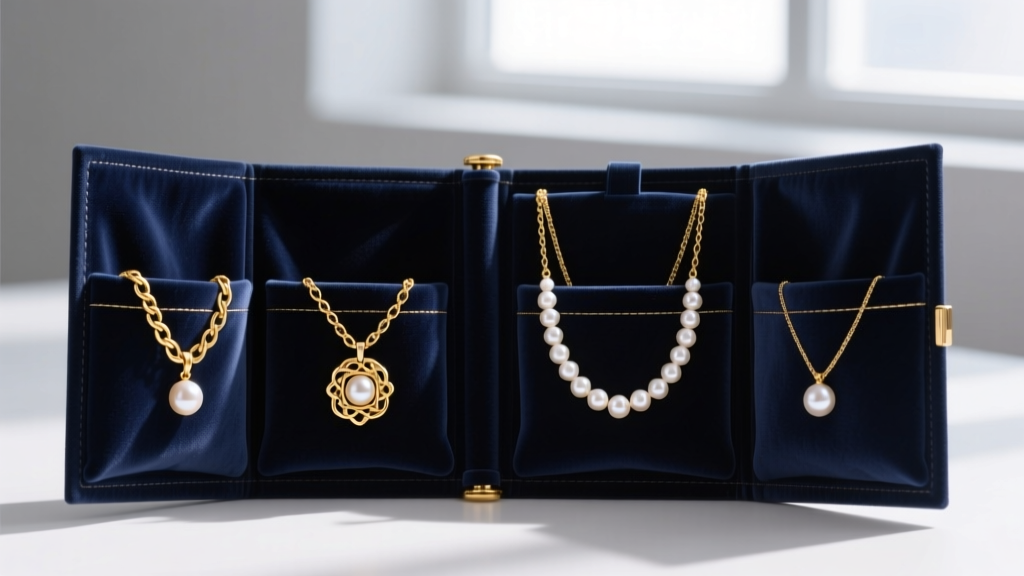
- Velvet Rolls with Individual Pockets: For high-end pendants and chokers, invest in a jewelry roll that features separate, buttoned velvet pockets. As noted by Jewelers of America, keeping pieces separated prevents metal-on-metal scratching and tangling simultaneously.
When to Take Your Necklace to a Professional Jeweler
While knowing how to untangle a necklace is a valuable skill, there are scenarios where DIY intervention will result in irreversible damage. You must stop and visit a professional bench jeweler if:
- The Metal is Kinked: If a herringbone, snake, or omega chain has developed a sharp fold or crease, pulling it will snap the links. A jeweler must use a specialized agate burnisher and a steel block to carefully hammer the metal back into its original alignment.
- Work Hardening Has Occurred: If the knot feels completely rigid and the metal has lost its flexibility, the crystalline structure has work-hardened. A jeweler will need to 'anneal' the chain—using a micro-torch to heat the metal to a specific temperature, which relaxes the crystal lattice and restores its malleability.
- Micro-Pave or Tension Settings are Present: If the tangled area is near a clasp or pendant featuring micro-pave diamonds, the lateral pressure from pins can easily bend the microscopic prongs, causing stone loss. Furthermore, Blue Nile's Education Guide emphasizes that any piece exposed to heavy oils or talc during a DIY rescue should undergo a professional ultrasonic cleaning and steam polish to ensure no residue is left trapped under the gemstone settings, which can dull their brilliance over time.
By combining the right lubricants, precision tools, and an understanding of metal behavior, you can safely rescue your favorite necklaces from the most stubborn knots and keep your collection pristine for years to come.


