Icarus Necklace Trends 2026: Styling Wing & Sun Pendants
Discover the 2026 Icarus necklace trend. Explore styling tips, material grades, and mythological wing motifs for modern layering.

The Myth Reimagined: What Defines an Icarus Necklace in 2026?
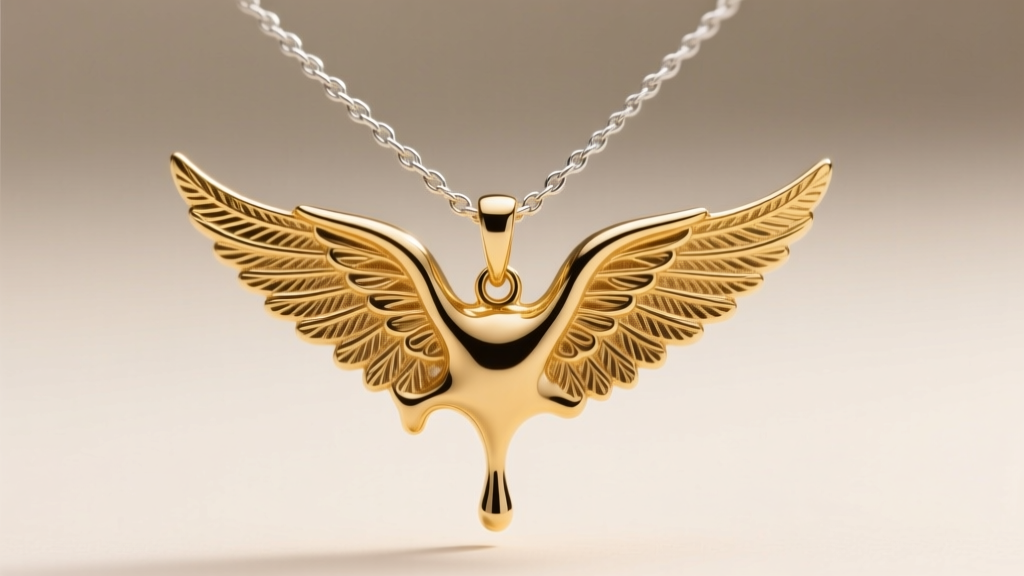
The legend of Icarus, the boy who flew too close to the sun only to have his wax wings melt, has long served as a cautionary tale about hubris. However, in the realm of contemporary jewelry, the Icarus necklace has evolved from a simple mythological reference into a profound symbol of ambition, freedom, and the beautiful fragility of pushing boundaries. According to Britannica, the myth centers on the tension between human aspiration and natural limits, a theme that resonates deeply with modern collectors.
In 2026, the aesthetic of the Icarus necklace has shifted dramatically. We are moving away from the literal, pristine angel-wing pendants that dominated the early 2020s. Today, the trend is defined by kinetic movement, abstract sunburst elements, and the melting motif. Designers are utilizing lost-wax casting techniques to create pendants where the metallic feathers appear to warp, drip, and dissolve at the edges, capturing the exact moment the wax succumbs to the solar heat. This organic, imperfect approach aligns perfectly with the broader 2026 jewelry trend of brutalist and fluid metalwork.
Material Evolution: From Dipped Brass to Aerospace Titanium
Because an Icarus necklace relies heavily on intricate textural details—like the barbs and vanes of a feather or the jagged rays of a sunburst—the base material is critical. Mass-market pieces often use zinc alloys with flash plating, which quickly degrades in the deep crevices of the design. For a piece meant to last, collectors are turning to advanced alloys and solid precious metals.
| Material | Grade / Standard | Patina & Tarnish Risk | Avg. Price (Pendant) | Best For |
|---|---|---|---|---|
| 925 Sterling Silver | 92.5% Ag, 7.5% Cu | High (requires frequent polishing) | $85 - $150 | Everyday wear, oxidized finishes |
| Argentium Silver | 93.5% Ag, Germanium | Very Low (highly tarnish resistant) | $140 - $220 | Intricate wings with deep crevices |
| Aerospace Titanium | Grade 5 (Ti-6Al-4V) | None (corrosion proof) | $180 - $300 | Sunburst motifs, lightweight wear |
| Recycled 14k Gold | 58.5% Au, alloy mix | None | $450 - $850+ | Heirloom melting-wing designs |
As noted by the Gemological Institute of America (GIA), traditional sterling silver contains copper, which reacts with sulfur in the air to create tarnish. In an Icarus wing pendant featuring hundreds of microscopic carved feather lines, removing tarnish from the recesses is nearly impossible without ultrasonic cleaners. Therefore, 2026 has seen a massive spike in Argentium silver and Grade 5 titanium, which maintain their luster without intensive maintenance.
Chain Gauges and Bail Mechanics: Engineering the Flight
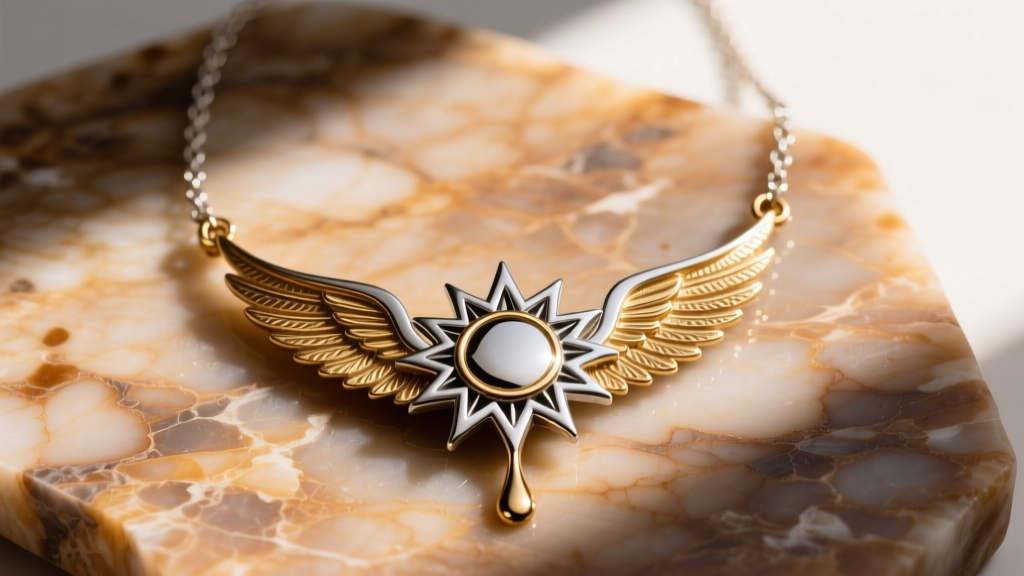
A common failure point in mythological pendants is the pairing of a heavy, detailed pendant with an inadequate chain. The visual metaphor of an Icarus necklace is flight; the pendant should appear suspended and weightless, not dragging the neckline down.
Optimal Chain Gauges for Wing Pendants
- 1.0mm to 1.2mm Box Chains: Ideal for minimalist, geometric sunburst pendants weighing under 5 grams. The square links catch the light, mimicking solar rays.
- 1.2mm to 1.5mm Rope Chains: The standard for medium-sized melting wing pendants (6-12 grams). The twisted metal provides tensile strength while maintaining a delicate visual profile.
- 2.0mm+ Curb or Cuban Links: Generally discouraged for Icarus motifs. The heavy, aggressive links clash with the delicate, tragic nature of the winged design, grounding the piece too heavily on the chest.
The Hidden Bail Advantage
Top-tier artisans in 2026 are utilizing hidden bails—where the chain threads directly through a hollowed-out tunnel at the top of the sunburst or the uppermost feather. This eliminates the traditional loop bail, creating a seamless illusion that the pendant is floating on the chain. This structural choice elevates the Icarus necklace from a standard charm to a cohesive, engineered piece of wearable art.
Styling Frameworks: Necklines and Layering Techniques
Styling an Icarus necklace requires an understanding of negative space. The pendant is inherently narrative and visually busy, meaning the surrounding canvas must be carefully curated.
The Asymmetrical Pairing
The melting wing motif thrives against asymmetrical necklines. A single-shoulder top or an off-center draped blouse creates a diagonal line that complements the sweeping curve of a wing pendant. Position the pendant at a 16-inch length so it rests precisely at the hollow of the clavicle, drawing the eye to the intersection of the fabric and the skin.
Sunburst Layering
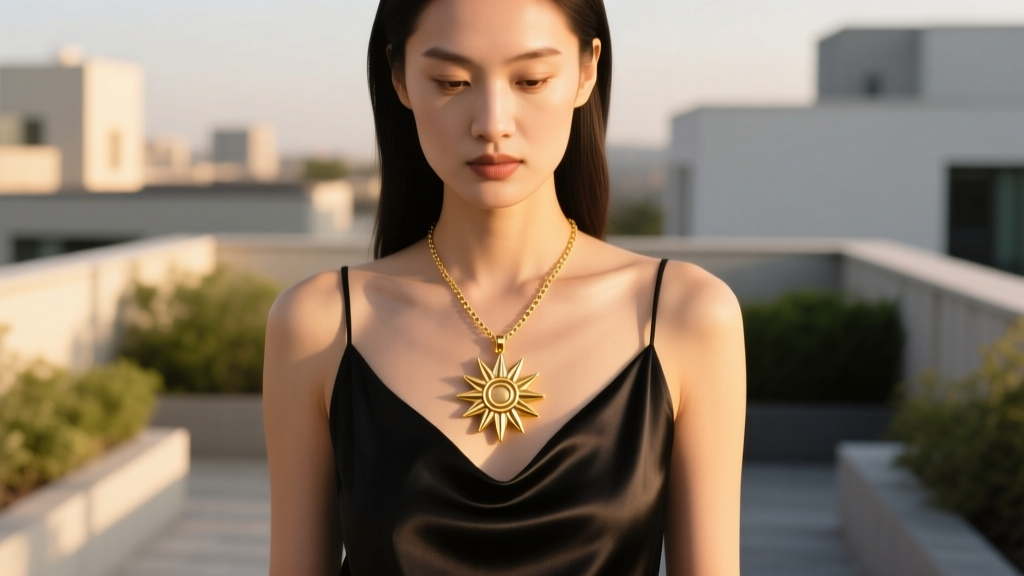
If your Icarus necklace features a sunburst rather than a wing, it acts as an excellent anchor for a layered stack. Use the sunburst as the shortest piece (14-15 inches, sitting high on the collarbone). Pair it with a 20-inch matte black onyx bead necklace and an 18-inch simple cable chain. The dark, muted beads provide a high-contrast backdrop that allows the metallic rays of the Icarus sun to pop without the stack looking cluttered.
Market Analysis: Artisan vs. Commercial Pricing Tiers
Understanding the pricing landscape is crucial for buyers looking to invest in an authentic Icarus necklace. The market is currently segmented into three distinct tiers, governed by manufacturing methods and material integrity as outlined by the Federal Trade Commission (FTC) Jewelry Guides.
- The Commercial Tier ($30 - $75): Dominated by mass-market retailers. These pieces are typically die-struck from thin sheets of brass or zinc alloy and plated with 0.5 microns of gold. The wing details are often stamped rather than carved, resulting in flat, lifeless feathers. The plating will inevitably wear off the high-friction areas within a year.
- The Artisan Indie Tier ($150 - $350): The sweet spot for design and durability. Independent jewelers use 3D printing combined with traditional lost-wax casting to create highly detailed, three-dimensional melting wings in solid 925 silver or bronze. These pieces offer exceptional texture and weight.
- The Fine Jewelry Tier ($800 - $2,500+): Reserved for master goldsmiths working in solid 14k or 18k recycled gold. These pieces often incorporate micro-pave diamonds along the leading edge of the wing or a central sapphire in the sunburst to represent the fatal star. They are finished by hand with a burin to create crisp, light-catching facets.
Care and Maintenance for Intricate Wing Motifs
The very details that make an Icarus necklace stunning are its greatest vulnerability when it comes to maintenance. Skin oils, lotions, and environmental dust easily become trapped between the carved feather barbs or the tight rays of a sunburst.
Avoid using silver polishing dips or harsh chemical baths, especially if your piece features an intentionally oxidized (blackened) background meant to highlight the raised silver feathers. Chemical dips will strip the oxidation, leaving the pendant looking flat and washed out. Instead, create a mild cleaning solution using warm distilled water and a drop of phosphate-free dish soap. Use a soft, clean horsehair detailing brush to gently agitate the crevices. Rinse thoroughly and dry with a low-heat hair dryer to prevent water spots from forming in the deep textures.
Final Verdict: Will the Icarus Motif Sustain its Flight?
The Icarus necklace in 2026 is far more than a fleeting pop-culture accessory; it is a masterclass in narrative jewelry design. By shifting from literal interpretations to abstract, melting, and kinetic representations of the myth, designers have ensured the motif remains relevant and deeply personal. Whether you opt for a lightweight titanium sunburst for daily wear or a heavy, melting 14k gold wing for evening layering, the key lies in respecting the engineering of the piece. Choose the right chain gauge, prioritize tarnish-resistant alloys for intricate textures, and let the story of flight and ambition rest elegantly against your collarbone.


