Krugerrand Necklace Value: 2026 Investment & Budget Guide
Evaluate the true cost, gold purity, and resale value of a Krugerrand necklace in 2026. Expert budget breakdown and chain pairing advice.

Understanding the Base Asset: Gold Content and Purity
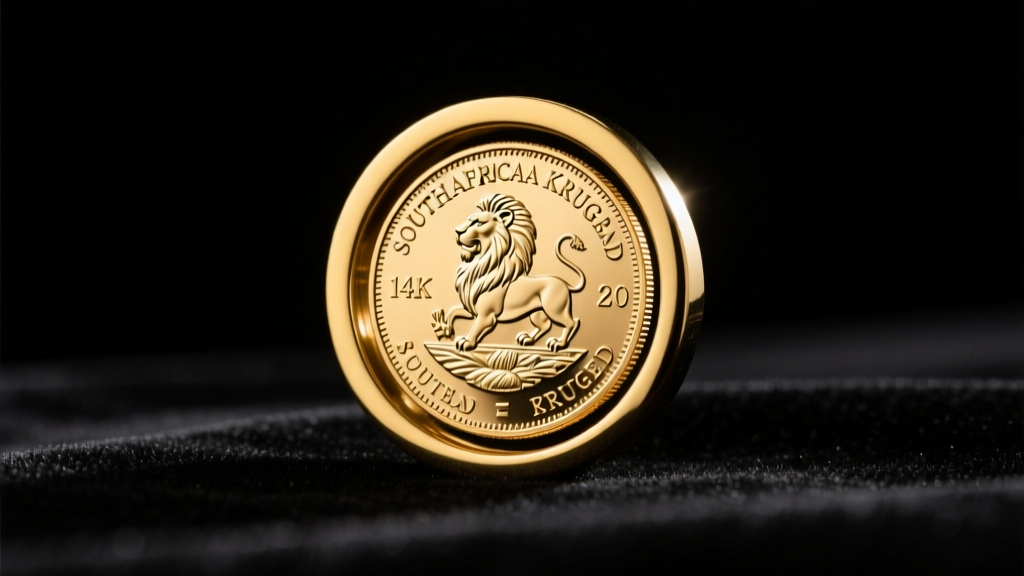
When assessing the budget and intrinsic value of a Krugerrand necklace, you must first understand the metallurgical profile of the coin itself. Unlike standard 24k (99.9%) gold bullion, the South African Krugerrand is minted in 22k gold. This means it consists of 91.67% pure gold and 8.33% copper alloy. According to the South African Mint, this specific copper alloy was chosen not to dilute the gold content, but to provide exceptional scratch resistance and structural integrity, giving the coin its distinct, warm reddish-gold hue.
Because the coin is 22k, a standard "1 ounce" Krugerrand actually weighs 1.0909 troy ounces (33.93 grams) in total, ensuring it contains exactly 1.000 troy ounces of pure gold. This is a critical distinction for budget assessment: you are paying for the pure gold weight, but you are wearing a heavier, more durable physical object.
Fractional vs. Full Ounce Specifications
| Denomination | Pure Gold Weight | Total Coin Weight | Diameter | Typical 2026 Premium |
|---|---|---|---|---|
| 1 oz | 31.103g | 33.930g | 32.69mm | 3% - 5% |
| 1/2 oz | 15.552g | 16.965g | 27.07mm | 6% - 9% |
| 1/4 oz | 7.776g | 8.482g | 22.10mm | 10% - 14% |
| 1/10 oz | 3.110g | 3.393g | 16.55mm | 18% - 25% |
The True Cost Breakdown: Spot Price vs. Dealer Premiums
Building a Krugerrand necklace requires a multi-layered budget. The base cost is the gold spot price, which fluctuates daily. However, the World Gold Council notes that physical bullion always carries a dealer premium to cover minting, distribution, and retail margins. As seen in the table above, fractional coins carry significantly higher premiums per ounce than the 1 oz variant.
If your primary goal is pure investment value per dollar spent, the 1 oz coin is mathematically superior. However, a 1 oz Krugerrand in a gold bezel and heavy chain is a massive, heavy piece of jewelry (often exceeding 80 grams total) that may not suit daily wear. The 1/2 oz or 1/4 oz coins offer a better balance of physical presence, wearable weight, and budget efficiency, despite the slightly higher premium over spot.
Bezel Settings: Protection vs. Value Preservation
The bezel is the metal frame that holds the coin. This is where many buyers make a critical error that destroys the coin's resale value. There are two primary types of bezels:
- Soldered Bezels: The jeweler solders a gold ring directly onto the coin's edge. While secure, the intense heat of the soldering torch can alter the coin's surface luster and cause irreversible metallurgical stress. Furthermore, removing a soldered bezel requires cutting, which almost always leaves file marks on the coin's rim, downgrading it from "bullion" to "scrap" condition.
- Snap-In / Screw-Top Bezels: These feature a precision-machined inner lip that snaps over the coin's edge or a threaded backplate that screws into the front frame. This requires zero heat and leaves the coin completely untouched.
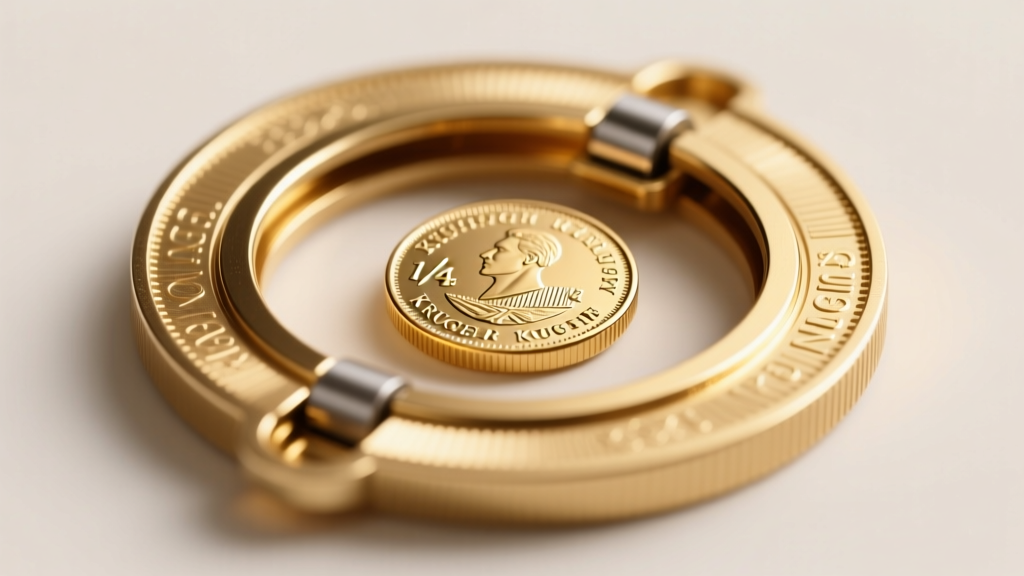
Expert Rule: Never allow a jeweler to solder directly to a bullion coin. Always invest in a high-quality 14k or 18k snap-in bezel (budget $150–$350 for the gold weight and machining). This preserves the coin's exact condition for future liquidation.
Chain Engineering: Supporting Heavy Gold Pendants
A common failure mode in coin necklaces is chain breakage. A 1 oz Krugerrand (33.9g) plus a 14k gold bezel (approx. 8g) creates a pendant weighing over 40 grams. When you factor in the dynamic load of walking, bending, and the pendant swinging, the chain must be rated to withstand at least 150 grams of tensile force.
Recommended Chain Profiles
To support this weight safely, avoid hollow-core chains, rope chains under 4mm, or delicate box chains. You need solid, interlocking geometries:
- Solid Cuban Link (5mm - 7mm): The flat, interlocking links distribute weight evenly and resist pulling apart. A 5mm solid 14k Cuban chain weighs roughly 45-55 grams, providing a perfect 1:1 weight ratio with the pendant.
- Solid Figaro (4mm - 6mm): Offers a classic aesthetic with excellent tensile strength due to the varied link sizing and tight welds.
- Wheat (Spiga) Chain (4mm+): Woven in a continuous braided pattern, solid wheat chains are incredibly resistant to kinking and snapping under heavy pendants.
The Clasp: The Weakest Link
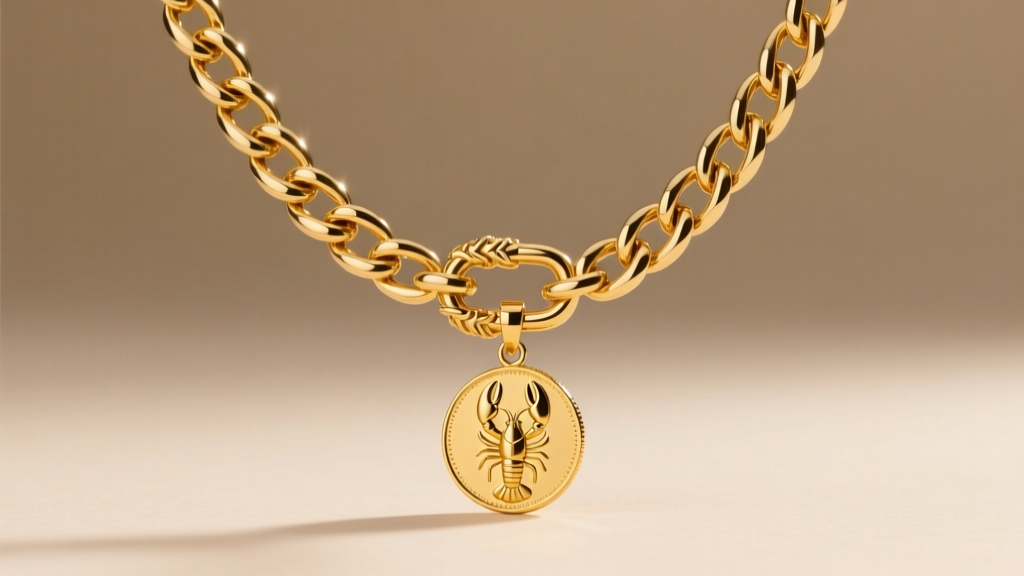
The clasp is the most frequent point of failure. Standard spring-ring clasps are entirely inadequate for a Krugerrand pendant. You must use a solid lobster claw clasp (minimum 12mm in length) or a box clasp with a figure-8 safety latch. The figure-8 safety wire acts as a secondary fail-safe; if the primary box mechanism loosens over time, the wire catches the jump ring before the necklace hits the floor.
Numismatic vs. Bullion: Which Krugerrand to Buy?
The South African Mint produces both standard bullion strikes and "Proof" Krugerrands. Proof coins are struck multiple times with polished dies, resulting in a mirrored background and frosted design. They command a massive numismatic premium.
Do not wear Proof Krugerrands as jewelry. The mirrored surface acts like a magnet for micro-scratches. Simply sliding the coin into a bezel, or the friction of it resting against your skin and clothing, will introduce hairline scratches that instantly destroy the numismatic premium, reducing its value back to standard bullion spot price. Always purchase standard bullion strikes for jewelry applications. According to grading authorities like the Professional Coin Grading Service (PCGS), once a coin's original mint luster is altered by wear, it loses its collectible grade entirely.
Resale Value and Liquidity in 2026
A Krugerrand necklace is highly liquid, but how you sell it dictates your return on investment. If you walk into a retail jeweler or a pawn shop with the fully assembled necklace, they will likely offer you the scrap melt value for the chain and bezel, and a discounted spot price for the coin.
To maximize your budget and value recovery, you must disassemble the necklace before selling:
- The Coin: Take the bare Krugerrand to a dedicated precious metals dealer or numismatist. Because it was housed in a snap-in bezel and never soldered, it remains in pristine bullion condition. You will receive the full spot price plus the prevailing market premium.
- The Chain and Bezel: Sell these separately to a gold buyer or jeweler. You will be paid based on the exact gram weight and purity (e.g., 14k or 18k) of the jewelry components.
By treating the coin as a financial asset and the chain/bezel as jewelry, you protect your capital and ensure the Krugerrand necklace serves as both a striking fashion statement and a reliable, liquid store of value.


