Lemon Necklace Gemology: Quartz Treatments & Settings
Discover the gemological secrets of the lemon necklace. Explore quartz treatments, refractive indices, setting types, and chain gauges in this expert guide.

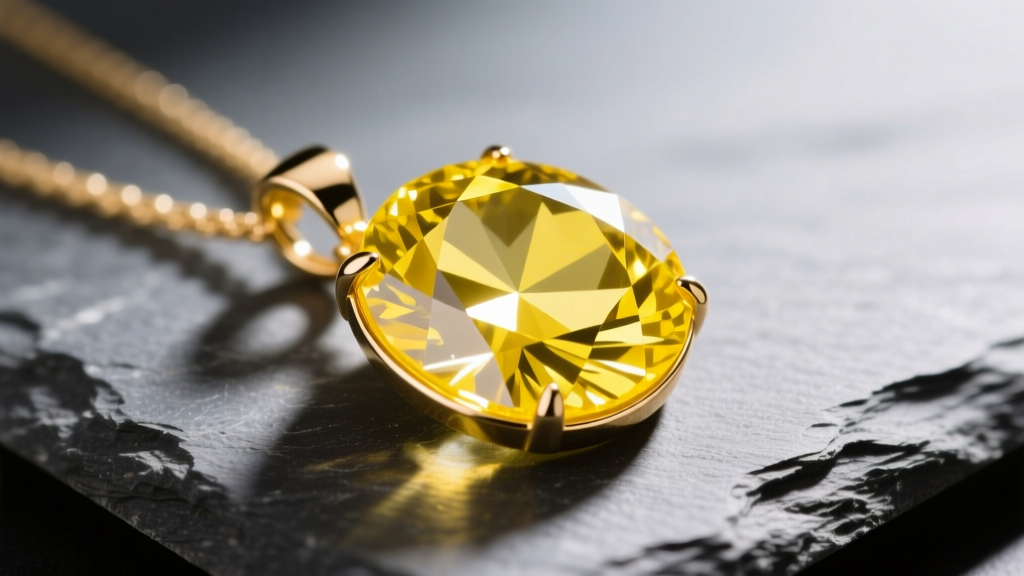
The Gemological Profile of Lemon Quartz
When evaluating a lemon necklace, it is crucial to understand that 'lemon quartz' is a trade name rather than a distinct mineral species. Gemologically, it is a macrocrystalline variety of quartz (SiO₂) characterized by its vivid, saturated yellow to greenish-yellow hue. As of 2026, the market is heavily saturated with lab-grown hydrothermal quartz, making the ability to distinguish natural, heat-treated stones from synthetic alternatives a vital skill for collectors and jewelers alike.
Natural, untreated yellow quartz is exceptionally rare and typically presents as a pale, desaturated straw color. The vibrant 'lemon' coloration seen in high-end jewelry is almost exclusively the result of precise thermal treatment of amethyst or smoky quartz. According to the Gemological Institute of America (GIA), quartz possesses a specific gravity of 2.65 and a refractive index ranging from 1.544 to 1.553, giving it a subtle, glassy luster that requires expert cutting to maximize brilliance.
Core Gemological Data
| Property | Value / Specification |
|---|---|
| Chemical Formula | SiO₂ (Silicon Dioxide) |
| Mohs Hardness | 7.0 |
| Refractive Index | 1.544 - 1.553 |
| Specific Gravity | 2.65 |
| Crystal System | Trigonal |
| Cleavage / Fracture | None / Conchoidal |
Thermal Treatment and Color Stability
The transformation of purple amethyst into yellow lemon quartz is a masterclass in solid-state chemistry. Amethyst derives its color from iron impurities (Fe³⁺) and natural irradiation within the earth's crust. When subjected to controlled heating between 470°C and 550°C in an oxidizing environment, the oxidation state of these iron inclusions shifts, altering the light absorption spectrum and resulting in a vibrant yellow hue.
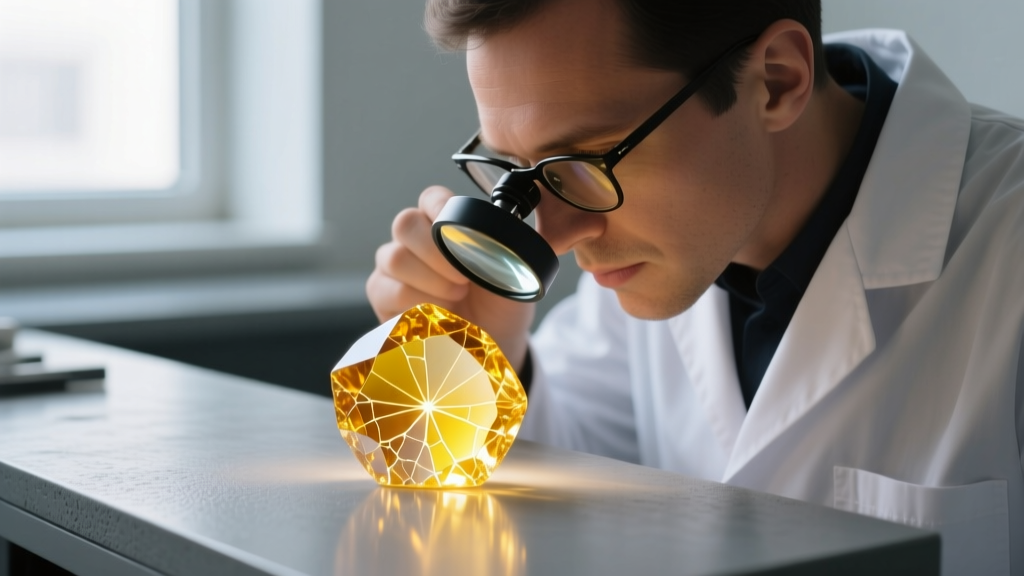
If the temperature exceeds 750°C, the color centers can collapse entirely, rendering the stone colorless or milky. Furthermore, some stones marketed as 'Ouro Verde' (a highly prized greenish-yellow lemon quartz) undergo a secondary process involving gamma irradiation followed by mild heating. While these treatments are permanent and stable under normal wear conditions, rapid temperature fluctuations can cause thermal shock. Because quartz lacks cleavage planes but exhibits conchoidal fracturing, internal stress fractures—often visible as 'tiger stripe' inclusions under 10x magnification—can propagate if the stone is exposed to sudden heat, such as a jeweler's torch during resizing.
Setting Mechanics: Bezel vs. Prong
Designing the perfect setting for a lemon necklace requires balancing security with light performance. Quartz is relatively hard (Mohs 7), making it resistant to everyday scratching, but its brittleness demands careful setting techniques.
- Bezel Settings: The gold standard for daily-wear lemon quartz pendants. A full bezel with a 0.3mm to 0.5mm lip protects the vulnerable girdle from impact. However, a poorly calibrated bezel can create uneven tension, leading to catastrophic girdle chipping.
- Prong Settings: A four-prong or six-prong basket allows maximum light entry, enhancing the stone's refractive brilliance. Jewelers must ensure the prong seats are perfectly filed; any gap between the metal and the pavilion will concentrate stress on the stone's culet or girdle.
- Tension Settings: Highly discouraged for quartz. The compressive force required to hold the stone (often exceeding 12,000 psi) will almost certainly shatter a heat-treated quartz gemstone.
Chain Metallurgy and Gauge Selection
A common failure point in any pendant necklace is the chain. The weight of a faceted lemon quartz pendant (which can easily range from 10 to 30 carats, or 2 to 6 grams) dictates the necessary chain gauge and alloy composition. In 2026, 14k yellow gold remains the optimal choice for chain durability, as its 58.5% gold content alloyed with copper and silver provides superior tensile strength compared to the softer 18k or 24k alternatives.
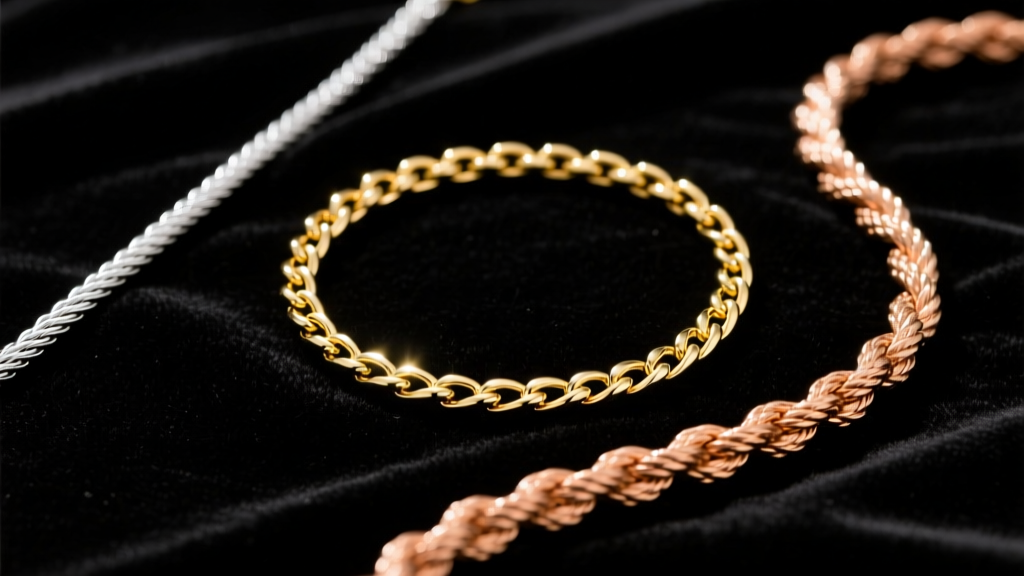
Chain Gauge vs. Pendant Weight Matrix
| Chain Style | Recommended Gauge | Max Pendant Weight | Best For |
|---|---|---|---|
| Box Chain | 1.0mm - 1.5mm | 15 - 25 grams | Heavy, geometric quartz cuts |
| Cable Chain | 0.8mm - 1.2mm | 5 - 10 grams | Delicate, minimalist solitaires |
| Rope Chain | 1.5mm - 2.5mm | 30+ grams | Oversized statement pendants |
| Wheat Chain | 1.2mm - 1.8mm | 20 - 35 grams | Intricate, vintage-inspired settings |
Pro Tip: Always check the jump ring connecting the pendant bail to the chain. A 14k gold jump ring should be soldered closed or feature a secure locking mechanism; a simple open jump ring will eventually warp under the pendulum motion of a heavy quartz pendant, leading to loss.
Care, Maintenance, and Cleaning Protocols
Maintaining the optical clarity of a lemon necklace requires specific cleaning protocols. While untreated quartz can generally withstand ultrasonic cleaning, heat-treated lemon quartz is a different story. The thermal treatment process can leave microscopic stress fractures within the crystal lattice. When subjected to the high-frequency vibrations of an ultrasonic cleaner, these micro-fractures can rapidly expand, causing the stone to shatter or cloud internally.
The Safe Cleaning Protocol:
- Prepare a solution of lukewarm distilled water and a few drops of pH-neutral dish soap.
- Soak the necklace for 10 to 15 minutes to loosen sebum and cosmetic buildup from the pavilion facets.
- Gently agitate the stone using a soft-bristled baby toothbrush, focusing on the back of the setting where dirt accumulates.
- Rinse under a gentle stream of room-temperature water and pat dry with a lint-free microfiber cloth.
Avoid steam cleaners entirely. The sudden introduction of 100°C+ steam to a room-temperature quartz pendant will induce immediate thermal shock. Additionally, keep the necklace away from hydrofluoric acid and harsh alkaline solutions, which can etch the surface of the quartz and permanently dull its polish.
Market Pricing and Authentication in 2026
As detailed by mineralogical databases like Mindat.org, quartz is one of the most abundant minerals on earth, which keeps the base material cost low. However, the value of a premium lemon necklace lies in the precision of the lapidary work and the quality of the metalwork. In the current market, a well-cut, heat-treated natural lemon quartz pendant in a 14k gold setting typically ranges from $150 to $450, depending on carat weight and brand provenance.
Conversely, synthetic hydrothermal quartz—which is chemically identical but grown in a lab over a few weeks—can be produced with flawless clarity and intense saturation for a fraction of the cost. To differentiate the two, gemologists look for 'zebra stripe' inclusions or liquid 'bread crumb' inclusions, which are hallmarks of natural, heat-treated amethyst. Synthetic stones will often exhibit 'seed plate' remnants or perfectly uniform color zoning that lacks the natural character of earth-mined gems. Always request a gemological report for high-value pieces to ensure you are paying for natural origin and expert craftsmanship.


