Letter B Necklace Value Guide: Budgeting for Initial Jewelry
Discover the true value of a letter b necklace. Compare materials, pricing tiers, and longevity to make the best budget-friendly jewelry investment.

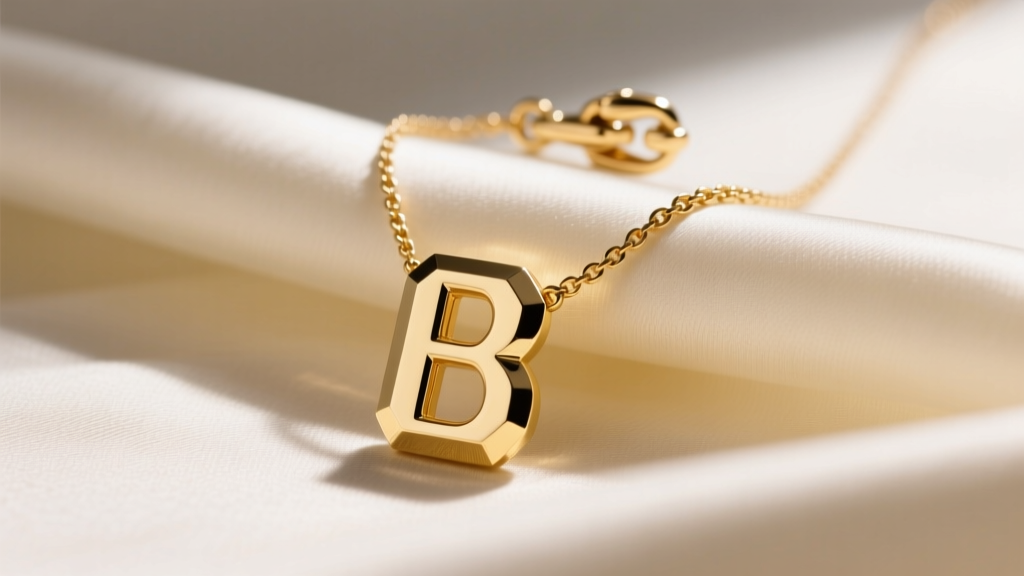
Initial jewelry has transcended fleeting trends to become a permanent staple in modern wardrobes. Among the alphabet, the letter 'B' remains one of the most sought-after initials, representing names, significant dates, or personal mantras. However, when shopping for a letter b necklace, consumers are often confronted with a massive pricing disparity. You can find seemingly identical initial pendants ranging from $15 at fast-fashion retailers to over $400 at luxury boutiques.
As a jewelry value assessor, I frequently see buyers fall into the trap of purchasing cheap, plated initial necklaces that tarnish within weeks, ultimately costing more in replacements than a single, high-quality piece. This comprehensive budget and value assessment breaks down the metallurgy, craftsmanship, and true cost-per-wear of letter B necklaces to help you make a financially sound jewelry investment in 2026.
The Pricing Tiers of Letter B Necklaces
To accurately assess value, we must first categorize the market into three distinct pricing tiers. The price of an initial necklace is rarely about the brand name; it is almost entirely dictated by the base metal, the plating thickness (if applicable), and the chain's structural integrity.
| Tier | Material Composition | Average Price Range | Expected Lifespan | Tarnish Risk |
|---|---|---|---|---|
| Budget / Fashion | Brass or Zinc Alloy with Flash Plating | $15 - $45 | 1 - 6 Months | Extremely High |
| Mid-Range / Bridge | Sterling Silver with Gold Vermeil | $60 - $130 | 1 - 3 Years | Moderate |
| Investment / Fine | Solid 10k, 14k, or 18k Gold | $150 - $450+ | Lifetime | None |
Material Deep Dive: What Are You Actually Paying For?
Understanding the metallurgical realities of gold and silver is crucial when evaluating a letter b necklace. The visual difference between a brand-new $20 plated pendant and a $250 solid gold pendant is virtually indistinguishable to the naked eye. The value proposition reveals itself only through wear and time.
Gold-Plated Brass (The Budget Trap)
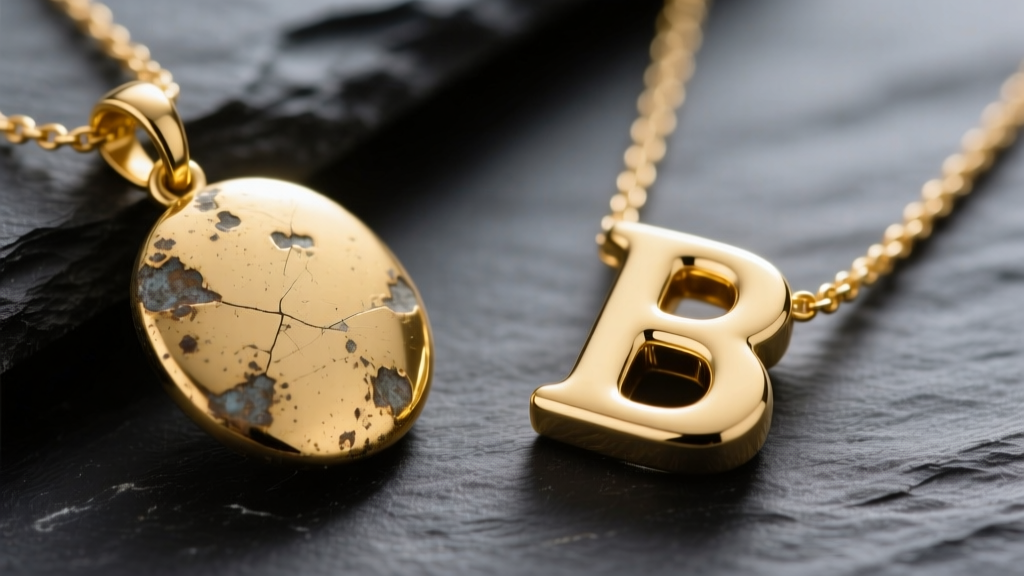
Budget necklaces typically utilize a brass or zinc base coated with a microscopic layer of gold via electroplating. This 'flash plating' is usually between 0.1 and 0.5 microns thick. The failure mode here is rapid: friction from clothing and the natural acidity of your skin will wear through the gold layer in a matter of weeks. Once the brass is exposed, it reacts with oxygen and sweat, resulting in the dreaded green skin effect and a dull, corroded pendant. From a value perspective, a $30 necklace that lasts three months has a high annualized cost of ownership.
Sterling Silver and Gold Vermeil (The Middle Ground)
For buyers who want the look of gold without the solid gold price tag, vermeil is the optimal compromise. According to Federal Trade Commission (FTC) guidelines, for a piece to be legally sold as 'vermeil' in the United States, it must have a sterling silver base and be plated with at least 2.5 microns of 10k gold or higher. This thicker plating provides significantly more longevity than flash-plated brass. However, the high-relief edges of a serif or sans-serif 'B' pendant will still eventually experience friction wear, requiring professional re-plating every few years to maintain its pristine appearance.
Solid 14k Gold (The Lifetime Investment)
Solid 14k gold is the gold standard for everyday initial jewelry. Composed of 58.5% pure gold alloyed with metals like copper, silver, and zinc, 14k gold offers the perfect balance of rich color and structural durability. Unlike plated alternatives, a solid 14k letter b necklace will never flake, peel, or turn your skin green. Furthermore, solid gold retains intrinsic scrap value. If you tire of the necklace in a decade, the gold itself holds residual market value, effectively lowering the net cost of ownership over time.
Chain Quality: The Hidden Cost of Initial Pendants
Many buyers hyper-focus on the letter pendant and completely ignore the chain. A fragile chain will snap, rendering the pendant useless or leading to loss. When assessing the budget of a letter b necklace, scrutinize the chain's gauge and clasp mechanism.
- Chain Gauge: Avoid chains thinner than 0.9mm. A 1.0mm to 1.5mm cable or rolo chain provides the necessary tensile strength to support the weight of a cast metal initial pendant without snapping when caught on a sweater.
- Clasp Mechanics: Budget brands frequently use spring-ring clasps to save fractions of a cent per unit. Spring rings are notorious for internal spring failure, leaving the necklace permanently open. Always look for a lobster clasp, which features a more robust, solid-lever internal mechanism that ensures the pendant stays securely around your neck.
- Soldered Jump Rings: Check the small ring connecting the chain to the clasp, and the ring connecting the pendant to the chain. These must be soldered shut. If there is a visible slit in the jump ring, it will eventually pull apart under the pendulum-like swinging motion of the initial pendant.
Diamond and Gemstone Accents: Value Add or Markup Trap?
A diamond-encrusted letter b necklace commands a premium price, but does it offer proportional value? The answer depends entirely on the quality and setting of the stones.
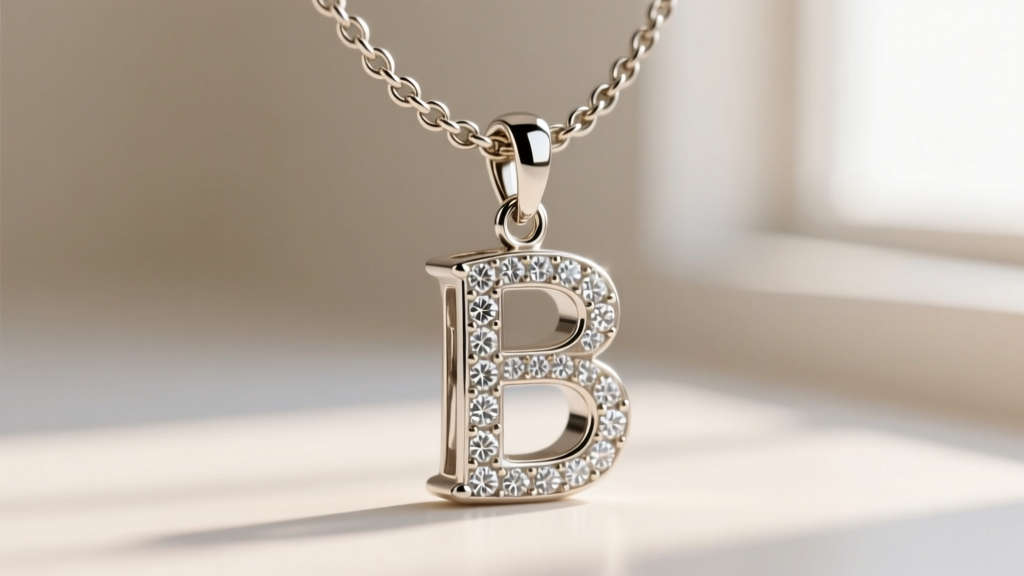
In the mid-range tier ($100-$200), brands often use 'single-cut' melee diamonds or, worse, cubic zirconia (CZ) set with microscopic prongs. Single-cut diamonds have only 17 or 18 facets (compared to the standard 58 facets of a full-cut brilliant), resulting in a dull, glassy appearance. Furthermore, mass-produced initial pendants often rely on adhesive rather than secure prong settings to hold these micro-stones. Within a year, you will likely lose a stone, and the cost of replacing a 1mm melee diamond often exceeds the original discount you received.
If you are budgeting for a diamond-accented letter B necklace, ensure the retailer specifies 'full-cut' melee diamonds and uses a pave or micro-prong setting where the metal beads are pushed over the girdle of the stone, securing it mechanically rather than chemically.
How to Evaluate Craftsmanship and Proportions
Beyond materials, the physical dimensions of the pendant dictate its aesthetic value and structural longevity. A high-quality letter b necklace should feature thoughtful proportions.
The Bail-to-Pendant Ratio: The bail (the loop the chain passes through) should be proportionate to the pendant. If the 'B' is 15mm tall, the bail should be at least 4mm wide to allow a 1.2mm chain to move freely. A bail that is too small causes excessive friction, wearing down both the chain and the bail over time.
Additionally, examine the edge finishing. Cheaper cast pendants often have sharp, unfinished edges that can scratch the skin or catch on delicate fabrics. Premium pendants feature hand-polished, slightly beveled edges that catch the light beautifully and feel smooth against the collarbone. For serif fonts, ensure the thin 'tails' of the letter are reinforced; otherwise, they are highly susceptible to bending or snapping upon impact.
Final Verdict: Which Letter B Necklace Offers the Best ROI?
When conducting a strict budget and value assessment, the 'cheapest' option is rarely the most economical over a five-year horizon.
- For Strict Budgets (Under $50): Opt for solid sterling silver rather than gold-plated brass. A plain sterling silver letter b necklace will not turn your skin green and can be easily polished to restore its shine, offering vastly superior longevity to flash-plated alternatives.
- For the Best Overall Value ($150 - $250): A solid 14k yellow or white gold letter b necklace on a 1.2mm cable chain with a lobster clasp is the undisputed champion of ROI. It requires zero maintenance, never tarnishes, survives daily wear (including swimming and showering), and holds intrinsic metal value.
- For Diamond Accents (Over $300): Only invest in diamond initial necklaces from reputable jewelers who provide clarity on their melee diamond sourcing and utilize mechanical prong settings rather than glue.
Ultimately, a letter b necklace is a highly personal artifact meant to be worn close to the heart. By prioritizing material integrity and structural craftsmanship over fleeting fast-fashion discounts, you secure a piece of jewelry that will retain both its physical beauty and its financial value for decades to come.


