Ultimate Care Guide: How to Clean a Lyric Necklace Safely
Learn how to safely clean and maintain your lyric necklace. Expert tips on removing tarnish, protecting engravings, and storing etched jewelry.

The Unique Anatomy of a Lyric Necklace
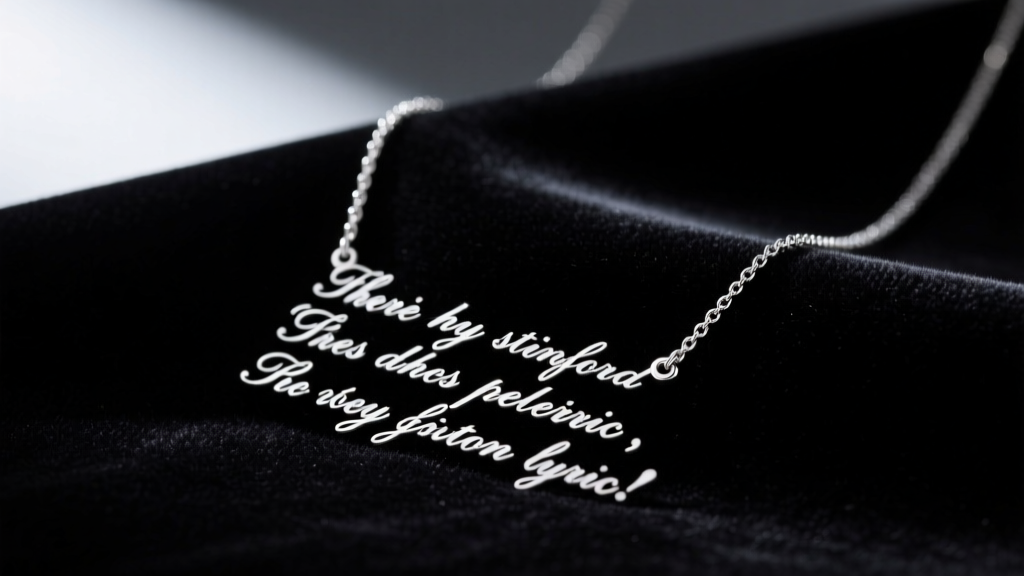
Lyric necklaces are more than just decorative pendants; they are deeply personal artifacts that capture the essence of a favorite song, a meaningful quote, or even a custom soundwave. However, the very features that make these necklaces unique—the intricate grooves, micro-etchings, and contrasting enamel fills—also make them notoriously difficult to maintain. Unlike a smooth, high-polish gold band, a lyric necklace features varying surface depths, typically ranging from 0.05mm for shallow laser engravings to over 0.5mm for deep hand-stamped or soundwave etchings.
These microscopic valleys and ridges act as magnets for daily environmental debris. Sebum (skin oils), dead skin cells, cosmetic powders, and lotion residues quickly accumulate in the grooves, dulling the contrast of the lyrics and accelerating metal oxidation. Understanding the specific anatomy of your pendant is the first step toward preserving its legibility and structural integrity for decades to come.
Daily Wear Risks: What Damages Engraved and Enameled Lyrics
Before diving into cleaning protocols, it is crucial to understand what degrades lyric necklaces. Many modern lyric pendants utilize a dark oxidizing agent or a colored epoxy enamel rubbed into the engraved grooves to make the text pop against the base metal. This contrast is highly vulnerable to everyday chemicals.
- Alcohol and Perfumes: Spraying fragrance directly onto your chest can degrade epoxy enamel fills over time, causing them to cloud, shrink, or flake out of the grooves entirely.
- Chlorides and Sweat: Human sweat contains chlorides and lactic acid. When trapped in the deep grooves of a sterling silver soundwave necklace, these compounds cause rapid, localized pitting and severe black tarnish (silver sulfide) that is incredibly difficult to reach with a standard polishing cloth.
- Friction: Wearing a lyric necklace during exercise or while sleeping subjects the delicate etched surface to micro-abrasions, which can slowly wear down gold vermeil or rhodium plating, exposing the base brass or copper beneath.
Step-by-Step Cleaning Guide for Etched Metal Pendants
According to guidelines from the Gemological Institute of America (GIA), the safest and most effective way to clean intricate jewelry at home is by using a mild, phosphate-free liquid detergent and lukewarm water. Avoid commercial silver dips, as their harsh thiourea-based chemicals will strip intentional oxidation and ruin enamel fills.
What You Need
- Mild, phosphate-free dish soap (e.g., original blue Dawn)
- Lukewarm distilled water (tap water can leave mineral spots)
- An ultra-soft baby toothbrush (adult bristles are too stiff and will scratch gold vermeil)
- A lint-free microfiber cloth
- Wooden toothpicks (for deep groove extraction)
The Washing Process
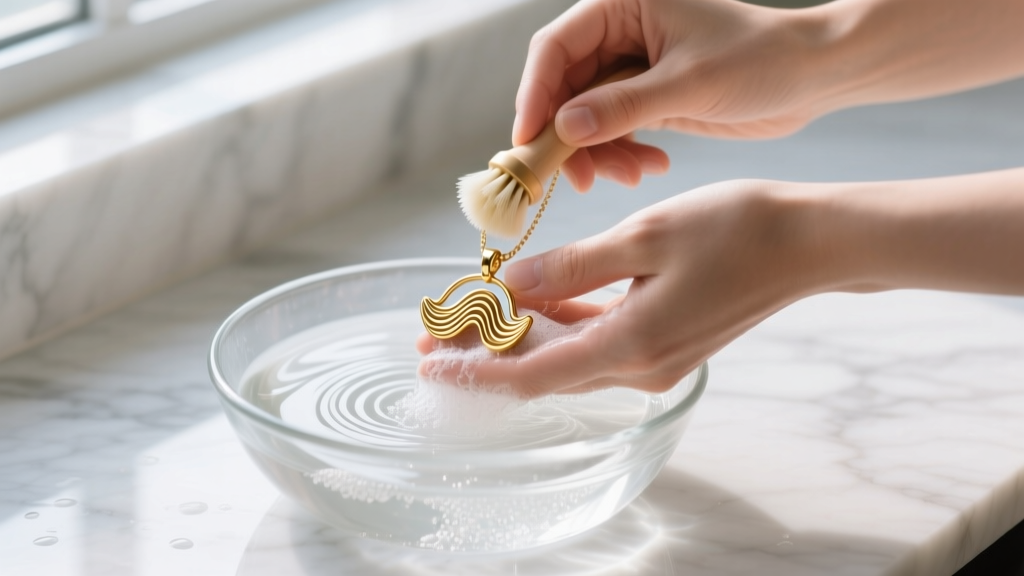
Begin by mixing three drops of dish soap into a small glass bowl of lukewarm distilled water. Submerge your lyric necklace and let it soak for exactly 3 to 5 minutes. This brief soak softens hardened sebum and cosmetic buildup without compromising the metal or enamel. After soaking, take the ultra-soft baby toothbrush and gently sweep along the grain of the engravings. Do not scrub in tight circles, as this can push debris deeper into the corners of hand-stamped letters. For soundwave necklaces with variable-depth grooves, use a wooden toothpick to gently dislodge stubborn particles. Wood is softer than all jewelry metals and will not cause micro-scratches.
Drying and Polishing (Without Ruining the Patina)
Rinse the pendant thoroughly under a gentle stream of lukewarm distilled water. Pat it dry with a microfiber cloth. If the outer, non-engraved borders of the pendant are tarnished, you may use a treated silver polishing cloth (like a Sunshine cloth) only on the raised, smooth surfaces. Never rub a treated cloth directly over the engraved lyrics, as the abrasive compounds will strip the dark contrast agent out of the grooves, leaving the text faded and illegible.
Materials Matrix: Cleaning Protocols by Metal Type
Different base metals react differently to cleaning agents and environmental factors. Use the matrix below to tailor your maintenance routine to your specific lyric necklace.
| Metal Type | Tarnish Risk | Safe Cleaning Agent | What to Strictly Avoid |
|---|---|---|---|
| Sterling Silver (925) | High (Prone to silver sulfide) | Mild soap, distilled water, treated cloth on flat areas only | Ultrasonic cleaners, bleach, ammonia, baking soda paste |
| Gold Vermeil (Silver base) | Medium (Tarnish occurs if gold wears off) | Mild soap, ultra-soft brush, microfiber drying | Polishing cloths (removes gold layer), ultrasonic cavitation |
| Stainless Steel (316L) | Very Low | Soap and water, glass cleaner for high-shine finish | Chlorine bleach (causes pitting in 316L grade) |
| Solid 14k/18k Gold | Low | Mild soap, warm water, soft brush | Harsh abrasives, ultrasonic cleaners if enamel is present |
Advanced Maintenance: Dealing with Enamel and Soundwave Grooves
Soundwave necklaces present a unique challenge. Because the etching mimics an audio waveform, the grooves vary wildly in width and depth, sometimes narrowing to less than 0.1mm. Standard brushing often fails to reach the bottom of these micro-fissures. As recommended by jewelry insurance and care experts at Jewelers Mutual, regular, gentle maintenance is superior to aggressive deep cleaning. For soundwave pendants, utilizing a can of compressed air (held at a 45-degree angle and at least six inches away) is an excellent way to blow out dried skin cells and dust from the deepest valleys without touching the metal.
If your lyric necklace features black or colored enamel fills, you must be hyper-vigilant about chemical exposure. Hand sanitizers, which became ubiquitous in recent years and remain a daily staple for many, contain high concentrations of isopropyl alcohol. Repeated exposure to alcohol will break down the molecular bonds in cold enamel and epoxy resins, causing the black fill to turn gray, crack, and eventually fall out. Always remove enameled lyric pendants before applying sanitizers, lotions, or perfumes.
Proper Storage to Prevent Tarnish and Scratches
How you store your lyric necklace when it is not being worn is just as critical as how you clean it. Sterling silver and brass lyric pendants tarnish primarily due to exposure to hydrogen sulfide in the air and ambient humidity. Tossing your necklace into an open jewelry dish guarantees a layer of black oxidation within weeks.
To preserve the pristine contrast of your engraved lyrics, adopt the following storage protocol:
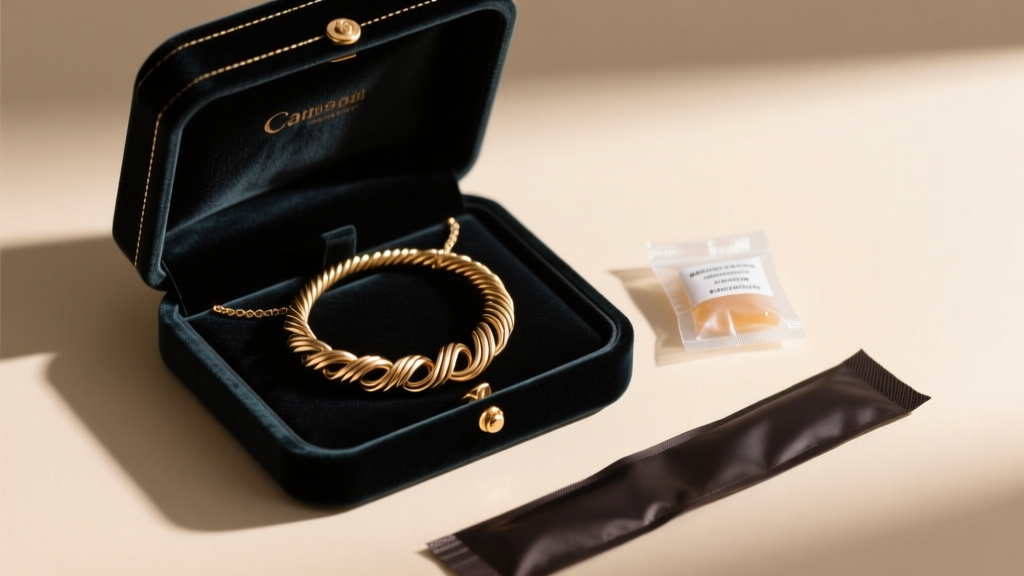
- Isolate the Pendant: Store the necklace in its own individual, airtight polyethylene ziplock bag. This prevents the chain from tangling and scratching the delicate engraved surface of the pendant.
- Use Anti-Tarnish Strips: Place a 3M or Pacific Silvercloth anti-tarnish strip inside the bag. These strips absorb airborne sulfur compounds and moisture, effectively neutralizing the environment.
- Control Humidity: Add a small, jewelry-safe silica gel desiccant packet to the bag to keep relative humidity below 40%, which is the threshold where rapid silver oxidation begins.
- Avoid Cardboard and Paper: Never store lyric necklaces in cardboard boxes or wrapped in tissue paper for long periods. The manufacturing processes of paper products often leave behind acidic residues and sulfur compounds that actively accelerate tarnishing.
Common Mistakes to Avoid
Even well-intentioned jewelry owners can accidentally ruin a lyric necklace by relying on outdated cleaning myths. Never use toothpaste to clean engraved silver; modern toothpastes contain hydrated silica, an abrasive that will scratch the high-polish borders and dull the metal. Avoid ultrasonic cleaners unless your pendant is solid, un-enameled, un-oxidized stainless steel or solid gold. The high-frequency cavitation bubbles created by ultrasonic machines will aggressively strip intentional blackening agents from silver engravings and shatter delicate glass or enamel inlays. Finally, never use a silver dip solution on a piece with deep grooves; the chemical residue is nearly impossible to rinse completely out of micro-etchings, leading to delayed, severe corrosion weeks after the cleaning.
By treating your lyric necklace with the specialized care it requires, you ensure that the words, waves, and memories etched into the metal remain as vivid and legible as the day you first clasped it around your neck.


