How Material Affects the Average Length of Women's Necklace
Discover how metal weight and drape dictate the average length of women's necklace choices. Compare gold, titanium, and silver for perfect fit.

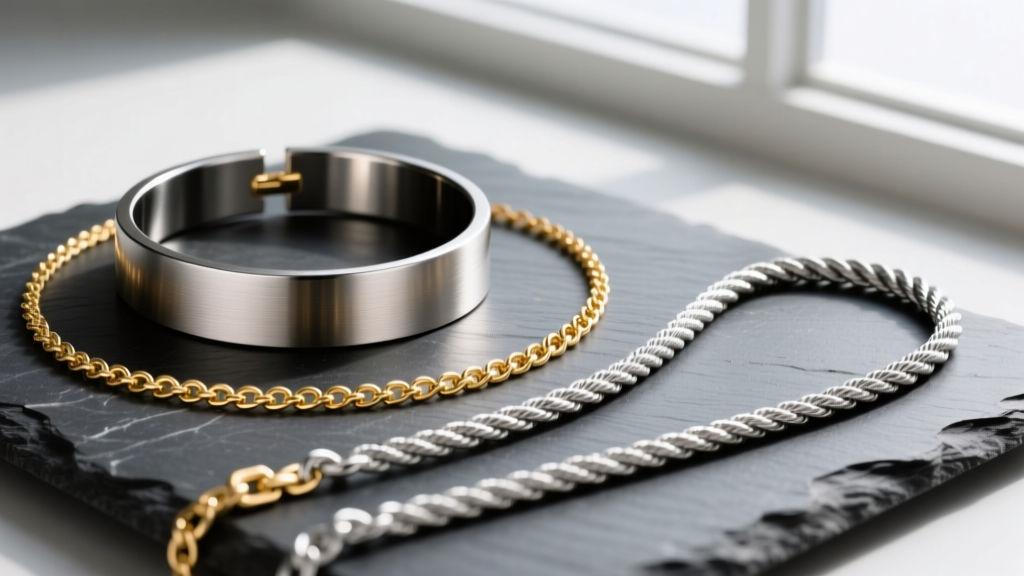
The Physics of Jewelry: Why Material Dictates Length
When jewelers and stylists discuss the average length of women's necklace styles, the conversation usually defaults to the 16-to-18-inch princess range. However, this industry standard is not arbitrary; it is deeply rooted in the physics of metallurgy, specific gravity, and tensile strength. The physical properties of a material directly determine how it drapes, how much it weighs on the cervical spine, and how long it can be manufactured before risking structural failure. Understanding the intersection of material science and jewelry sizing is critical for selecting pieces that offer both aesthetic elegance and physical comfort.
Different metals possess vastly different densities. For instance, the specific gravity of 18-karat yellow gold is approximately 15.6 g/cm³, while aerospace-grade titanium sits at a mere 4.5 g/cm³, and aluminum is even lighter at 2.7 g/cm³. This means an 18-inch solid gold chain will weigh nearly 3.5 times more than an identically sized titanium chain. When you extend that length to a 30-inch opera necklace, the weight of solid gold becomes cumbersome, pulling on the neckline and stressing the clasp, whereas lightweight alloys maintain an effortless drape. Consequently, the average length of women's necklace designs shifts dramatically depending on the base material utilized by the jeweler.
Standard Sizing vs. Material Limitations
To truly master necklace styling, one must map standard jewelry lengths to their most compatible materials. Below is a structural breakdown of how material properties align with traditional necklace sizing categories.
| Length Category | Measurement | Ideal Materials | Material Rationale & Drape Profile |
|---|---|---|---|
| Collar | 12 - 14 inches | Memory Wire, Leather, Woven Silk | Requires high rigidity or extreme flexibility to hug the clavicle without buckling or choking the wearer. |
| Choker | 14 - 16 inches | Tungsten, Thick Sterling Silver | Heavy metals are tolerable here because the chain rests on the base of the neck, distributing weight across the shoulders. |
| Princess | 17 - 19 inches | 14k/18k Gold, Platinum | The true 'average length of women's necklace' styles. Mid-weight precious metals drape perfectly over the collarbone. |
| Matinee | 20 - 24 inches | Sterling Silver, Palladium, Pearls | Mid-length requires moderate weight. Silver and palladium offer durability without the excessive drag of heavy gold. |
| Opera | 28 - 36 inches | Titanium, Aluminum, Hollow-Core Gold | Long lengths demand lightweight alloys or hollow constructions to prevent the chain from acting as a heavy pendulum. |
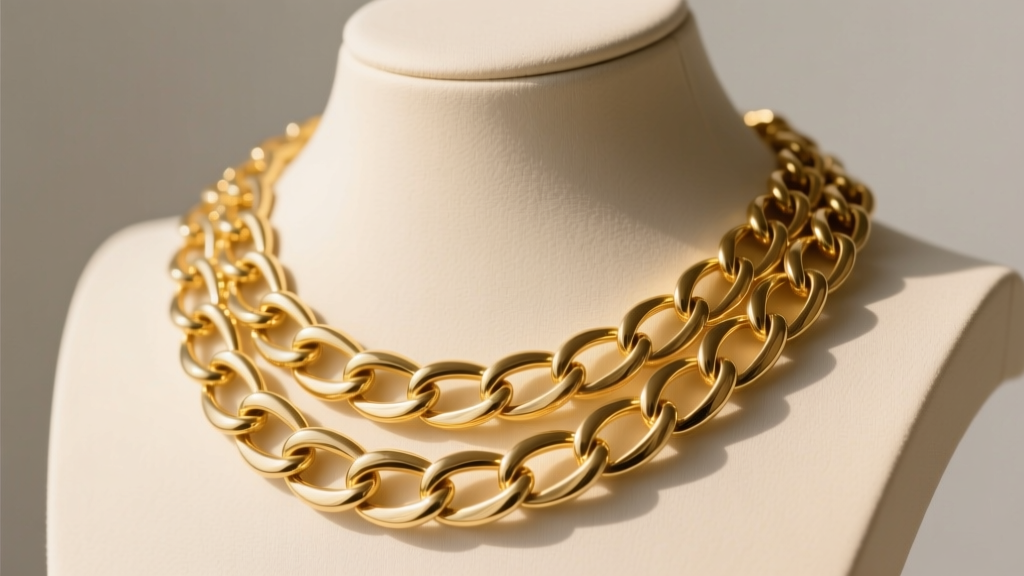
The Choker and Collar Exception
At the 14-inch mark, the necklace must navigate the complex topography of the human neck. Rigid materials like tungsten carbide or thick brass alloys work exceptionally well for collars because they maintain their geometric shape. Conversely, if a jeweler attempts to craft a 14-inch collar from a highly flexible, thin-gauge 22k gold chain, the piece will buckle and fold unattractively against the skin. Therefore, shorter lengths demand either structural rigidity or specialized knotting techniques, such as the silk knotting used in pearl collars to maintain spacing and flexibility.
Heavy Metals vs. Lightweight Alloys: A Drape Comparison
The concept of 'drape' refers to how a chain falls and moves with the body. According to Rio Grande's comprehensive metals guide, the alloy composition drastically alters the workability and final hang of a chain. Let us compare the two extremes of the jewelry market: solid 18k gold and Grade 5 titanium.
18k Gold: The Heavyweight Standard
An 18-inch, 16-gauge (1.3mm) solid 18k gold cable chain typically weighs between 12 and 15 grams. At a price point of $800 to $1,400, it is an investment piece. The high density of gold gives it a luxurious, fluid drape that feels substantial against the skin. However, if you were to scale this exact chain to a 36-inch opera length, the weight would exceed 30 grams. This creates a pendulum effect, where the heavy chain swings aggressively with movement, and the concentrated weight at the lowest point places immense shear stress on the individual links and the clasp mechanism.
Titanium and Aluminum: The Lightweight Innovators
Titanium and aluminum have revolutionized long-form jewelry. A 30-inch, 14-gauge titanium rope chain weighs less than 10 grams and costs between $60 and $150. Because it is featherlight, it can be layered extensively or worn at extreme lengths without causing neck fatigue or stretching the neckline of delicate garments. According to the GIA Gem Encyclopedia, modern jewelry design increasingly relies on these alternative metals to push the boundaries of traditional sizing, allowing for dramatic, oversized silhouettes that would be physically unbearable in solid platinum or gold.

Gauge Thickness, Tensile Strength, and Length
The relationship between the average length of women's necklace designs and material durability is governed by gauge thickness and tensile strength. Gauge refers to the diameter of the wire used to forge the links. In the American Wire Gauge (AWG) system, a lower number indicates a thicker wire.
- 22-Gauge (0.64mm): Suitable only for short, lightweight chains (14-16 inches) or temporary fashion jewelry. A 24-inch chain in 22-gauge sterling silver will easily snap if paired with a heavy pendant.
- 20-Gauge (0.81mm): The standard for delicate 18-inch gold chains. It offers a balance of flexibility and strength but will suffer from metal fatigue over time if subjected to the swinging motion of a 30-inch length.
- 18-Gauge (1.02mm): Highly durable for mid-length matinee necklaces (20-24 inches). Provides enough structural integrity to support small to medium gemstone pendants.
- 16-Gauge (1.29mm) and 14-Gauge (1.63mm): Mandatory for long opera chains (28+ inches) crafted from softer metals like 18k gold or pure silver. The increased wire diameter prevents the links from elongating and warping under the chain's own cumulative weight.
Clasp Mechanics and Failure Points
The longer and heavier the chain, the more critical the clasp becomes. A standard 5mm spring ring clasp is perfectly adequate for a lightweight 16-inch aluminum choker. However, for a 24-inch 14k gold matinee necklace, the kinetic energy generated by the heavy metal swinging can easily deform a small spring ring's internal tension wire. For any necklace exceeding 20 inches in a high-density metal, jewelers recommend upgrading to a solid lobster clasp or a specialized box clasp with a dual-safety figure-eight catch to prevent catastrophic failure and loss of the piece.
Expert Verdict: Matching Material to Your Ideal Length
Ultimately, the average length of women's necklace styles is not a one-size-fits-all metric; it is a dynamic variable dictated by material science. If your wardrobe calls for the classic 18-inch princess length, you have the freedom to choose any material, from heavy platinum to hollow rose gold, as the weight will remain comfortably distributed across the collarbone.
However, if you are venturing into the 24-inch matinee or 32-inch opera territories, you must prioritize low-specific-gravity metals like titanium, aluminum, or hollow-core electroformed gold. Conversely, if you prefer the structured, bold look of a 14-inch choker, embrace the high-density rigidity of tungsten, thick brass, or memory wire to ensure the piece maintains its architectural integrity. By respecting the physical properties of your jewelry materials, you ensure that every piece you wear is as structurally sound as it is visually stunning.


