Mayfair Bas Relief Pendant Necklace: The 2026 Buyer's Guide
Discover what to look for when buying a Mayfair bas relief pendant necklace. Expert guide on gold grades, casting quality, and chain pairing.


The Allure of the Mayfair Bas Relief Pendant Necklace
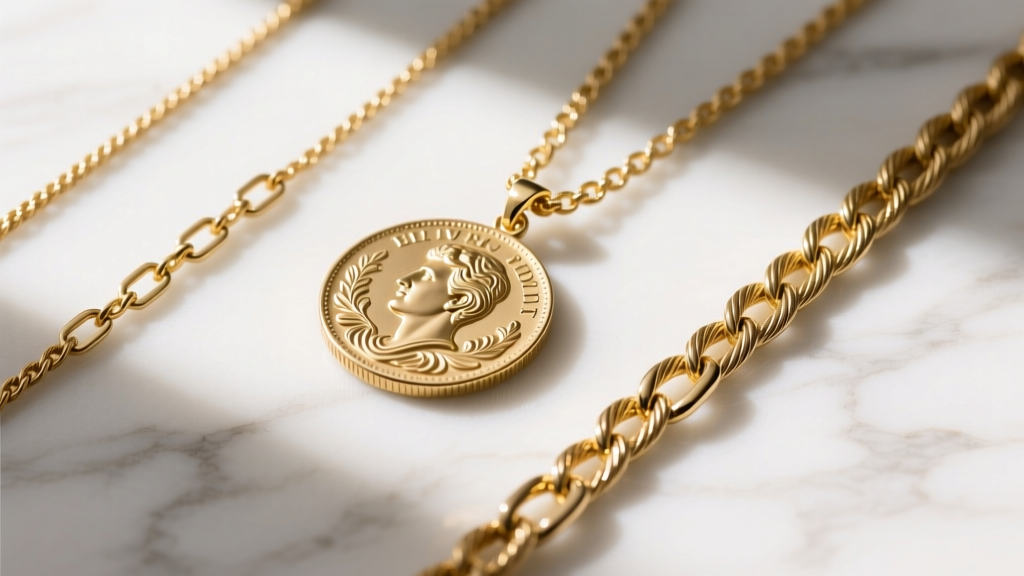
The Mayfair bas relief pendant necklace represents a pinnacle of neo-classical jewelry design, merging the historic artistry of basso-relievo sculpture with the refined elegance associated with London's most luxurious district. Unlike flat-stamped coins or enamel medallions, a true bas relief pendant features sculpted elements that project slightly from a solid background, creating a three-dimensional topography that catches light and shadow. As we navigate the 2026 jewelry market, these pendants have surged in popularity, driven by a renewed appreciation for tactile, museum-quality wearable art. However, the market is currently flooded with mass-produced imitations that lack the structural integrity and metallurgical quality of genuine pieces. This comprehensive buying guide will equip you with the technical knowledge required to evaluate casting quality, material grades, and structural hardware before making an investment.
Material Grades & Metallurgy: What to Demand
The foundation of any luxury pendant lies in its metallurgy. Because bas relief requires capturing microscopic details—such as the individual strands of hair on a mythological figure or the veining on an acanthus leaf—the choice of metal directly impacts the crispness of the final piece.
Solid Gold: 14k vs. 18k
When investing in a solid gold Mayfair bas relief pendant necklace, you will primarily choose between 14k and 18k gold. According to the Gemological Institute of America (GIA), 18k gold (75% pure gold) is significantly softer and more malleable than 14k (58.3% pure gold). In the context of lost-wax casting, 18k gold flows into intricate molds with slightly better fidelity, capturing sharper relief edges. However, this softness makes 18k pendants more susceptible to surface abrasion and scratching over time. Conversely, 14k gold offers superior durability and a slightly paler hue, making it ideal for everyday wear, though the highest relief peaks may lose a fraction of a millimeter of crispness during the polishing phase.
Vermeil and Plating Standards
If you are opting for vermeil (gold plated over sterling silver), you must verify the plating thickness. The US standard for vermeil requires a minimum of 2.5 microns of gold. However, for a heavy-wear item like a pendant that constantly experiences friction against the skin and clothing, demand a minimum of 3.0 to 4.0 microns. Anything less will result in the gold wearing away from the highest points of the bas relief within months, exposing the silver underlayer and ruining the visual depth of the sculpture.

Evaluating the Relief: Depth, Crispness, and Casting Quality
The term "bas relief" is frequently misused by fast-fashion brands to describe slightly textured stampings. A genuine Mayfair bas relief pendant necklace is created through lost-wax casting, a process that inherently involves a 1% to 2% shrinkage rate from the original wax model. When inspecting a piece, either in person or via high-resolution macro photography, look for the following indicators of quality:
- Undercutting: True bas relief features areas where the sculpted element slightly overhangs the background, creating deep, natural shadows. Stamped pieces cannot achieve this and will look flat and uniform.
- Sprue Mark Eradication: During casting, the molten metal enters the mold through a channel called a sprue. On the finished pendant, this leaves a small bump, usually on the edge or back. High-end jewelers meticulously file and polish this away. A visible sprue mark is a hallmark of rushed, low-tier manufacturing.
- Background Texture: The negative space (the background behind the raised figure) should have a deliberate finish—either a high polish, a matte sandblast, or a stippled texture. This contrast is what makes the raised relief "pop" visually.
"The mastery of bas relief in jewelry lies not just in what is raised, but in how the negative space is treated to manipulate light and enhance the three-dimensional illusion." — Archival notes on sculptural jewelry, Victoria and Albert Museum.
The Chain Pairing Matrix: Weight and Proportion
A common failure mode when styling a Mayfair bas relief pendant necklace is pairing a heavy, dense pendant with a delicate chain. Bas relief pendants typically weigh between 8 and 18 grams due to the volume of metal required for the sculpted depth. A chain that is too thin will not only look visually unbalanced but will also suffer from accelerated wear at the clasp and bail due to the pendulum effect of the heavy pendant. Use the matrix below to select the appropriate chain.
| Chain Style | Recommended Width | Weight Capacity | Best For |
|---|---|---|---|
| Figaro | 3.0mm - 4.5mm | Up to 15g | Classic, masculine, or heavy neo-classical profiles. |
| Rope | 2.5mm - 4.0mm | Up to 20g | Adding textural contrast to smooth, polished relief backgrounds. |
| Curb / Cuban | 3.0mm - 5.0mm | Up to 25g | Modern, bold aesthetics; highly resistant to kinking. |
| Box Chain | 2.0mm - 3.5mm | Up to 12g | Geometric, architectural pendants; offers a sleek, reflective surface. |
Bail Sizing and Hardware Integrity
The bail—the loop that connects the pendant to the chain—is the most critical stress point on any necklace. Because a Mayfair bas relief pendant necklace requires a thicker chain to support its weight, the bail must have a sufficiently large inner diameter. When reviewing product specifications, ensure the bail's inner diameter is at least 4.5mm to 6.0mm. Furthermore, inspect the solder joints where the bail meets the pendant body. A poorly soldered bail will eventually snap under the dynamic weight of a heavy bas relief piece. Look for seamless cast bails (where the bail is cast as one piece with the pendant) or laser-welded attachments, which offer superior tensile strength compared to traditional torch soldering.
Pricing Tiers and Authenticity Markers
Understanding the pricing landscape will protect you from overpaying for inferior craftsmanship or underpaying for a piece that may be counterfeit. Here is what you should expect to pay in the current market:
- Entry-Level Vermeil ($120 - $280): Sterling silver base with 2.5+ microns of 18k gold. Expect machine-finished backgrounds and slightly softer relief details.
- Solid 14k Gold ($850 - $1,600): The sweet spot for durability and luxury. Look for a "585" hallmark and a distinct maker's mark stamped on the flat back of the pendant.
- Solid 18k Gold ($1,800 - $3,500+): Reserved for artisan-crafted, limited-edition pieces. These will feature hand-chased details (where the jeweler uses tiny steel tools to refine the cast metal), resulting in unparalleled sharpness and depth.
Red Flags to Avoid
Be highly suspicious of pendants marketed as "solid gold" that weigh less than 4 grams. A true bas relief design requires substantial metal volume. Additionally, avoid pieces that lack a proper hallmark (e.g., 14k, 18k, 585, 750) stamped directly into the metal; a mere paper tag or laser engraving on the packaging is not a legal guarantee of metal purity.
Final Verdict: Styling and Neckline Framework
The Mayfair bas relief pendant necklace is inherently a statement piece. To maximize its visual impact, pair it with necklines that provide a blank canvas. Crew necks and high-collared blouses in solid, muted tones (like charcoal, navy, or cream) allow the intricate topography of the gold to take center stage. Avoid wearing these pendants over busy patterns or lace, which will visually compete with the micro-details of the relief. By prioritizing lost-wax casting quality, verifying metal thickness, and matching the pendant to a structurally sound chain, you will secure a piece of wearable sculpture that retains its elegance and value for decades.


