Men Wearing Necklaces: 2026 Trend Analysis & Style Guide
Explore the evolution of men wearing necklaces in 2026. Discover trending materials, optimal chain lengths, and styling frameworks for modern menswear.

The Paradigm Shift: Redefining Modern Menswear
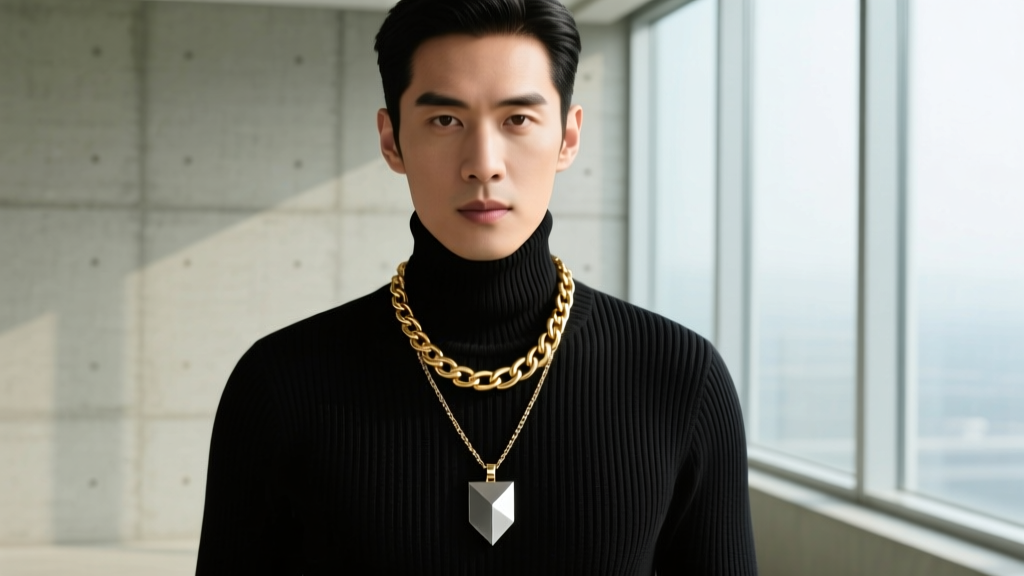
The cultural conversation around men wearing necklaces has fundamentally shifted from subcultural signaling to a cornerstone of contemporary luxury styling. According to recent market analyses by the Business of Fashion, the men's fine jewelry sector has consistently outpaced women's in year-over-year growth, driven largely by a demand for versatile, everyday hardware. In 2026, the archetype of men wearing necklaces is no longer confined to musicians or athletes; it is a staple of the modern professional's wardrobe, demanding a rigorous understanding of material science, anatomical proportion, and structural integrity.
This evolution is not merely aesthetic; it is deeply technical. The modern consumer is highly educated on metal grades, chain weaves, and clasp mechanics. To navigate the current landscape, one must move beyond generic style advice and examine the precise engineering and styling frameworks that define high-end men's jewelry today.
Material Science & Hardware Standards
When analyzing the mechanics of men wearing necklaces daily, material selection dictates both longevity and skin compatibility. The most common failure point in men's jewelry is not the chain snapping, but rather the degradation of the metal due to environmental exposure and skin chemistry. High-acidity sweat can rapidly break down the copper alloys present in lower-karat golds and sterling silver, leading to verdigris and structural weakening.
For daily wear chains, 14k gold is often preferred over 18k gold by jewelry engineers. While 18k gold (75% pure gold) offers a richer, warmer hue, its higher softness makes it more susceptible to micro-scratches and deformation under the heavy tensile stress of a thick Cuban link. 14k gold (58.3% pure gold), alloyed with silver, copper, and zinc, provides superior tensile strength and scratch resistance, making it the optimal choice for heavy, everyday chains.
| Metal Grade | Composition | Tarnish / Corrosion Risk | Avg. Price (20" 5mm Chain) |
|---|---|---|---|
| 925 Sterling Silver | 92.5% Ag, 7.5% Cu | High (Requires rhodium plating) | $150 - $350 |
| 14k Yellow Gold | 58.3% Au, Ag/Cu/Zn | Low (Highly durable) | $1,400 - $2,200 |
| 18k Yellow Gold | 75% Au, Ag/Cu | Very Low (Softer, prone to scratching) | $2,800 - $4,500 |
| Grade 5 Titanium | Ti-6Al-4V Alloy | None (Hypoallergenic, lightweight) | $90 - $180 |
Chain Weaves & Structural Integrity
The structural integrity of a chain is dictated by its weave pattern and solder points. For men wearing necklaces that carry significant weight, understanding these weaves is critical for avoiding catastrophic failure.
- Cuban Link: The undisputed king of men's chains. A 5mm Cuban link at 20 inches weighs approximately 45-55 grams. Ensure the links are individually soldered; unsoldered Cubans will stretch and warp under their own weight over time.
- Rope Chain: Created by twisting multiple strands of metal. Diamond-cut rope chains offer immense light refraction but are notorious for trapping skin oils and lint. They require ultrasonic cleaning every six months to maintain their structural flexibility.
- Wheat (Spiga) Chain: Composed of interlocking, figure-eight loops. Wheat chains offer the highest tensile strength per gram of any standard weave, making them the ideal foundation for heavy gemstone or solid gold pendants.
Crucial Hardware Note: Avoid standard lobster clasps on any chain exceeding 40 grams. The internal spring mechanism is a known failure point under heavy loads. Opt for a double-latch box clasp or a reinforced toggle clasp with a minimum 8mm ring diameter.
The Length & Layering Matrix
The anatomy of the male chest requires precise length selection. A chain that sits incorrectly can disrupt the visual proportion of the torso. According to styling data aggregated by Lyst Insights, the 20-inch chain remains the highest-searched length for men, but 2026 trends show a massive surge in deliberate, multi-length layering.
The Proportion Framework
- 18 Inches (The Collarbone): Sits high, resembling a choker or tight crew. Best reserved for thin (2mm-3mm) box chains or worn exclusively under a closed collar for a subtle flash of metal.
- 20 Inches (The Sternum): The universal standard. Sits just below the collarbone, perfectly framing the neckline of a standard crewneck t-shirt. Ideal for 4mm-6mm chains with medium-sized pendants.
- 22 Inches (Mid-Chest): Drops to the upper sternum. This is the optimal length for layering over a secondary chain or for wearing over thicker garments like hoodies and knitwear.
- 24+ Inches (The Solar Plexus): Sits low on the chest. Primarily used as a base layer for heavy, oversized pendants or integrated into streetwear aesthetics. Avoid pairing with V-necks, as the parallel lines create a visually elongating, often unflattering effect.
Pendant Proportions & Bail Sizing
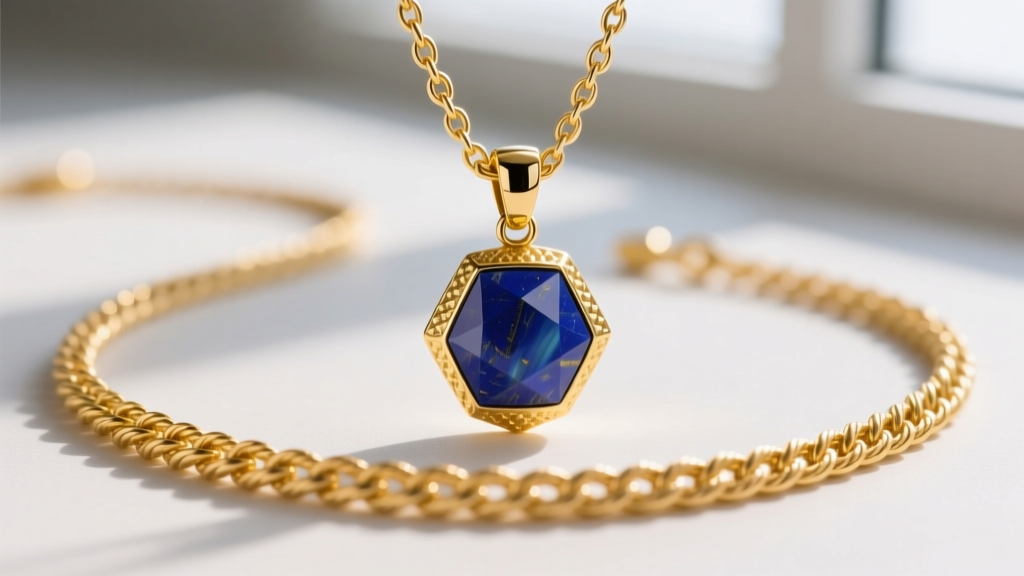
The intersection of chain and pendant—the bail—is where most wear and tear occurs. A critical rule of thumb for men wearing necklaces with pendants is the 1.5mm clearance rule. If you are threading a 5mm Cuban link, the inner diameter of the pendant's bail must be at least 6.5mm to allow for fluid movement. Friction caused by a tight bail will rapidly degrade the top link of your chain.
Furthermore, beware of galvanic corrosion when mixing metals. Pairing a 925 sterling silver pendant with a Grade 5 titanium chain creates a galvanic cell when exposed to the salt in human sweat. This electrochemical reaction will rapidly corrode the softer silver bail. Always match metal hardness, or use a protective, replaceable jump ring between dissimilar metals.
Styling Frameworks: Necklines & Occasions
"The goal of men's jewelry in 2026 is not to announce wealth, but to demonstrate a meticulous attention to detail. The hardware should look like an extension of the garment's architecture." — GQ Style
The Crewneck & T-Shirt Protocol
For standard cotton crewnecks, the neckline acts as a rigid frame. A 20-inch, 5mm gold or silver chain provides a sharp geometric contrast to the soft cotton. If layering, pair a 20-inch Cuban link with a 22-inch oxidized silver bead necklace. The contrast in texture (smooth links vs. matte beads) and color (yellow gold vs. darkened silver) creates depth without looking cluttered.
The Open Collar & Smart Casual Approach
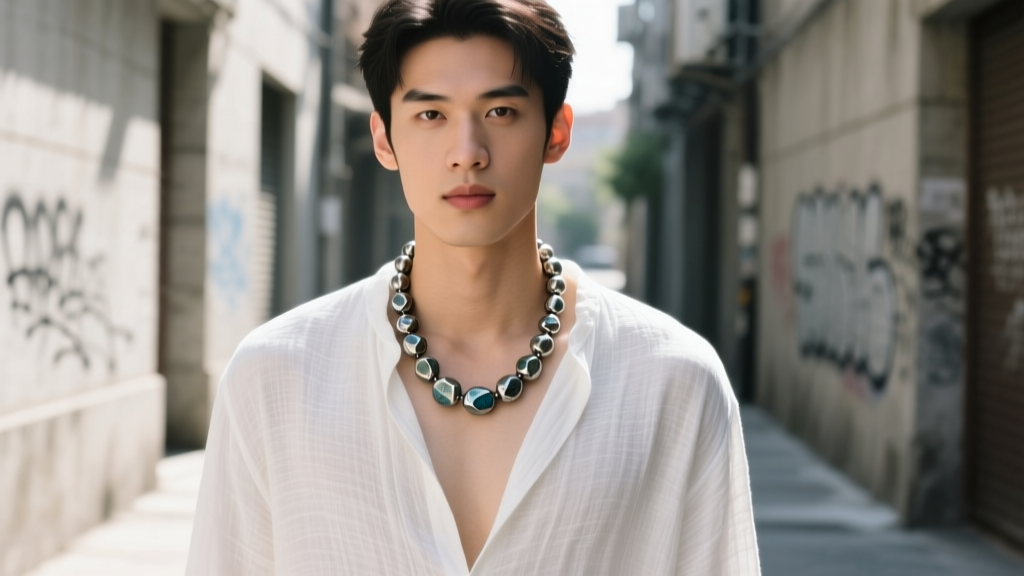
When wearing an unbuttoned linen or poplin shirt, the exposed chest creates a natural V-shape. Avoid chains longer than 22 inches, as they will disappear into the shirt. Instead, opt for an 18-inch or 20-inch delicate rope chain with a singular, meaningful pendant (such as a signet-style medallion or a raw, uncut gemstone). The metal should rest directly against the skin, catching the light subtly as you move, providing an effortless, sophisticated focal point that elevates the smart-casual silhouette.
Future Forecast: Beyond 2026
The landscape of men wearing necklaces is moving toward hyper-personalization and sustainable metallurgy. We are seeing a rise in lab-grown diamond accents integrated directly into the links of heavy chains, as well as the use of reclaimed aerospace-grade titanium for ultra-lightweight, high-tensile hardware. As the boundaries between traditional menswear and fine jewelry continue to dissolve, mastering the technical and aesthetic nuances of necklaces will remain a defining trait of the modern, style-conscious man.


