What Are the Colors of a Mood Necklace Mean? Care & Color Guide
Discover what are the colors of a mood necklace mean, why they turn black, and expert cleaning tips to protect the thermochromic crystals.

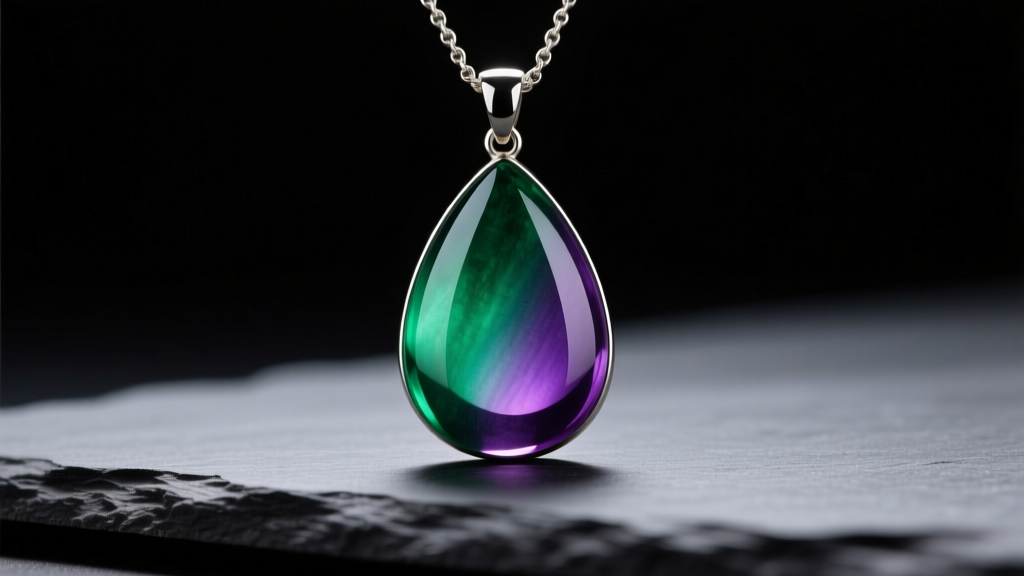
Mood jewelry has fascinated wearers since the 1970s, but the delicate science behind these color-shifting accessories requires highly specific care. Unlike standard gemstones, the "stone" in a mood necklace is actually a hollow glass or quartz cabochon filled with thermochromic liquid crystals. If you have ever found yourself asking what are the colors of a mood necklace mean, you are really asking about the thermal mapping of your peripheral blood flow—and how to preserve the fragile chemistry that makes it visible.
In this comprehensive care and maintenance guide, we will decode the color spectrum, explain the exact failure modes that ruin these pendants, and provide a strict cleaning protocol to ensure your thermochromic jewelry survives daily wear.
The Science: Decoding the Thermochromic Spectrum
To understand how to care for these pieces, you must first understand how they work. According to Scientific American, mood jewelry relies on cholesteric liquid crystals. These molecules twist in response to minute temperature changes, altering the pitch of their molecular structure. This twist changes the wavelength of light they reflect, producing different colors.
When people search for what are the colors of a mood necklace mean, they are looking for the emotional correlation to skin temperature. Stress causes vasoconstriction (blood moves to core organs, cooling the skin), while relaxation or excitement causes vasodilation (warming the skin). Here is the standard thermal-to-color mapping:
| Color Displayed | Approximate Temperature | Emotional / Physical State |
|---|---|---|
| Deep Violet / Purple | 38°C (100°F) | Passionate, excited, or physically warm |
| Blue / Cyan | 37°C (98.6°F) | Calm, relaxed, optimal baseline |
| Green | 36°C (96.8°F) | Average, neutral, resting state |
| Yellow / Amber | 34°C (93.2°F) | Anxious, unsettled, or slightly cool |
| Black / Grey | Below 32°C (90°F) | Stressed, cold, or poor circulation |
The "Stuck Black" Phenomenon: Why Mood Pendants Fail
The most common complaint among mood necklace owners is the pendant turning permanently black or clear. While the color chart suggests black means "stressed," a pendant that stays black at room temperature (around 22°C / 72°F) is not detecting extreme stress—it is broken.
1. Water Damage and Solvent Dilution
The liquid crystals inside the cabochon are suspended in a highly specific chemical solvent. The bezel sealing the glass to the metal backing is rarely 100% waterproof. If you wear your necklace in the shower, swim with it, or submerge it in a jewelry cleaning solution, water breaches the microscopic seal. This dilutes the solvent, destroying the molecular alignment of the crystals. Once the alignment is lost, the stone will permanently default to black or cloudy clear.
2. UV Radiation Degradation
Thermochromic compounds are highly sensitive to ultraviolet light. Prolonged exposure to direct sunlight breaks down the chemical bonds of the liquid crystals. A necklace left on a sunny dashboard or windowsill for a few weeks will suffer irreversible UV bleaching, rendering it colorless.
Step-by-Step Cleaning Protocol for Thermochromic Pendants
Because the pendant is essentially a sealed liquid vessel, traditional jewelry cleaning methods like ultrasonic baths, steam cleaners, or chemical dips will instantly destroy it. Follow this strict, dry-first cleaning methodology.
Cleaning the Mood Stone
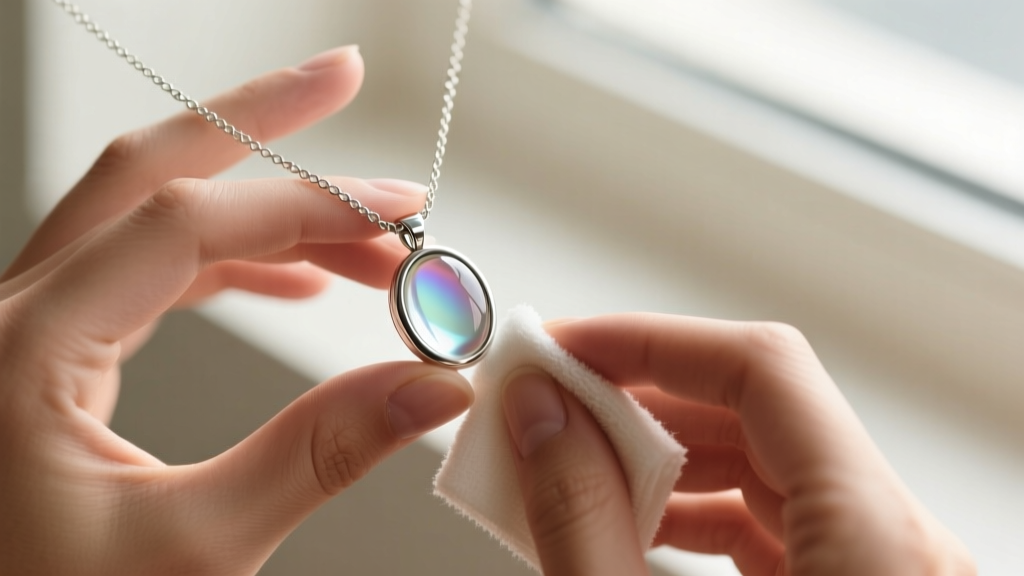
- Dry Wipe Only: Use a clean, lint-free microfiber cloth to gently buff the surface of the glass or quartz cabochon.
- Tackling Skin Oils: If the stone is cloudy from sebum and lotion buildup, breathe lightly on the glass to create a tiny amount of condensation, then immediately buff it dry with the microfiber cloth. Do not apply liquid cleaners directly to the stone.
- Avoid Pressure: The glass cabochons used in mood jewelry are often quite thin (around 1.5mm to 2mm). Pressing too hard can crack the glass, instantly flooding the liquid crystal layer with air and ruining the pendant.
Cleaning the Metal Chain and Bezel
Most mood pendants are set in base metal alloys with a thin silver or gold plating, though higher-end versions use solid 925 sterling silver. To clean the hardware without risking the pendant seal:
- Remove the pendant from the chain if the clasp allows.
- Dip a cotton swab (Q-tip) in a mild solution of warm water and phosphate-free dish soap.
- Wring out the swab until it is merely damp, not dripping.
- Carefully trace the metal bezel and the chain links, avoiding any direct contact with the glass seam.
- Immediately dry the metal with a separate, clean cotton cloth to prevent water spots or oxidation.
Expert Tip: Never use silver polish or tarnish-removing dips on a mood necklace chain while the pendant is attached. The harsh thiourea chemicals in these dips will seep into the bezel gap and melt the adhesive holding the glass cabochon in place.
Hardware Upgrades: Prolonging the Lifespan of Your Necklace
The thermochromic pendant itself can last for decades if kept dry and out of the sun. However, the factory-included chains are often the first point of failure. Cheap box chains or snake chains (usually 0.8mm or thinner) are prone to kinking, which traps moisture and dirt against the skin, accelerating the degradation of the pendant's metal backing.
Consider upgrading your hardware to protect your investment:
- Chain Type: Swap the factory chain for a 1.2mm to 1.5mm solid sterling silver cable or curb chain. These thicker links allow for better airflow against the skin, ensuring the pendant reads your actual skin temperature rather than the ambient heat trapped by a tight, cheap chain.
- Clasp Upgrade: Replace standard spring-ring clasps with a lobster clasp. This prevents the necklace from accidentally falling off and hitting hard surfaces, which is the primary cause of cabochon shattering.
Long-Term Storage and Maintenance Rules
Proper storage is just as critical as proper cleaning when it comes to preserving the liquid crystals. The Gemological Institute of America (GIA) emphasizes that delicate, non-traditional jewelry materials require environment-controlled storage.
The 3 Rules of Mood Jewelry Storage
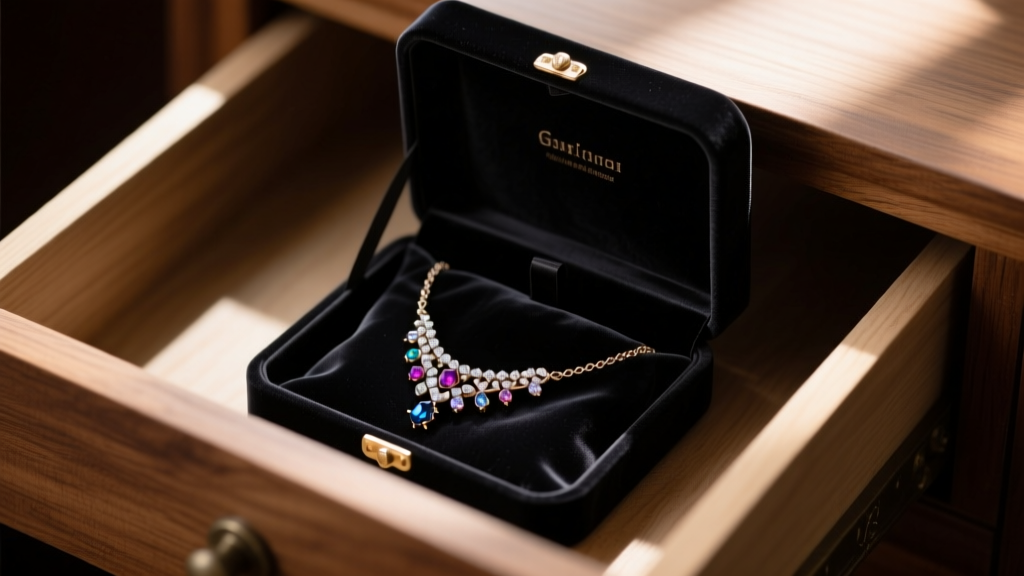
- Total Darkness: Always store your mood necklace in an opaque pouch or a closed jewelry box. Even ambient indoor lighting over several months can slowly degrade the thermochromic sensitivity.
- Temperature Stability: Do not store the necklace in a bathroom (high humidity and temperature fluctuations) or near a radiator. Store it in a climate-controlled bedroom drawer where the temperature remains a stable 20°C - 22°C.
- Isolation: Store the pendant separately from harder gemstones like diamonds, sapphires, or quartz crystals. The glass surface of a mood pendant has a Mohs hardness of roughly 5.5, making it highly susceptible to scratching if tossed into a communal jewelry dish.
Frequently Asked Questions
Can I put a clear topcoat over the glass to protect it?
No. Applying clear nail polish or resin over the cabochon will create a thermal barrier. The insulating layer will prevent your skin's heat from reaching the liquid crystals, causing the necklace to stay permanently green or black.
My necklace is stuck on blue, even when I am cold. Is it broken?
If it is stuck on a vibrant color regardless of temperature, the liquid crystal suspension has likely separated or degraded due to age or heat exposure. Unfortunately, there is no way to "reboot" or repair the chemical mixture inside the sealed glass; the pendant must be replaced.
Are modern 2026 mood necklaces more durable than vintage ones?
Yes. While the fundamental chemistry of cholesteric liquid crystals remains the same, modern manufacturing utilizes UV-stabilized solvents and laser-welded bezels that offer significantly better resistance to accidental splashes and sun exposure compared to the glued settings of the 1970s and 1990s. However, the strict "no submersion" rule still applies.


