Name in Diamonds Necklace: 2026 Custom Typography Trends
Discover 2026 trends for the name in diamonds necklace. Expert analysis on bespoke typography, diamond melee grades, and structural chain pairing.

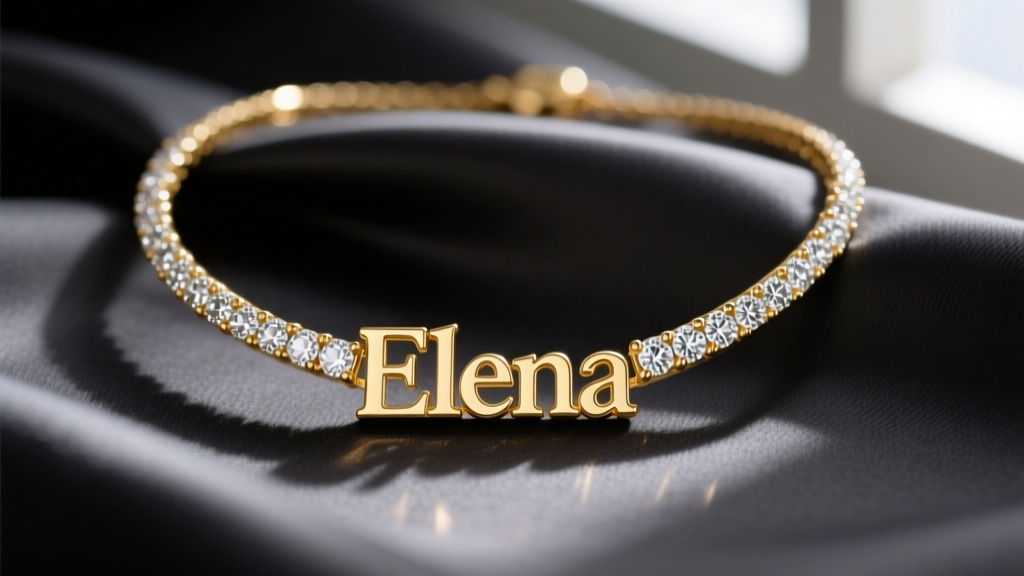
The cultural footprint of personalized jewelry has undergone a radical transformation. While the early 2000s popularized the cursive script nameplate, the 2026 landscape demands architectural precision, bespoke typography, and uncompromising material science. Today, a custom name in diamonds necklace is no longer just a pop-culture nod; it is a sophisticated exercise in micro-sculpture and gemological engineering. As quiet luxury continues to dictate fine jewelry trends, collectors and gifting buyers are pivoting toward minimalist sans-serif fonts, structural mixed-metal settings, and ethically sourced lab-grown diamond melee. This comprehensive style and trend analysis dissects the anatomy of the modern diamond nameplate, providing a technical framework for commissioning, styling, and evaluating these highly personalized investment pieces.
The Evolution of Typography: Beyond the Classic Script
The most significant shift in 2026 is the departure from traditional, flowing cursive scripts. Modern jewelers and CAD (Computer-Aided Design) specialists are treating typography with the same rigor as high-end horology. The current market favors high-contrast serif fonts like Didot and Bodoni, or ultra-clean geometric sans-serifs like Futura and Helvetica Neue.
Vector Conversion and CAD Shrinkage Compensation
Creating a flawless name in diamonds necklace begins in the digital realm. Jewelers must convert TrueType or OpenType fonts into vector paths. However, a critical E-E-A-T detail often overlooked by mass-market retailers is casting shrinkage. When 14k or 18k gold is cast from a wax or resin model, it shrinks by approximately 1.2% to 1.8%. Master CAD designers must artificially scale the vector file and adjust the kerning (letter spacing) to ensure that delicate elements—like the crossbar of an 'A' or the dot of an 'i'—do not merge or become brittle post-casting. A well-engineered nameplate will feature structural 'sprues' or hidden connecting bars between letters to maintain rigidity without compromising the visual flow of the chosen font.
Diamond Melee Specifications: The Engine of Scintillation
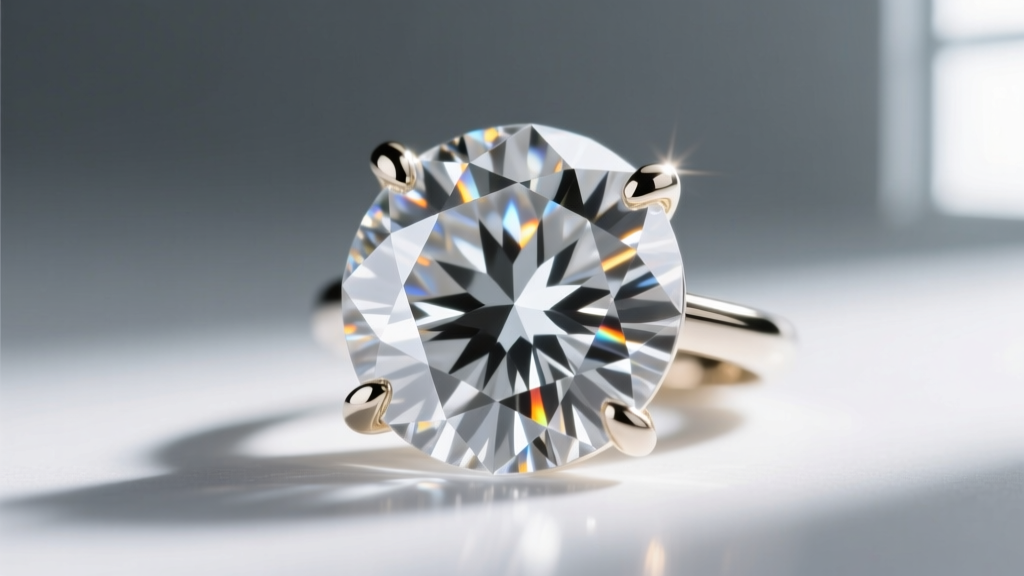
The brilliance of a diamond nameplate relies entirely on 'melee' (pronounced may-lee)—the industry term for small diamonds typically weighing under 0.20 carats each. In 2026, the standard for luxury nameplates has shifted from single-cut melee to full-cut lab-grown diamonds, which offer superior light return. According to the Gemological Institute of America (GIA), the cut quality of melee drastically impacts the overall face-up appearance of the jewelry. While large center stones receive rigorous grading reports, melee is usually sorted by sieve size. For a premium name in diamonds necklace, you must demand 'Ideal' or 'Excellent' cut melee, ensuring 57 or 58 facets per stone rather than the 17 facets found in cheaper single-cut alternatives.
| Melee Diameter | Approx. Carat Weight | Facet Style | Optimal Application in Nameplates |
|---|---|---|---|
| 0.8mm - 1.0mm | 0.005 - 0.01 ct | Single Cut (17 facets) | Tight inner curves, delicate serifs, and punctuation marks. |
| 1.1mm - 1.3mm | 0.01 - 0.02 ct | Full Cut (57/58 facets) | Standard letter stems and medium-width arches. |
| 1.5mm - 1.7mm | 0.02 - 0.03 ct | Full Cut (57/58 facets) | Bold sans-serif capitals, structural crossbars, and statement pieces. |
Color and Clarity Thresholds
Because melee stones are set closely together in a bead-set or micro-pave arrangement, color inconsistencies are magnified. For white gold or platinum settings, insist on G-H color melee with VS2-SI1 clarity. In yellow or rose gold settings, you can safely step down to I-J color without visible warmth, allowing you to reallocate budget toward a heavier gold weight or a longer chain.
Structural Integrity: Chains, Connectors, and Weight Distribution
A frequent failure point in custom nameplate jewelry is the chain. A 6-letter name in diamonds necklace crafted in solid 14k gold with 1.50 carats total weight (ctw) of diamonds will weigh between 8 and 12 grams. Suspending this weight on a delicate 1mm cable chain is a structural hazard that will inevitably lead to snapped links or a deformed clasp.
The Weight Distribution Framework
- Lightweight Nameplates (Under 5 grams): 3 to 4 letters, minimal diamond coverage. Can be supported by a 1.5mm to 2.0mm solid box chain or a delicate paperclip chain.
- Mid-Weight Nameplates (5 - 10 grams): 5 to 7 letters, full diamond pave. Requires a 2.5mm to 3.0mm wheat chain, rope chain, or medium Cuban link. The connector rings (bails) must be soldered and at least 18-gauge thickness.
- Heavyweight Statement Pieces (Over 10 grams): 8+ letters, double-layered or chunky typography. Demands a 3.5mm+ solid Figaro or thick box chain with a locking lobster clasp. Spring ring clasps are strictly prohibited at this weight class due to internal spring failure risks.
Furthermore, the orientation of the connector rings matters. In 2026, custom jewelers are utilizing horizontal 'slider' bails rather than vertical soldered loops. Slider bails allow the chain to thread directly through the top edges of the first and last letters, keeping the nameplate perfectly flush against the collarbone and preventing the dreaded 'flip-over' effect common in poorly balanced pendants.
Material Science: Gold Alloys and Setting Techniques
The longevity of your diamond setting is dictated by the metallurgy of the gold alloy and the technique used by the setter. The Jewelers of America emphasizes the importance of proper alloy mixtures for durability. 18k yellow gold is prized for its rich hue but is inherently softer than 14k. If you are commissioning an 18k name in diamonds necklace, the setter must use a 'bead set' or 'bright cut' technique, pushing the surrounding gold over the diamond's girdle to create a protective metal cushion. Conversely, 14k white gold, alloyed with nickel or palladium, offers superior tensile strength, making it the ideal candidate for 'micro-prong' settings, where tiny, delicate prongs hold the stones, exposing more of the diamond's crown to light and maximizing brilliance.
Investment Matrix and Commissioning Process
Commissioning a bespoke piece requires navigating a tiered pricing structure based on material origins and labor intensity. In 2026, lab-grown diamond melee has disrupted the market, offering identical chemical and optical properties to mined diamonds at a fraction of the cost, allowing buyers to prioritize carat weight and gold purity.
| Specification Tier | Materials | Estimated Price Range (USD) | Lead Time |
|---|---|---|---|
| Accessible Luxury | 10k/14k Gold, Lab-Grown Melee (I-J color) | $800 - $1,800 | 2 - 3 Weeks |
| Core Fine Jewelry | 14k/18k Gold, Lab-Grown Melee (G-H color, VS clarity) | $1,800 - $3,500 | 3 - 5 Weeks |
| Heirloom Commission | 18k Gold / Platinum, Natural Mined Melee (D-F color, VVS) | $4,000 - $9,000+ | 6 - 8 Weeks |
When working with a custom jeweler, always request the CAD render before casting. This allows you to verify the kerning, the thickness of the letter stems (which should never be less than 1.2mm for structural integrity), and the placement of the diamond melee. A master setter will spend up to 15 hours hand-setting the melee in a complex 8-letter nameplate, a labor cost that is rightfully reflected in the final price of heirloom-tier commissions.
Styling the Modern Nameplate
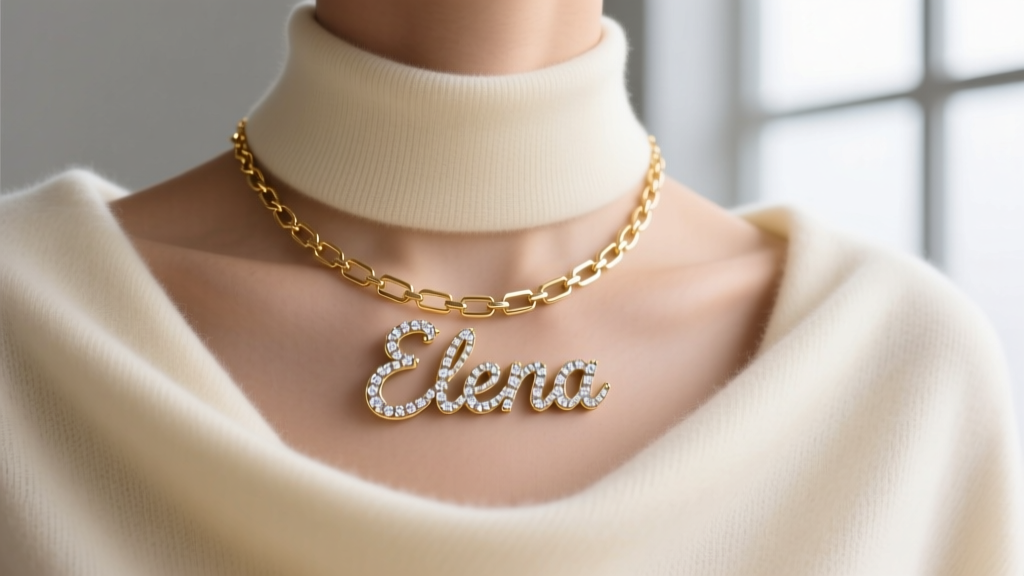
The styling paradigm for 2026 favors intentional layering and contrast. Rather than wearing a diamond nameplate in isolation, contemporary stylists recommend pairing it with varying chain textures. A 14k yellow gold name in diamonds necklace featuring a bold serif font creates a striking visual anchor when layered with a 20-inch oxidized silver rope chain and a minimal 16-inch gold herringbone choker. For formal or professional environments, the 'hidden luxury' approach prevails: a petite, 12-point font nameplate set in platinum, worn solo against a dark silk blouse or a structured cashmere turtleneck, allowing the scintillation of the full-cut melee to catch ambient light without overpowering the silhouette. By prioritizing typographic uniqueness, structural engineering, and premium melee specifications, your custom nameplate transcends fleeting trends to become a permanent, deeply personal fixture in your fine jewelry rotation.


