Necklace Belly Trend: Styling Extra-Long Chain Drops
Discover the 2026 necklace belly trend. Learn how to style extra-long lariat and rope chains that graze the midriff with our expert layering guide.


The Anatomy of the Necklace Belly Trend
In the evolving landscape of 2026 fashion, the silhouette of jewelry has shifted dramatically from the restrictive, close-fitting chokers of the early 2020s to an emphasis on elongation and body mapping. At the forefront of this movement is the necklace belly trend. Unlike traditional belly chains that wrap horizontally around the waist, the necklace belly refers to the dramatic, vertical drop of extra-long lariats, rope chains, and opera-length pendants that intentionally graze the midriff, solar plexus, or navel. This trend thrives on the interplay between rigid metallic structures and the soft, kinetic movement of the human torso.
Runway shows and street style icons have embraced this elongated drape as a tool for visual lengthening. By drawing the eye downward past the chest and into the stomach region, a well-placed necklace belly creates a striking vertical line that complements the era's resurgence of low-rise bottoms, midriff-baring cutouts, and sheer mesh layering. However, styling a chain that extends 40 to 50 inches from the nape of the neck requires a deep understanding of chain fluidity, material weight, and skin-contact safety.
Optimal Lengths and Drop Measurements
Achieving the perfect necklace belly drop is not a one-size-fits-all endeavor. The termination point of the chain depends heavily on the wearer's torso length and the specific neckline of the garment. Below is a structural guide to extra-long chain measurements and their corresponding drape locations.
| Chain Length | Drop Location | Best Chain Style | Ideal Neckline Pairing |
|---|---|---|---|
| 36" (Opera) | Lower Sternum / Solar Plexus | Cable or Beaded | Deep V-Neck or Scoop |
| 42" (Rope) | Just Above the Navel | Snake or Liquid Metal | Cutout Dresses, Sheer Mesh |
| 48" (Extra Rope) | Navel / High Waistband | Paperclip or Lariat | Cropped Tees, Open Blazers |
Chain Fluidity and the 'V-Drape'
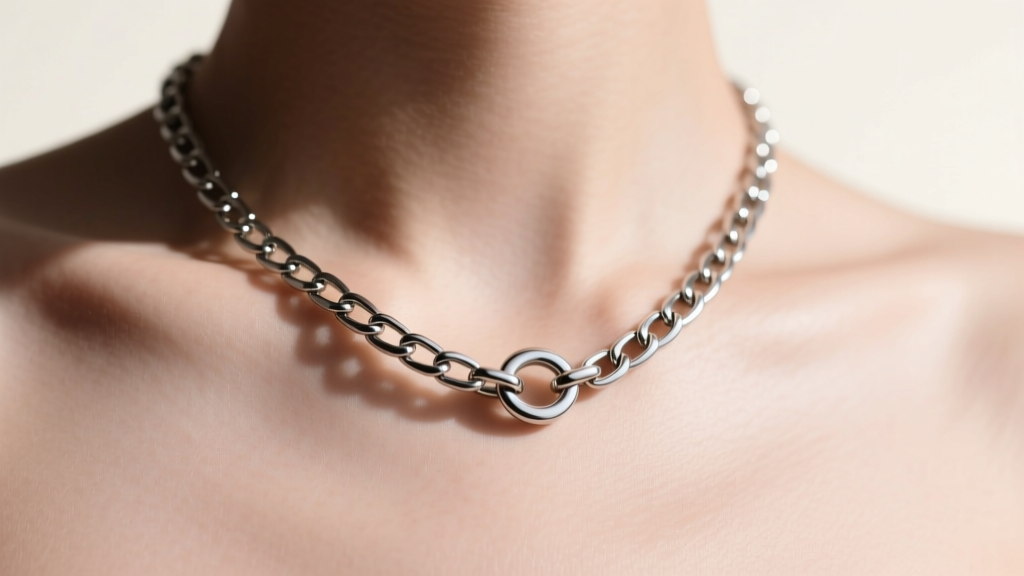
The mechanical behavior of the chain links dictates how the necklace belly rests against the body. Snake chains and liquid metal styles are highly fluid, draping like heavy silk and conforming to the natural curves of the stomach. Conversely, rigid styles like box chains tend to form polygonal, unnatural angles when they hit the midriff, ruining the elongating effect. Paperclip chains offer a modern, industrial aesthetic but require careful styling, as their open, elongated links can easily catch on lace or textured fabrics.
Material Science: Midriff Contact and Skin Safety
When a necklace drops to the belly, it enters a high-friction, high-moisture zone. The midriff has a dense concentration of sebaceous (sweat) glands and is subject to constant friction from waistbands, belts, and posture changes. This makes material selection critical to avoid contact dermatitis and jewelry degradation.
According to the American Academy of Dermatology, nickel is the most common culprit behind allergic contact dermatitis. Many budget-friendly fashion chains use a brass or copper base plated with thin layers of gold or silver. When the plating wears off at the friction points near the stomach, the base metals react with sweat, causing verdigris (green skin) and severe rashes.
Recommended Material Grades for Belly Drops
- ASTM F136 Titanium: The ultimate standard for midriff-contact jewelry. It is entirely nickel-free, highly resistant to sweat corrosion, and exceptionally lightweight. A 48-inch titanium chain weighs significantly less than its steel or gold counterparts, preventing cervical spine strain.
- 316L Surgical Steel: A cost-effective alternative that contains trace amounts of nickel, but generally remains safe for intact skin. However, individuals with hyper-sensitivities should avoid it for prolonged, sweaty midriff contact.
- 14k / 18k Solid Gold: Hypoallergenic and luxurious, but heavy. A 45-inch solid 14k gold rope chain can exceed 120 grams. To mitigate neck strain, look for hollow-tube gold chains or graduated designs that are thicker at the nape and thinner near the belly.
Industry analysts at JCK Online have noted a massive surge in PVD (Physical Vapor Deposition) gold coatings over titanium bases, allowing consumers to achieve the luxury look of a gold necklace belly without the heavy weight or allergy risks associated with traditional plated brass.
3 Frameworks for Styling the Necklace Belly
- The Cutout Accent: Pair a 42-inch liquid silver snake chain with a dress featuring strategic midriff cutouts. The chain should pass directly through the negative space of the cutout, acting as a metallic bridge that highlights the skin without resting directly on it, minimizing friction.
- The Double-Wrap Lariat: Take a 60-inch chain, wrap it once around the neck to create a faux-choker effect, and let the remaining length drop straight down the sternum to the belly. This anchors the jewelry, preventing the 'pendulum effect' while maintaining the dramatic vertical line.
- The Asymmetrical Drape: Pin or knot the chain slightly off-center at the solar plexus, allowing the 'belly' of the necklace to cascade diagonally across the stomach. This breaks the symmetry of high-waisted trousers and adds an avant-garde, editorial edge to minimalist outfits.

Troubleshooting: Snags, Snaps, and the Pendulum Effect
Extra-long necklaces introduce unique mechanical challenges. The most common issue is the pendulum effect, where a heavy pendant or thick chain link swings wildly during walking, potentially striking belt buckles or scratching the navel. To solve this, opt for lariats with a 'slider' or 'tension clasp' at the nape of the neck, allowing you to dynamically adjust the drop length based on your activity level.
Another frequent failure mode is waistband snagging. If the bottom loop of your necklace belly gets tucked into high-waisted denim or caught under a tight belt, the sudden tension can warp open links or snap delicate clasps. The Golden Rule: The termination point of your necklace should always sit at least one inch above the waistband button, or be intentionally layered beneath a sheer top but completely clear of any restrictive garments.
Final Thoughts on the Elongated Silhouette
The necklace belly trend represents a mature, sophisticated approach to body jewelry. It moves beyond simple adornment and treats the chain as an active participant in the garment's architecture. By prioritizing fluid chain styles like snake or liquid links, investing in hypoallergenic materials like ASTM F136 titanium, and respecting the mechanical realities of extra-long drops, you can master this striking 2026 silhouette with confidence and comfort.


