Choosing a Necklace for Crew Neck Dress: Material Guide
Discover the best necklace for crew neck dress styles. Compare metal weights, chain flexibility, and material properties for perfect collarbone drape.


The crew neck dress is a cornerstone of modern wardrobe styling, offering a clean, high, and rounded neckline that frames the face. However, this same architectural simplicity makes it notoriously difficult to accessorize. When selecting the ideal necklace for crew neck dress ensembles, the primary challenge is not just aesthetic—it is deeply rooted in material science. The interaction between metal alloys, chain link geometry, and fabric friction dictates whether a necklace will lay elegantly or bunch awkwardly against the collarbone.
In this comprehensive guide, we analyze the physical properties of jewelry materials to help you engineer the perfect pairing for your crew necklines, moving beyond basic style advice into the mechanics of drape, weight, and surface friction.
The Geometry of Clearance: Why Length and Material Intersect
A standard crew neck sits precisely at the base of the neck, typically 0.5 to 1 inch below the collarbone. This creates a strict binary for necklace lengths: you must either sit entirely above the fabric hem or drop significantly below the bodice. The 'danger zone' is the 16 to 20-inch range, where chains tangle with the dress seam, creating a cluttered silhouette.
- The Collar/Choker (14–15 inches): Sits above the crew neck hem. Requires rigid or semi-rigid materials to maintain a perfect circle without dipping into the fabric.
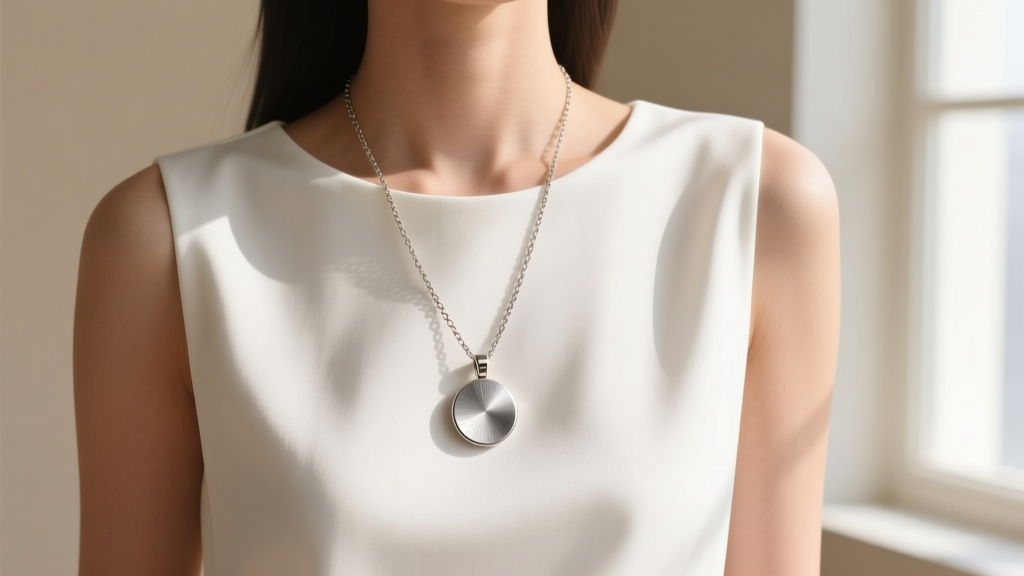
- The Long Pendant (24–30 inches): Drops below the bust line. Requires lightweight materials to prevent the chain from pulling the back of the dress neckline upward.
Material Weight and Drape: The Specific Gravity Factor
When wearing a long pendant over a crew neck dress, the specific gravity (density) of your chosen metal directly impacts the garment's drape. Heavy metals pull on the delicate nape of the neck, causing the dress fabric to pucker and ride up.
High-Density Metals: Gold and Platinum
Pure 24k gold has a specific gravity of 19.3 g/cm³, while 18k gold sits around 15.6 g/cm³. A solid 50mm pendant in 18k gold can easily exceed 18 grams. On a delicate silk or rayon crew neck dress, this concentrated weight will distort the fabric's natural fall. If you prefer high-density metals, opt for hollow-cast pendants or electroformed designs, which reduce the physical weight by up to 70% while maintaining visual volume.
Low-Density Alternatives: Titanium and Niobium
Titanium (specifically the Ti-6Al-4V aerospace alloy) boasts a specific gravity of just 4.43 g/cm³. A statement pendant machined from Grade 5 titanium will weigh roughly a quarter of its gold counterpart. According to metallurgical data published by the World Gold Council and independent jewelry engineering labs, titanium's strength-to-weight ratio makes it the superior choice for oversized, avant-garde pendants that need to rest lightly against a cotton or synthetic crew neck without dragging the garment.
Surface Friction: Metal Finishes vs. Fabric Textures
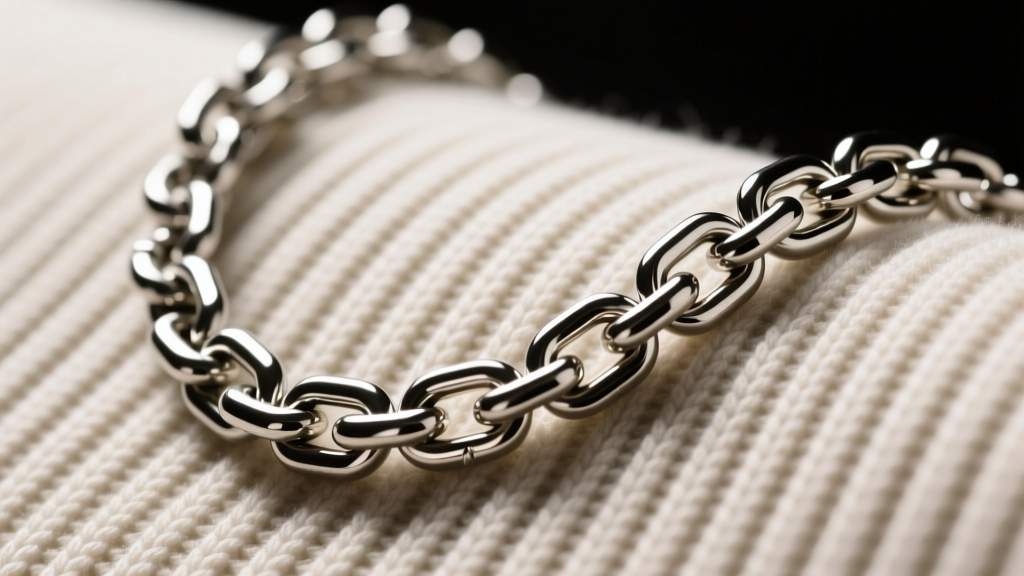
The most overlooked variable in jewelry styling is the coefficient of friction between the metal's surface finish and the dress fabric. A crew neck dress in a ribbed knit or textured bouclé will actively 'grab' certain chain types, causing the necklace to shift off-center throughout the day.
High-Polish and PVD-Coated Metals
Mirror-polished 316L surgical stainless steel, rhodium-plated sterling silver, and high-karat gold offer the lowest surface friction. These materials glide effortlessly over matte cottons and synthetic blends. Furthermore, Physical Vapor Deposition (PVD) coatings applied to stainless steel not only provide a 14k gold aesthetic but also create an ultra-smooth, ceramic-like surface that resists micro-snags.
Matte, Oxidized, and Hammered Finishes
While oxidized sterling silver and brushed brass offer a beautiful, moody contrast to a crisp white crew neck, their micro-textured surfaces act like Velcro against knitwear. If you are wearing a textured crew neck dress, avoid hammered or oxidized metals entirely. Reserve these high-friction materials for smooth, high-thread-count fabrics like silk charmeuse or fine merino wool.
Expert Tip: If you must wear a high-friction oxidized chain with a knit crew neck, apply a microscopic layer of clear, jewelry-safe Renaissance Wax to the back of the chain links. This fills the microscopic pores of the oxidation, reducing fabric drag without altering the visual patina.
Chain Link Profiles: Flexibility vs. Rigidity
The structural geometry of the chain dictates how it behaves around the tight curve of a crew neckline.
| Chain Profile | Material Flexibility | Friction Risk | Best Crew Neck Application |
|---|---|---|---|
| Snake Chain | Semi-Rigid | Very Low | 15-inch collars sitting above the hem; sleek modern looks. |
| Herringbone | Highly Flexible | High (Snags easily) | Avoid with knits; best for 24-inch drops over smooth silk. |
| Cable / Rolo | Moderate | Moderate | Everyday wear; requires a high-polish finish to prevent catching. |
| Box Chain | Rigid / Geometric | Low | Long pendants (28+ inches); provides structural support for heavy stones. |
As noted in manufacturing guidelines by the Silver Institute, the sharp interior edges of poorly soldered cable chains can easily catch and pull the threads of a delicate cotton crew neck. Always inspect the interior links of your chain with a jeweler's loupe; if the solder joints are rough, the chain is unsuitable for tight-neckline garments.
Chemical Reactions: Sweat, Tarnish, and the Crew Neck Microclimate
A crew neck dress sits flush against the skin at the base of the throat, an area highly prone to perspiration. This creates a humid microclimate that accelerates chemical reactions in reactive metals.
The Copper Problem in Sterling Silver and Brass
Standard 925 sterling silver contains 7.5% copper. When trapped against the skin by a tight crew neck collar, the copper reacts with sweat and oxygen, forming copper chloride—which manifests as a green or black stain on both your skin and the dress's inner collar. Similarly, raw brass (an alloy of copper and zinc) will rapidly oxidize in this environment.
Inert Solutions for High-Humidity Styling
If you are attending an outdoor event or dancing, your necklace for crew neck dress styling must utilize inert metals. Platinum, palladium, and 316L stainless steel are virtually impervious to sweat-induced tarnish. For silver lovers, upgrading to Argentium Silver (which replaces some copper with germanium) provides a highly tarnish-resistant alternative that maintains the bright white luster of traditional silver without the copper-induced staining.
Practical Troubleshooting: Clasp Mechanics and Fabric Preservation
The clasp is the heaviest and most angular component of any necklace. On a 14-inch collar worn above a crew neck, the clasp sits at the nape of the neck. A bulky lobster clasp can rub against the dress fabric, causing pilling over time.
- For 14-15 inch Collars: Swap standard lobster clasps for a sleek, high-polish magnetic clasp or a hidden barrel clasp. These offer a continuous, smooth profile that won't abrade the back of your dress collar.
- For 24+ inch Pendants: Ensure the jump ring connecting the pendant to the chain is soldered shut. The constant swinging motion of a long pendant against a crew neck bodice will eventually pry open an unsoldered jump ring, leading to lost jewelry.
Final Verdict: Engineering the Perfect Pairing
Finding the right necklace for crew neck dress outfits requires treating your jewelry as an extension of the garment's architecture. For a modern, structured look above the neckline, choose a 14-inch high-polish stainless steel or rhodium-plated snake chain that mirrors the clean curve of the collar. For a dramatic, elongating effect, opt for a 28-inch Grade 5 titanium or hollow-cast gold pendant on a low-friction box chain, allowing the piece to glide over the bodice without distorting the fabric. By respecting the specific gravity, surface friction, and chemical properties of your materials, you elevate your styling from a guessing game to an exact science.


