How Long Should My Necklace Be? The Technical Fit Guide
Discover exactly how long your necklace should be based on neck anatomy, pendant weight physics, and precise neckline mapping for a flawless drape.

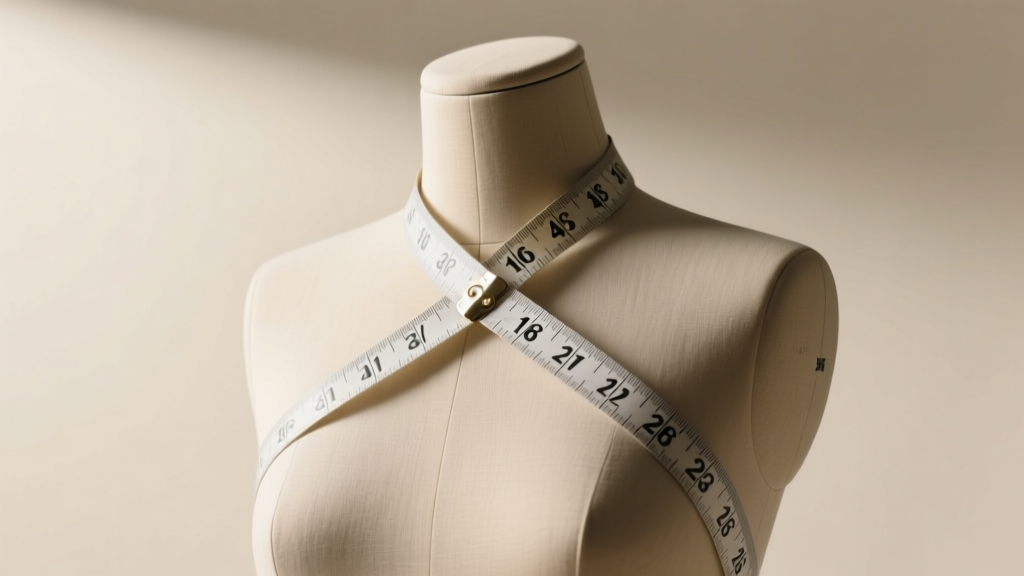
When determining how long your necklace should be, relying on industry-standard labels like 'princess' or 'matinee' is a fundamental error. Standard sizing assumes a uniform neck circumference of 14 inches and ignores the physics of drape, pendant weight, and individual skeletal anatomy. As jewelry designers and gemologists have noted in recent technical analyses, a true custom fit requires calculating the parabolic drop of the chain relative to the wearer's C7 vertebra and suprasternal notch. This expert guide breaks down the exact mathematics, material tensions, and anatomical variables you need to achieve a flawless, engineered fit in 2026.
The Anatomy of a Drop: Beyond Standard Sizing
To understand necklace length, we must first define the 'drop'—the vertical distance from the base of the neck to the lowest point of the chain. The human neck is not a perfect cylinder; it slopes forward. The prominent bone at the base of your neck is the C7 vertebra. Standard chains are measured end-to-end, including the clasp. Therefore, an 18-inch chain wrapped around a 15-inch neck does not yield a 3-inch drop. Because the chain must travel around the nape and down the sloped front of the throat, the actual visual drop is closer to 1.25 inches.
According to anatomical data referenced by the Gemological Institute of America (GIA), variations in neck circumference drastically alter where a chain rests. A 16-inch choker on a wearer with a 13-inch neck will sit loosely at the collarbone. On a wearer with a 15.5-inch neck, that exact same 16-inch chain will act as a tight, restrictive collar, sitting high on the thyroid cartilage. To find your baseline, measure your neck circumference precisely at the C7 vertebra using a flexible, non-stretch tailor's tape, then add your desired front-facing drop to calculate the minimum required chain length.
The Physics of Drape: How Pendant Weight Alters Length
A chain hanging under its own weight forms a mathematical curve known as a catenary. However, introducing a pendant fundamentally alters this geometry, shifting the curve into a localized V-shape due to concentrated tensile stress. This is where many buyers miscalculate how long their necklace should be.
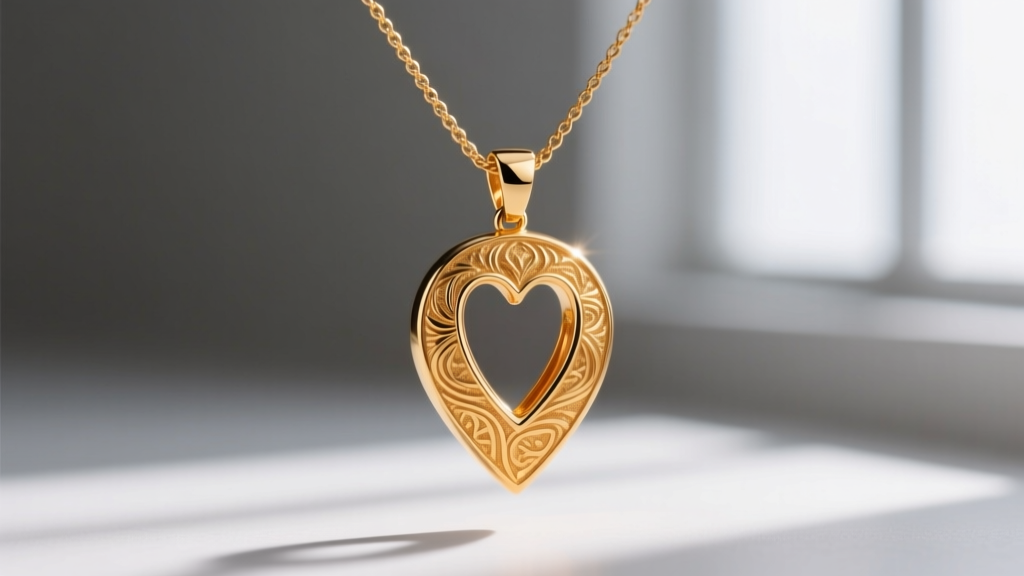
If you attach a 15-gram solid gold pendant to an 18-inch, 1.2mm cable chain, the weight will pull the chain downward, effectively increasing the visual drop by 0.5 to 1.5 inches depending on the chain's flexibility. Conversely, a rigid chain like a 3mm herringbone or a thick Figaro will resist this downward pull, maintaining a wider, shallower arc. Furthermore, the bail (the loop connecting the pendant to the chain) adds hidden length. A standard hidden bail adds 4mm to the drop, while a decorative oversized bail can add up to 12mm. When selecting a pendant, always subtract the bail's vertical length from your target drop to ensure the gemstone or focal point rests exactly where you intend.
Technical Measurement Matrix: Necklines & Chain Gauges
Pairing the correct chain gauge with the appropriate length and neckline is critical for both aesthetics and structural integrity. A chain that is too thin for its length will tangle and snap; a chain that is too thick will look rigid and fail to drape properly over fabric. Below is a technical matrix based on current 2026 styling frameworks and structural jewelry standards.
| Target Length | Anatomical Rest Point | Ideal Gauge (Thickness) | Best Neckline Pairing | Max Pendant Weight |
|---|---|---|---|---|
| 14 - 16 Inches | Base of throat / Clavicle | 0.9mm - 1.5mm | Off-shoulder, Boatneck, Scoop | 5 grams |
| 18 - 20 Inches | Sternum / Upper chest | 1.2mm - 2.5mm | V-neck, Button-down, Crew | 15 grams |
| 22 - 24 Inches | Mid-chest / Solar plexus | 2.0mm - 4.0mm | Turtleneck, High-collar, Blazer | 30+ grams |
| 28 - 32 Inches | Lower chest / Diaphragm | 3.0mm - 6.0mm | Maxi dresses, Deep-plunge | 45+ grams |
For comprehensive layering strategies and precise visual guides, Brilliant Earth's Necklace Length Guide offers excellent visual mapping of these rest points against various garment cuts.
Calculating Your Personal Baseline: The String Test
Do not use a stiff fiberglass measuring tape to determine your ideal necklace length; it will bridge the gaps between your collarbones and yield inaccurate, overly short measurements. Instead, use the 'String Test' for precise, real-world mapping.

Cut a piece of non-stretch cotton string or dental floss. Stand in front of a mirror wearing the exact garment you intend to pair with the necklace. Drape the string around your neck, adjusting it until the bottom loop rests at your desired focal point (e.g., the hollow of the suprasternal notch, or two inches below the collarbone). Pinch the string at the nape of your neck, remove it carefully, and lay it flat against a rigid metal ruler. This measurement is your true anatomical baseline. If you plan to add a pendant, subtract the pendant's total vertical drop (including the bail) from this string measurement to find the exact chain length you need to commission or purchase.
Hardware & Tension: Clasp Types and Chain Stretch
The hardware used to secure your necklace contributes to its total length and long-term structural integrity. Many consumers forget that clasps and jump rings add measurable millimeters to the final drape.
- Spring Ring Clasps: Typically 5mm to 7mm. They add negligible length but are prone to spring failure under heavy tension.
- Lobster Clasps: Standard sizes range from 10mm to 15mm. Combined with the soldered jump ring on the opposite end, a 12mm lobster clasp adds approximately 14mm (over half an inch) to the stated chain length.
- Extender Chains: Often feature a 2-inch (50mm) tail. While useful for adjustability, the dangling tail can catch on fine knits and disrupt the visual symmetry of a delicate pendant.
Expert Warning on Chain Stretch: Fine link chains, particularly snake chains and herringbone styles, are highly susceptible to tensile deformation. Under the constant pull of a heavy pendant, a 20-inch snake chain can permanently stretch by 2% to 3% over a year of daily wear, altering its engineered fit. For heavy pendants, always opt for structurally rigid chains like box, curb, or rope links, which resist elongation.
Troubleshooting Common Fit Failures
Even with precise measurements, physical dynamics can cause fit issues. Here is how to troubleshoot the most common technical failures:
The Clasp Migration Issue
If your clasp constantly slides to the front of your neck, your chain is too light relative to the clasp's weight, or the chain is too short, creating excessive tension that forces the heaviest component (the clasp) to the lowest gravitational point. Solution: Upgrade to a heavier chain gauge, or have a jeweler add a 2mm silicone friction disc to the jump ring to increase drag against the skin.
The Flipping Pendant
Pendants that constantly flip backward, hiding the gemstone, suffer from a bail-to-chain mismatch. If the bail's inner diameter is too large for the chain's width, the pendant lacks a stable pivot axis. Solution: Use a chain with a wider profile (like a 2.5mm flattened curb) that fills the bail, or have a jeweler solder a small sizing ring inside the bail to restrict lateral movement.
The Choking Sensation
A necklace that feels comfortable while standing but restricts breathing when sitting is a victim of postural neck expansion. The human neck circumference expands by up to 0.5 inches when the head is tilted forward or when sitting slouched. Solution: Always perform your final string test while seated in your typical working posture, ensuring a minimum 0.75-inch clearance between the chain and your thyroid cartilage.


