How to Clean and Care for a Necklace of Harmonia Replica
Discover expert cleaning and maintenance tips for your Necklace of Harmonia replica. Learn how to protect gold, enamel, and cabochon stones from damage.

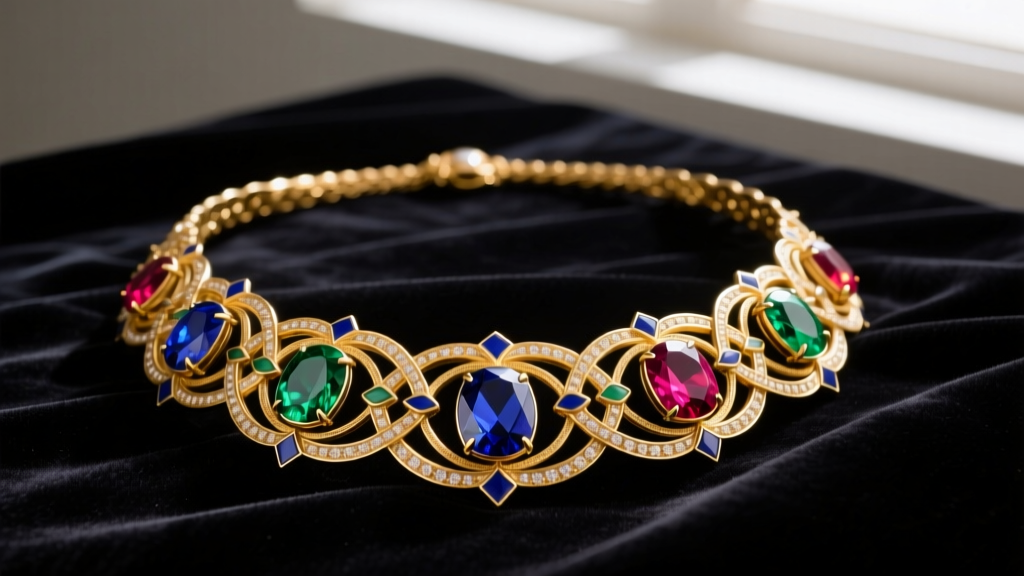
The Myth, The Metal, and The Maintenance
In Greek mythology, the Necklace of Harmonia was a masterpiece forged by Hephaestus, cursed to bring disaster to its wearers. Today, modern bench jewelers and historical reproduction artisans craft breathtaking replicas of this legendary artifact. These Hellenistic-inspired masterpieces typically feature intricate gold granulation, vitreous enamel inlays, and cabochon-cut semi-precious stones like lapis lazuli, carnelian, and garnet. While you do not have to worry about the mythological curse of Thebes, improper cleaning methods can certainly curse your investment, leading to shattered enamel, etched stones, and ruined patinas.
Caring for a multi-material historical replica requires a deep understanding of gemological hardness scales, metallurgical reactivity, and the fragility of glass-based enamels. This comprehensive guide provides actionable, bench-jeweler-approved protocols to maintain the structural integrity and visual brilliance of your Necklace of Harmonia replica.
Material Breakdown: Understanding Your Replica's Anatomy
Before applying any cleaning solution, you must identify the exact materials used in your specific replica. High-end museum-quality reproductions generally rely on the following components, each with distinct vulnerabilities:
- The Base Metal: Usually 18k to 22k yellow gold, or high-karat gold plating over sterling silver or bronze. High-karat gold is highly resistant to tarnish but easily scratched due to its low Vickers hardness.
- Vitreous Enamel: Essentially fused glass (silica). While it rates around 5.5 to 7 on the Mohs scale, it is highly brittle and susceptible to thermal shock and chemical etching from harsh alkalis.
- Cabochon Gemstones: Replicas frequently use porous or treated stones. Lapis lazuli (Mohs 5-6) is highly sensitive to acids and water absorption. Carnelian (Mohs 6.5-7) and garnet (Mohs 6.5-7.5) are more durable but can still suffer from abrasive scratching.
The Expert Cleaning Protocol: Step-by-Step
Forget commercial jewelry dips and ultrasonic machines. Cleaning a complex, multi-material Hellenistic necklace requires a gentle, methodical approach that prioritizes the most fragile component—in this case, the vitreous enamel and porous lapis lazuli.
Step 1: Dry Particulate Removal
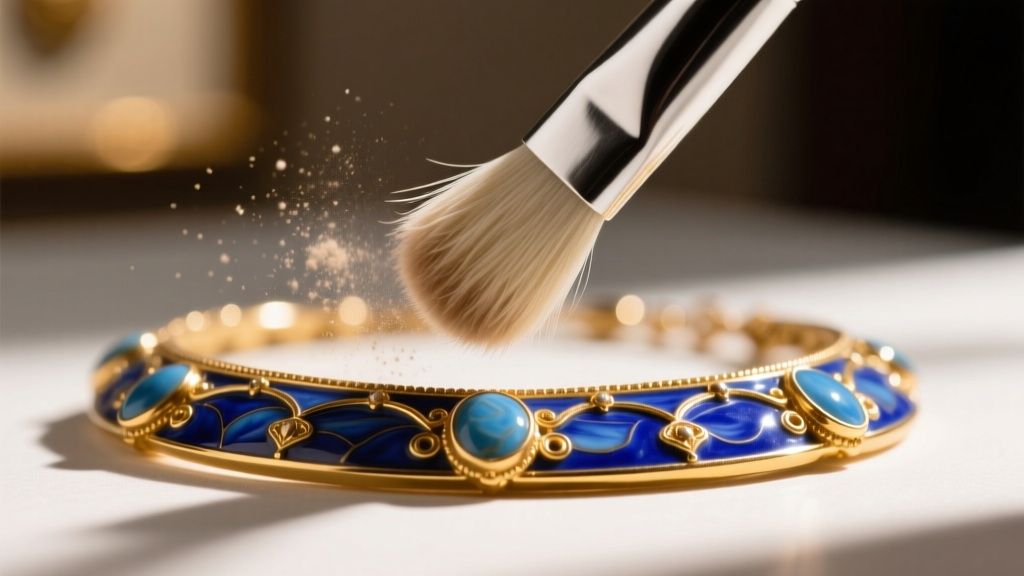
Never introduce water to a dusty piece of jewelry. Dust contains microscopic quartz particles (Mohs 7), which will grind into the gold and enamel when rubbed. Use a clean, soft goat-hair makeup brush to gently sweep away loose particulate matter from the filigree work and stone bezels.
Step 2: Targeted Aqueous Cleaning
If the gold components require degreasing from skin oils and lotions, prepare a lukewarm solution of distilled water and a few drops of pH-neutral, fragrance-free dish soap (pH 7.0). Do not use hot water, as thermal expansion can cause the vitreous enamel to crack or pop out of its gold bezels.
Dip a micro-swab or a very soft baby toothbrush into the solution and gently agitate only the gold sections. Avoid scrubbing the lapis lazuli or the enamel borders. According to the Gemological Institute of America (GIA), lapis lazuli is a porous rock that can absorb liquids, leading to internal staining or the degradation of any waxy surface treatments applied by the lapidary.
Step 3: Rinsing and Controlled Drying
Rinse the gold areas briefly under a gentle stream of lukewarm distilled water. Tap water contains chlorine and dissolved minerals that can leave spotting on high-karat gold and degrade silver cores. Immediately pat the piece dry with a lint-free microfiber cloth. Use a hair dryer on the 'cool' setting to blow moisture out of the intricate granulation work and beneath the stone settings.
The 'Cursed' Mistakes: What to Absolutely Avoid
The fastest way to destroy a historical replica is by treating it like modern, solid-diamond jewelry. Avoid these catastrophic errors:
- Ultrasonic Cleaners: These machines use high-frequency sound waves (typically 40kHz) to create cavitation bubbles. The micro-implosions will instantly shatter vitreous enamel and can fracture internal inclusions in garnets. The Victoria and Albert Museum explicitly warns against using ultrasonic or steam cleaners on historical or enameled artifacts.
- Ammonia and Commercial Dips: Ammonia will aggressively strip the oxidized patina that artisans deliberately apply to the recesses of the filigree to create contrast. Furthermore, ammonia will etch the surface of lapis lazuli and carnelian, leaving a dull, chalky finish.
- Polishing Cloths with Compounds: Jeweler's rouge or treated polishing cloths contain mild abrasives. Dragging these across the piece will result in micro-scratches on the enamel and can wear through gold plating on less expensive replicas.
Material-Specific Care Matrix
| Material Component | Mohs Hardness | Primary Vulnerability | Approved Cleaning Agent |
|---|---|---|---|
| 22k Gold Filigree | 2.5 - 3.0 | Scratching, bending, loss of patina | pH-neutral soap, distilled water |
| Vitreous Enamel | 5.5 - 7.0 (Brittle) | Thermal shock, impact, alkali etching | Dry dusting only; avoid liquids |
| Lapis Lazuli Cabochon | 5.0 - 6.0 | Porosity, acid sensitivity, water absorption | Dry microfiber cloth only |
| Carnelian / Garnet | 6.5 - 7.5 | Hard impacts, abrasive scratching | Damp micro-swab, mild soap |
Storage and Environmental Controls
How you store your Necklace of Harmonia replica is just as critical as how you clean it. Hellenistic-style necklaces are often heavy and feature rigid, articulated segments that can kink or snap if hung improperly.
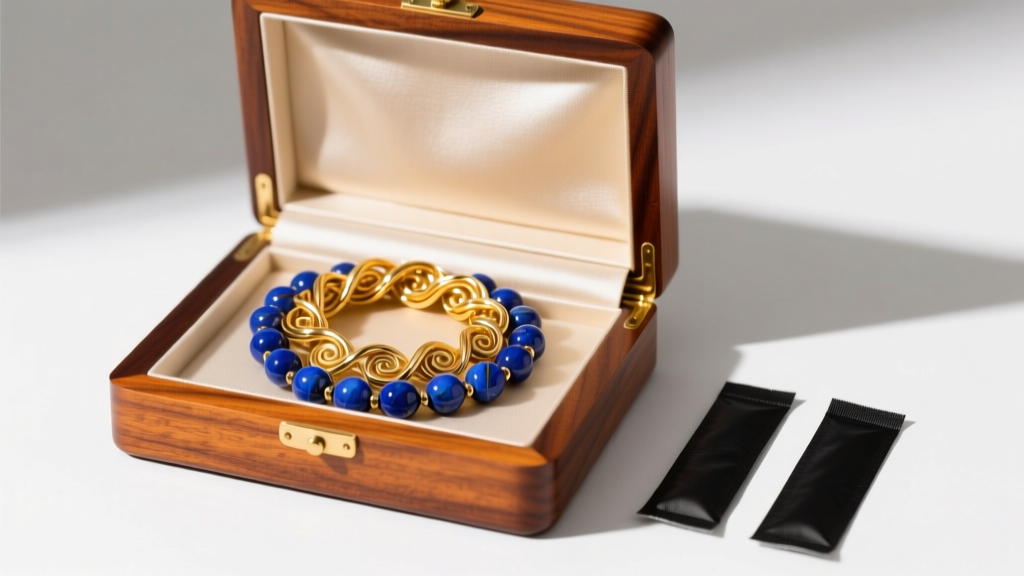
- Flat Storage: Always store the necklace flat in a lined mahogany or archival-quality cardboard box. Hanging it on a velvet bust or hook places continuous tension on the solder joints of the chain and the delicate wirework of the pendants.
- Humidity Control: If your replica features a sterling silver or bronze core beneath the gold plating, humidity is your enemy. Include 3M anti-tarnish strips or activated charcoal sachets in the storage box to absorb ambient sulfur compounds. Do not use silica gel packets directly touching the lapis lazuli, as extreme desiccation can sometimes cause treated stones to crack.
- Individual Compartmentalization: The gold granulation and enamel work must not come into contact with other jewelry pieces. Store the necklace in its own dedicated velvet pouch or a separate compartment to prevent friction damage.
When to Seek Professional Bench Maintenance
Even with meticulous home care, a complex replica requires professional attention every three to five years. You should consult a master bench jeweler who specializes in historical reproductions or antique jewelry for the following services:
- Bezel Tightening: Over time, the soft gold bezels holding the cabochon stones and enamel plaques can relax or pull away. A jeweler can carefully burnish the metal back into place using agate-tipped tools that will not scratch the gold.
- Enamel Restoration: If a segment of vitreous enamel chips or cracks, do not attempt to fill it with resin or glue. A specialist can carefully remove the damaged glass and re-fire a matching enamel patch, preserving the historical integrity of the piece.
- Structural Soldering: If the articulated links of the necklace become stiff or a solder joint fails, laser welding is required. Traditional torch soldering poses too high a risk of melting the adjacent enamel or thermally shocking the gemstones.
Conclusion
Owning a Necklace of Harmonia replica is a tribute to the golden age of Hellenistic craftsmanship. By respecting the distinct physical properties of high-karat gold, vitreous enamel, and porous semi-precious stones, you can ensure your piece remains as captivating as the myth that inspired it. Abandon the harsh chemicals and ultrasonic machines of modern jewelry care, and embrace the gentle, methodical conservation techniques used by museum curators. Your replica will survive the ages, entirely free of any curse.


