Mastering the Necklace Separator: Technical Layering Guide
Discover the technical mechanics of necklace separator hardware. Learn about gauge sizes, material grades, and tension distribution for layered strands.

The Physics of Entanglement: Why Layered Chains Tangle
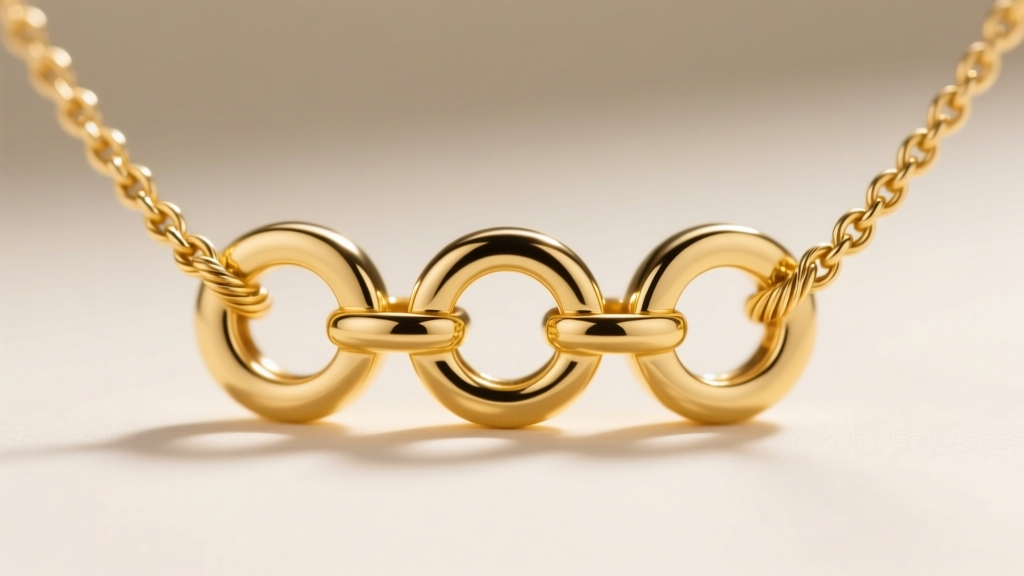
In the realm of advanced jewelry design and daily wear, the necklace separator is far more than a decorative finding; it is a critical structural component engineered to mitigate the physics of entanglement. When multiple chains of similar length and link geometry are worn together, they naturally succumb to rotational inertia and pendulum frequency synchronization. This phenomenon, often referred to by bench jewelers as the 'helix effect,' causes adjacent strands to twist around a central axis, resulting in frustrating knots and accelerated metal fatigue.
By introducing a precisely engineered necklace separator into the design architecture, you disrupt this rotational symmetry. The separator forces the strands into distinct, parallel planes of movement. However, achieving this requires a deep understanding of tension distribution, link geometry, and metallurgical hardness. A poorly designed separator will not only fail to prevent tangling but will also introduce asymmetric stress points that can snap delicate jump rings or warp the clasp mechanism over time.
Metallurgical Considerations and Vickers Hardness
The efficacy of a necklace separator relies heavily on the metallurgical properties of both the finding itself and the jump rings used to attach the chains. According to data from the Gemological Institute of America (GIA), the alloy composition of precious metals directly dictates their tensile strength and resistance to deformation.
Comparing Precious Metal Alloys
When selecting a separator for heavy, multi-strand pendants or layered chains, you must consider the Vickers Hardness (HV) scale. A higher HV indicates greater resistance to scratching and, more importantly, structural deformation under load.
- 14k Yellow Gold (approx. 135 HV): The industry standard for durable findings. The copper and zinc alloy mix provides excellent spring-back tension, making it ideal for the jump rings connecting to the separator.
- 18k Yellow Gold (approx. 115 HV): Softer and more malleable. While visually superior for high-end pieces, 18k gold separators require thicker gauges (minimum 1.2mm thickness) to prevent the outer loops from pulling open under the weight of multiple chains.
- 925 Sterling Silver (approx. 110 HV): Highly affordable but prone to work-hardening and subsequent brittleness if repeatedly stressed. Silver separators should be annealed periodically by a bench jeweler if they are part of a modular, interchangeable layering system.
- Platinum 950 (approx. 120 HV): Despite a moderate HV rating, platinum's high density and lack of 'metal memory' make it incredibly secure. A platinum separator will bend before it breaks, offering superior longevity for heirloom multi-strand designs.
Dimensional Specifications: Hole Gauges and Spacing
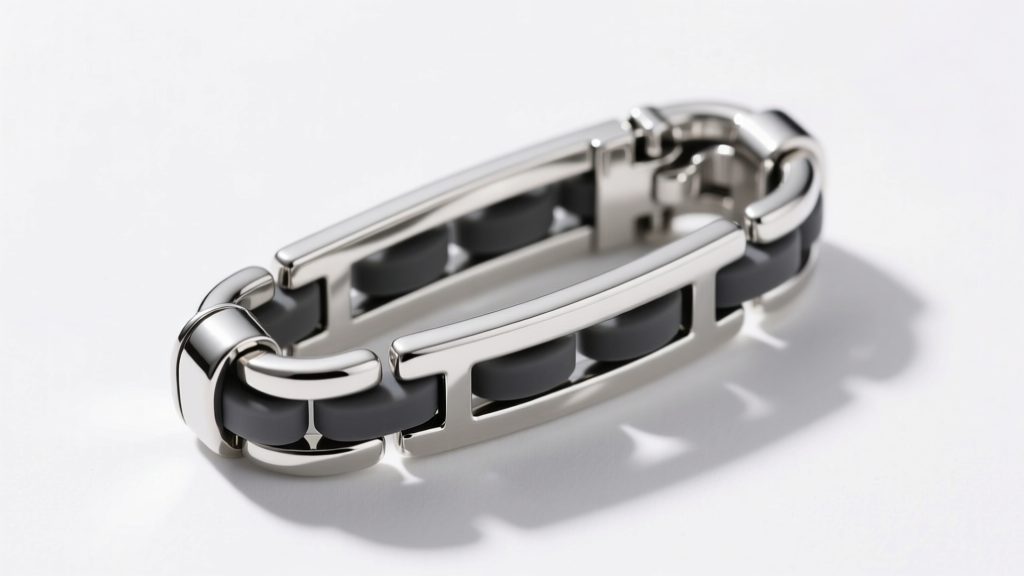
The physical dimensions of the necklace separator dictate its compatibility with various chain styles. The two most critical metrics are the hole diameter and the interstitial spacing (the distance between the holes). If the spacing is too narrow, the jump rings will bind against one another, restricting the chain's natural drape and causing localized friction. If the spacing is too wide, the separator acts as a lever, creating torque on the primary clasp and causing the necklace to flip over during wear.
Below is a technical matrix for matching chain profiles to separator specifications, derived from manufacturing standards utilized by major findings suppliers like Stuller.
| Chain Profile | Max Chain Thickness | Recommended Hole Diameter | Optimal Interstitial Spacing |
|---|---|---|---|
| Cable / Rolo | 0.8mm - 1.2mm | 1.5mm - 2.0mm | 12mm - 15mm |
| Box / Wheat | 1.5mm - 2.5mm | 3.0mm | 18mm - 22mm |
| Rope / Figaro | 3.0mm - 5.0mm | 4.5mm - 5.0mm | 25mm+ |
| Snake / Herringbone | 2.0mm - 4.0mm | 3.5mm (Oval) | 20mm (Angled) |
The Geometry of Snake Chain Separators
Notice the specification for Snake and Herringbone chains. These tubular, liquid-like chains do not swivel at the link level; the entire chain rotates as a single unit. Therefore, standard circular holes in a necklace separator will cause the snake chain to kink. For these specific profiles, jewelers must use separators with oval or angled slots that accommodate the flat, ribbon-like drape of the metal, allowing the chain to lay flush against the collarbone without inducing structural torsion.
Manufacturing Methods: Cast vs. Die-Struck
Not all separators are created equal on the factory floor. The manufacturing process fundamentally alters the grain structure of the metal, which in turn dictates the finding's structural integrity.
Bench Jeweler Insight: Never use cast findings for high-tension multi-strand connectors. Always opt for die-struck or machined components to ensure compressed grain structures and eliminate the risk of micro-porosity.
The Porosity Problem in Cast Findings
Lost-wax casting is excellent for intricate, three-dimensional pendant designs, but it is suboptimal for small, high-stress findings like necklace separators. During the cooling phase of the casting process, microscopic gas bubbles can become trapped, resulting in porosity. When a heavy multi-strand necklace pulls against a porous cast separator, the metal can fracture cleanly along these hidden fault lines, resulting in catastrophic failure and the loss of the jewelry piece.
The Superiority of Die-Struck Hardware
Die-striking involves stamping sheet metal under immense pressure (often exceeding 50 tons). This process compresses the molecular grain structure of the metal, aligning it with the shape of the finding. As noted in technical guides by Rio Grande, die-struck findings exhibit significantly higher tensile strength and superior work-hardening characteristics. A die-struck 14k gold necklace separator will withstand years of dynamic loading without warping, making it the mandatory choice for professional jewelers designing custom layered pieces.
Bench Techniques for Seamless Integration
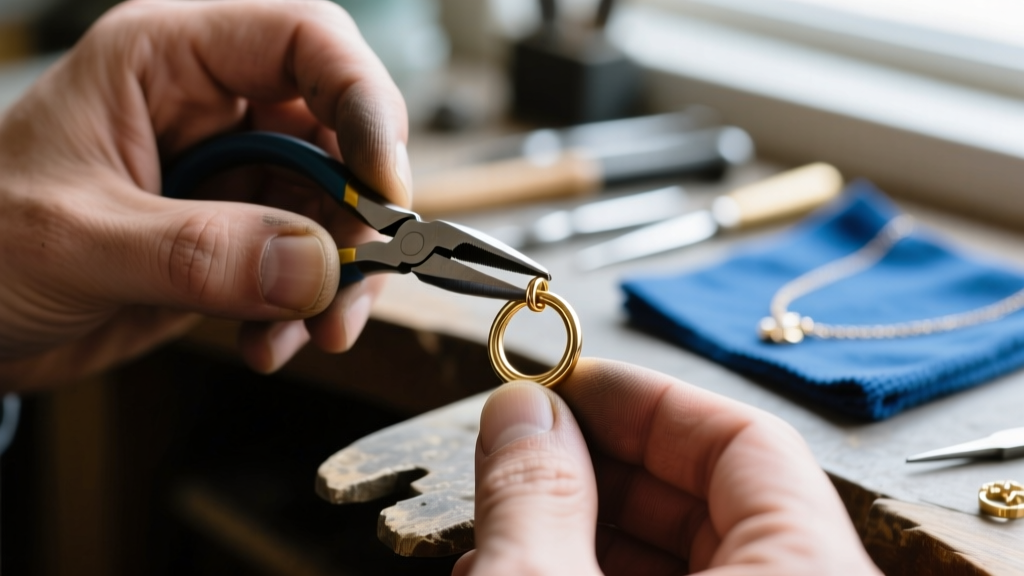
Integrating a necklace separator into a multi-strand design requires precision at the jeweler's bench. The most common point of failure in layered necklaces is not the separator itself, but the jump rings connecting the chains to the separator's loops.
Jump Ring Gauge and Tensile Load
When attaching chains to the separator, avoid standard open jump rings for any strand exceeding 15 grams of total weight. Open jump rings, even when tightly closed with pliers, are susceptible to lateral pulling. Instead, utilize seamless closed jump rings or soldered rings. If you must use open rings, ensure the wire gauge is at least 20% thicker than the chain wire, and always use two pairs of flat-nose pliers to twist the ring open laterally, rather than pulling the ends apart, which distorts the perfect circle and weakens the metal's memory.
Laser Welding vs. Traditional Soldering
For high-end multi-strand pieces featuring delicate chains (such as 0.8mm cable chains), traditional torch soldering carries a high risk of melting the adjacent chain links due to heat transfer. Modern bench jewelers increasingly rely on laser welding to fuse the jump rings directly to the necklace separator. Laser welding delivers a highly focused beam of light that melts the metal in a fraction of a second, creating a joint that is as strong as the parent metal without risking thermal damage to the delicate chain links inches away.
Troubleshooting Common Failure Modes
Even with perfect materials and bench techniques, layered necklaces can present mechanical challenges. Here is how to diagnose and resolve the most common issues associated with necklace separator hardware.
- Clasp Inversion (The Flip): If the necklace constantly flips around, showing the clasp at the front, the center of gravity is misaligned. Solution: Use a separator with an integrated counterweight, or attach a small, dense metal tag (like a 14k gold heart or disc) directly to the ring adjacent to the clasp to anchor it to the nape of the neck.
- Accelerated Patina in Loops: The holes of the separator experience high friction, which can wear away anti-tarnish coatings (like rhodium plating) and expose base metals or raw sterling silver. Solution: Apply a microscopic layer of jewelry-grade synthetic wax to the inner diameter of the separator holes during annual maintenance to reduce friction and inhibit sulfur oxidation.
- Jump Ring Binding: If the chains refuse to drape naturally and instead stand out rigidly, the jump rings are binding against the separator body. Solution: Replace standard round jump rings with oval jump rings. The elongated shape provides an extra 1.5mm of articulation clearance, allowing the chain to pivot freely away from the separator's edge.
Conclusion: Engineering the Perfect Drape
Mastering the use of a necklace separator elevates a jewelry design from a simple assembly of chains to a masterclass in wearable engineering. By respecting the physics of entanglement, selecting the appropriate metallurgical hardness, and adhering to strict dimensional tolerances, jewelers and collectors alike can ensure that their multi-strand and layered necklaces drape flawlessly, resist tangling, and endure the mechanical stresses of daily wear for generations.


