Decoding the Necklace Tribal Aesthetic: Alloys & Gauges
Discover the metallurgy, structural gauges, and sourcing facts behind the necklace tribal aesthetic. Expert guide to alloys, weight, and patina.

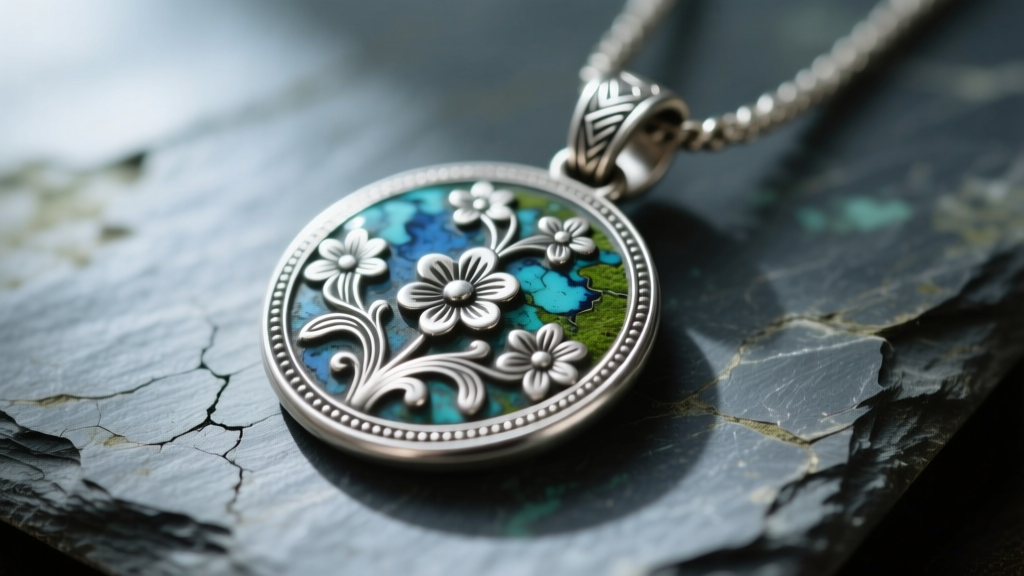
The Metallurgy of 'Tribal' Alloys: What Are You Actually Buying?
The term 'tribal' in the jewelry trade is a broad, often misapplied umbrella used to describe indigenous, nomadic, and ethnic-inspired designs. However, when evaluating a necklace tribal design from a technical perspective, the first step is stripping away the marketing romance to examine the raw metallurgy. The structural integrity, skin safety, and long-term value of these pieces depend entirely on their elemental composition. According to the Gemological Institute of America (GIA), understanding silver alloys is critical, as many pieces labeled as 'silver' in ethnic markets contain zero precious metal.
Mass-produced 'Tibetan Silver' is the most notorious offender. Despite the name, it is typically a copper-nickel-zinc alloy (nickel silver) or a leaded brass. These base metals are prone to rapid galvanic corrosion when exposed to sweat and can cause severe contact dermatitis due to nickel content. Conversely, authentic artisan pieces from specific regions boast distinct, highly specialized metallurgical profiles that dictate how the necklace must be engineered and worn.
| Regional Style | Typical Alloy Composition | Metallurgical Properties & Structural Risks |
|---|---|---|
| Hill Tribe (Thailand) | 950 to 999 Fine Silver | Extremely high purity yields a rich, bright luster but low tensile strength. Thin bails and prongs will permanently deform under heavy pendant loads. |
| Tuareg (Sahara) | 800 to 925 Sterling Silver | Alloyed with copper for rigidity. Excellent for large, geometric repoussé work. Holds structural shape well but requires regular polishing to prevent deep copper oxidation. |
| Nepalese Brass | Copper-Zinc (70/30) | Highly durable and heavy. Prone to surface tarnishing (zinc oxide). Often used as a base for heavy cast pendants. Safe for skin unless leaded solder is used. |
| 'Tibetan' Silver (Mass) | Copper-Nickel-Zinc or Leaded Brass | Zero silver content. High risk of nickel allergies and lead exposure. Brittle over time; jump rings frequently snap under dynamic stress. |
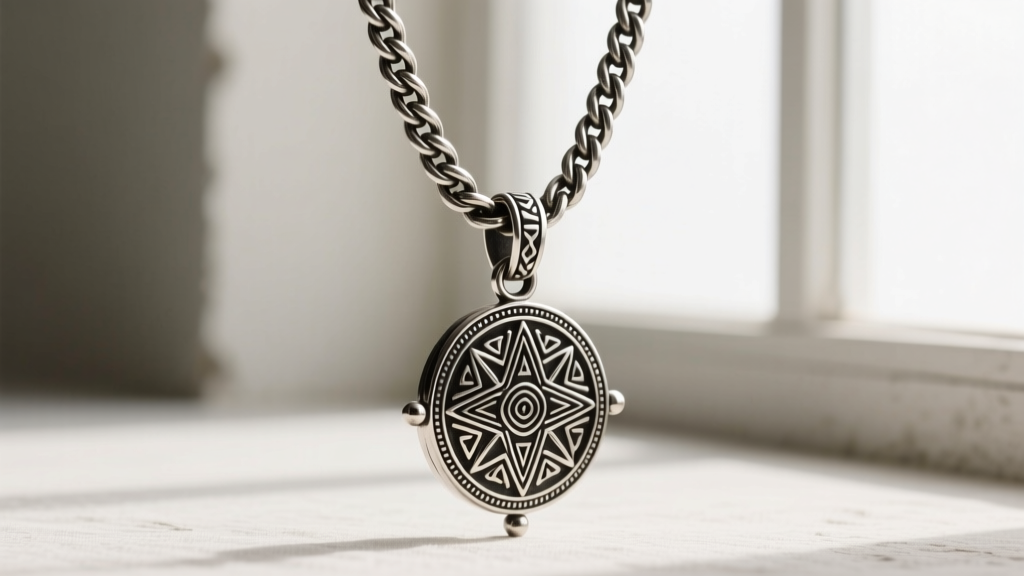
Structural Engineering: Gauges, Bails, and Weight Distribution
Authentic ethnic pendants are notoriously heavy. A solid cast Tuareg cross or a multi-component Karen Hill Tribe collar can easily weigh between 80 and 150 grams. In jewelry engineering, static weight is only half the equation. When a wearer walks, bends, or turns quickly, the dynamic shock load on the chain and clasp can multiply the static weight by a factor of three to five. A 100-gram pendant can exert over 4 Newtons of peak force on the weakest link of the assembly.
Chain vs. Cord: Tensile Strength Requirements
Standard 18-gauge (1.02mm) or 20-gauge (0.81mm) sterling silver cable chains are entirely insufficient for heavy tribal pendants. The yield strength of these gauges is easily exceeded by dynamic shock loads, leading to elongated links and eventual failure. For pendants exceeding 50 grams, you must upgrade the suspension system:
- 14-Gauge (1.6mm) to 12-Gauge (2.0mm) Rolo or Figaro Chains: The thick, interlocking circular links of a rolo chain distribute stress evenly. Ensure all jump rings are soldered shut to prevent them from pulling apart under tension.
- Multi-Strand Leather Cords (4mm - 6mm): For a more rustic aesthetic, braided leather or multiple strands of waxed cotton provide immense tensile strength. However, the end-caps and glue joints are critical failure points. Always use mechanical crimp-ends rather than relying solely on cyanoacrylate (super glue) or epoxy.
- Clasp Upgrades: Standard lobster clasps will fail because the internal spring mechanism cannot withstand the lateral pull of a heavy pendant. Use a heavy-duty toggle clasp or a magnetic neodymium clasp with a reinforced steel housing.
The Bail Friction Problem
One of the most common failure modes in high-purity ethnic jewelry is bail wear-through. If you hang a 999 fine silver Hill Tribe bail onto a work-hardened 925 sterling silver chain, the harder chain acts like a microscopic file. Over months of wear, the friction will literally saw through the softer fine silver bail. To prevent this catastrophic loss, always line the interior of soft fine-silver bails with a hardened steel or titanium insert, or use a thick, work-hardened 925 sterling silver transition ring between the pendant and the chain.
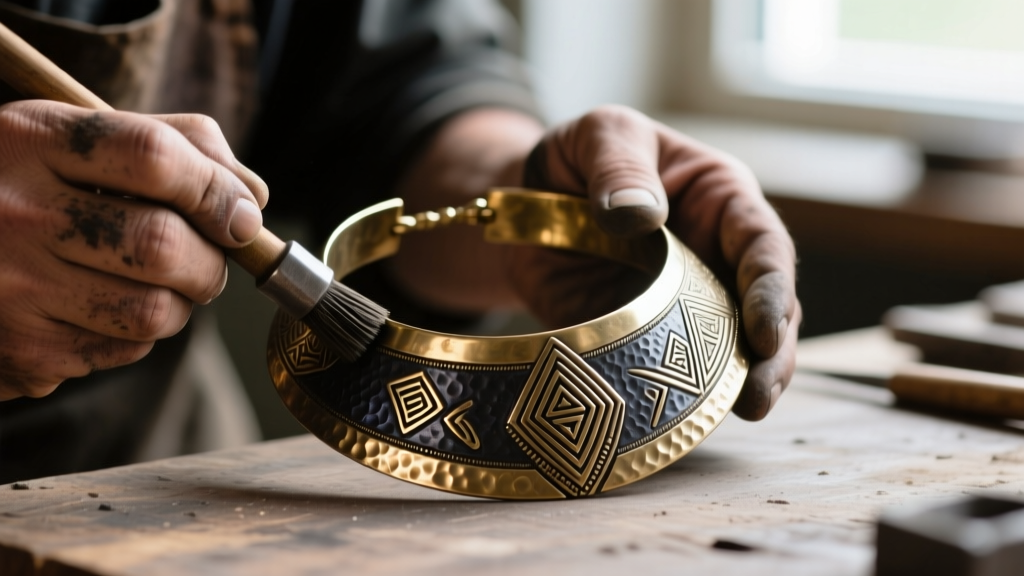
Patina and Surface Finishing Techniques
The deep, moody blackness that defines the necklace tribal aesthetic is rarely a natural occurrence; it is the result of controlled chemical oxidation. Artisans and restorers primarily use Liver of Sulfur (LOS), a mixture of potassium polysulfide and potassium thiosulfate, to induce rapid tarnishing.
Expert Insight: Fine silver (999) lacks the copper required to react with Liver of Sulfur. If a piece marketed as 'Hill Tribe Fine Silver' turns pitch black when exposed to LOS, it is either not 999 fine silver, or the artisan has intentionally used a copper-rich solder paste on the joints to create contrast. True fine silver will only develop a mild yellowish hue when exposed to sulfur compounds.
After the piece is submerged in a heated LOS bath, the entire surface turns a matte, velvety black. The artisan then uses a mild abrasive—traditionally pumice powder mixed with water, or modern fiberglass scratch pens—to polish the high-relief areas. This leaves the black copper sulfide trapped in the deep recesses of the repoussé and stamped patterns, creating a stark, three-dimensional contrast that highlights the intricate geometric and floral motifs typical of nomadic metalwork.
Sourcing, Authentication, and Ethical Considerations
The global demand for ethnic jewelry has led to a flood of machine-stamped, artificially oxidized base metals masquerading as authentic artisan work. True authentication requires looking at the back of the piece. Handcrafted tribal pendants will show slight asymmetries, file marks from hand-finishing, and evidence of traditional soldering techniques (like granulation or wire appliqué). Machine-made knockoffs will have perfectly uniform stamping, laser-sharp edges, and a hollow, lightweight feel.
Furthermore, ethical sourcing is paramount. The Metropolitan Museum of Art and other leading cultural institutions emphasize the importance of provenance and ethical acquisition when dealing with culturally significant artifacts. When purchasing contemporary tribal-style jewelry, seek out certified fair-trade cooperatives that ensure indigenous artisans (such as the Karen silversmiths of Chiang Mai or the Tuareg craftsmen of Agadez) receive direct, equitable compensation for their highly specialized metallurgical skills. By understanding the exact alloys, gauges, and finishing techniques involved, you transition from a passive consumer to an informed custodian of global metalworking heritage.


