Necklaces Layering Trends 2026: Asymmetrical & Mixed-Metal Guide
Master necklaces layering in 2026 with our expert guide on asymmetrical drops, mixed-metal pairings, chain gauges, and anti-tangle mechanics.

The 2026 Shift: From Symmetrical to Asymmetrical Necklaces Layering
The art of necklaces layering has undergone a radical structural evolution as we move through 2026. For the past half-decade, the dominant formula was rigidly symmetrical: a 14-inch choker, a 16-inch princess, and an 18-inch matinee, all spaced exactly two inches apart. While visually tidy, this approach often resulted in a cluttered neckline where pendants competed for the same visual real estate. Today, high jewelry stylists and independent designers are championing deliberate asymmetry and extreme length variances. The modern aesthetic relies on negative space, allowing each chain's unique weave and metal finish to breathe. According to recent trend forecasts highlighted by Vogue, the 'curated chaos' of asymmetrical layering is no longer just a street-style anomaly; it is the definitive standard for both editorial shoots and everyday luxury wear.
The 4-Inch Drop Rule
The most critical technical adjustment in 2026 is the abandonment of the 2-inch gap in favor of the 4-inch drop rule. When you layer a 15-inch collar directly with a 19-inch chain, the friction between the two metals causes them to twist, especially if either features a pendant. By spacing your anchor points at 14 inches, 18 inches, and 24 inches, you create distinct visual tiers. This 4-inch differential ensures that a 20mm pendant on the 18-inch chain swings freely without striking the links of the 14-inch chain above it or the 24-inch chain below it. This spacing is particularly vital when working with heavy gemstone pendants, such as a 5-carat bezel-set amethyst or a solid 14k gold signet, which require kinetic clearance to lay flat against the sternum.

Mixed-Metal Matrix: Pairing Karats and Oxidation States
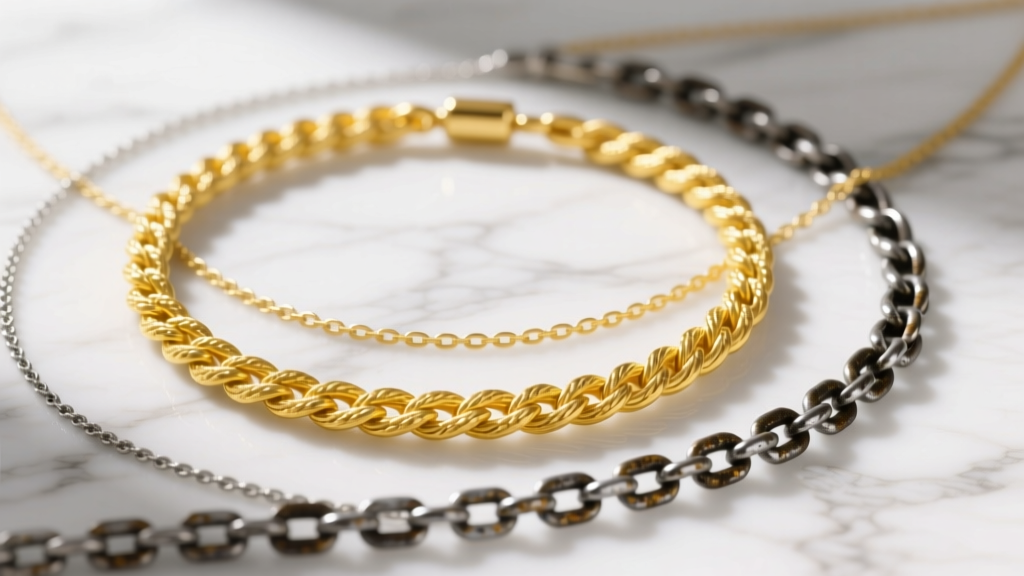
Gone are the days when mixing gold and silver was considered a fashion faux pas. In 2026, mixed-metal necklaces layering is highly technical, focusing on the interplay between high-polish karat gold and intentionally oxidized sterling silver. The key to mastering this is contrast in texture and tone, rather than just color. Pairing a mirror-polished 18k yellow gold (75% pure gold, alloyed with copper and silver for warmth) rope chain with a heavily oxidized 925 sterling silver box chain creates a striking, high-contrast matrix. The blackened crevices of the oxidized silver absorb light, making the reflective surface of the yellow gold appear significantly more luminous.
However, layering disparate metals requires an understanding of basic metallurgy. While galvanic corrosion is a slow process, wearing high-copper alloys (like 14k rose gold) directly against platinum or high-grade silver in high-sweat environments can accelerate surface tarnishing on the lesser noble metal. The Gemological Institute of America (GIA) frequently notes that proper alloy awareness is essential for jewelry longevity. To mitigate this, 2026 layering sets often utilize a 'spacer chain'—a neutral, low-reactivity metal like 950 platinum or titanium—between reactive layers.
| Primary Chain | Secondary Chain | Visual Contrast | Tarnish Risk |
|---|---|---|---|
| 18k Yellow Gold (Polished) | Oxidized 925 Silver (Box) | Extremely High | Low |
| 14k Rose Gold (Brushed) | White Gold (Cable) | Medium | Medium (Sweat) |
| 950 Platinum (Rope) | Titanium (Bead) | Low (Monochrome) | Zero |
| Vermeil (Gold over Silver) | Raw Brass (Herringbone) | High | Very High |
Gauge Weight & Clasp Mechanics
A common failure point in necklaces layering is ignoring the relationship between chain gauge (thickness) and clasp mechanics. A visually stunning layering stack will quickly become unwearable if the hardware cannot support the cumulative weight or if the clasps interfere with one another. In 2026, the standard for a foundational layering chain is between 1.2mm and 1.5mm. Chains thinner than 0.8mm (often sold as 'micro-cables') are structurally insufficient for daily layering; they catch on the links of adjacent chains and snap under minimal torsional stress.
Avoiding the 'Tangle Factor'
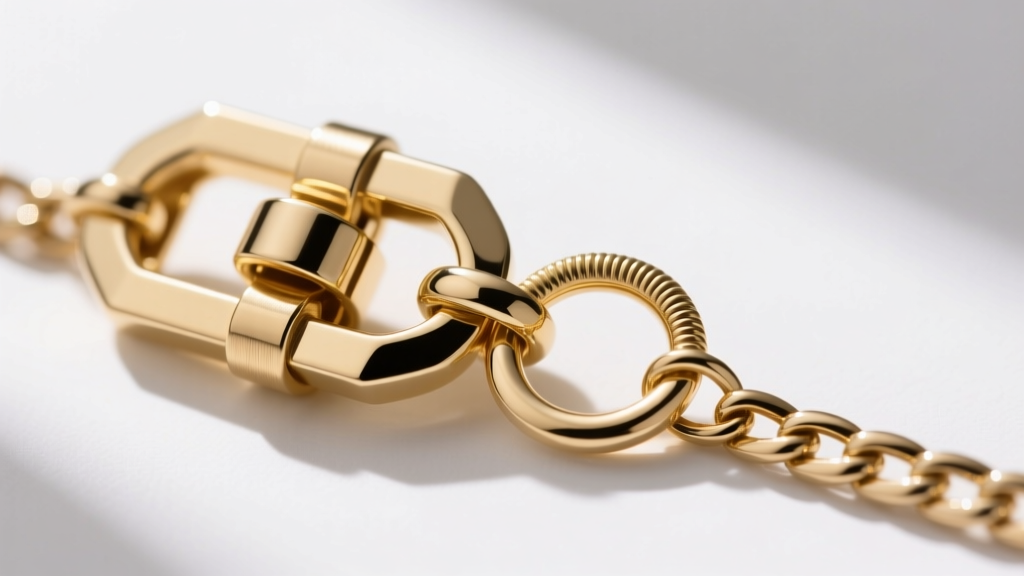
The 'Tangle Factor' occurs when two chains of the exact same weave and gauge are layered together. Their uniform links act like interlocking gears, knotting together within minutes of wear. To prevent this, you must mix chain weaves based on their friction coefficients. A smooth, low-friction Snake chain should never be layered with another Snake chain, nor with a high-friction Rope chain that will catch its flat scales. Instead, pair a structured Box chain (which has flat, geometric surfaces that slide past other metals easily) with a classic Cable chain. Furthermore, clasp selection must scale with the chain. A 1.2mm cable chain requires a 5mm spring ring clasp, while a 3.0mm Cuban link demands a 12mm lobster clasp or a neodymium-core magnetic clasp encased in a stainless steel shell for secure, accessible fastening.
The Anchor Pendant Strategy
Visual weight distribution is the hallmark of an expert layering job. The 2026 'Anchor Strategy' involves utilizing a single, substantial pendant on the longest chain in your stack to dictate the drape of the entire arrangement. By placing a heavy pendant—such as a 12-gram solid gold medallion or a dense carved onyx piece—on a 24-inch, 2.5mm Figaro chain, the weight pulls the chain into a deep, taut V-shape. This tension prevents the longest chain from flipping over or bunching up at the back of the neck, a common issue with lightweight matinee-length chains.
'The anchor pendant isn't just a focal point; it's a structural counterweight. When you layer three or more chains, the longest one must have enough kinetic mass at its terminus to hold the entire stack in place against the body's movement.' — Elena Rostova, Senior Jewelry Stylist.
To balance this heavy lower tier, the upper tiers (14-inch and 16-inch) should remain relatively unadorned or feature micro-pendants weighing less than 2 grams. This creates a top-down visual gradient that draws the eye downward, elongating the neck and torso. If you prefer a pendant on every chain, ensure the physical dimensions of the charms decrease by at least 30% with each ascending tier to maintain the gradient effect.
Final Verdict on 2026 Layering
Mastering necklaces layering in 2026 requires moving beyond simple aesthetic matching and embracing the structural engineering of jewelry. By adopting the 4-inch drop rule, intentionally mixing oxidation states, varying chain weaves to eliminate tangling, and utilizing anchor pendants for structural tension, you can create a layered look that is as durable and functional as it is visually striking. Whether you are mixing 18k gold with oxidized silver or pairing a heavy Cuban link with a delicate bead chain, the key lies in the deliberate, calculated contrast of every single millimeter.


