One Carat Diamond Necklace Value: A 2026 Budget Guide
Discover how to maximize value when buying a one carat diamond necklace. Compare 2026 pricing, lab-grown vs. natural, and optimal 4Cs for pendants.

The Milestone Investment: Navigating the 2026 Diamond Market
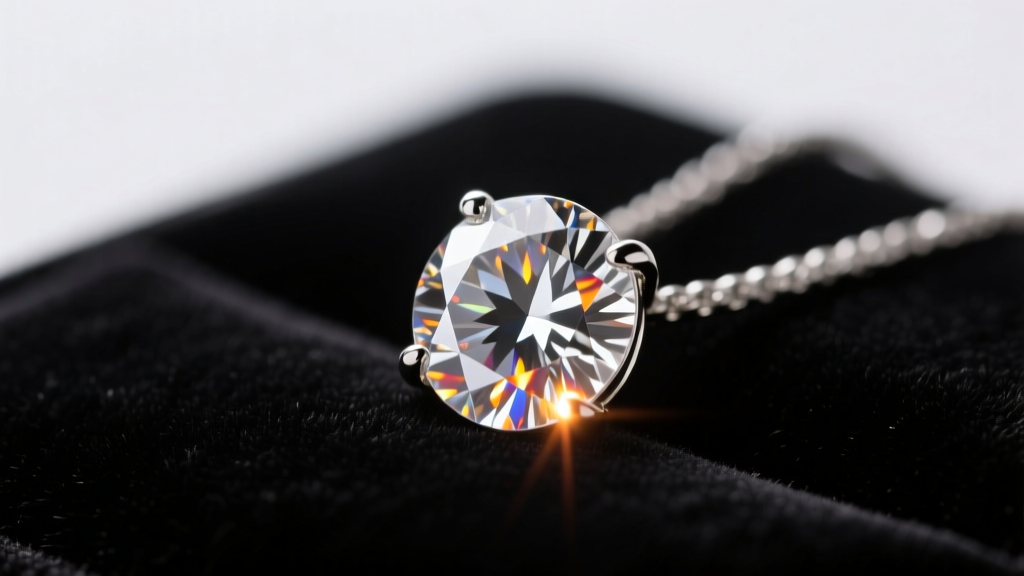
A one carat diamond necklace remains one of the most coveted milestones in fine jewelry. Unlike a ring, which is subject to constant macro-level scrutiny and physical wear, a pendant rests elegantly on the décolletage, catching the light with every movement. However, allocating a budget for a 1.00-carat center stone requires a strategic approach, especially as the 2026 market continues to bifurcate between natural earth-mined diamonds and advanced lab-grown alternatives. According to the Gemological Institute of America (GIA), the optical performance of a diamond is dictated by its cut quality, not its origin. This guide strips away the retail markup fluff to provide a precise, data-driven framework for assessing the true value of a one carat diamond necklace, ensuring you maximize visual impact without overpaying for invisible characteristics.
Natural vs. Lab-Grown: The True Cost Breakdown
The most significant budget decision you will make is choosing between a natural and a lab-grown diamond. In 2026, lab-grown diamonds (LGDs) produced via Chemical Vapor Deposition (CVD) and High Pressure High Temperature (HPHT) methods are chemically and optically identical to mined stones. The Federal Trade Commission (FTC) mandates clear disclosure of origin, ensuring market transparency. However, their value retention profiles are vastly different. Natural diamonds hold a percentage of their wholesale value, while lab-grown diamonds are essentially priced as manufactured goods with negligible resale value. If your goal is purely aesthetic impact on a strict budget, LGDs offer an undeniable advantage.
| Diamond Type | Color / Clarity Grade | Estimated 2026 Retail Price | Resale Value Expectation |
|---|---|---|---|
| Natural Earth-Mined | G / VS2 | $4,500 - $6,200 | 25% - 40% of retail |
| Natural Earth-Mined | I / SI1 | $2,800 - $3,900 | 20% - 30% of retail |
| Lab-Grown (CVD/HPHT) | G / VS2 | $800 - $1,400 | < 10% of retail |
| Lab-Grown (CVD/HPHT) | I / SI1 | $500 - $900 | Negligible |
Optimizing the 4Cs for Pendant Wear
Buying a diamond for a necklace requires a different grading matrix than buying an engagement ring. Because the pendant rests 12 to 14 inches from the observer's eye, you can strategically downgrade certain metrics without sacrificing naked-eye beauty.
Cut: The Non-Negotiable Metric
Never compromise on cut. A poorly cut 1.00-carat diamond may have a deep pavilion, causing it to 'face up' like a 0.85-carat stone while trapping light and creating a dull, glassy appearance. For round brilliants, insist on a GIA 'Excellent' or AGS 'Ideal' cut grade. Look for a table percentage between 54% and 58%, and a total depth between 59% and 62.5%. If you prefer fancy shapes like ovals or pears, scrutinize the stone for the 'bow-tie effect'—a dark shadow across the center that ruins scintillation. For budget buyers, the round brilliant remains the safest and most forgiving shape for maximizing perceived size and sparkle.
Color: Leveraging Metal Tones
The metal you choose for your setting and chain directly dictates how low you can go on the color scale. If you are setting the diamond in platinum or 18k white gold, stick to the G or H color range to avoid visible yellow warmth against the bright white metal. However, if you opt for 14k or 18k yellow gold, you can comfortably drop down to a J or even a K color. The warm reflections of the gold will mask the faint yellow tint of the diamond, saving you up to 20% on the stone's cost. Additionally, seek out diamonds with Faint to Medium Blue fluorescence; in daylight, this fluorescence can make an I or J color diamond appear up to one full grade whiter.
Clarity: The Distance Advantage
Flawless (FL) and Internally Flawless (IF) grades are a waste of capital for a pendant. The primary function of clarity is to ensure the stone is 'eye-clean' from a normal viewing distance. An SI1 (Slightly Included) diamond with inclusions located near the girdle—where they can be hidden by prongs—is the ultimate sweet spot for value. Avoid SI2 or I1 grades unless you have high-resolution 360-degree video of the stone, as large central carbon spots or feather fractures can compromise both brilliance and structural integrity.
Setting Styles That Manipulate Visual Weight
The way your one carat diamond is mounted dramatically alters its perceived size and security. Understanding setting architecture is crucial for budget optimization.
- The Martini (3-Prong) Setting: This minimalist design uses the least amount of metal, allowing maximum light to enter the pavilion from the sides. It makes the diamond appear slightly larger but offers less protection to the girdle. Ensure the prongs are V-tipped if using a pear or marquise shape.
- The 4-Prong Basket: The industry standard for solitaire pendants. It provides excellent security and keeps the stone sitting relatively low against the chest, preventing the dreaded 'pendant flip' where the stone turns backward.
- The Bezel Setting: A modern, sleek rim of metal encircles the diamond. While highly secure and snag-proof, a bezel setting covers 1mm to 1.5mm of the diamond's crown, making a 1.00-carat stone look closer to 0.80 carats. If you want a bezel, consider buying a 1.10-carat stone to compensate for the lost visual diameter.
- The Hidden Halo: A massive trend in 2026, this involves setting 0.10ct to 0.15ct of melee diamonds underneath the basket of the setting. It doesn't increase the center stone's carat weight, but it creates a stunning burst of scintillation from side profiles, elevating the perceived value of the piece without the cost of a traditional top-down halo.
Chain Engineering: Supporting a One Carat Centerpiece
A common failure mode in luxury jewelry is pairing a heavy, expensive pendant with an inadequate chain. A one carat diamond in a gold or platinum setting typically weighs between 1.5 and 2.5 grams. The chain must support this weight while maintaining a delicate aesthetic.
Gauge and Style: Avoid chains thinner than 0.9mm; they will stretch and eventually snap under the pendulum effect of a moving pendant. The ideal gauge is 1.0mm to 1.2mm. Box chains are popular for their modern, geometric look, but they are prone to kinking if bent. A 1.1mm Wheat (Spiga) chain is the superior choice for a one carat pendant; its woven, interlocking links offer immense tensile strength and drape beautifully without tangling. Avoid Snake chains entirely, as their continuous tube structure easily dents and breaks when subjected to the localized weight of a heavy bail.
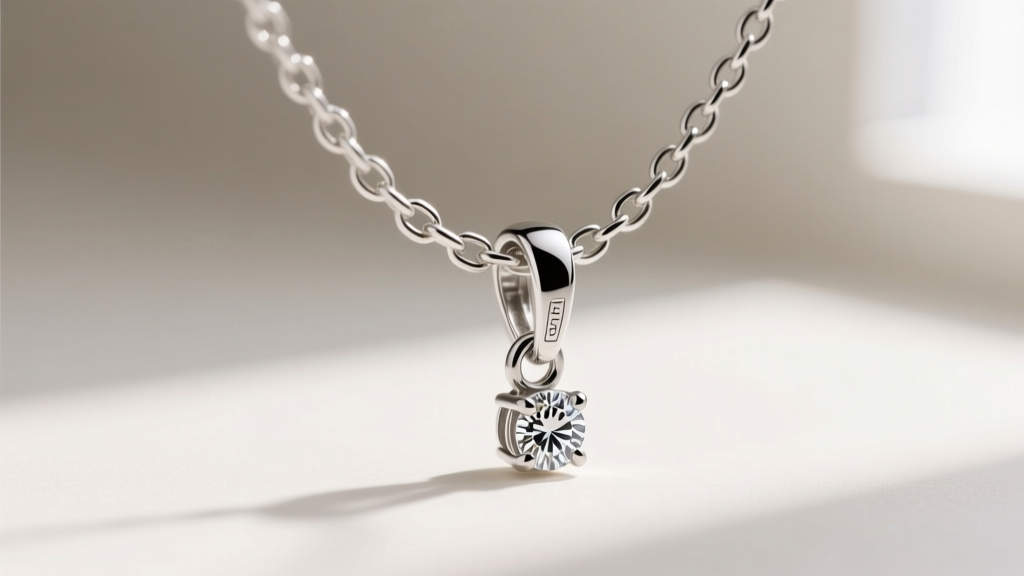
The Bail and Center of Gravity: The bail is the loop connecting the pendant to the chain. Ensure the bail has an internal diameter of at least 3.5mm to accommodate a 1.2mm chain. More importantly, the jeweler must engineer the bail's solder point so the center of gravity sits perfectly plumb. If the bail is too heavy or angled incorrectly, the diamond will constantly tilt forward, resting face-down against the skin.
The Final Value Assessment
Purchasing a one carat diamond necklace is an exercise in balancing optical physics, material science, and market economics. By prioritizing an Excellent cut, leveraging yellow gold to mask lower color grades, and selecting an eye-clean SI1 clarity, you can stretch your budget significantly. If resale value is secondary to immediate visual impact, a high-quality lab-grown diamond set in a 14k gold hidden halo setting offers unmatched brilliance for under $1,500. Conversely, if you view the piece as a generational asset, a natural G/VS2 round brilliant in a classic 4-prong basket remains a timeless, liquid store of value. Whichever path you choose, ensure the chain and bail are engineered to protect your investment for decades to come.


