2026 Gift Guide: Choosing the Perfect Orthodox Icon Necklace
Discover our 2026 gift guide for orthodox icon necklaces. Learn about materials, chain gauges, iconography, and occasion matching for baptisms and weddings.

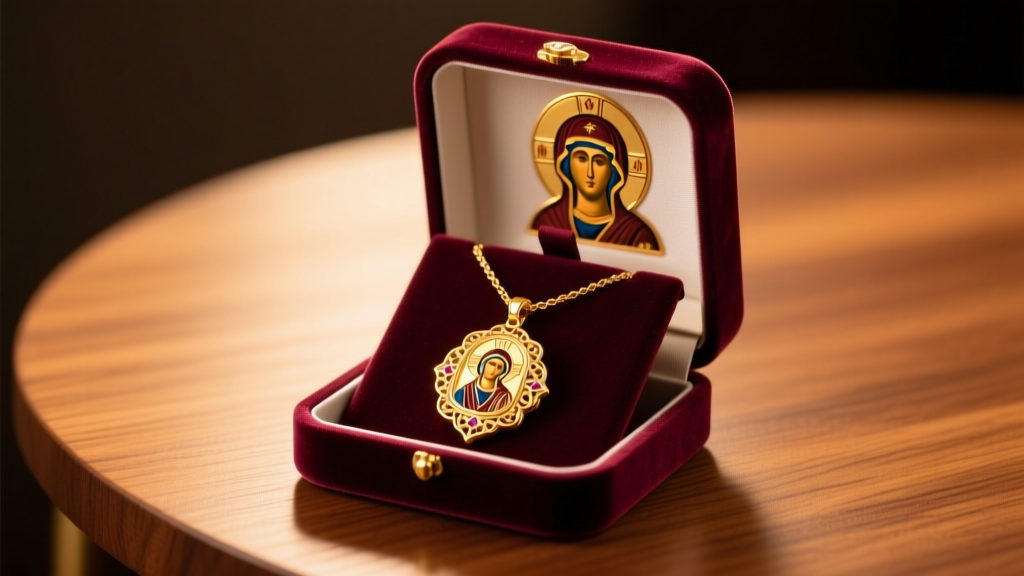
Gifting an orthodox icon necklace is far more than a simple jewelry exchange; it is a profound spiritual gesture that connects the wearer to centuries of theological tradition, familial heritage, and divine protection. Whether you are shopping for a godchild’s baptism, a spouse’s wedding day, or a loved one’s Name Day, selecting the right piece requires a nuanced understanding of sacred iconography, metallurgical durability, and chain mechanics. In this comprehensive 2026 gift guide, we break down the exact specifications, material grades, and sizing frameworks you need to choose an orthodox pendant that will last a lifetime.
The Spiritual & Cultural Weight of the Gift
Within the Eastern Orthodox tradition, wearing an icon or a pectoral cross is an outward expression of an inward faith. According to the Greek Orthodox Archdiocese of America, these sacred items serve as constant reminders of the believer's baptismal vows and the communion of saints. When you gift an orthodox icon necklace, you are not merely giving an accessory; you are providing a tangible anchor for the recipient's spiritual journey. In 2026, we are seeing a resurgence in heirloom-quality, hand-finished pieces that reject mass-produced stamping in favor of traditional lost-wax casting and genuine vitreous enameling.
Matching the Occasion: A Gifting Framework
The appropriateness of an orthodox pendant depends heavily on the milestone being celebrated. Different occasions dictate specific iconographic choices, metal purities, and chain safety features.
Baptisms & Chrismations (Infants & Adults)
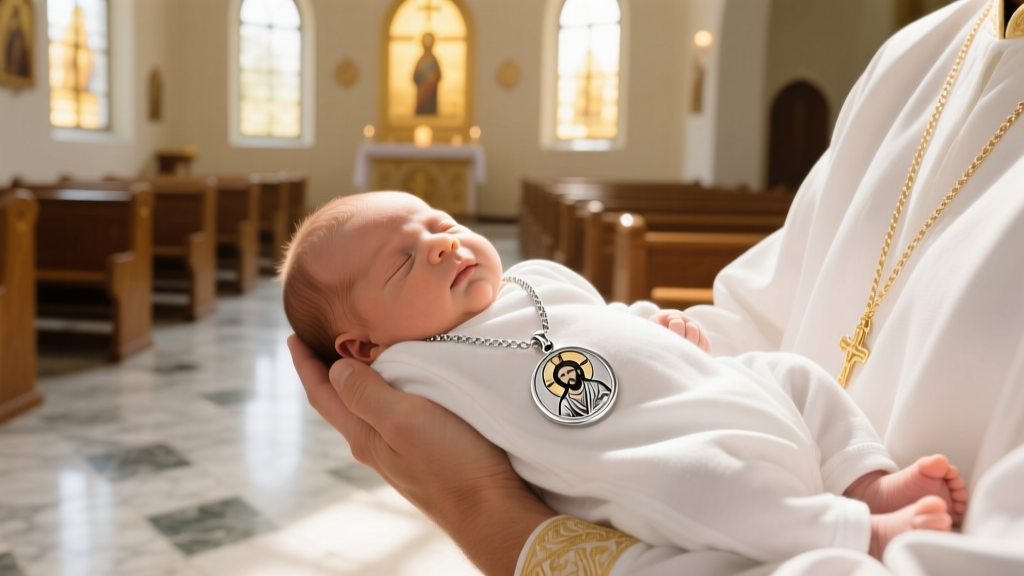
For infant baptisms, safety is the paramount concern. You must select a pendant with completely smoothed, rounded edges and no sharp prongs. The icon itself should be relatively small (typically 12mm to 15mm in diameter) to prevent it from catching on clothing. For adult converts undergoing Chrismation, a larger, more detailed pendant (20mm to 25mm) featuring their newly adopted patron saint is the traditional choice.
Weddings & Milestone Anniversaries
Orthodox weddings often involve the gifting of matching or complementary icon necklaces. It is common for the groom to gift the bride a pendant of the Theotokos (Mother of God), while the bride gifts the groom an icon of Christ Pantocrator. For these high-value milestones, 18k gold is the preferred metal due to its rich, warm luster and heirloom status, often accented with subtle lab-grown diamond halos—a major trend in 2026 ecclesiastical jewelry design.
Name Days & Patron Saints
In many Orthodox cultures, the Name Day (the feast day of one's patron saint) is celebrated with more fervor than a biological birthday. Gifting an orthodox icon necklace depicting the recipient's specific patron saint—such as St. Nicholas, St. George, or St. Catherine—is a deeply personalized and culturally resonant gift.
Material Grades, Enamel Types, & Chain Gauges
The longevity of an orthodox icon necklace is dictated by its metallurgical composition and the specific enameling technique used. Many buyers mistakenly assume all gold-plated jewelry is equal, but the Federal Trade Commission Jewelry Guides strictly define the differences between flash plating and true vermeil.
| Material Specification | Durability & Lifespan | Price Range (2026) | Best Occasion |
|---|---|---|---|
| 925 Sterling Silver (Rhodium Plated) | High (prevents tarnish); 10-20 years | $45 - $150 | Infant Baptisms, Daily Wear |
| 14k Solid Gold (Yellow or White) | Exceptional; Lifetime heirloom | $350 - $800 | Confirmations, Graduations |
| 18k Solid Gold | Exceptional; Softer, rich color | $600 - $1,500+ | Weddings, Major Anniversaries |
| Gold Vermeil (2.5μm over 925) | Moderate; 3-5 years before wear | $80 - $200 | Name Days, Budget-Conscious |
The Enamel Distinction: Cloisonné vs. Cold Enamel
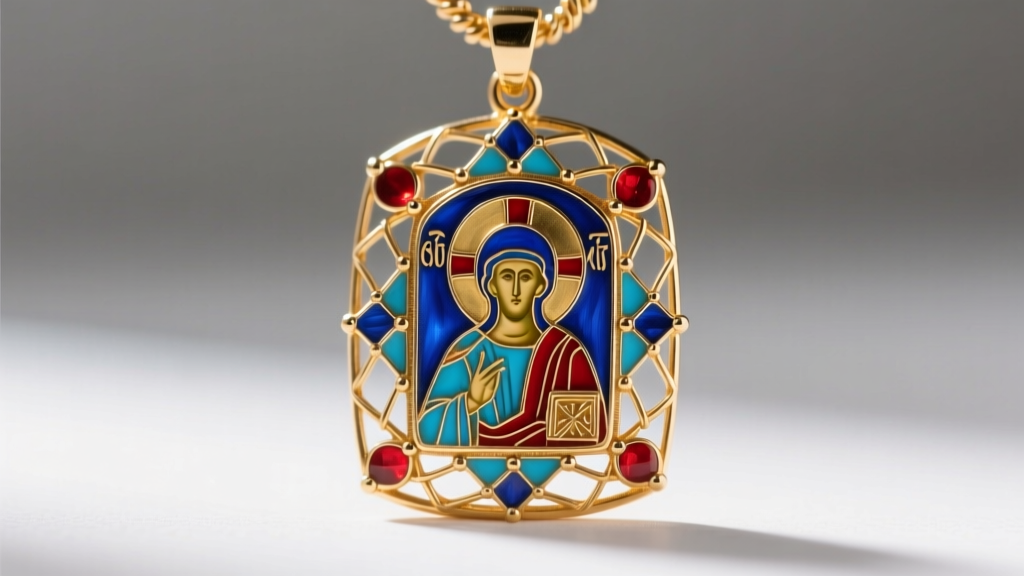
When purchasing an enameled orthodox icon necklace, you must verify the technique. True cloisonné involves packing glass powder into fine gold or silver wire cells and firing it in a kiln at over 1400°F. This creates a permanent, scratch-resistant glass surface. Conversely, 'cold enamel' is merely an epoxy resin poured into recesses. Cold enamel will yellow, chip, and degrade within a few years of daily wear. Always demand kiln-fired vitreous enamel for a genuine heirloom piece.
Iconography Guide: Choosing the Right Motif
The theological accuracy of the icon is critical. According to historical context provided by the Metropolitan Museum of Art, Byzantine and Eastern Orthodox iconography follows strict canonical guidelines. Here are the most common motifs for jewelry:
- Christ Pantocrator: Depicts Christ as the 'Ruler of All,' holding the Gospel and offering a blessing. Ideal for adult men and clergy.
- Theotokos of Kazan or Vladimir: Icons of the Mother of God emphasizing compassion and protection. The traditional choice for women, mothers, and brides.
- Guardian Angel: A universal motif suitable for children and adults alike, symbolizing divine guidance and protection from spiritual harm.
- The Holy Trinity (Rublev): A complex, deeply theological icon representing the three angels who visited Abraham. Best suited for larger pendants worn by theologians or devout adults.
Sizing & Fit: Chain Lengths by Age and Gender
An orthodox icon necklace must rest at the appropriate depth to remain concealed beneath clothing if the wearer prefers modesty, or to sit perfectly on the collarbone if worn visibly. Furthermore, the chain gauge must support the weight of the pendant without snapping.
- Infants & Toddlers (Ages 0-3): 12 to 14-inch cable chain. Gauge: 1.0mm to 1.2mm. Note: Always use a secure lobster clasp and ensure the chain is thick enough to resist pulling but light enough for comfort.
- Children (Ages 4-12): 16 to 18-inch chain. Gauge: 1.2mm to 1.5mm.
- Adult Women: 18 to 20-inch chain. Gauge: 1.5mm to 1.8mm. Anchor or box chains are preferred for their resistance to tangling in hair.
- Adult Men: 22 to 24-inch chain. Gauge: 2.0mm to 3.0mm. Figaro or curb chains offer the necessary tensile strength for heavier, solid gold pendants.
Care, Maintenance, & Common Failure Modes
Even the finest orthodox icon necklace will fail if subjected to improper care or poor structural design. As a buyer, you must inspect the jewelry for common failure modes before gifting it.
The Open Jump Ring Trap
The most common point of failure in any pendant necklace is the jump ring—the small loop connecting the pendant to the chain. Mass-produced jewelry often uses 'open' jump rings that are merely bent shut. Over time, the friction of the chain will twist the ring open, resulting in a lost pendant. Always ensure the artisan has used a soldered jump ring or a heavy-gauge split ring.
Enamel Micro-Fractures
While kiln-fired cloisonné is durable, it is still glass. Dropping an enameled orthodox pendant on a hard tile floor can cause micro-fractures that eventually lead to the enamel popping out of its wire casing. Advise the recipient to remove the necklace before swimming, showering, or engaging in high-impact sports, as thermal shock and chlorine can degrade both the metal backing and the enamel adhesion.
Silver Tarnish & Rhodium Solutions
If gifting a sterling silver piece, ensure it is plated with a thick layer of rhodium. Unplated 925 silver will react with the sulfur in human sweat and the ambient air, turning black and potentially staining the skin. Rhodium plating provides a brilliant, white-gold-like finish that acts as an impermeable barrier against tarnish, ensuring the sacred icon remains bright and legible for decades.
Final Thoughts on Gifting Sacred Jewelry
Selecting an orthodox icon necklace requires balancing theological reverence with rigorous jewelry standards. By prioritizing solid metals, kiln-fired enamels, soldered connections, and canonical iconography, you ensure that your gift is not just a beautiful object, but a lasting spiritual heirloom capable of being passed down through generations of the faithful.


