OSRS Games Necklace Replica: Care, Cleaning, and Maintenance Tips
Discover expert care, cleaning, and maintenance tips for your real-life OSRS Games necklace replica. Keep your gold and emerald cosplay jewelry pristine.

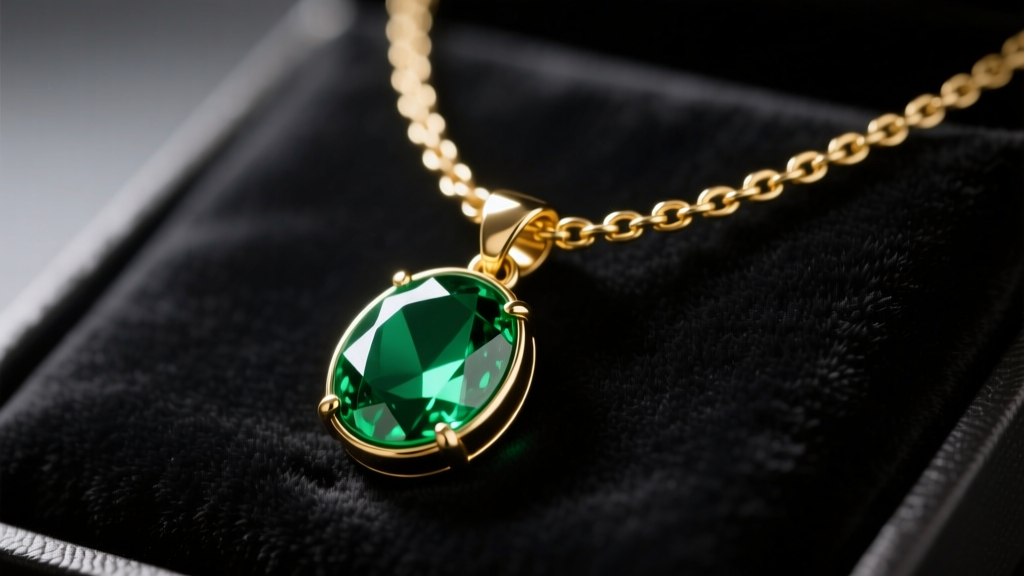
For fans of Old School RuneScape, the iconic teleport jewelry is more than just a digital asset; it is a highly sought-after piece of cosplay and replica jewelry. Whether you commissioned a custom jeweler to craft a 1:1 scale piece or purchased a high-quality cast replica, maintaining the brilliant gold luster and vibrant green center stone requires specialized knowledge. Because most real-world replicas are crafted from gold-plated brass, sterling silver, or vermeil, treating them like solid gold will quickly lead to irreversible damage. This comprehensive guide breaks down the exact metallurgical and gemological care protocols required to keep your OSRS Games necklace in mint condition for years to come.
The Anatomy of an OSRS Games Necklace Replica
Before applying any cleaning solutions, you must identify the exact materials used in your replica. The vast majority of fantasy RPG jewelry is not cast in solid 24k or 18k gold due to the prohibitive cost and the softness of high-karat gold. Instead, manufacturers typically use a base metal core with a decorative outer layer.
- Gold-Plated Brass or Zinc Alloy: The most common base for affordable replicas. A microscopic layer of gold (usually between 0.5 and 2.5 microns) is electroplated over the base metal. Once this layer wears away, the underlying brass will rapidly oxidize and turn your skin green.
- Gold Vermeil: A higher-end option where a thick layer of gold (minimum 2.5 microns) is plated over a solid sterling silver core. This is highly durable and valuable.
- The "Emerald" Centerpiece: While screen-accurate replicas might use a genuine Colombian emerald, most replicas utilize synthetic spinel, green cubic zirconia (CZ), or colored glass cabochons to mimic the game's aesthetic.
Daily Wear and Tear: Environmental Hazards
Teleport jewelry in the game might survive a trip to the Wilderness, but real-world replicas face a much harsher environment: human biology and atmospheric chemistry. Human sweat has a pH ranging from 4.5 to 7.0 and contains urea, salts, and lactic acid. When this acidic moisture becomes trapped between the links of your necklace chain or beneath the pendant bail, it eats through thin gold plating and accelerates the oxidation of brass and copper alloys.
Furthermore, everyday cosmetics such as lotions, perfumes, and hairsprays leave a microscopic film on the center stone, dulling its refractive index and making the "emerald" look cloudy and lifeless. Always practice the "last on, first off" rule: put your replica necklace on after your cosmetics have fully dried, and remove it immediately upon returning home.
Step-by-Step Cleaning Guide for Plated Replicas
Never use commercial silver dips, ultrasonic cleaners, or harsh abrasive pastes on gold-plated jewelry. These methods will strip the gold plating down to the base metal in seconds. Instead, follow this gentle, conservation-grade cleaning protocol.
Step 1: The Dry Dusting
Use a clean, ultra-soft makeup brush or a specialized jewelry dusting brush to remove loose particulate matter from the intricate link work and the bezel setting holding the center stone. This prevents microscopic scratching during the wet wash.
Step 2: The Surfactant Wash
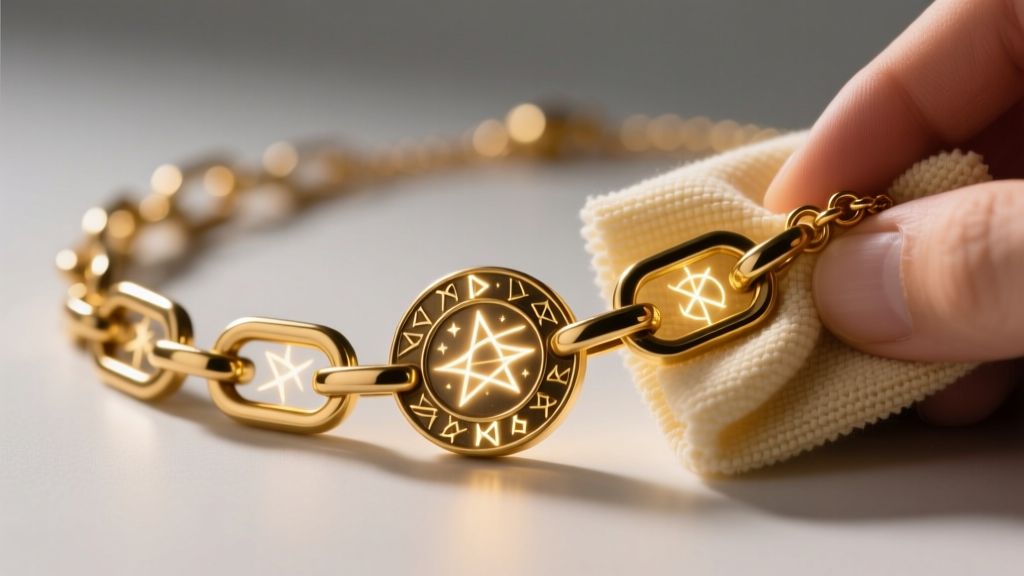
Mix one drop of pH-neutral dish soap (such as original Dawn) into eight ounces of lukewarm distilled water. Avoid tap water, as the dissolved minerals and chlorine can cause water spots and react with the base metals. Dip a soft cotton swab or a microfiber cloth into the solution and gently wipe the chain and pendant. Do not submerge the necklace entirely, as water can become trapped in the bezel setting, leading to hidden corrosion.
Step 3: Controlled Drying
Immediately pat the jewelry dry with a lint-free microfiber cloth. Follow up by using a hair dryer on the "cool" setting to blow out any residual moisture from the chain links and the stone setting. Never let gold-plated jewelry air dry.
Caring for the Center Stone: Glass vs. Genuine Gemstones
The cleaning method for the green centerpiece depends entirely on its material composition. If you are unsure what your stone is, assume it is a genuine emerald and treat it with the utmost caution. According to the Gemological Institute of America (GIA), genuine emeralds are heavily fractured by nature and are almost always treated with cedar oil or synthetic resins to improve clarity. Ultrasonic cavitation and steam cleaning will boil out these oils, leaving the stone looking opaque and heavily flawed.
| Stone Material | Mohs Hardness | Safe Cleaning Method | What to Avoid |
|---|---|---|---|
| Genuine Emerald | 7.5 - 8 | Warm soapy water, soft brush only | Ultrasonic, steam, harsh chemicals, heat |
| Synthetic Spinel | 8 | Warm soapy water, ultrasonic (mild) | Hydrofluoric acid, extreme thermal shock |
| Green Cubic Zirconia | 8.5 | Warm soapy water, ultrasonic, steam | Abrasive polishing pastes |
| Colored Glass | 5.5 - 6 | Damp microfiber cloth only | Ultrasonic (can shatter), hard bristle brushes |
Proper Storage Solutions to Prevent Tarnish
Tarnish on the underlying brass or silver core is caused by a chemical reaction with hydrogen sulfide and sulfur dioxide present in the ambient air. When storing your OSRS Games necklace, tossing it into a standard jewelry box or leaving it exposed on a dresser will guarantee a dull, oxidized finish within weeks.
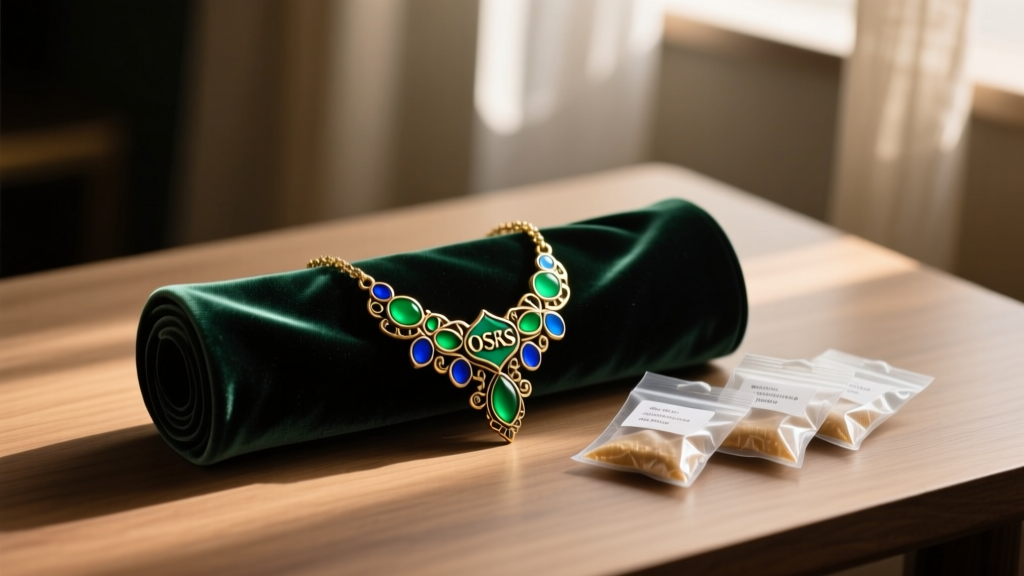
To halt this chemical reaction, store the necklace in an airtight polyethylene ziplock bag alongside a 3M anti-tarnish strip. These strips contain activated carbon and a silver-reactive compound that absorbs sulfur gases before they can reach your jewelry. For an added layer of protection, wrap the necklace in a piece of Pacific Silvercloth before bagging it. Never store your replica in humid environments like a bathroom, as moisture acts as a catalyst for the oxidation process.
Restoring Heavily Tarnished or Damaged Cosplay Pieces
If your necklace has already suffered from plating loss—a condition known in the jewelry trade as "brassing" where the yellowish-red hue of the base metal shows through the gold—you cannot simply polish it back to life. Polishing a plated item will only remove more of the microscopic gold layer.
For minor surface oxidation on the gold itself, apply a microscopic layer of Renaissance Wax using a soft cotton cloth. Originally developed for the British Museum to protect metal artifacts, this micro-crystalline wax creates an invisible, hard barrier that seals the metal away from oxygen and moisture, significantly slowing down future tarnish without altering the necklace's visual luster.
If the plating is entirely compromised, your only viable option is professional re-plating. A local bench jeweler can chemically strip the remaining gold, polish the underlying brass or silver core to a mirror finish, and electroplate it with a fresh, heavy layer of 18k or 22k gold. According to the GIA Gold Care Guide, professional re-plating is the only safe way to restore the structural integrity and aesthetic value of heavily worn plated jewelry.
Final Thoughts on Replica Maintenance
Treating your OSRS Games necklace replica with the same respect you would afford a piece of fine, solid-gold jewelry is the key to its longevity. By understanding the specific vulnerabilities of gold plating and the unique requirements of your center stone, you can ensure your teleport jewelry remains a vibrant, screen-accurate centerpiece of your collection for decades. Avoid harsh chemicals, store it in an airtight environment, and clean it gently, and your replica will remain ready for your next real-world adventure.


