Peace Symbol Necklace: A Beginner's Guide to Styling & History
Discover the history, best metal grades, and modern styling tips for the iconic peace symbol necklace. Your ultimate beginner guide.

The Origins: Decoding the Semaphore
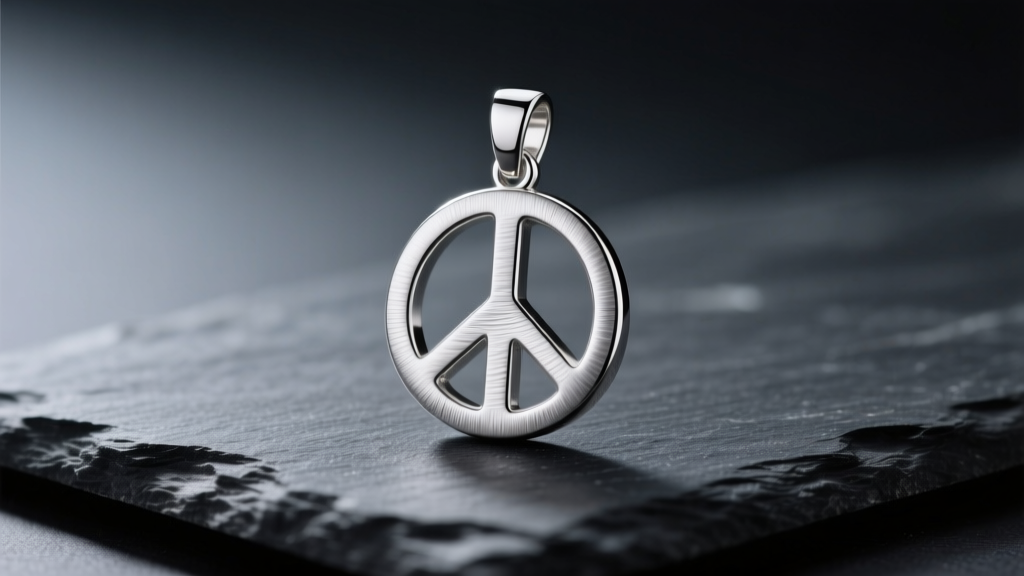
Before diving into styling and metallurgy, it is essential to understand what a peace symbol necklace actually represents. The iconic design is not merely a retro 1960s aesthetic; it is a highly specific piece of visual communication. The symbol was created in 1958 by British designer Gerald Holtom for the Direct Action Committee Against Nuclear War. Holtom based the design on the naval semaphore alphabet, combining the letter 'N' (two flags held downward at 45-degree angles) and the letter 'D' (one flag held straight up, one straight down) to stand for 'Nuclear Disarmament.' The circle enclosing the letters represents the world, making the pendant a profound statement of global unity and anti-war sentiment.
When you wear a peace sign pendant today, you are wearing a piece of mid-century design history that has transcended its original political boundaries to become a universal emblem of harmony. Understanding this depth adds a layer of intentionality to your jewelry choices, elevating the piece from a simple accessory to a meaningful talisman. For a deeper dive into the artifact's origins, the Smithsonian Magazine offers an excellent historical retrospective on Holtom's original sketches and the symbol's rapid adoption by the counterculture movement.
Metallurgy 101: Choosing Your Peace Pendant
The longevity, skin-reactivity, and visual weight of your necklace depend entirely on the metal grade. Beginners often make the mistake of buying cheap base-metal alloys that turn the skin green or snap under the weight of a heavy cast pendant. Here is a breakdown of the most common materials used for peace symbol necklaces, complete with pricing and durability metrics.
| Metal Grade | Composition | Pros & Cons | Avg. Price Range |
|---|---|---|---|
| 925 Sterling Silver | 92.5% Silver, 7.5% Copper | Classic look, easily polished. Prone to sulfur tarnish over time. | $45 - $120 |
| Argentium Silver | 93.5% Silver, Germanium alloy | Highly tarnish-resistant, hypoallergenic. Slightly more expensive. | $80 - $180 |
| 14k Solid Gold | 58.5% Gold, Zinc/Copper/Silver | Excellent durability, no plating to wear off. High upfront cost. | $250 - $600+ |
| 316L Surgical Steel | Iron, Chromium, Molybdenum | Extremely durable, hypoallergenic, no tarnish. Heavy on the neck. | $20 - $50 |
| Cast Bronze/Brass | Copper alloyed with Tin or Zinc | Beautiful vintage patina. Requires regular maintenance to prevent verdigris. | $30 - $85 |
If you have sensitive skin, strictly avoid 'gold-plated' or 'silver-toned' brass pendants, as the friction against the collarbone will wear through the microscopic plating layer within weeks, exposing the nickel-heavy base metal beneath. According to the Gemological Institute of America (GIA), understanding karatage and alloy mixtures is vital for ensuring your jewelry withstands daily wear without causing contact dermatitis. For everyday wear, 14k gold or Argentium silver offers the best balance of hypoallergenic properties and structural integrity.
Chain Mechanics: Weight and Bail Sizing
A common beginner mistake is pairing a heavy, solid-cast bronze peace pendant with a delicate 0.9mm thread chain. This creates a structural failure point. The pendant's weight will inevitably warp the links or snap the chain at the clasp. Furthermore, you must pay attention to the 'bail'—the loop at the top of the pendant through which the chain threads.
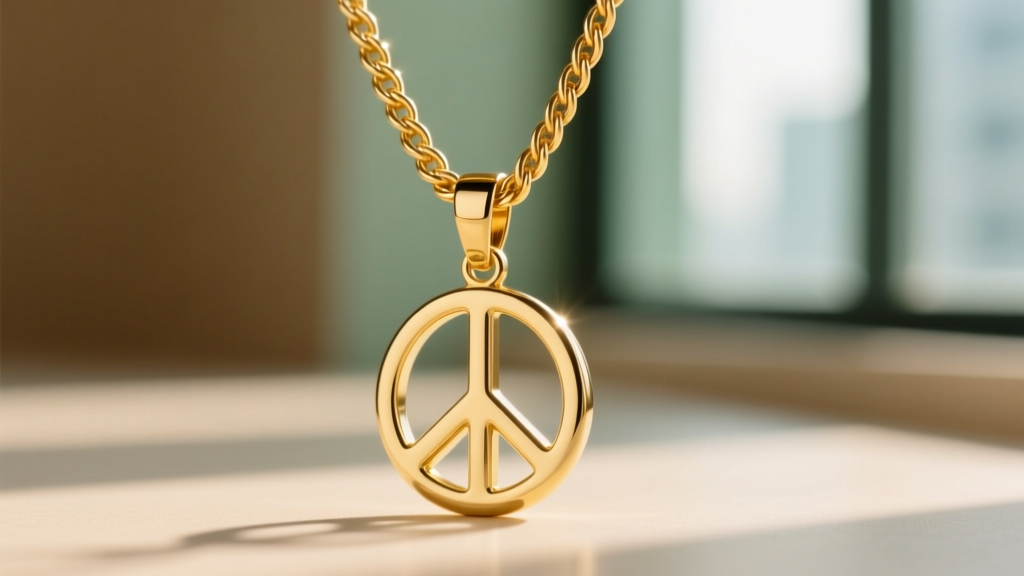
Many vintage or artisan-cast peace symbols feature 'integrated bails' (cast as one solid piece with the pendant) which can be quite thick. If the bail's inner diameter is 4mm, a standard lobster clasp will not fit through it. You will need a chain with a spring-ring clasp or a chain that utilizes an open jump-ring attachment. For standard peace pendants (ranging from 15mm to 25mm in diameter), opt for a 1.5mm to 2.5mm cable, rolo, or rope chain. These styles offer the tensile strength required to support the pendant's drop weight while maintaining a fluid drape across the clavicle. Avoid snake chains entirely; their interlocking cup-and-ball structure is notorious for kinking when subjected to the localized torque of a swinging pendant.
Proportion Framework: Pendant Drop vs. Chain Length
The visual impact of your peace symbol necklace is dictated by the mathematical relationship between the pendant's diameter and the chain's length. A 30mm statement peace sign hanging on a 24-inch chain will rest on the sternum, functioning as a bohemian talisman that pairs best with deep V-necks or flowing linen garments. Conversely, that same 30mm pendant on a 16-inch choker-length chain will sit high on the collarbone, creating a bold, punk-adjacent statement piece that demands a crew-neck t-shirt or an open button-down.
For a versatile, everyday piece that tucks neatly under a blouse but remains visible with a scoop neck, aim for a 'sweet spot' proportion: a 15mm to 18mm pendant on an 18-inch chain with a 2-inch extender. This specific configuration allows the pendant to rest exactly in the suprasternal notch (the hollow at the base of the throat), which is universally flattering across different body types and necklines.
2026 Layering Blueprint: Integrating the Peace Sign
Layering necklaces requires a strategic approach to texture, weight, and visual hierarchy. The peace symbol is a high-recognition geometric shape, meaning it should act as either the focal anchor or a subtle textural accent in your stack. Never layer a peace pendant with other heavy, competing geometric pendants (like large coins or crosses), as this creates visual clutter and causes the metal pieces to aggressively scratch one another.
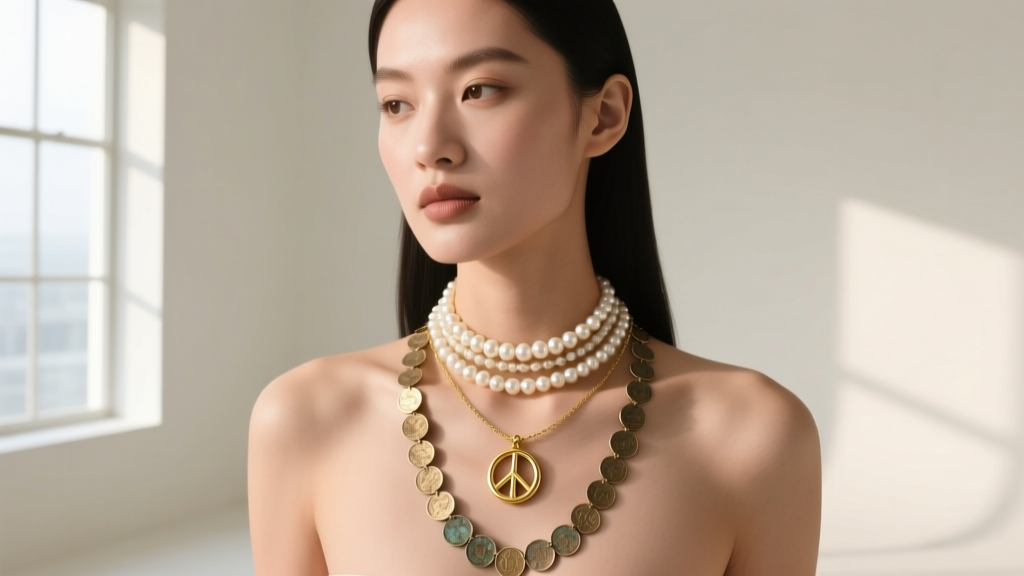
Here is a foolproof, three-piece layering framework that balances the peace motif with complementary textures:
- Layer 1 (The Base): A 14-inch or 16-inch freshwater pearl choker or a simple 1mm herringbone chain. This sits high and provides a luminous, non-metallic backdrop.
- Layer 2 (The Anchor): Your peace symbol necklace. Use an 18-inch chain with a dainty 12mm pendant. This provides the ideological and visual focal point without overwhelming the chest.
- Layer 3 (The Elongator): A 22-inch or 24-inch lariat chain or a simple, unadorned box chain. This draws the eye downward, elongating the neck and torso while framing the central peace pendant.
When layering, always ensure there is a minimum two-inch difference in length between each chain to prevent the clasps and bails from tangling at the nape of your neck.
Maintenance: Preserving Patina and Polish
How you care for your peace symbol necklace depends heavily on its finish. Many sterling silver and bronze peace pendants are intentionally 'oxidized' or 'antiqued.' This means the jeweler has applied silver sulfide or liver of sulfur to the metal to blacken the recessed areas, making the raised semaphore lines pop in high contrast. If you own an oxidized piece, never use liquid silver dips or ultrasonic cleaners. These aggressive chemical and sonic processes will strip the dark patina from the crevices, leaving you with a flat, uniformly bright, and visually muddy pendant.
Instead, clean oxidized pieces using a soft, dry microfiber cloth, gently rubbing only the raised, high-polish areas. For standard, high-polish 925 silver or 14k gold peace signs without antiquing, a treated jewelry polishing cloth (impregnated with mild jeweler's rouge) is sufficient for removing daily oils and light tarnish. Store your necklaces individually in anti-tarnish ziplock bags or a lined jewelry box to prevent the chains from knotting and the pendants from scratching against harder gemstones in your collection. By respecting the metallurgy and history of the piece, your peace symbol necklace will remain a durable, meaningful staple in your wardrobe for decades.


