Qlink Necklace Trends 2026: Styling Wellness Tech Pendants
Discover how to style a Qlink necklace in 2026. We analyze wellness tech jewelry trends, layering techniques, and material grades for biohackers.

The Intersection of Biohacking and High Fashion
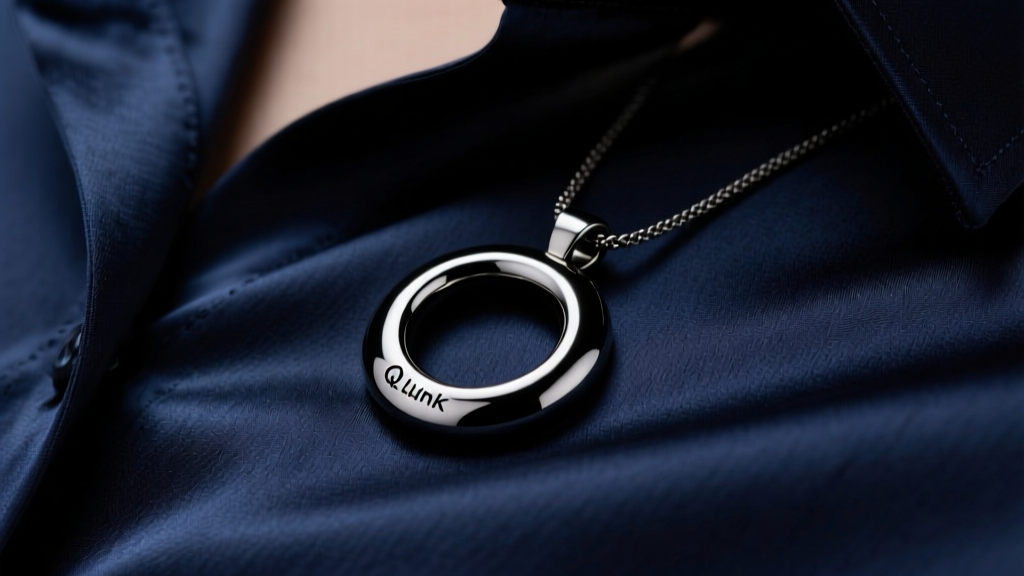
In the contemporary jewelry landscape of 2026, the boundary between functional wellness technology and luxury accessories has completely dissolved. At the forefront of this 'bio-luxe' movement is the Qlink necklace. Originally designed with Sympathetic Resonance Technology (SRT) to provide wearers with a sense of energetic balance and EMF mitigation, the Qlink pendant has evolved from a niche holistic tool into a legitimate style statement. Today, style-conscious biohackers and wellness enthusiasts are no longer hiding their wellness pendants beneath their shirts; they are integrating them into sophisticated, layered necklace stacks. As Vogue recently noted in their coverage of wearable tech fashion, the modern consumer demands that their functional wearables possess the same aesthetic rigor as their fine jewelry. This guide explores the metallurgy, styling mechanics, and maintenance protocols required to seamlessly integrate a Qlink necklace into your daily wardrobe.
Material Breakdown: The Metallurgy of Wellness Pendants
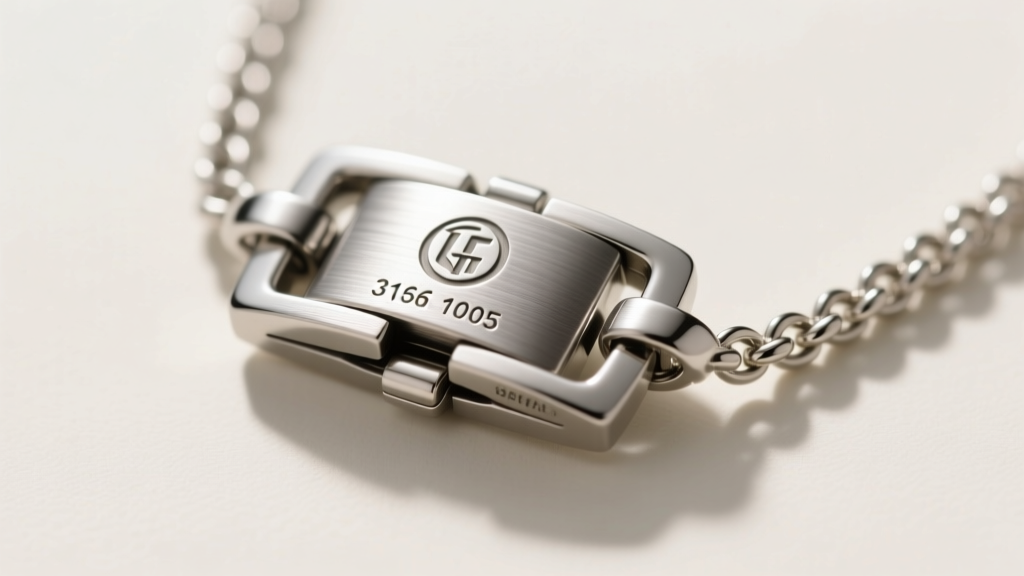
Understanding the material composition of your Qlink necklace is critical for both skin health and aesthetic longevity. Because wellness pendants are designed for 24/7 wear, they are subjected to constant exposure to sebum, sweat, and environmental chlorides. The premier Qlink models are crafted from 316L surgical stainless steel or aerospace-grade titanium, but not all metals are created equal.
316L vs. 304 Stainless Steel
While cheaper wellness pendants often utilize 304 stainless steel, authentic high-tier Qlink necklaces rely on 316L. The 'L' stands for low carbon, but the real hero ingredient is molybdenum. According to metallurgical data referenced by the Gemological Institute of America (GIA) in their alternative metals research, the addition of 2-3% molybdenum in 316L steel drastically increases resistance to pitting and crevice corrosion from chloride ions (found in human sweat). If you are wearing your pendant during workouts or in high-humidity environments, 316L is non-negotiable to prevent the unsightly rust spots and skin discoloration associated with lesser grades.
Titanium and Acrylic Hybrids
For those seeking a lighter, more architectural aesthetic, titanium-acrylic hybrid Qlink pendants offer a striking visual contrast. Grade 2 titanium provides excellent hypoallergenic properties and a featherlight wear experience (often weighing under 12 grams), while the inlaid acrylic elements protect the internal SRT core while offering a sleek, matte-black or iridescent finish that catches the light beautifully.
Technical Specifications and Failure Modes
One of the most common mistakes consumers make when styling a Qlink necklace is treating the pendant like a standard fashion charm. Qlink pendants are dense, typically weighing between 15 and 25 grams. This weight introduces specific mechanical stress points that require careful consideration.
| Component | Specification | Failure Mode to Avoid |
|---|---|---|
| Pendant Bail | Integrated or Fixed Steel Loop | Attempting to pry open the bail with standard pliers, which can crack the internal resin seal. |
| Chain Gauge | 1.2mm to 1.8mm thickness | Using chains under 1.0mm, which will stretch, kink, or snap under the 20g dynamic load of walking. |
| Jump Rings | 14-gauge or 12-gauge split rings | Using soldered rings that are too small to fit over the pendant's fixed bail. |
| Clasp Type | Lobster or Magnetic Locking | Standard spring-ring clasps that fail to support the pendant's resting weight on the collarbone. |
Layering Your Qlink Necklace: A 2026 Style Guide
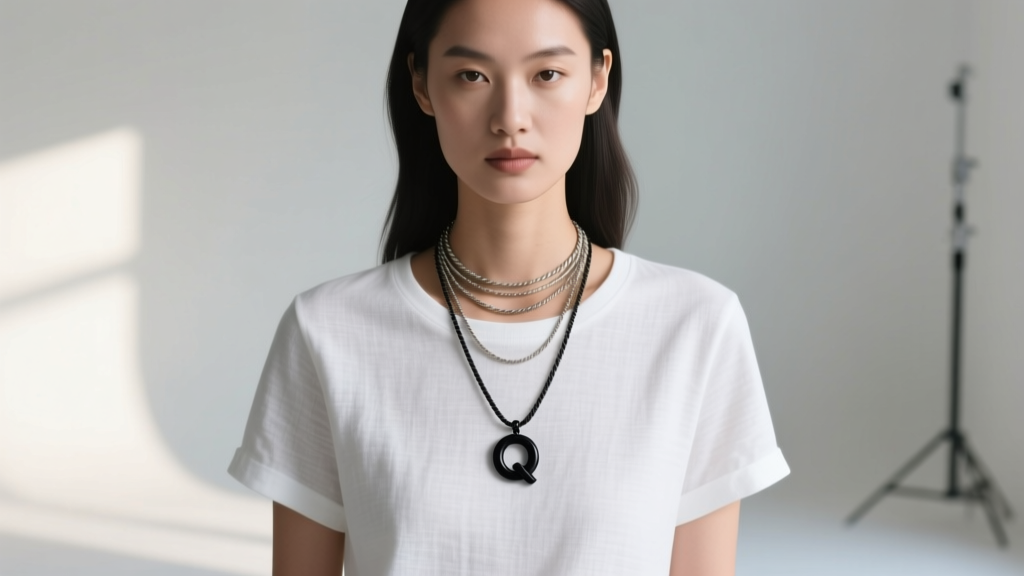
The art of layering a heavy, tech-focused pendant requires a strategic approach to chain lengths, textures, and visual weight. The goal is to frame the Qlink necklace as the anchor piece of your stack, rather than letting it get lost in a sea of delicate chains.
The 3-Chain Bio-Luxe Stack
- The Base Layer (16-18 Inches): Start with a lightweight, textured chain like a 1.0mm wheat or herringbone chain in a complementary metal tone. This sits high on the collarbone and provides a subtle metallic frame for the chest.
- The Anchor (20-22 Inches): This is where your Qlink necklace lives. Thread the pendant onto a 1.5mm box chain or a 2.0mm rope chain. The rope chain's twisted links provide excellent tensile strength and a masculine, architectural texture that pairs perfectly with the geometric lines of the pendant. The 20-inch length ensures the pendant rests precisely on the sternum, the ideal focal point for both visual balance and the pendant's intended energetic field.
- The Accent (24-26 Inches): Finish the stack with a long, minimalist pendant—perhaps a simple geometric bar or a raw, uncut gemstone like black tourmaline or obsidian. This elongates the torso and bridges the gap between high-tech wellness and organic earthiness.
Mixed Metal Dynamics and Galvanic Corrosion
Mixing metals is a massive trend in 2026, but it requires technical caution. If you layer a 14k gold-filled chain directly against a 316L stainless steel Qlink pendant, the constant friction combined with sweat can theoretically trigger mild galvanic corrosion over several years. To mitigate this, use leather cord spacers, or ensure the chain lengths are staggered by at least three inches so the metals do not constantly rub against one another at the neckline.
Occasion Matching: From the Boardroom to the Bio-Lab
Versatility is the hallmark of any staple jewelry piece. The Qlink necklace transitions surprisingly well across different environments, provided you adjust the chain hardware accordingly.
'The modern wellness pendant is no longer a conversation starter about alternative health; it is an architectural accessory that signals a commitment to optimization and mindful living.' — Contemporary Men's Style Journal, 2025
Corporate and Formal Settings: Swap the heavy rope chain for a sleek, 1.2mm polished snake chain. The snake chain's smooth, cylindrical surface mimics the look of fine luxury jewelry, allowing the titanium or steel Qlink pendant to pass as a high-end designer piece under an unbuttoned dress shirt or a tailored blazer.
Casual and Streetwear: Embrace the industrial roots of wellness tech. Pair a matte-black acrylic Qlink pendant with a thick, 3.0mm Cuban link chain or even a braided leather cord with a sterling silver end-cap. This leans into the utilitarian, cyberpunk-adjacent aesthetic that dominates current streetwear trends.
Care and Maintenance Protocols
Because the Qlink necklace houses a proprietary SRT core, standard jewelry cleaning methods can be disastrous. Never place a Qlink pendant in an ultrasonic jewelry cleaner. The high-frequency cavitation bubbles generated by ultrasonic cleaners can compromise the microscopic internal components and degrade the epoxy resins used to seal the acrylic inlays.
Instead, adopt a gentle, manual cleaning routine:
- Remove the pendant from the chain to avoid trapping moisture in the chain links.
- Use a lint-free microfiber cloth dampened with warm water and a single drop of pH-neutral dish soap.
- Gently wipe the steel or titanium exterior, paying special attention to the crevices around the bail where skin oils accumulate.
- For the acrylic inlays, use a dry, soft-bristled brush (like a clean makeup brush) to dust the surface without scratching the polymer.
- Ensure the pendant is completely dry before reattaching it to your chain to prevent water spots on the polished metal.
Final Verdict: A Lasting Staple
As we move deeper into 2026, the Qlink necklace has successfully transcended its origins as a purely functional wellness tool. By understanding the metallurgical advantages of 316L steel, respecting the mechanical weight of the pendant through proper chain gauge selection, and mastering the art of the layered stack, you can elevate this piece of biohacking technology into a cornerstone of your personal style. It is a testament to the fact that in modern fashion, optimization and aesthetics are no longer mutually exclusive.


