Red Gemstone Necklace Value: Ruby, Garnet & Spinel
Compare ruby, garnet, and spinel for your next red gemstone necklace. Expert value assessment, pricing per carat, and durability tips.

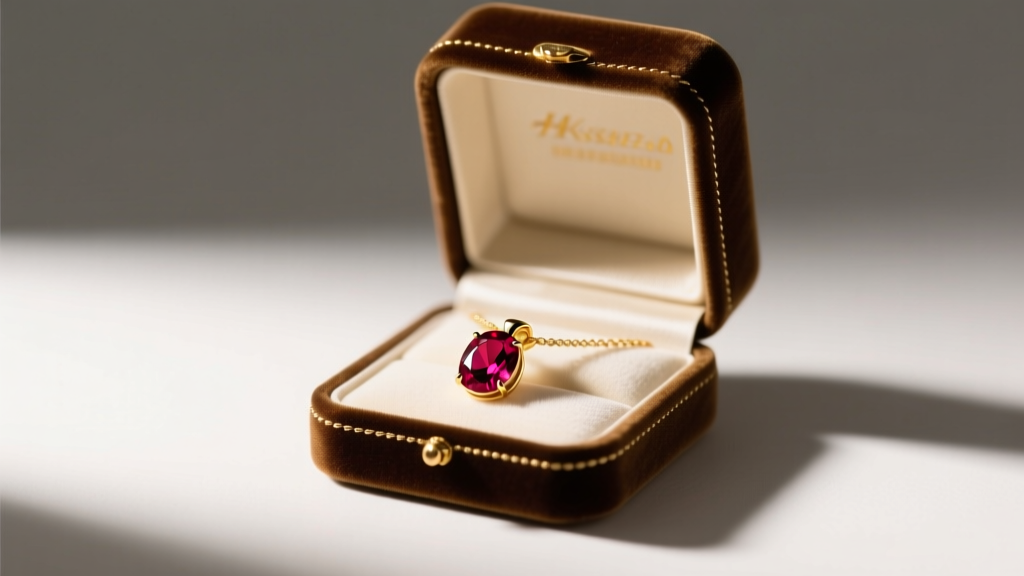
The True Cost of Red: Decoding Gemstone Value in 2026
When shopping for a red gemstone necklace, buyers are often immediately drawn to the prestige of the ruby. However, the modern gemological market offers a spectrum of red stones that vary wildly in price, optical performance, and structural integrity. As of 2026, the pricing gap between top-tier natural rubies and premium alternatives like spinel and garnet has widened significantly, driven by supply chain constraints in East Africa and increased demand for untreated stones. Understanding the precise value metrics—beyond just carat weight—is essential for making an informed investment in fine jewelry.
This guide breaks down the three most prominent red gemstones used in pendant necklaces, evaluating their gemological properties, current market pricing, and optimal setting configurations to ensure your piece retains both its beauty and its financial value over time.
Ruby: The Premium Investment
The ruby (corundum) remains the undisputed king of red gemstones, boasting a Mohs hardness of 9, making it exceptionally durable for daily-wear necklaces. However, the term 'ruby' encompasses a vast range of quality and value. According to the Gemological Institute of America (GIA), the most critical value factor for ruby is its color saturation and the presence of treatments.
Pricing and Treatments
An unheated, 'pigeon blood' Burmese ruby can easily command $10,000 to $30,000+ per carat. Conversely, heavily glass-filled rubies from Madagascar may sell for as little as $10 to $50 per carat. For a high-quality but accessible ruby pendant necklace, buyers typically look toward Mozambican rubies. A 1.5-carat, eye-clean Mozambican ruby with standard heat treatment (no flux healing or lead glass) generally retails between $1,200 and $3,500 per carat. Always demand a laboratory report from GIA, GRS, or AGL to verify the absence of glass filling, which severely compromises the stone's structural integrity and long-term value.
Spinel: The Undervalued Contender
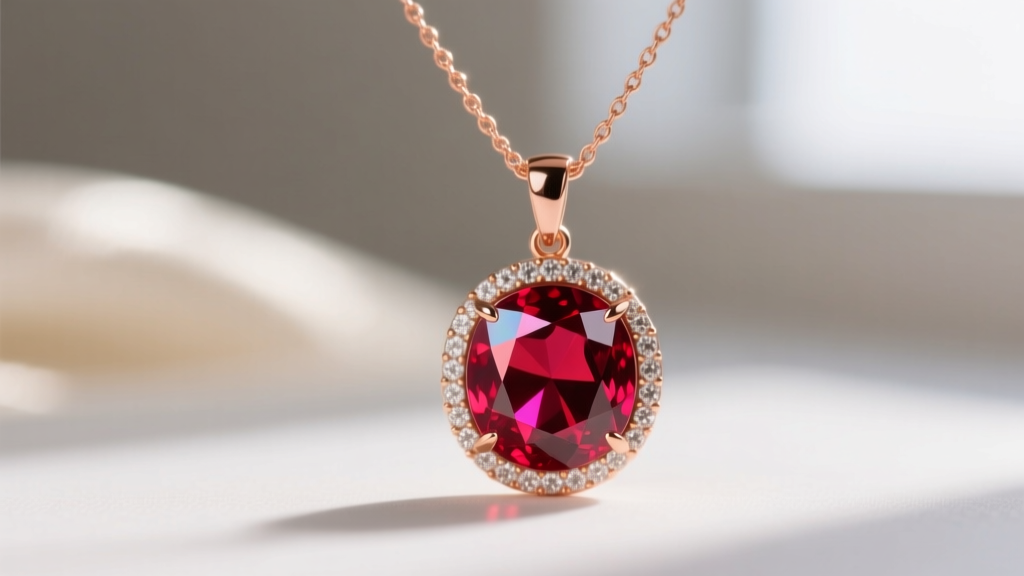
Historically mistaken for ruby (the famous 'Black Prince's Ruby' is actually a spinel), this singly refractive gemstone is experiencing a massive renaissance among collectors and jewelers. Spinel lacks the pleochroism of ruby, meaning it exhibits the same vivid red color from every viewing angle—a massive advantage when set in a pendant that shifts with the wearer's movement.
The Mahenge Factor
The most sought-after red spinels currently originate from Mahenge, Tanzania. These stones possess a 'neon' or 'Jedi' glow caused by high chromium content and low iron content. While a top-tier 2-carat Mahenge red spinel might cost $2,000 to $5,000 per carat, standard Burmese or Vietnamese red spinels can be acquired for $300 to $800 per carat. With a Mohs hardness of 8, spinel is highly resistant to scratching, though its indistinct cleavage means it can chip if struck directly against a hard surface. A bezel setting is highly recommended for spinel pendants to protect the girdle.
Garnet: The Budget-Friendly Classic
When most consumers hear 'garnet,' they picture the dark, brownish-red almandine stones common in cheap mall jewelry. However, the garnet family is incredibly diverse. For a vibrant, high-clarity red gemstone necklace, buyers should specifically seek out Rhodolite garnet or Pyrope garnet.
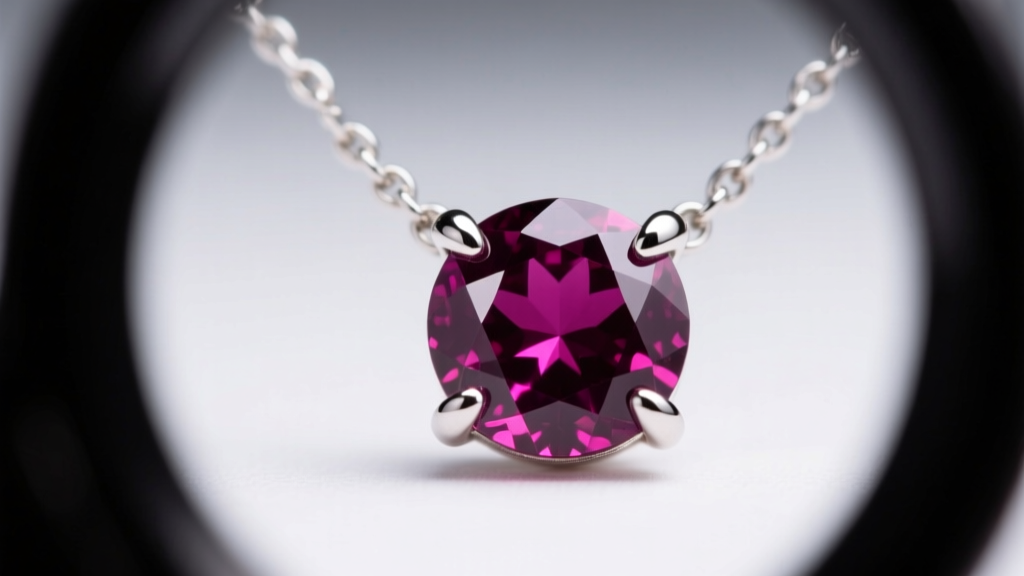
Rhodolite offers a stunning purplish-red to raspberry hue with exceptional brilliance. Because garnet is never treated (heat or irradiation does not alter its color), what you see is exactly what you get. According to GIA's garnet overview, this lack of treatment makes garnet highly appealing to purists. A pristine, 3-carat Rhodolite garnet will typically cost between $150 and $400 per carat, offering massive visual impact for a fraction of a ruby's price. The trade-off is durability: garnet sits at 7 to 7.5 on the Mohs scale, making it susceptible to micro-scratches over years of daily wear. It is best reserved for occasional-wear necklaces or protected in heavy bezel settings.
Comparative Value Matrix
To visualize the investment landscape, review the gemological and financial data below. This matrix assumes a 1.5 to 2.0-carat, eye-clean, faceted stone in a commercial-to-fine jewelry grade.
| Property | Ruby (Corundum) | Spinel | Rhodolite Garnet |
|---|---|---|---|
| Mohs Hardness | 9.0 | 8.0 | 7.0 - 7.5 |
| Refractive Index | 1.762 - 1.770 | 1.718 | 1.714 - 1.785 |
| Typical Treatments | Heat, Glass-Filling | None (Rarely Heat) | None |
| Price Range (per ct) | $800 - $15,000+ | $300 - $5,000 | $150 - $400 |
| Best Necklace Setting | 4-Prong or 6-Prong | Bezel or Half-Bezel | Heavy Bezel or Halo |
Necklace Setting & Chain Mechanics
The value of your red gemstone necklace is not solely dependent on the center stone; the metalwork and chain gauge play critical roles in both security and aesthetics. A common failure point in pendant necklaces is the bail or the chain snapping under the weight of a dense gemstone.
Chain Gauge and Clasp Selection
- Lightweight Pendants (Under 3 grams): A 0.9mm to 1.1mm cable or box chain in 14k gold is sufficient. Use a standard 5mm lobster claw clasp.
- Medium Pendants (3 to 8 grams): Upgrade to a 1.3mm to 1.5mm rope or wheat chain. The interlocking links of a wheat chain provide superior tensile strength. Ensure the clasp is a heavy-duty lobster or a spring-ring with a reinforced jump ring.
- Heavy Drops (8+ grams): You must use a 2.0mm+ chain, ideally with a box clasp featuring a figure-8 safety catch. Prong settings should be forged in 18k gold or platinum, as 14k gold prongs can wear down and release the stone over a decade of friction.
Lab-Grown vs. Natural
As of 2026, the lab-grown market has heavily saturated the ruby and spinel sectors. Flux-grown synthetic rubies are chemically identical to natural stones but cost roughly 80% less. While excellent for fashion-forward buyers on a strict budget, lab-grown red gemstones possess virtually zero resale value. If your goal is long-term value retention or heirloom creation, natural stones with verifiable origins (e.g., Mozambican ruby or Mahenge spinel) remain the only sound financial choice.
Final Verdict: Maximizing Your Budget
Choosing the right red gemstone necklace requires aligning your budget with your expectations for durability and prestige. If you require a daily-wear piece that will survive decades of friction and impacts, an untreated or lightly heated ruby in a platinum setting is the ultimate, albeit expensive, choice. For the savvy buyer seeking exceptional brilliance and collector appeal without the ruby premium, a Mahenge red spinel offers unparalleled optical performance. Finally, for those wanting maximum carat size and deep, untreated color on a modest budget, Rhodolite garnet is an unbeatable option, provided it is set protectively and worn with care.
Expert Sourcing Tip: When purchasing any red gemstone pendant over $1,000, always view the stone under both daylight-equivalent (5500K) and incandescent (3000K) lighting. Many garnets and lower-grade spinels will 'black out' or turn muddy brown under warm indoor lighting, whereas high-chromium rubies and spinels will fluoresce, appearing even more vibrant.
For further reading on gemstone identification and grading standards, consult the GIA Gem Encyclopedia to ensure your next jewelry acquisition is backed by rigorous science.


