How to Restore and Clean a Fading Black White Bead Necklace
Learn how to troubleshoot, clean, and restring your black white bead necklace. Expert tips on fixing faded onyx, yellowed pearls, and broken silk.

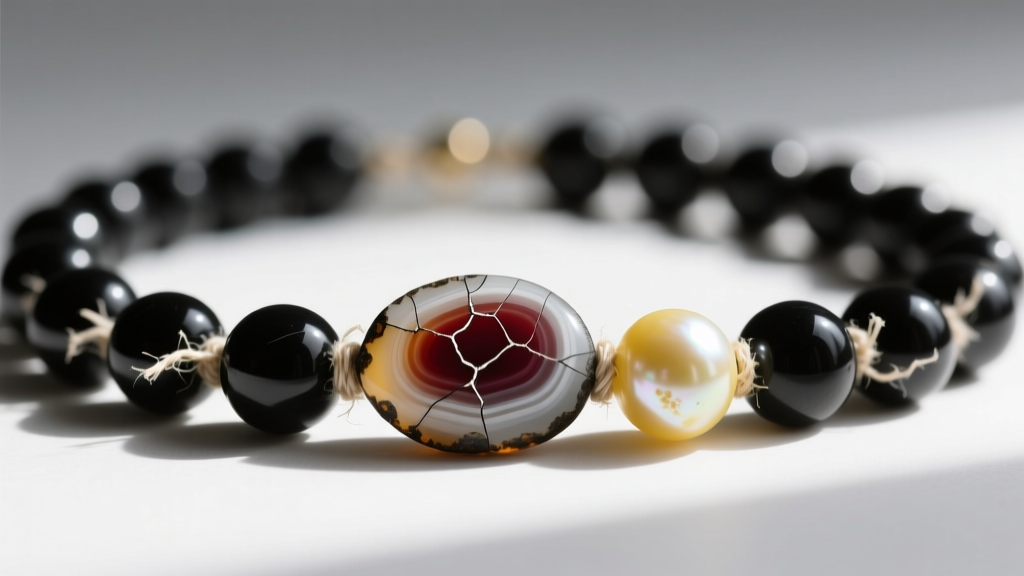
The Monochrome Dilemma: Why Your Necklace is Degrading
As monochrome layering continues to dominate 2026 fashion runways, the classic black white bead necklace remains a staple of modern jewelry wardrobes. The stark contrast between dark, light-absorbing stones and luminous, reflective white beads creates an Art Deco-inspired elegance that works with everything from casual linen to evening wear. However, this specific combination of materials presents a unique set of gemological and structural challenges. When you mix porous organic whites with heavily treated black stones on a single strand, standard jewelry cleaning methods can cause catastrophic damage.
If your favorite necklace is looking dull, if the black beads are turning grey, or if the white beads are yellowing and cracking, you are likely dealing with material incompatibility and stringing degradation. In this comprehensive troubleshooting guide, we will diagnose the exact failure points of your necklace and provide professional-grade restoration protocols to bring it back to life.
The Anatomy of Bead Degradation: Identifying Your Materials
The first step in troubleshooting any jewelry piece is accurate material identification. The commercial jewelry market frequently mislabels stones, leading consumers to apply the wrong cleaning techniques. According to the Gemological Institute of America (GIA), understanding the porosity and chemical sensitivity of your specific beads is critical before applying any liquid or polish.
The "Black Onyx" Deception: Dyed Agate vs. True Onyx
Approximately 90% of the black beads sold in commercial black white bead necklaces are not true black onyx. They are actually grey or pale chalcedony and agate that have been boiled in a sugar solution and treated with sulfuric acid to achieve a deep, uniform black color. While true onyx (Mohs hardness 7) is relatively stable, dyed agate is highly susceptible to fading. When exposed to the acidic pH of human sweat, alcohol-based perfumes, or harsh ultrasonic cleaners, the dye leaches out, leaving the beads looking muddy, grey, or patchy.
The Acetone Test: To determine if your black beads are dyed, dip a cotton swab in pure acetone (nail polish remover) and rub it vigorously against an inconspicuous bead near the clasp. If the swab turns blue, grey, or black, your beads are dyed agate. True onyx will not transfer any color.
White Bead Vulnerabilities: Pearl, Howlite, and Shell
White beads are typically organic or highly porous, making them the exact opposite of treated agate in terms of care requirements.
- Freshwater Pearls: Composed of calcium carbonate and conchiolin, pearls have a low Mohs hardness (2.5-4.5). They are highly sensitive to acids. Daily exposure to skin oils and sweat dissolves the outer nacre layers, leading to a loss of luster and eventual yellowing.
- Howlite: A porous borate mineral often used as a pearl or turquoise substitute. Howlite acts like a sponge, absorbing lotions, oils, and dirt, which causes it to turn a dingy yellow-grey over time.
- Mother of Pearl (Nacre): While beautiful, thin slices of shell can delaminate or crack if subjected to rapid temperature changes or prolonged dry storage.
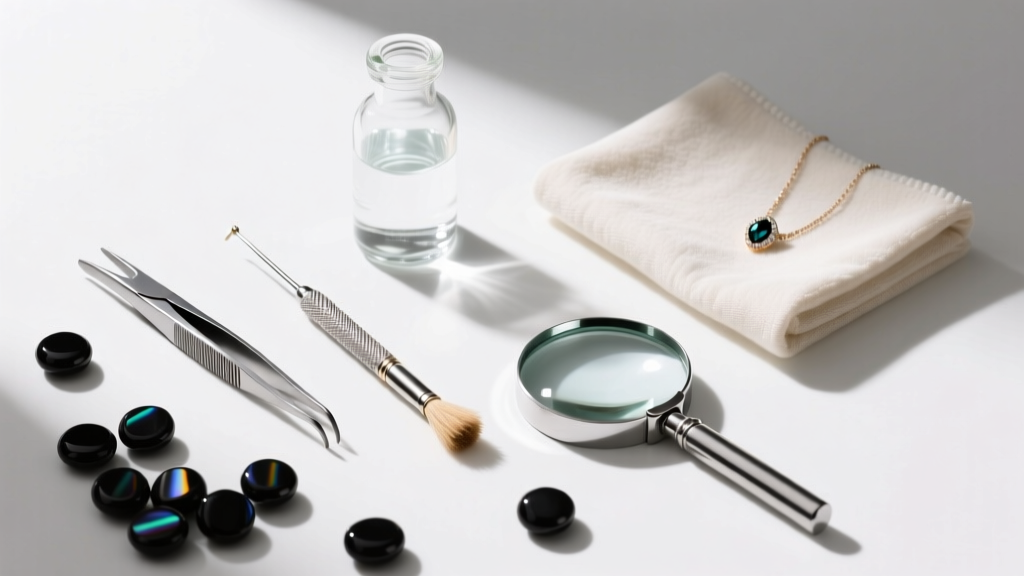
The Troubleshooting Matrix: Material Diagnostics
Use the table below to identify your bead materials and understand their specific failure modes. Never apply a one-size-fits-all cleaning approach to a mixed-material necklace.
| Material | Mohs Hardness | Porosity | Common Failure Mode | Safe Cleaning Agent |
|---|---|---|---|---|
| Dyed Black Agate | 6.5 - 7 | Low (but dye is unstable) | Dye leaching, greying, patchiness | Dry microfiber cloth only |
| True Black Onyx | 7 | Very Low | Surface scratching, chipping | Mild castile soap & distilled water |
| Freshwater Pearl | 2.5 - 4.5 | High (Organic) | Nacre dissolution, yellowing, cracking | Damp cloth, pearl-safe polish |
| Howlite | 3.5 | Very High | Oil absorption, yellow/grey staining | Soft dry brush, baking soda paste (mild) |
| Mother of Pearl | 2.5 - 4.5 | Low (but layered) | Delamination, dulling from acids | Damp cloth, avoid all chemicals |
Step-by-Step Restoration and Cleaning Protocols
Because your black white bead necklace contains materials with opposing chemical tolerances, you must clean the black and white sections separately, or use the lowest common denominator for safety.
Protocol A: Deep Cleaning Non-Porous Stones (True Onyx & Agate)
If you have confirmed your black beads are true onyx or stable glass, you can safely deep clean them. Mix a few drops of pH-neutral castile soap into a bowl of distilled water. Dip a soft-bristled baby toothbrush into the solution and gently agitate the dirt trapped in the drill holes. Crucial Warning: Never submerge the entire necklace if it is strung on silk or cotton thread, as water will rot the natural fibers from the inside out. Clean the beads while the strand is suspended, and dry immediately with a lint-free cloth.
Protocol B: Rehydrating and Polishing Organic Whites
If your pearls or shell beads have lost their luster, do not use silver polish or ultrasonic cleaners. Ultrasonic waves will shatter the crystalline structure of organic gems. Instead, wipe each white bead individually with a microfiber cloth slightly dampened with distilled water. For severe yellowing on pearls, the damage is often irreversible if the nacre has been dissolved. However, you can restore temporary luster by gently rubbing the pearls with a cloth lightly dampened with a drop of sweet almond oil, then buffing them completely dry. This mimics the natural oils that keep pearls supple.
Structural Failures: When and How to Restring
The most common point of failure for a heavy stone necklace is the stringing material. If you notice gaps between your beads, or if the thread looks frayed near the clasp, your necklace is at imminent risk of snapping. According to the stringing guidelines from Beadalon, choosing the correct tensile strength for your specific bead weight is non-negotiable.
Selecting the Correct Stringing Medium
- For Pearls and Light Organics: Use Size F or G silk thread (e.g., Griffin Silk). Silk drapes beautifully and allows for traditional hand-knotting between each bead. Knotting ensures that if the strand breaks, you only lose one bead, and it prevents the beads from grinding against each other.
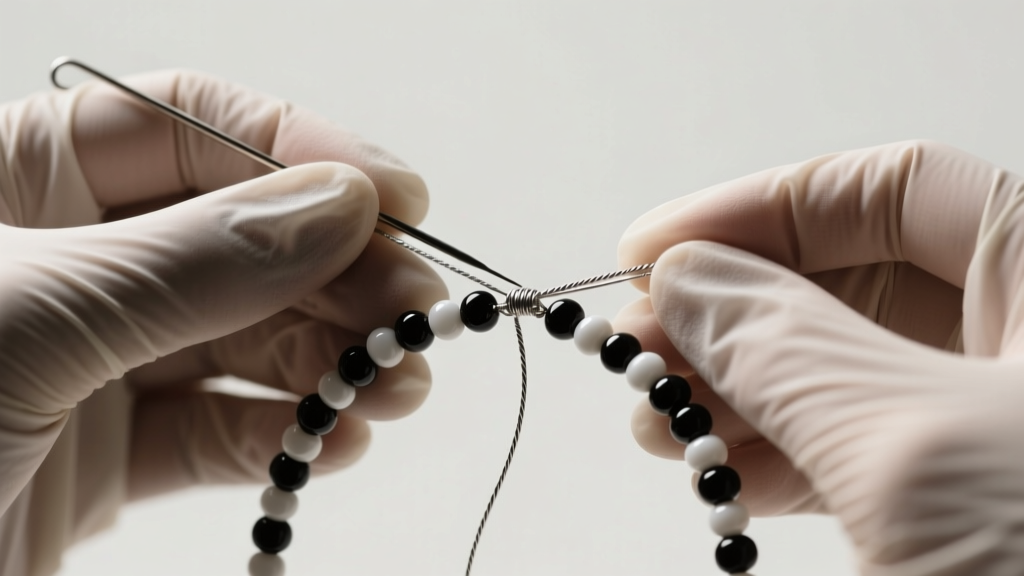
- For Heavy Onyx and Agate: Silk will stretch and snap under the weight of dense stone beads. You must use a multi-strand stainless steel micro-wire. A 49-strand wire in a 0.018-inch or 0.024-inch diameter provides the necessary tensile strength while maintaining enough flexibility to drape around the neck without kinking.
The Restringing Process: Securing the Clasp
When restringing a black white bead necklace onto steel wire, never tie the wire directly to the metal clasp; the friction will saw through the wire over time. Instead, use a wire guardian (a horseshoe-shaped metal finding) to protect the loop. Thread your wire through a sterling silver crimp tube, through the wire guardian, and back through the crimp tube. Use specialized crimping pliers to fold and compress the tube into a secure, rounded bead shape. For silk-threaded pearls, use French wire (gimp) to protect the silk from the clasp's metal ring, and secure it with a bead tip and a surgeon's knot.
Preventative Maintenance for Long-Term Wear
To ensure your restored necklace survives the rigors of daily wear, adopt the "Last On, First Off" rule. Your black white bead necklace should be the final item you put on after applying cosmetics, perfumes, and hairspray, and the first item you remove when you return home.
Expert Storage Tip: Never store pearl or shell components in airtight plastic bags or safety deposit boxes for long periods. Organic gems require ambient humidity to prevent the conchiolin from drying out and cracking. Store your necklace flat in a breathable fabric pouch, away from direct sunlight which will rapidly accelerate the fading of dyed black agate.
By understanding the distinct gemological properties of your beads and utilizing the correct stringing architecture, you can preserve the striking contrast and structural integrity of your monochrome jewelry for decades to come. For further reading on gemstone care and identification, consult the Fire Mountain Gems Encyclopedia.


