How to Clean and Restore a Necklace with Black PVD or Enamel
Is your necklace with black enamel, PVD, or onyx fading? Learn expert troubleshooting tips to clean, restore, and protect your dark jewelry finishes.

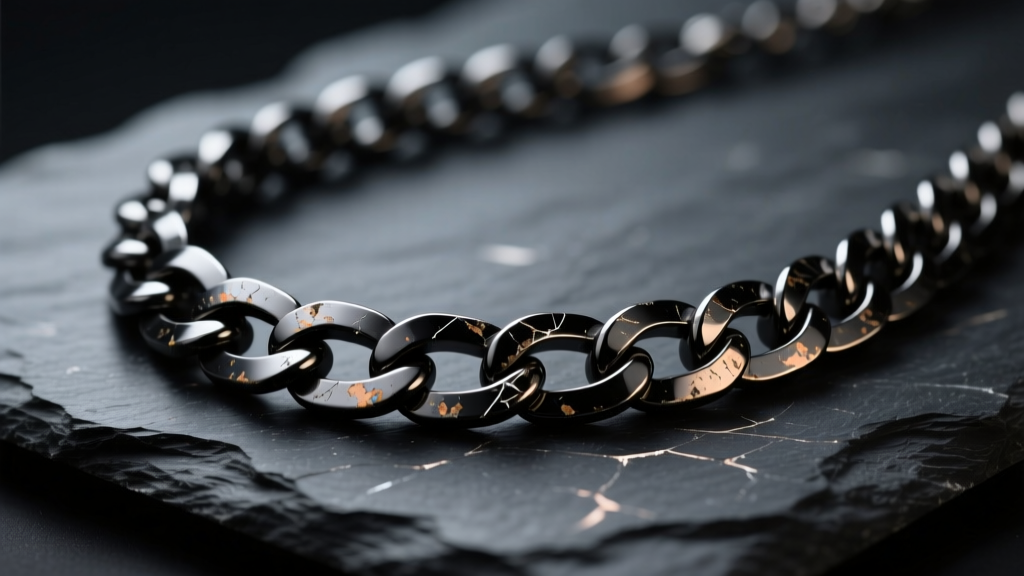
The Science of Black Jewelry: Why Fading and Tarnish Happen
A necklace with black elements offers an undeniable edge, providing a striking contrast that elevates both casual and formal wardrobes. However, dark jewelry is notoriously high-maintenance. Unlike yellow gold or platinum, black finishes are rarely solid throughout the metal. They are usually surface treatments, platings, or delicate inlays. When your favorite dark pendant starts looking patchy, brassy, or dull, it is rarely a defect in the core metal; rather, it is a failure of the surface application.
To troubleshoot effectively, you must first understand how the black color was achieved. In modern jewelry manufacturing (especially as of 2026), black finishes generally fall into four categories: Black Rhodium plating, Physical Vapor Deposition (PVD), Vitreous Enamel, and Oxidized Silver (Silver Sulfide). Each reacts differently to skin acidity, friction, and environmental chemicals, requiring highly specific restoration techniques.
Troubleshooting Guide: Identifying Your Black Material
Before applying any cleaning solution or attempting a repair, identify the material. Using the wrong method—such as putting oxidized silver in an ultrasonic cleaner—will permanently destroy the finish. Consult the troubleshooting matrix below to diagnose your necklace's specific failure mode.
| Material / Finish | Application Method | Common Failure Mode | Safe Cleaning Method |
|---|---|---|---|
| Black Rhodium | Electroplating over silver/gold | Wears off at high-friction points, revealing yellow/white metal beneath | Mild dish soap, microfiber cloth |
| Black PVD | Vaporized titanium nitride + carbon | Micro-scratches, chipping from hard impacts, cannot be spot-repaired | Warm water, lint-free cloth (No chemicals) |
| Vitreous Enamel | Fused glass powder in metal recesses | Cracking from thermal shock, chipping from drops | Dry polishing cloth only |
| Oxidized Silver | Chemical patina (Silver Sulfide) | Rubs off on high points, turns skin black temporarily | Dry cloth on high points ONLY |
Step-by-Step Fixes for Common Black Necklace Disasters
Fixing Chipped Black Enamel
Black enamel is essentially glass fused to metal at high temperatures. If your enamel pendant has chipped, the structural integrity of the glass matrix is compromised. Do not attempt to use superglue or standard epoxy to fill the gap; these resins will yellow under UV light and lack the vitreous luster of true enamel. For minor surface crazing, a jeweler can sometimes apply a specialized optical resin to stabilize the crack. For deep chips, the piece must undergo guilloché repair or complete enamel stripping and re-firing, which typically costs between $150 and $300 depending on the surface area.
Restoring Faded Black PVD and Rhodium
If your necklace with black PVD (Physical Vapor Deposition) is showing silver or gold underneath, you are dealing with plating wear. PVD is incredibly hard—often harder than the stainless steel or titanium substrate it coats—but it is microscopically thin (usually 0.3 to 1.5 microns). Once it wears through to the base metal, it cannot be spot-dabbed. According to Rio Grande jewelry suppliers, PVD requires a complete strip and re-coating in a vacuum chamber. Black rhodium, being a soft electroplated metal, can be re-plated more easily by a local bench jeweler for roughly $45 to $85, but it will require re-plating every 12 to 18 months if worn daily.
Cleaning Tarnished Oxidized Silver Without Ruining the Patina
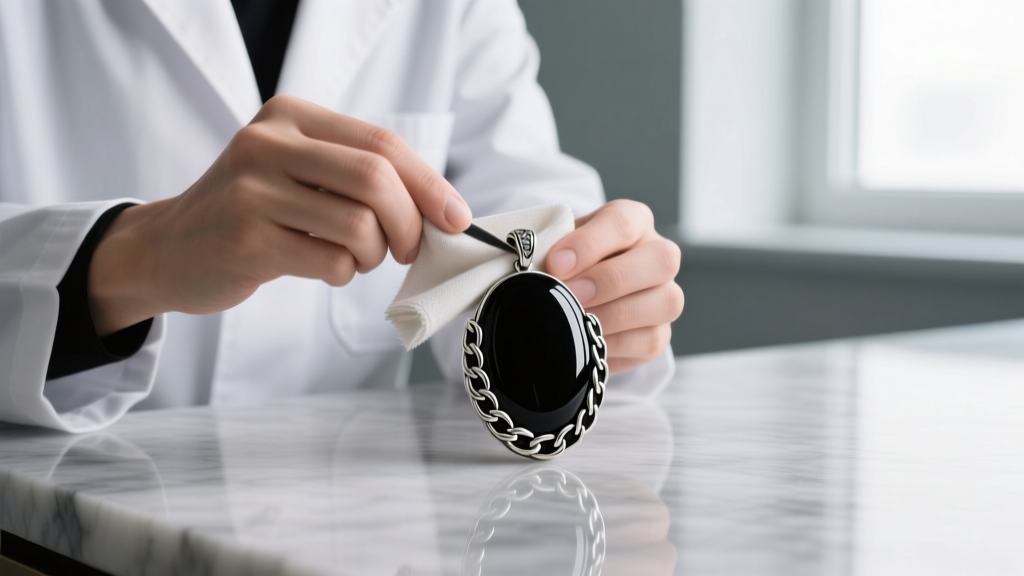
Oxidized silver is created by intentionally exposing sterling silver to sulfur compounds, creating a black silver sulfide layer. The most common mistake owners make is using commercial silver dip or polishing pastes, which strip the oxidation entirely, leaving you with a bright, shiny silver necklace. To clean oxidized silver, use a dry, untreated polishing cloth and only buff the raised, high-friction areas of the design. Never scrub the recessed, dark areas. If the black patina has rubbed off the high points and you want to restore the contrast, you can use a Liver of Sulfur solution at home, though professional re-oxidation yields a much more uniform, deep black finish.
Preventative Maintenance: Keeping Your Black Necklace Pristine
Troubleshooting is only half the battle; preventing degradation is where true jewelry care lies. The Gemological Institute of America (GIA) emphasizes that porous and treated materials require strict environmental controls. Follow these non-negotiable rules to extend the life of your dark jewelry:
- Ban Ultrasonic Cleaners: The high-frequency vibrations will shatter black enamel and shake loose the microscopic bonds of black rhodium plating.
- Avoid Chlorine and Bromine: Swimming pools and hot tubs will instantly react with oxidized silver, turning it a sickly, irreversible copper-brown color.
- Manage Skin pH: Highly acidic skin chemistry can dissolve black rhodium in a matter of weeks. If you have acidic skin, opt for Black PVD or solid Black Onyx instead of plated metals.
- Store in Anti-Tarnish Pouches: Keep black silver and enamel pieces in individual, sulfur-free anti-tarnish bags to prevent ambient humidity from degrading the finish.
Dealing with Solid Black Gemstones: Onyx and Tourmaline
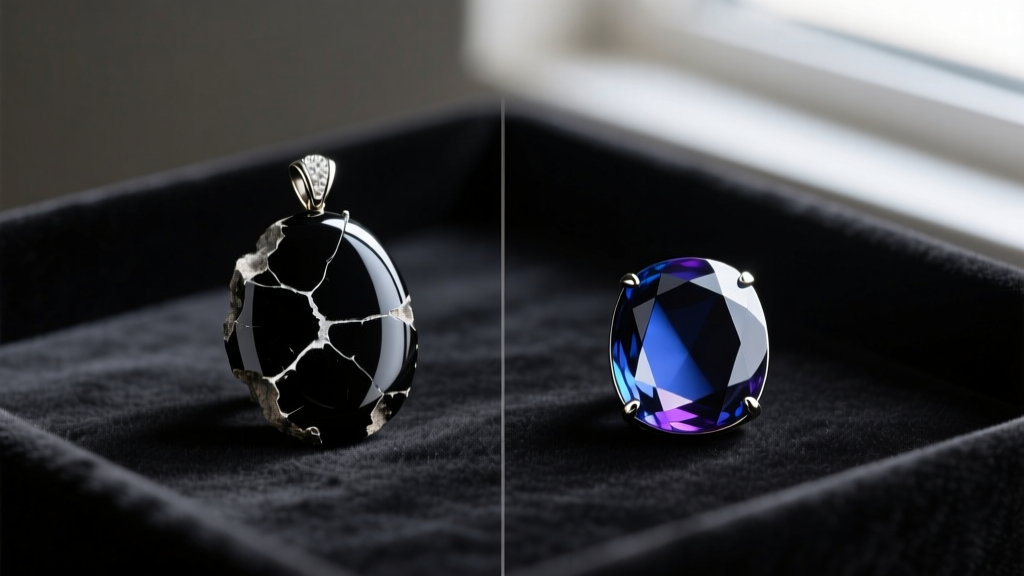
Sometimes, a necklace with black elements relies on gemstones rather than metal treatments. Black Onyx (which is typically dyed agate) and Black Tourmaline are popular choices. While they do not 'fade' like PVD, they are highly susceptible to physical damage. Black Onyx is a 7 on the Mohs scale but has high brittleness. A sharp knock against a granite countertop can cause internal fracturing or surface chipping. If your onyx pendant loses its high-gloss polish, it cannot be fixed with metal polish. It must be sent to a lapidary to be re-tumbled or re-polished with cerium oxide on a felt wheel.
When to Call a Professional Jeweler
While at-home maintenance is sufficient for basic cleaning, certain red flags indicate the need for a professional bench jeweler. If your black necklace exhibits any of the following, stop wearing it immediately and seek professional restoration:
"Never attempt to re-plate a mixed-metal piece at home. Black rhodium requires precise voltage control; too much current will burn the plating, resulting in a flaky, gray-black mess that must be completely polished off before re-attempting." — Master Bench Jeweler Guidelines
- Deep Enamel Cracks: If a crack exposes the metal backing, moisture will seep underneath and cause the surrounding enamel to pop off.
- Flaking PVD: If the black coating is peeling in sheets (rare, but possible on low-quality imports), the entire piece must be sandblasted to bare metal before a new coating can adhere.
- Clasp Failure on Oxidized Chains: Soldering a broken clasp on an oxidized chain requires a laser welder. Traditional torch soldering will burn off the black patina in a one-inch radius around the repair site.
By understanding the specific material science behind your jewelry, you can transition from frustrated owner to informed curator. A necklace with black details is a bold statement piece, and with the right troubleshooting protocols, it can maintain its dark, moody elegance for decades.


