Ring Charm Necklace Buying Guide: Metals & Lengths
Discover how to choose the perfect ring charm necklace. Our buying guide covers chain gauges, metal grades, bail types, and styling tips for lasting wear.

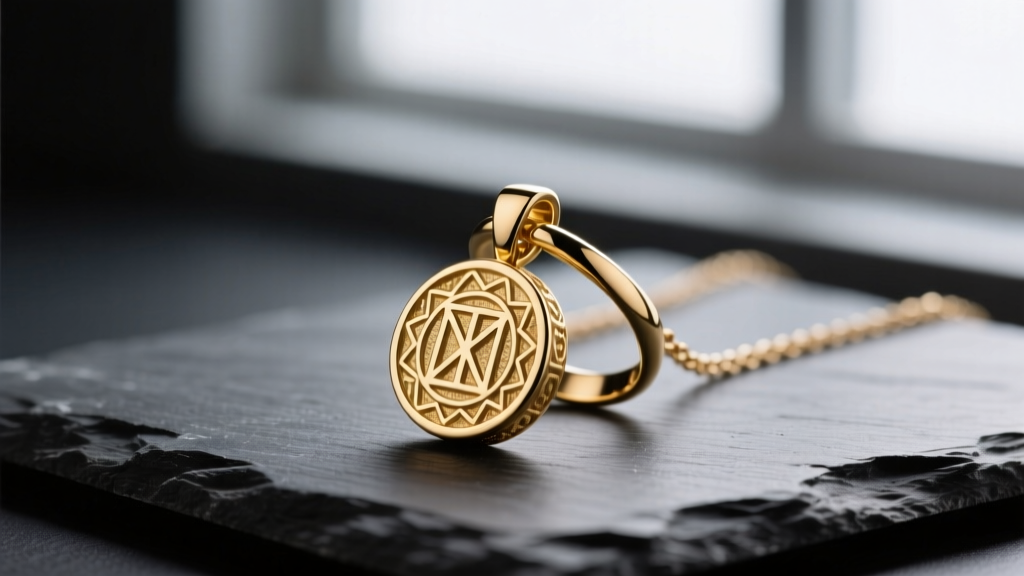
The Anatomy of a Ring Charm Necklace
A ring charm necklace is a uniquely versatile category of jewelry that bridges the gap between traditional pendants and sentimental keepsakes. In the jewelry industry, this term encompasses two distinct designs: necklaces featuring a pendant cast in the shape of a ring (such as an eternity band, halo, or signet motif), and necklaces designed to safely carry an actual functional ring—like a wedding band or heirloom signet—as a charm. Both styles present specific structural challenges that buyers often overlook. Because a ring is inherently circular and dense, it swings, rotates, and concentrates kinetic energy differently than a flat or teardrop-shaped pendant. Understanding the physics of how a ring charm interacts with its chain is the first step toward making a purchase that will last a lifetime without requiring constant repairs.
Whether you are investing in a solid gold piece for daily wear or selecting a delicate silver chain to hold a sentimental band, evaluating the metallurgical compatibility and structural mechanics is non-negotiable. This comprehensive buying guide breaks down the exact specifications, material grades, and design frameworks you need to know before purchasing a ring charm necklace.
Evaluating Metal Grades and Hardness
The most common mistake buyers make is prioritizing color over structural integrity. When dealing with a ring charm necklace, the Vickers Hardness (HV) of your chosen metal dictates how well the piece will withstand the friction and weight of the charm. Pure gold (24k) is far too soft for chains or heavy charms, which is why it is alloyed. However, not all alloys behave the same way under stress.
Precious Metals vs. Plated Options
For a high-quality ring charm necklace, avoid gold-plated or gold-vermeil chains if the charm itself is solid gold or platinum. The friction caused by a heavy ring sliding against a plated chain will quickly wear away the microscopic outer layer of gold, exposing the base metal (usually brass or copper) beneath. Always opt for solid metals for both the chain and the charm to ensure uniform wear rates.
| Metal Grade | Avg. Vickers Hardness (HV) | Tarnish Resistance | Best Use Case for Ring Charms |
|---|---|---|---|
| 14k Yellow/White Gold | 130 - 150 HV | Excellent | Ideal for chains holding heavy signet or gemstone rings due to high tensile strength. |
| 18k Yellow/White Gold | 110 - 125 HV | Excellent | Best for the charm itself; slightly too soft for thin chains bearing heavy loads. |
| 950 Platinum | 110 - 130 HV (Work-hardens) | Superior | Heirloom ring charms; develops a patina rather than losing metal mass over time. |
| 925 Sterling Silver | 60 - 80 HV | Poor (Oxidizes) | Lightweight, budget-friendly ring motifs; requires frequent polishing and rhodium plating. |
According to the Gemological Institute of America (GIA), 14k gold is generally the superior choice for necklace chains because its higher alloy content provides the necessary rigidity to support a heavy charm without stretching. If you prefer the richer color of 18k gold for your ring charm, consider pairing it with a slightly thicker 14k chain to balance aesthetics with structural durability.
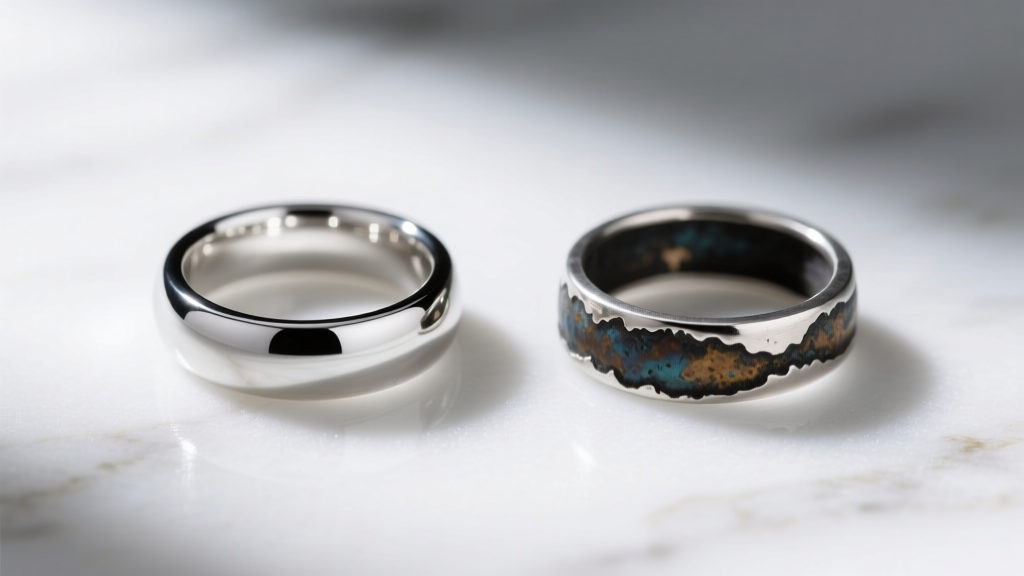
Selecting the Right Chain Gauge and Style
The chain is the literal lifeline of your ring charm necklace. A ring's circular geometry means it will constantly pivot around the chain link it rests on. If the chain is too delicate, the links will warp, oval out, and eventually snap. Selecting the correct gauge (thickness) and link structure is critical.
Matching Chain Thickness to Charm Weight
- Lightweight Ring Charms (Under 5 grams): A 0.9mm to 1.2mm chain is sufficient. Delicate cable chains or fine box chains work beautifully for minimalist, hollow, or small-diameter ring motifs.
- Medium Ring Charms (5 to 15 grams): Opt for a 1.5mm to 2.0mm chain. Wheat (spiga) chains or rope chains are highly recommended here because their interwoven links distribute the pendulum weight of the ring across multiple contact points, reducing stress on any single link.
- Heavy Heirloom Rings (Over 15 grams): You need a 2.5mm to 4.0mm chain. Solid curb chains, thick box chains, or heavy rope chains are mandatory. A thick ring charm necklace requires a robust chain to prevent the 'sawing effect' where the charm slowly cuts through the chain link.
Bail Types and the 'Sawing Effect'
The bail is the connector that attaches the ring charm to the chain. In a traditional pendant, the bail is fixed. In a ring charm necklace—especially when an actual ring is used as the charm—the ring slides directly onto the chain or through a specialized jump ring. This creates a mechanical vulnerability known in jewelry repair as the 'sawing effect'.
When a harder metal (like a platinum ring) slides back and forth against a softer metal (like an 18k gold chain), the ring acts like a saw blade, slowly grinding away the gold. To mitigate this, look for ring charm necklaces that feature a protective hard-metal bail or a hidden diamond-cut bail lined with a durable material. If you are threading an actual ring onto a chain, always use a secondary jump ring made of a metal that matches or exceeds the hardness of the chain, ensuring the jump ring takes the friction rather than the chain itself.
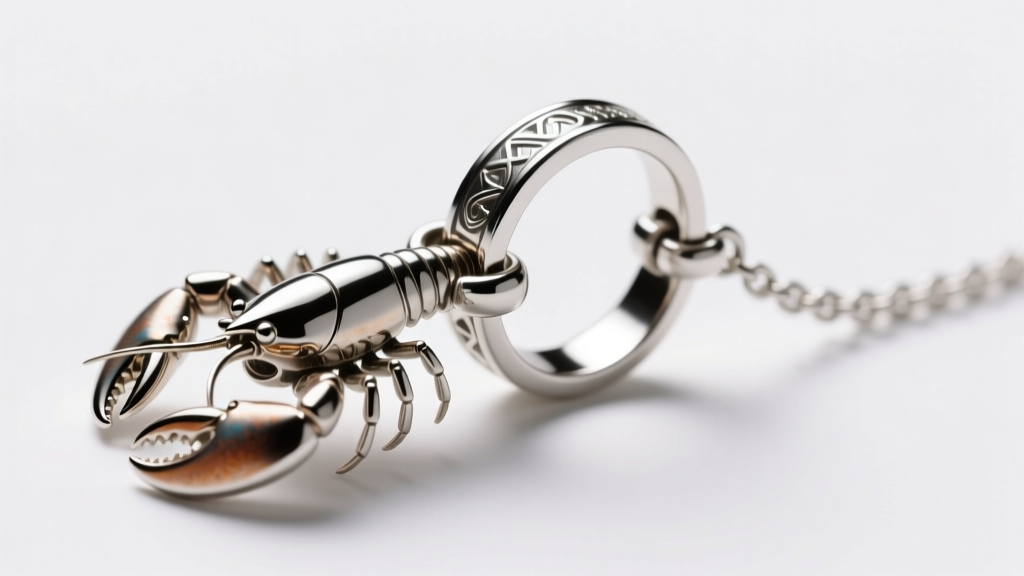
Clasp Security Framework
The clasp is the most frequent point of failure on any necklace, but it is especially critical for a ring charm necklace due to the concentrated weight of the pendant. When you lean forward, the heavy ring charm pulls the chain taut, placing immense shear stress on the clasp mechanism.
Which Clasp Should You Choose?
Spring Ring Clasps: Avoid these entirely for ring charms. The internal spring mechanism is weak, and the small lip can easily catch on clothing and pull open under the weight of a ring.
Lobster Clasps: The industry standard for medium-weight ring charm necklaces. Ensure the lobster clasp is solid cast, not hollow stamped. A solid 14k lobster clasp can easily withstand the dynamic tension of a 10-gram ring charm.
Box Clasps with Safety Latches: For heavy signet rings or diamond-encrusted eternity band charms weighing over 15 grams, a box clasp is mandatory. As noted by Jewelers of America, box clasps with a secondary safety figure-eight wire provide redundant security, ensuring that even if the primary tongue dislodges, the necklace remains secured around your neck.
Sizing, Length, and Neckline Pairing
Because a ring charm has a distinct geometric profile, it interacts with clothing necklines differently than organic or asymmetrical pendants. The circular shape draws the eye directly to the center of the chest, making length selection vital for visual balance.
The Length-to-Neckline Matrix
- 16 to 18 Inches (Collarbone): Best paired with V-necks, scoop necks, and open collars. A ring charm at this length sits perfectly in the negative space of a V-neck, framing the face and highlighting the collarbone. This is the most popular length for delicate halo or eternity ring motifs.
- 20 to 24 Inches (Chest/Sternum): Ideal for crew necks, turtlenecks, and high-collared blouses. A heavier signet ring charm necklace worn at 22 inches creates a striking, bohemian or 'quiet luxury' aesthetic over a solid-colored sweater or turtleneck, breaking up the expanse of fabric.
- 28 to 32 Inches (Opera Length): Reserved for layering or wearing over long dresses and tunics. If wearing a ring charm at this length, ensure the ring is substantial (over 20mm in diameter), otherwise, it will look lost and visually disproportionate against the long chain.
Care and Maintenance Protocol
To maintain the structural integrity and visual brilliance of your ring charm necklace, implement a strict maintenance protocol. Once a month, inspect the bail and the specific chain link where the ring rests. Look for 'thinning' or oval-shaped distortion in the link. If the link has stretched by more than 15% of its original circular shape, take it to a jeweler immediately for link replacement before it snaps. Clean the piece using a soft-bristled brush and a mild solution of warm water and phosphate-free dish soap. Avoid ultrasonic cleaners if your ring charm features tension-set stones or porous gems like opals or turquoise, as the high-frequency vibrations can loosen the settings or fracture the stones. By understanding the metallurgy, mechanics, and styling nuances of these unique pieces, you can confidently select a ring charm necklace that is as durable as it is beautiful.


