How to Clean a Sapphire Necklace Men Wear: Expert Care Tips
Learn how to clean and maintain a sapphire necklace men wear daily. Expert tips on ultrasonic safety, prong checks, and avoiding damage.

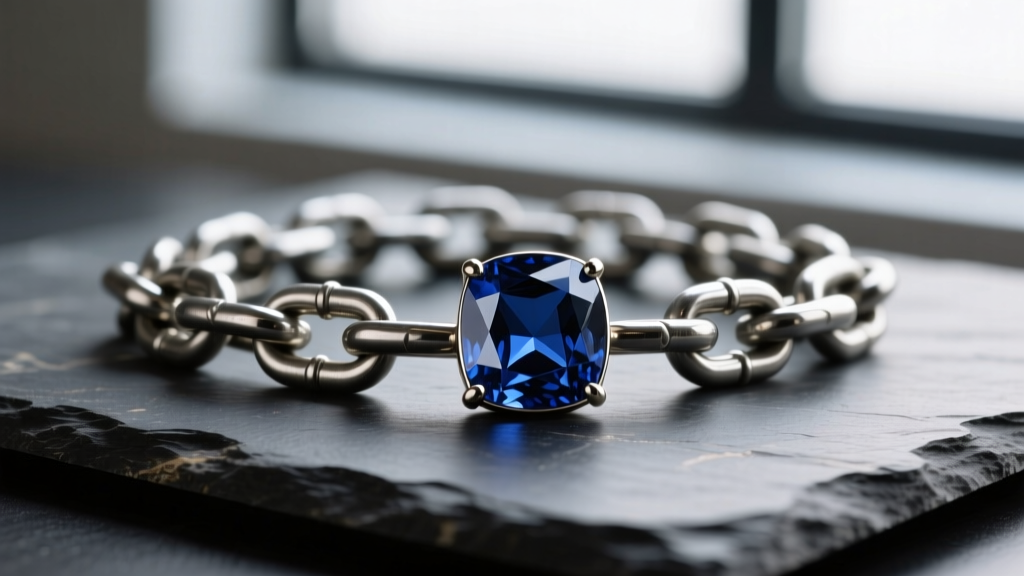
Understanding Sapphire Durability in Men's Jewelry
When investing in fine jewelry, men often prioritize durability alongside aesthetics. A sapphire necklace men wear daily is subjected to a unique set of physical demands compared to women's jewelry. Sapphires, a variety of the mineral corundum, rank at a 9 on the Mohs scale of hardness. This makes them the second hardest natural gemstone on earth, trailing only diamonds. However, it is a common misconception that hardness equates to invincibility.
Hardness measures a gem's resistance to scratching, while toughness measures its resistance to chipping, breaking, and cleavage. While sapphires possess excellent toughness, they can still chip if struck at the right angle against a hard surface—such as a steel dumbbell, a workbench, or a car door. Understanding the distinction between hardness and toughness is the first step in properly maintaining a sapphire pendant and its accompanying chain.
Daily Wear Hazards for Active Men
Men's lifestyles often expose jewelry to harsh environments. Whether you are hitting the gym, working with your hands, or simply navigating a daily commute, your sapphire necklace faces several hidden hazards:
- Impact and Abrasion: Lifting weights or using metal tools can cause micro-abrasions on the metal setting or chip the sapphire's girdle (the outer edge).
- Chemical Exposure: Chlorine in swimming pools, harsh cleaning agents, and even the alcohol in colognes can degrade the alloy metals in your chain and setting, particularly if it is crafted from 14k or 18k gold.
- Sweat and Sebum: Men generally have higher sebum (oil) production and sweat rates. The acidic nature of sweat can tarnish silver chains and create a cloudy film over the sapphire, dulling its natural brilliance and light return.
To preserve the structural integrity and optical performance of your necklace, it is highly recommended to remove it before engaging in heavy manual labor, weightlifting, or swimming.
The Step-by-Step Cleaning Routine
Routine cleaning is essential to maintain the fiery brilliance of a sapphire. Over time, lotions, dead skin cells, and environmental dust accumulate on the back of the gemstone (the pavilion), blocking light from entering and reflecting back to the eye. Follow this expert-approved cleaning protocol every two to three weeks.

1. Prepare the Cleaning Solution
Fill a small glass bowl with lukewarm water. Add a few drops of mild, phosphate-free dish soap (such as Dawn). Avoid using hot water, as extreme temperature shifts can cause thermal shock, especially if the sapphire has internal inclusions or fractures.
2. The Soak
Submerge the sapphire necklace in the solution for 15 to 20 minutes. This soaking period is crucial for breaking down the hardened sebum and skin cells trapped within the links of thicker men's chains, such as 4mm Cuban or Figaro links.
3. Gentle Agitation
Using a brand-new, ultra-soft baby toothbrush, gently brush the sapphire. Pay special attention to the underside of the stone and the prongs. For the chain, lay it flat on the palm of your hand and brush along the links to dislodge debris. Never use toothpaste or baking soda, as these contain abrasive particles that can scratch the metal setting and leave a dull, matte finish on polished gold or platinum.
4. Rinsing and Drying
Rinse the necklace thoroughly under lukewarm running water. Ensure the drain is plugged to prevent accidental loss. Pat the piece dry with a clean, lint-free microfiber cloth. Avoid paper towels or tissues, as the wood pulp fibers can cause micro-scratches on precious metals and leave frustrating lint behind in the chain links.
Ultrasonic and Steam Cleaners: Are They Safe?
Many men opt for the convenience of at-home ultrasonic jewelry cleaners. While these devices use high-frequency sound waves to create microscopic bubbles that blast away dirt, they are not universally safe for all sapphires. The safety depends entirely on the gemstone's treatment history.
| Sapphire Treatment Type | Ultrasonic Cleaner Safety | Steam Cleaner Safety | Notes & Risks |
|---|---|---|---|
| Untreated / Natural | Generally Safe | Generally Safe | Ensure no surface-reaching fractures exist. |
| Heat-Treated | Safe | Safe | The industry standard; highly stable under vibration and heat. |
| Fracture-Filled | NEVER | NEVER | Vibrations and heat will melt or shatter the glass/resin filler. |
| Lattice-Diffused | Use Caution | Use Caution | Surface damage can alter the color layer; stick to manual cleaning. |
According to the Gemological Institute of America (GIA), heat treatment is a permanent and stable process that accounts for the vast majority of sapphires on the market. However, if you purchased a lower-grade sapphire that has been fracture-filled with lead glass or resin to improve clarity, ultrasonic waves will shatter the stone from the inside out. When in doubt, stick to the manual soap-and-water method.
Inspecting Chain Hardware and Settings
Cleaning is only half the maintenance equation; structural inspection is equally critical. Men's necklaces often feature heavier, thicker chains that place more tensile stress on the clasp and the pendant's bail (the loop connecting the pendant to the chain).
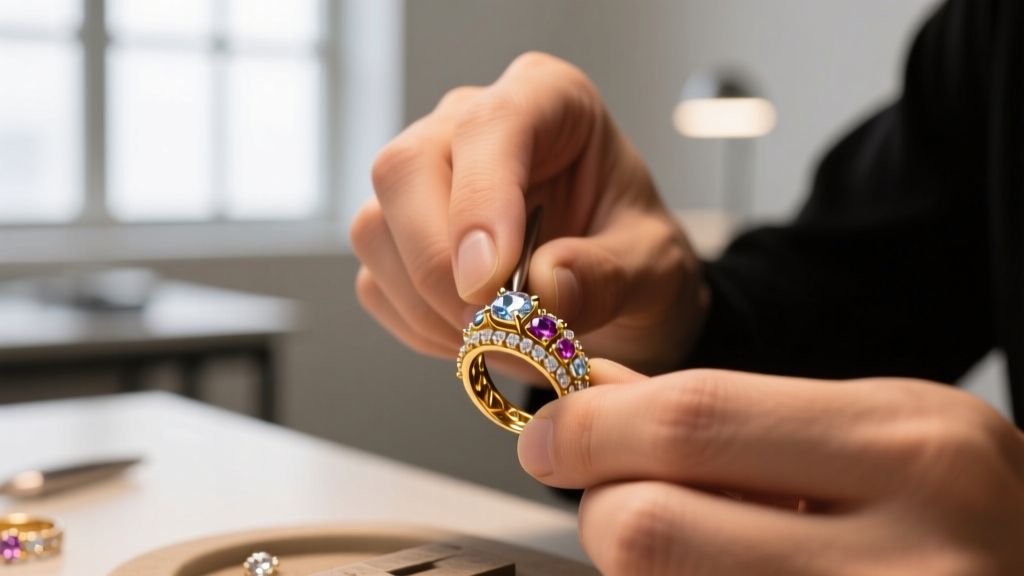
Prong vs. Bezel Settings
If your sapphire is held in a traditional prong setting, inspect the prongs every six months. Use a jeweler's loupe to check if the metal is worn thin or lifting away from the gemstone's crown. For men with active lifestyles, a bezel setting—where a continuous rim of metal surrounds the sapphire's girdle—is vastly superior. It protects the vulnerable edges from impact and prevents the stone from snagging on clothing or gym equipment.
Clasp and Link Integrity
Thicker chains like Rope or Curb links can stretch over time if pulled. Check the jump ring (the small circle connecting the clasp to the chain) to ensure it is fully closed and soldered. A lobster clasp is generally more secure for men's heavy chains than a spring ring, but the internal spring mechanism can fail if exposed to corrosive sweat without regular rinsing.
Proper Storage Techniques
How you store your sapphire necklace when it is not being worn directly impacts its longevity. Because sapphires are a 9 on the Mohs scale, they are hard enough to scratch almost any other gemstone in your collection, including emeralds, rubies, and softer metals like silver and lower-karat gold.
Expert Rule of Thumb: Never toss a sapphire necklace into a communal jewelry box. The sapphire will act as an abrasive, leaving permanent scratch marks on your other chains and rings.
Always store your sapphire necklace in a dedicated, soft-lined fabric pouch or a separate compartment in a wooden jewelry box. If you are traveling, use a hard-shell travel case with individual padded slots to prevent the chain from tangling and the pendant from being crushed by other items in your luggage.
Professional Maintenance Schedule
Even with meticulous at-home care, a sapphire necklace men wear daily requires professional attention. We recommend visiting a certified gemologist or bench jeweler once a year. They will use professional-grade steam and ultrasonic equipment (after verifying the stone's treatment) and will physically tighten any loose prongs using a burnishing tool. As noted by the International Gem Society (IGS), preventative prong tightening is significantly cheaper than replacing a lost sapphire. By combining mindful daily wear habits with this rigorous cleaning and inspection protocol, your sapphire necklace will maintain its deep, velvety blue brilliance for a lifetime.


