Anatomy of a Scientology Necklace: Cross Pendants & Materials
Explore the metallurgy, design specs, and history of the Scientology necklace. Learn to identify authentic cross pendants and material grades.

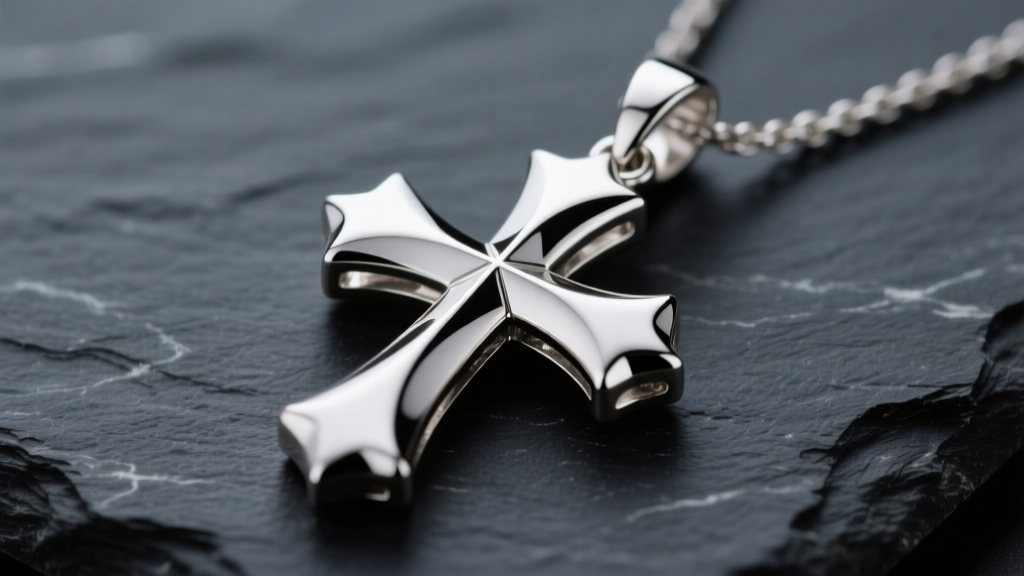
The Iconography and Geometry of the Eight-Pointed Cross
When collectors, appraisers, and individuals search for a scientology necklace, they are almost exclusively referring to the pendant featuring the religion's distinct eight-pointed cross. Unlike the traditional Latin or cruciform crosses found in mainstream Christianity, the Scientology cross possesses a unique radial symmetry that presents specific challenges and opportunities in jewelry manufacturing. To understand the value and construction of these pieces, one must first examine the geometric and symbolic requirements of the design.
The eight points of the cross represent the eight "dynamics" or spheres of survival as outlined by the religion's founder, L. Ron Hubbard, ranging from the self and family to the physical universe and infinity, as detailed in Britannica's overview of Scientology's core beliefs. The center of the cross typically features a distinct circular motif. From a jewelry design perspective, this radial symmetry requires precise mold-making. Any slight deviation in the lost-wax casting process will result in an asymmetrical piece, which is immediately noticeable to the trained eye. High-quality versions of this pendant maintain exact 45-degree angles between each of the eight arms, with a perfectly centered circular bezel or raised dome in the middle.

Metallurgical Breakdown: Material Grades and Manufacturing
The market for Scientology jewelry is bifurcated into two distinct categories: official merchandise produced or authorized by the Church, and third-party replicas crafted by independent jewelers or mass-market novelty manufacturers. The metallurgical quality varies drastically between these two groups.
Official and High-Grade Castings
Authentic, high-tier pendants are typically cast in solid 10k or 14k yellow gold, or .925 sterling silver. These pieces utilize the lost-wax casting method, which allows for the sharp, crisp edges required for the eight points. The finishing process usually involves a high-polish buffing on the raised surfaces, while the recessed background may be left with a matte or lightly sandblasted texture to create visual contrast. According to the GIA Gem Encyclopedia on silver properties, sterling silver used in religious artifacts is often alloyed with copper for durability, requiring careful anti-tarnish storage.
Replica and Base-Metal Alternatives
Conversely, replicas found on secondary markets are frequently die-cast from zinc alloys, pewter, or brass, and then electroplated with a micro-layer of gold or silver. While visually similar from a distance, these base-metal pieces suffer from edge degradation. The sharp points of the cross often show premature wear, revealing the dark base metal beneath the plating. Furthermore, the casting lines (sprue marks) are often poorly filed, leaving visible seams along the lateral edges of the cross arms.
Material Comparison and Pricing Matrix
For appraisers and buyers looking to evaluate a scientology necklace, understanding the material grade is critical for determining both intrinsic melt value and collectible premium. The following table outlines the standard material specifications encountered in the market.
| Material Grade | Composition / Purity | Tarnish Resistance | Average Pendant Weight | Estimated Market Price |
|---|---|---|---|---|
| Solid 14k Gold | 58.5% Gold, Alloyed | Excellent | 4.5g - 8.0g | $450 - $850+ |
| Solid 10k Gold | 41.7% Gold, Alloyed | Very Good | 4.0g - 7.0g | $250 - $450 |
| Sterling Silver | 92.5% Silver, 7.5% Copper | Moderate (Requires Polish) | 5.0g - 10.0g | $80 - $180 |
| Gold-Plated Brass | Brass Core, Flash Plated | Poor (Plating Wears Off) | 6.0g - 12.0g | $15 - $40 |
| Pewter / Zinc Alloy | Tin/Zinc Base, Antiqued | Low (Oxidizes Dark) | 8.0g - 15.0g | $10 - $25 |
Authentic vs. Replica: Identification Framework
Distinguishing an official Church-issued scientology necklace from a third-party replica requires a systematic inspection of hallmarks, weight distribution, and chain hardware. The Federal Trade Commission maintains strict FTC guidelines on precious metal marketing and stamping, which mandate that any piece sold as solid gold or silver must bear a legible quality mark and a registered maker's mark.
Hallmarks and Stamps
Inspect the reverse side of the pendant and the bail (the loop that connects the pendant to the chain). Authentic sterling silver pieces will be stamped with "925" or "Sterling". Solid gold pieces will bear "10k", "14k", or "585". Crucially, look for a secondary maker's mark or trademark stamp adjacent to the purity mark. Replicas often lack a maker's mark entirely, or they feature generic, unregistered stamps. If the piece is gold-plated, it may be stamped "HGE" (Heavy Gold Electroplate) or "GF" (Gold Filled), which immediately categorizes it as a replica or secondary-market item.
Weight and Center of Gravity
Because the eight-pointed cross is a radially symmetric design, it must hang perfectly flat against the sternum. High-quality castings are engineered with a specific center of gravity, ensuring the bail is positioned precisely on the vertical axis. Replicas often suffer from poor bail placement or uneven metal distribution in the mold, causing the pendant to tilt or flip upside down when worn. A physical weight test using a jeweler's digital scale can also expose hollow-cast base metal replicas, which will feel disproportionately light for their physical volume.
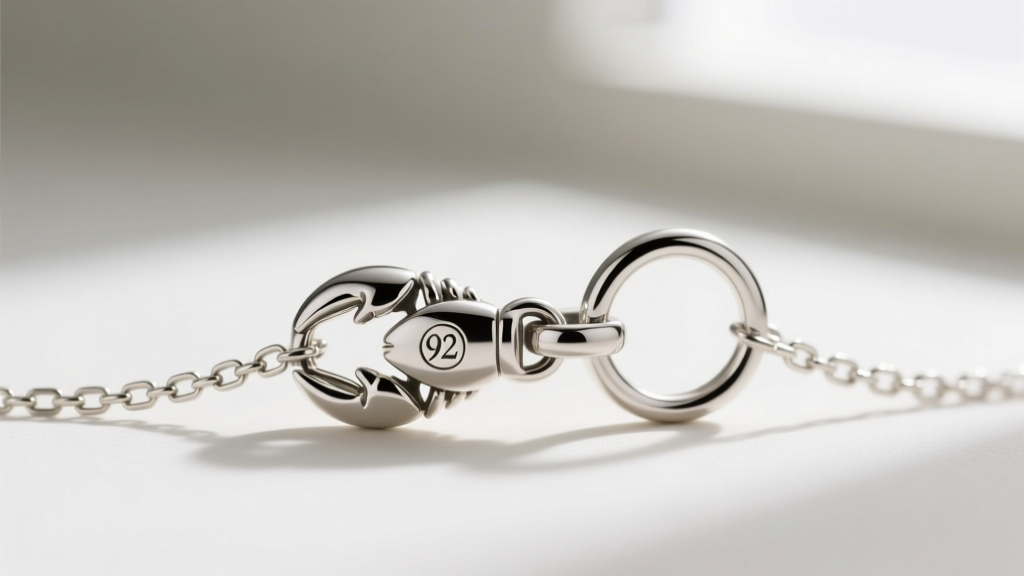
Chain Mechanics and Clasp Engineering
The physical geometry of the Scientology cross dictates the type of chain it should be paired with. The sharp, protruding points of the eight arms are notorious for catching on intricate chain weaves.
- Box Chains (1.0mm - 1.5mm): The optimal choice for this pendant. The smooth, square links glide past the sharp points of the cross without snagging. Box chains also possess high tensile strength, easily supporting the weight of a solid silver or gold casting.
- Cable and Curb Chains: While traditional, the open oval links of standard cable chains frequently catch on the tips of the cross arms, leading to bent links and damaged pendant points.
- Snake Chains: These offer a sleek, modern aesthetic and are entirely snag-proof. However, snake chains are prone to kinking if bent sharply, and they are difficult to repair if the heavy pendant causes a stress fracture near the clasp.
For the clasp hardware, a solid lobster clasp is vastly superior to a spring-ring clasp. The eight-pointed cross pendant exerts a unique rotational torque on the chain; a spring-ring's thin wire mechanism can easily deform under this lateral stress, whereas a forged lobster clasp provides a secure, locking closure.
Surface Finishing and Long-Term Care
Maintaining the crisp geometry of a scientology necklace requires specific care protocols. The recessed areas of the central circle and the angles between the eight arms are natural traps for skin oils, lotions, and environmental sulfur, which accelerates tarnishing in sterling silver pieces.
Do not use abrasive silver dips or harsh chemical baths on high-polish versions of this pendant, as these solutions can strip the rhodium plating often applied to white gold or high-end silver pieces to prevent tarnish. Instead, utilize a mild, phosphate-free dish soap and a soft-bristled toothbrush to gently agitate the recessed corners. For oxidized or antiqued finishes—where the background is intentionally darkened to highlight the raised cross—ultrasonic cleaners must be strictly avoided, as the high-frequency vibrations will strip the intentional patina from the crevices, leaving the piece looking flat and washed out.
Conclusion
The scientology necklace is far more than a simple religious identifier; it is a complex piece of geometric jewelry that demands precise metallurgical execution. Whether evaluating an estate piece, verifying the authenticity of a solid gold casting, or selecting the correct snag-free box chain for daily wear, understanding the technical specifications of the eight-pointed cross ensures that the artifact is properly identified, valued, and preserved for the long term.


