Expert Guide to Buying a Screen-Accurate Darth Vader Necklace
Explore the metallurgy, casting methods, and hardware specs of a premium Darth Vader necklace. Learn to identify licensed, high-quality Sith jewelry.

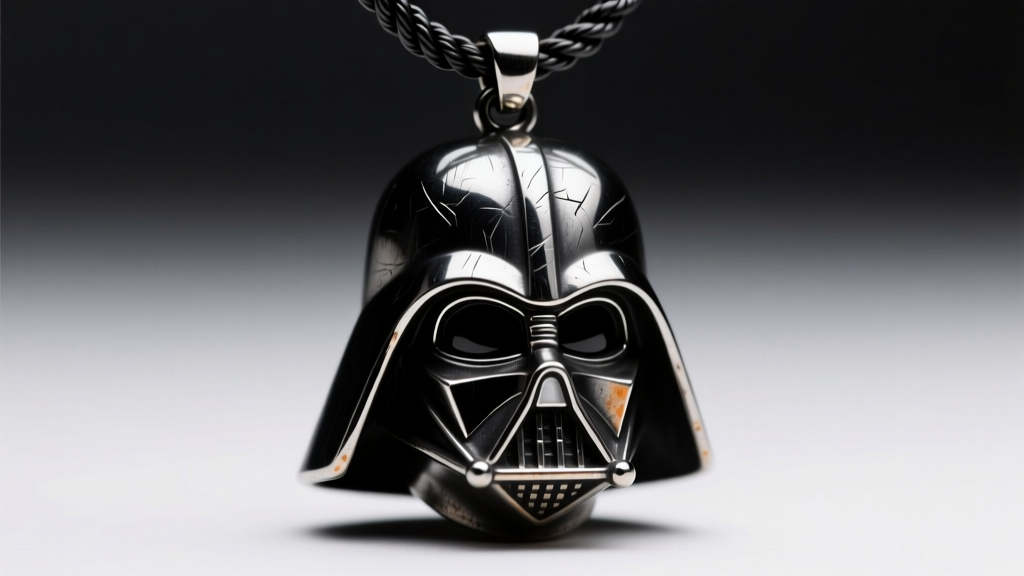
The evolution of cinematic fandom jewelry has transformed novelty trinkets into serious horological and metallurgical investments. When searching for the perfect Darth Vader necklace, collectors and style enthusiasts alike must navigate a crowded market of cheap alloys, unlicensed knock-offs, and premium, screen-accurate masterpieces. As of 2026, the intersection of geek culture and fine jewelry has never been more refined, but it requires a trained eye to distinguish a true collectible from a mass-produced toy. This expert deep dive explores the material science, casting techniques, and hardware specifications that define a high-quality Sith Lord pendant.
The Metallurgy of the Dark Side: Material Breakdown
The foundation of any premium Darth Vader necklace lies in its base metal. The iconic black and silver aesthetic of the Sith helmet demands materials that can hold high-polish finishes while supporting deep, light-absorbing oxidation or plating.
Zamak 5 (Zinc Alloy)
Entry-level and mid-tier licensed pendants frequently utilize Zamak 5, a zinc alloy containing 5% aluminum. Zamak is favored for die-casting because of its low melting point and excellent fluidity, allowing it to capture the sharp, angular lines of Vader’s mouth grille and the sweeping curves of the neck guard. However, Zamak is inherently porous. If the protective plating (usually PVD or electroplated chrome) chips, the underlying zinc will rapidly oxidize and degrade when exposed to skin acids and humidity.
316L Surgical Stainless Steel
For daily wearers, 316L marine-grade stainless steel is the optimal choice. It offers superior tensile strength and is highly resistant to tarnish and corrosion. High-end steel pendants often feature Physical Vapor Deposition (PVD) coating to achieve the helmet's signature glossy black finish. PVD bonds at a molecular level, making it vastly superior to traditional wet-painting or electroplating for resisting micro-scratches.
Sterling Silver with Black Rhodium
Luxury licensees, such as RockLove Jewelry, elevate the Darth Vader necklace into the realm of fine jewelry by casting in solid 925 sterling silver. To achieve the dark, menacing contrast of the helmet, master jewelers apply black rhodium plating or use hand-painted black enamel in the recessed areas of the dome and brow. Silver provides a weight and thermal conductivity that feels substantial and luxurious against the chest.
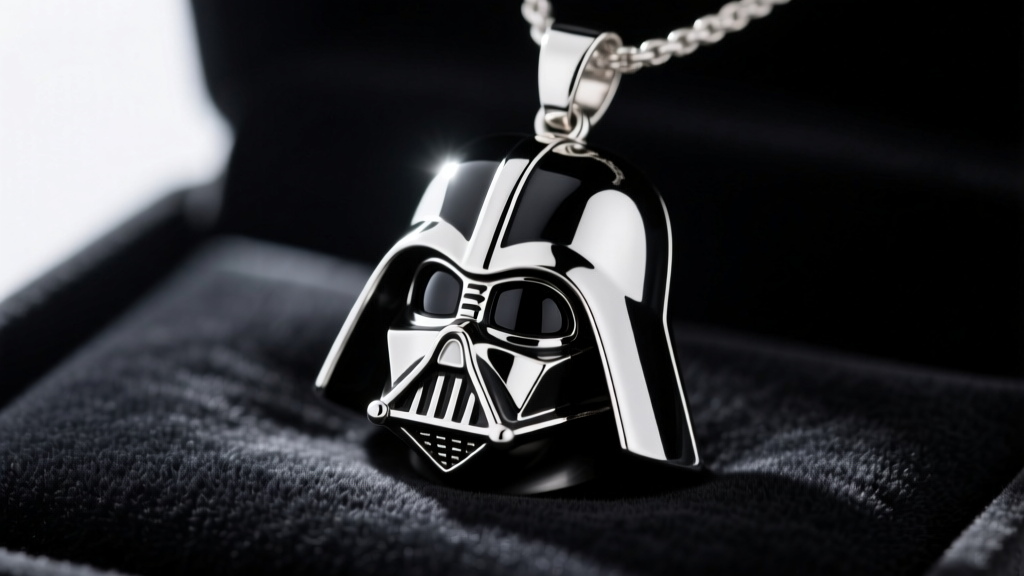
Lost-Wax Casting vs. Die-Casting: Capturing the Details
The method used to form the pendant dictates the level of screen-accurate detail. The original Star Wars props were complex assemblies of fiberglass, vacuum-formed plastic, and machined aluminum. Translating this into a 30-millimeter pendant requires precision engineering.
- Die-Casting: Used for high-volume production. Molten Zamak is injected into a steel mold under high pressure. While efficient, the mold lines (parting lines) often require manual filing, and ultra-fine details like the micro-tusks on the mouth grille can sometimes appear soft or rounded.
- Lost-Wax Casting (Investment Casting): The standard for artisan and luxury pieces. A 3D-printed or hand-carved wax model is encased in a plaster investment, burned out, and replaced with molten silver or gold. This method captures microscopic surface textures, including the simulated battle damage and asymmetric weathering seen on the Empire Strikes Back helmet variant.
Chain Hardware and Tensile Specifications
A common failure point in heavy geek jewelry is the chain and the bail (the loop connecting the pendant to the chain). A screen-accurate Vader helmet pendant, especially in solid silver or steel, can weigh between 15 and 35 grams. Pairing a heavy pendant with a weak chain guarantees a broken necklace and a lost investment.
| Chain Style | Recommended Gauge | Tensile Strength | Max Pendant Weight | Aesthetic Match |
|---|---|---|---|---|
| Rope Chain | 2.5mm - 3.5mm | High | 45g | Excellent; mimics mechanical cabling |
| Curb Chain | 3.0mm - 4.0mm | Very High | 60g | Good; offers an industrial, heavy-duty look |
| Box Chain | 2.0mm - 2.5mm | Moderate | 25g | Fair; geometric links complement the helmet |
| Wheat Chain | 2.5mm - 3.0mm | High | 40g | Excellent; woven texture adds organic contrast |
Bail and Jump Ring Engineering
Do not overlook the bail. A premium Darth Vader necklace will feature a soldered, fixed bail rather than a simple open jump ring. Open jump rings are prone to pulling apart under the pendulum motion of a heavy pendant. Furthermore, the inner diameter of the bail must be at least 1.5mm larger than the chain's width to prevent friction wear and binding at the clasp point.
Licensing, Hallmarks, and Artisan Alternatives
When investing over $100 in a piece of Star Wars jewelry, provenance is critical. Officially licensed pieces from Lucasfilm and Disney will bear specific hallmarks. According to StarWars.com licensing archives, authentic merchandise will feature the Lucasfilm copyright stamp (e.g., '© LFL') either engraved on the back of the pendant or stamped on the chain's clasp tag.
However, the artisan market offers compelling alternatives. Independent jewelers on platforms like Etsy often create 'inspired-by' pieces that avoid direct copyright infringement by abstracting the helmet's geometry into brutalist, minimalist silver designs. These artisan pieces frequently utilize lost-wax casting and incorporate genuine black onyx or obsidian cabochons into the brow band, offering a unique, high-fashion interpretation of the Sith Lord aesthetic that mass-market licensees rarely attempt.
'The best cinematic jewelry doesn't look like a toy; it looks like an artifact. The weight, the cold touch of the metal, and the precision of the casting are what separate a costume prop from a permanent wardrobe staple.' — Master Jeweler & Prop Replication Expert
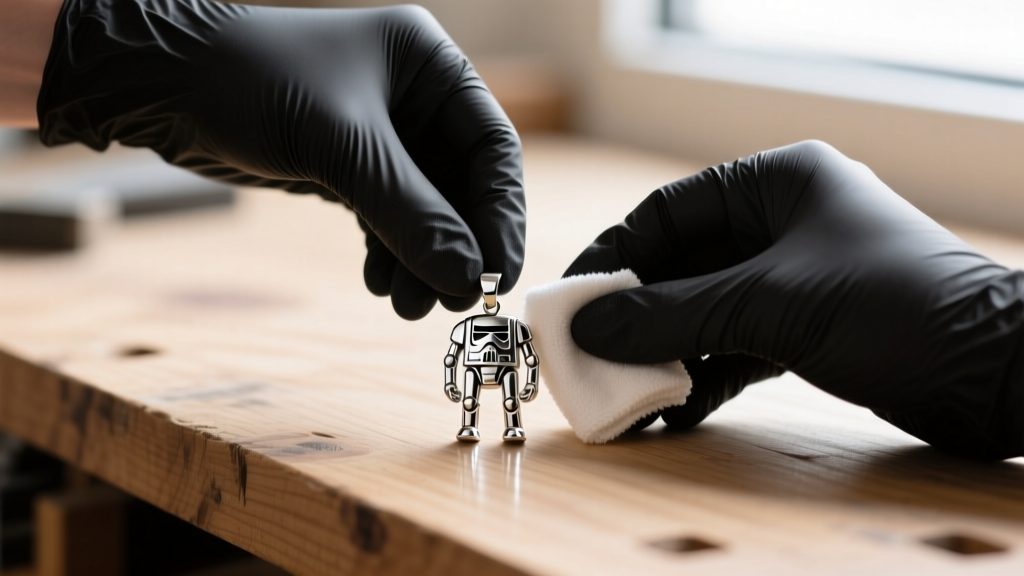
Long-Term Maintenance and PVD Coating Care
Maintaining the imposing finish of a Darth Vader necklace requires specific care protocols, particularly for pieces featuring black rhodium or PVD coatings.
Cleaning Protocols
- Avoid Ultrasonic Cleaners: Never place a PVD-coated or enameled pendant in an ultrasonic jewelry cleaner. The high-frequency cavitation can cause micro-fractures in the enamel and strip the black rhodium plating from the recessed details.
- Mild Surfactants Only: Use a few drops of pH-neutral dish soap in lukewarm water. Agitate gently with a baby-hair toothbrush to remove sebum and dead skin cells from the intricate mouth grille.
- Microfiber Drying: Pat dry with a lint-free microfiber cloth. Air-drying will leave hard water spots that are highly visible on the mirror-polished silver or steel sections of the helmet dome.
Storage and Oxidation Prevention
Sterling silver pieces with intentional oxidation (antiquing) should be stored in anti-tarnish cloth bags. If the bright silver areas begin to yellow, use a specialized silver polishing cloth, but never use liquid silver dip. Liquid dips are highly abrasive and will strip the deliberate black oxidation from the helmet's panel lines, flattening the 3D effect and ruining the screen-accurate contrast.
Final Verdict: Investing in the Dark Side
A high-quality Darth Vader necklace is a testament to modern jewelry manufacturing, blending pop-culture reverence with serious metallurgical engineering. By prioritizing 316L steel or solid sterling silver, demanding secure soldered bails, and understanding the nuances of PVD and rhodium plating, you can secure a piece that commands respect. Whether worn as a subtle nod to the galaxy's most iconic villain or as a bold statement piece, the right Sith pendant is an investment in enduring, cinematic style.


