Technical Guide to Choosing the Right Pearl Necklace Clasp
Discover the mechanics, metallurgy, and security ratings of every pearl necklace clasp type. Expert guide to fishhook, box, and safety catches.

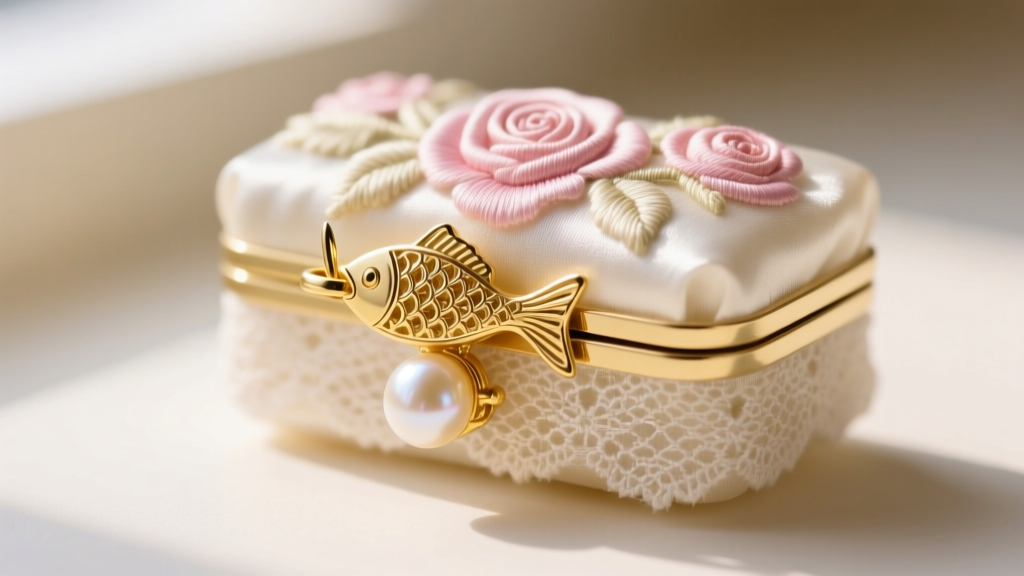
The Engineering Behind Pearl Strand Security
When evaluating high-end jewelry, the focal point is inevitably the gemstone. However, for master jewelers and gemologists, the most critical point of failure on any strand lies at the nape of the neck. A pearl necklace clasp is not merely an aesthetic terminus; it is a highly engineered mechanical joint subjected to continuous dynamic loading. Unlike rigid metal chains, pearl strands are flexible, articulated structures that drape in a catenary curve. This curvature places localized shear stress on the thread-to-clasp connection point every time the wearer moves.
Standard lobster claws and spring ring clasps—while perfectly adequate for lightweight metal chains—are fundamentally unsuited for knotted pearl strands. Their small jump rings create friction points that saw through silk and synthetic threads over time. Selecting the correct pearl necklace clasp requires a deep understanding of metallurgy, tensile strength, and traditional stringing mechanics. In this technical deep dive, we examine the structural integrity of various clasp mechanisms and the precise specifications required to secure pearls weighing anywhere from 20 to over 100 grams.
The Physics of Strand Tension and Shear Stress
A standard 18-inch princess-length strand of 8mm Akoya pearls weighs approximately 35 grams. While this static weight seems negligible, dynamic movement multiplies the force exerted on the clasp assembly. When a wearer leans forward or turns quickly, the inertia of the pearl strand transfers kinetic energy directly to the terminal ends. If the clasp relies on a simple jump ring, the thread bears the brunt of this lateral shear stress. According to the Gemological Institute of America (GIA), improper clasp attachment is the leading cause of sudden strand failure, resulting in catastrophic pearl loss. To mitigate this, the transition from the flexible thread to the rigid metal clasp must be gradual, buffered, and mechanically reinforced.
Metallurgy: Vickers Hardness and Prong Memory
The security of a pearl necklace clasp is directly tied to the metallurgical properties of the alloy used in its manufacture. The tension prongs and internal tongues of clasps require specific Vickers Hardness (HV) ratings to maintain "memory"—the ability to return to their original shape after being compressed or bent.
- 14k Gold (HV ~130-140): The industry standard for fishhook and box clasps. Its higher hardness allows for thinner, more elegant tension prongs that will not permanently deform when forced into a catch.
- 18k Gold (HV ~110-120): Softer and richer in color, but lacks the innate springiness of 14k gold. If an 18k gold fishhook clasp is used, the prongs must be milled at least 20% thicker (e.g., 1.2mm instead of 1.0mm) to prevent fatigue failure.
- Platinum (Pt950/Ru) (HV ~130+): Offers superior tensile strength and durability. Platinum clasps are exceptionally secure but require specialized laser welding for any sizing adjustments or repairs, as traditional soldering can compromise the adjacent silk thread.
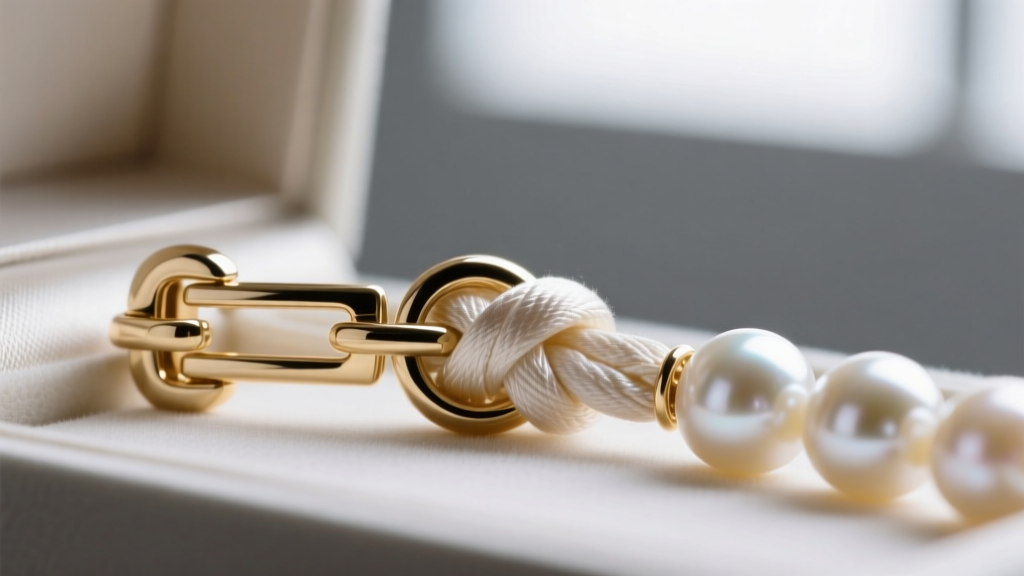
Anatomy of the Primary Pearl Necklace Clasp Types
Not all clasps are engineered for the unique demands of pearl strands. Below is a technical breakdown of the mechanisms specifically designed for pearl jewelry.
The Fishhook and Floral Box Clasp
The fishhook clasp is the gold standard for medium-to-heavy pearl strands. It consists of a hook with one or two tension prongs that slide into a decorative box (often shaped like a flower or barrel). To engage it, the wearer compresses the prongs, inserts the hook, and releases. The prongs expand behind an internal metal lip. High-quality fishhook clasps feature a secondary safety catch—a figure-8 wire loop that snaps over a button on the opposite side, providing redundancy if the primary prongs fail.
The Ball Clasp (Kugelverschluss)
Popular in European pearl jewelry, the ball clasp utilizes a threaded screw mechanism. While aesthetically seamless, it presents a significant technical vulnerability: cross-threading. If the wearer forces the threads at an improper angle, the soft gold or silver threads will strip, rendering the clasp useless. Furthermore, ball clasps are difficult for individuals with limited manual dexterity to operate blindly behind the neck.
The Box and Tongue Clasp
For heavy South Sea or Tahitian pearl strands exceeding 80 grams, a heavy-duty box and tongue clasp is mandatory. The tongue is stamped with a small fold or dimple that acts as a spring, snapping securely into the box housing. This mechanism resists lateral pulling forces far better than a fishhook, provided it is paired with a robust safety catch.
Comparative Security and Tensile Data
The following table outlines the operational parameters for different pearl necklace clasp mechanisms based on bench-jeweler stress testing.
| Clasp Mechanism | Ideal Strand Weight | Primary Failure Mode | Security Rating |
|---|---|---|---|
| Fishhook & Box | 20g - 60g | Prong fatigue / bending | High |
| Ball (Screw) | 10g - 40g | Cross-threading / stripping | Medium-High |
| Heavy Box & Tongue | 40g - 120g+ | Tongue compression loss | Very High (w/ Safety) |
| Magnetic | < 20g | Lateral shear separation | Low |
The Critical Role of French Wire and Safety Catches
A premium pearl necklace clasp is only as secure as its attachment point. The transition from the silk or synthetic thread to the metal clasp ring must be protected by French wire (also known as gimp). French wire is a tightly coiled metal spring, typically measuring 0.6mm to 0.8mm in diameter. The thread passes through the center of the coil before looping through the clasp ring. This creates a sacrificial metallic barrier that prevents the abrasive clasp ring from sawing through the thread during dynamic movement.
Additionally, any clasp valued over $500 or securing pearls over 8mm must feature a figure-8 safety catch. This secondary mechanism is constructed from spring-hard wire (usually 0.8mm gauge). The safety wire must be laser-welded or hard-soldered to the clasp body; soft soldering will inevitably melt or fracture under the stress of daily wear. For comprehensive restringing protocols, master stringers often refer to the Pearl Paradise Education Center, which emphasizes that skipping French wire reduces the lifespan of a silk strand by up to 70%.
Bead Tips vs. Direct Clasp Attachment
Historically, jewelers used clamshell bead tips (calottes) to hide the terminal knot of the silk thread. The bead tip features a small loop that connects to the clasp via a jump ring. While this method is fast and requires less specialized skill, it introduces an unnecessary point of mechanical failure. The jump ring can pull open under sudden tension. Modern master stringers prefer the direct French wire attachment method, where the thread loops directly through the clasp's integrated ring, eliminating the jump ring entirely and reducing the profile of the clasp assembly for a seamless drape.
Expert Maintenance and Inspection Protocols
Even the most robust pearl necklace clasp requires periodic technical inspection. Every 12 to 18 months, a jeweler should evaluate the clasp under 10x magnification. Key inspection points include:
- Prong Tension: Checking for microscopic stress fractures at the base of fishhook prongs.
- Safety Catch Integrity: Ensuring the figure-8 wire maintains its spring tension and hasn't been stretched open.
- French Wire Degradation: Inspecting the coiled wire for unspooling or crushing, which can expose the underlying thread to abrasion.
- Thread Fraying: Examining the silk or PowerPro synthetic thread immediately inside the clasp ring for signs of micro-fraying.
By prioritizing mechanical engineering over mere aesthetics, collectors and jewelers can ensure that a pearl necklace clasp provides a lifetime of security, allowing the wearer to enjoy the strand without the persistent anxiety of sudden structural failure.


