Silver Clay Necklace Buying Guide: What to Look For
Discover what to look for when buying a silver clay necklace. Learn about fine silver purity, firing methods, shrinkage rates, and pricing tiers.

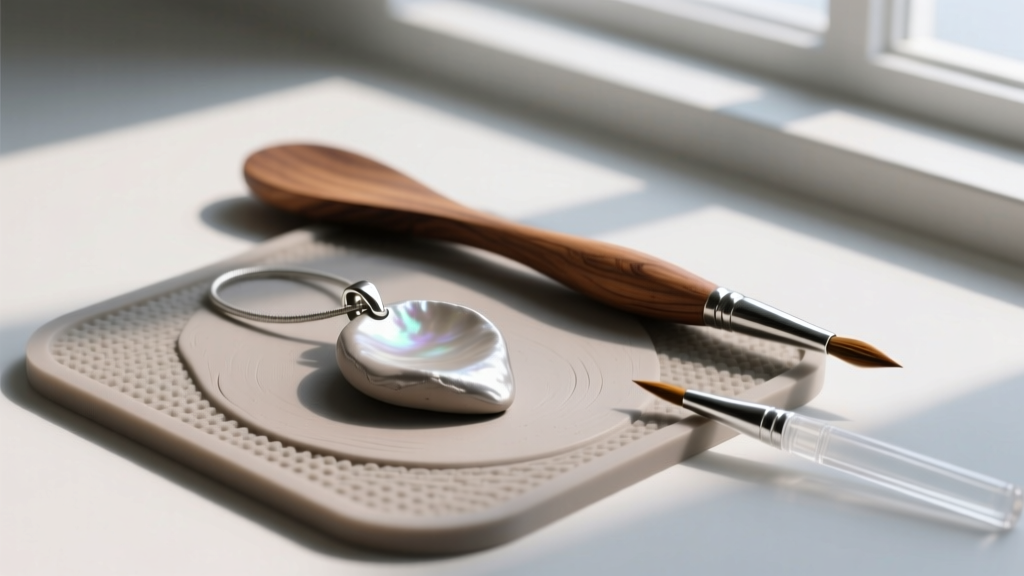
The Metallurgy of Silver Clay: Fine Silver vs. Sterling Formulas
When shopping for a silver clay necklace, the first critical factor to understand is the metallurgical composition of the material. Silver clay—originally developed in the 1990s by Mitsubishi Materials as Precious Metal Clay (PMC) and later by Aida Chemical as Art Clay Silver—is not actually "clay" in the ceramic sense. It is a sophisticated matrix of microscopic silver particles, an organic cellulose binder, and water. This unique composition allows artisans to sculpt, carve, and mold the material with the ease of pottery before transforming it into solid metal through firing.
The vast majority of authentic silver clay pendants on the market are .999 fine silver. Because the organic binder completely vaporizes during the firing process, what remains is pure, sintered silver. According to the Silver Institute, fine silver is highly prized for its brilliant luster and hypoallergenic properties, making it an exceptional choice for sensitive skin. However, fine silver is inherently softer than sterling silver.
In recent years, sterling silver clay (e.g., Art Clay 950) has entered the artisan market. This formula incorporates copper alloy particles, yielding a .925 or .950 sterling equivalent after firing. Sterling clay requires a much more complex firing schedule involving activated carbon in a kiln to prevent the copper from oxidizing. When buying, always check the product description or hallmark. If the artisan specifies "950" or "Sterling Clay," expect a slightly more rigid pendant that resists bending, whereas ".999 Fine Silver" will offer a brighter, whiter shine but requires gentle care to avoid warping.
Firing Protocols: How Kiln vs. Torch Affects Durability
The structural integrity of your silver clay necklace is entirely dependent on the artisan's firing protocol. Sintering is the process where the microscopic silver particles fuse together at a molecular level without melting into a liquid pool.
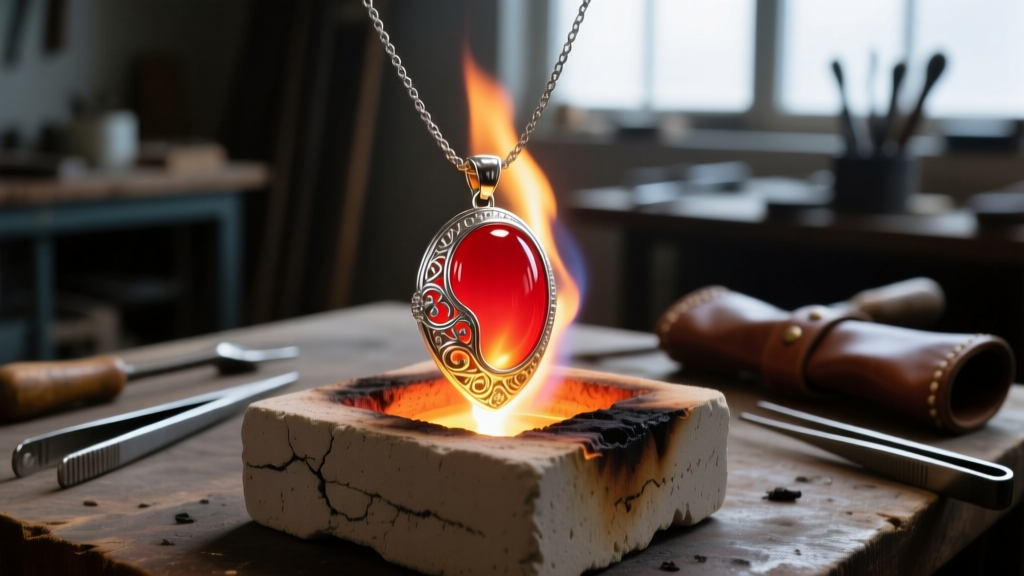
There are two primary firing methods used by jewelry makers, and understanding the difference is crucial for evaluating durability:
- Kiln Firing: The gold standard for silver clay. The piece is placed in a digital jewelry kiln and held at approximately 1,600°F (870°C) for up to two hours. This extended heat soak allows for maximum particle fusion, resulting in a dense, highly durable pendant with minimal internal porosity. According to jewelry fabrication experts at Ganoksin, kiln-fired pieces can be aggressively polished, work-hardened, and soldered just like traditional cast or milled silver.
- Torch Firing: Often used for small, delicate pendants or by hobbyists without kiln access. A butane or propane torch is used to heat the piece until it glows a dull cherry red for 2 to 5 minutes. While torch-fired pieces are fully sintered and perfectly safe for everyday wear, they may retain a slightly higher degree of microscopic porosity. They are generally not suitable for heavy traditional soldering or extreme work-hardening.
Buyer's Tip: If you are purchasing a large, heavy, or structurally complex silver clay pendant, ask the artisan if it was kiln-fired. Large pieces torch-fired unevenly can suffer from internal stress fractures.
Shrinkage Rates and Texture Fidelity: Spotting Authentic Handcrafted Pieces
One of the most fascinating aspects of a genuine silver clay necklace is the physical transformation it undergoes during firing. As the water evaporates and the cellulose binder burns away, the silver particles pull tightly together, resulting in a predictable shrinkage rate of 8% to 15%, depending on the specific brand and formula used (e.g., PMC+ shrinks roughly 12%, while Art Clay shrinks about 8-10%).
This shrinkage is a massive advantage for the buyer when verifying authenticity. Because the piece shrinks uniformly, any texture pressed into the raw clay—such as botanical leaf veins, woven fabric patterns, or even the artisan's actual fingerprint—becomes incredibly compressed and hyper-detailed.
"The hallmark of a true silver clay piece is the microscopic fidelity of its textures. The shrinkage acts like a magnifying glass in reverse, pulling the ridges of a stamped texture tighter together than is physically possible with traditional wax carving or metal stamping."
When examining product photos, look closely at the edges of textured areas. Authentic silver clay will have slightly softened, organic edges where the artisan hand-smoothed the raw clay with a damp brush. If the edges are perfectly sharp, rigid, and mathematically uniform, you may be looking at a 3D-printed resin casting that has been deceptively marketed as "hand-sculpted clay."
Hardware and Chain Pairings for Fine Silver Pendants
A common oversight when purchasing a silver clay necklace is ignoring the hardware. Because .999 fine silver pendants are relatively soft, the jump rings and bails connecting them to the chain must be carefully selected to prevent metal fatigue and loss.
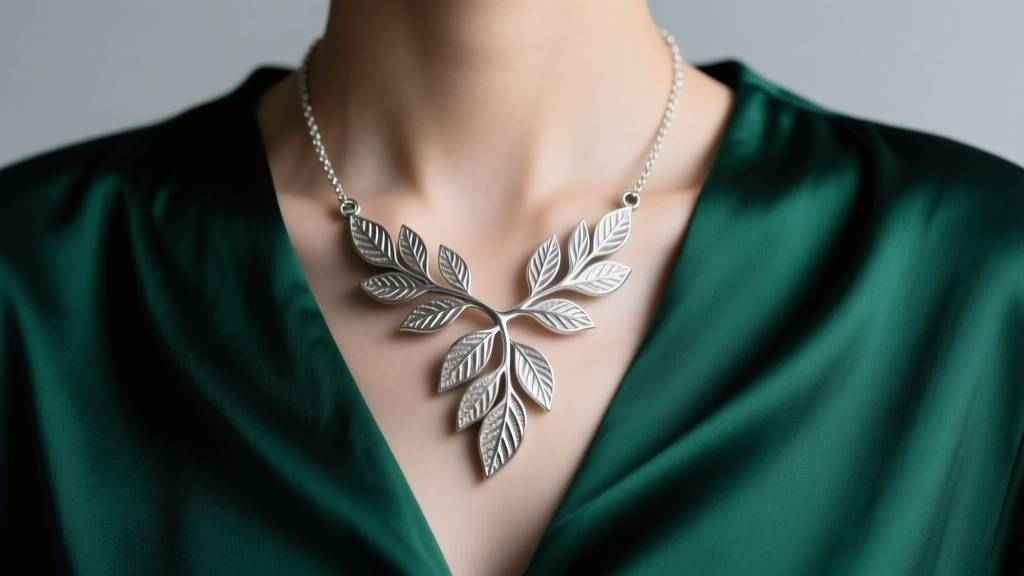
Here is what to look for regarding necklace hardware:
| Hardware Component | Recommended Material | Why It Matters |
|---|---|---|
| Jump Rings | Sterling Silver (.925) or Argentium | Fine silver jump rings will pull apart under the weight of a pendant. Sterling provides the necessary tensile strength. |
| Bails | Soldered Sterling or Work-Hardened Fine | The bail must resist friction from the chain. If the artisan uses a wrapped fine silver wire bail, ensure it is heavily work-hardened. |
| Chains | Sterling Silver, Argentium, or Platinum | Pairing a fine silver pendant with a sterling chain is standard. Avoid silver-plated chains, as the plating will wear off and clash with the pure silver pendant. |
Always ensure the artisan uses a soldered jump ring to attach the bail to the pendant. An open, unsoldered jump ring made of soft fine silver will eventually warp and drop the pendant.
Pricing Framework and Red Flags
The market for silver clay jewelry has expanded significantly, making it vital to understand the pricing tiers. Because silver clay is sold by the gram (and silver prices fluctuate), the cost of a necklace is driven more by the artisan's labor, design complexity, and firing overhead than by the raw melt value of the metal.
Expected Pricing Tiers (2026 Market Estimates)
- Entry-Level / Simple Stamps ($45 - $85): Small, lightweight pendants (under 5 grams) with simple geometric shapes or basic stamp textures. Usually torch-fired.
- Mid-Tier Artisan ($90 - $180): Intricate botanical impressions, carved relief designs, or pieces incorporating synthetic or natural gemstones (which must be kiln-fired to survive the heat). Expect excellent finishing and patina work.
- Master / Sculptural ($200 - $450+): Large, multi-piece constructed pendants, hollow-form beads, or pieces featuring complex keum-boo (gold foil fusion) detailing. These require advanced kiln schedules and dozens of hours of bench time.
Red Flag Warning: If you see a "silver clay necklace" selling for $25 with a highly complex, multi-layered 3D design, it is almost certainly a die-cast or 3D-printed wax-cast piece manufactured overseas. True silver clay is a premium, labor-intensive medium; pricing that undercuts the raw cost of silver plus basic bench time is a guaranteed indicator of mass-produced cast knockoffs.
Authentication and Hallmarking Checklist
Before finalizing your purchase, verify the piece against this quick authentication checklist to ensure you are investing in genuine, high-quality metal clay artistry:
- Hallmark Verification: Look for a ".999", "FS" (Fine Silver), or ".950" stamp. While not legally mandated for pieces under specific weight thresholds in some countries, reputable artisans almost always stamp their work.
- Weight-to-Size Ratio: Silver clay is slightly less dense than traditionally cast silver due to microscopic porosity. A silver clay pendant will feel surprisingly lightweight for its visual volume compared to a solid cast equivalent.
- Patina and Oxidation: Fine silver does not tarnish as quickly as sterling silver because it lacks copper. However, artisans often apply liver of sulfur to create dark, antique patinas in the textured crevices. Ensure the patina looks hand-applied (darker in recesses, polished on high spots) rather than uniformly sprayed.
By understanding the unique metallurgical properties, firing requirements, and pricing structures of metal clay, you can confidently select a silver clay necklace that is not only a stunning piece of wearable art but a durable heirloom crafted with genuine artisanal expertise.


