Silver Necklace Chunky Styles: 2026 Trend Analysis
Explore the silver necklace chunky trend for 2026. Expert analysis on chain weights, Argentium silver, and advanced styling frameworks.


The search for the perfect silver necklace chunky aesthetic has evolved from a niche streetwear staple into a dominant force in contemporary fine jewelry. As we navigate 2026, the oversized silver chain is no longer just a bold statement; it is a masterclass in proportion, metallurgy, and gender-fluid styling. However, investing in heavy silver requires a technical understanding of weight, alloy composition, and hardware integrity. This guide deconstructs the modern heavy-gauge silver trend, offering actionable frameworks for selection, styling, and long-term maintenance.
Defining "Chunky": Millimeters, Grams, and Link Architecture
In the jewelry industry, "chunky" is not merely a subjective descriptor; it is defined by specific dimensional thresholds. A true heavy-gauge necklace typically features a link width between 10mm and 20mm, with a total metal weight ranging from 60 grams to over 150 grams for a standard 20-inch length. The architecture of the link dictates how the piece drapes and reflects light.
- Cuban Links: Characterized by tightly interlocking, flat-surfaced oval links. They offer a fluid drape and maximum surface area for light reflection.
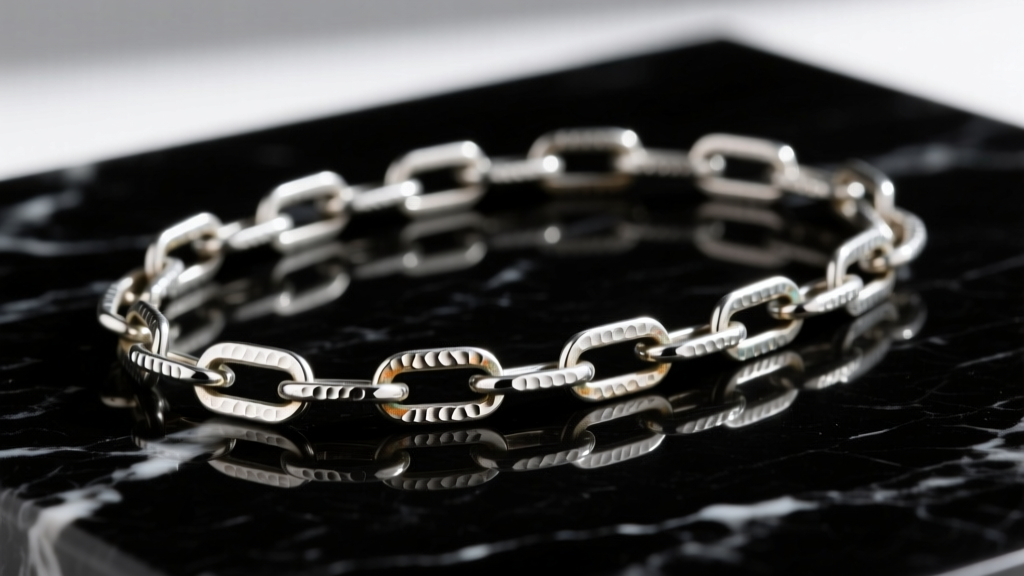
- Paperclip Chains: Elongated, rectangular links that provide a modern, architectural silhouette. They are significantly lighter than Cuban chains of the same width.
- Rope Chains: Twisted, helical links that create a continuous spiral. They are incredibly dense, making them the heaviest option per millimeter of width.
The Perils of Hollow-Core Construction
When shopping for a heavy chain, consumers frequently encounter pieces that look massive but weigh surprisingly little. These are hollow-core or semi-solid chains, manufactured by electroforming or wrapping a thin sheet of silver over a resin or base-metal core. While they offer a lower price point (often under $150 for a 15mm chain), they represent a false economy. Hollow links are highly susceptible to crushing from minor impacts, such as leaning against a hard surface or catching the chain on a door handle. Once crushed, hollow chains cannot be repaired or soldered; they must be entirely replaced. Furthermore, the resin cores can degrade over time when exposed to perfumes, sweat, and UV light, leading to structural collapse. For a true investment piece that can be passed down or repaired by a bench jeweler, solid cast or solid die-struck links are non-negotiable. You are paying for the intrinsic melt value of the silver and the durability of the architecture.
Material Science: Sterling vs. Argentium in Heavy Chains
When dealing with high-surface-area jewelry, oxidation and tarnish become primary concerns. Traditional 925 Sterling silver contains 7.5% copper, which reacts with sulfur and moisture in the air to create silver sulfide (tarnish). According to the Gemological Institute of America (GIA), this copper content is necessary for structural hardness, but it demands rigorous maintenance, especially on a 120-gram chain where polishing every crevice is labor-intensive.
The 2026 market has seen a massive shift toward Argentium Silver (typically 935 or 960 purity). By replacing a portion of the copper with the metalloid germanium, Argentium forms a transparent, self-healing germanium dioxide layer on the surface. This makes it highly tarnish-resistant and significantly brighter than traditional sterling. For a chunky chain that sits against the skin and clothing daily, Argentium reduces maintenance time by up to 80%. To maintain traditional sterling, ultrasonic cleaners can be used, but they must be avoided if the chain features any oxidized detailing, as the cavitation will strip the intentional patina. Argentium, conversely, requires only a gentle wash with mild dish soap and warm water to remove skin oils, followed by a dry with a microfiber cloth to restore its brilliant white luster.
Weight, Width, and Price Matrix
Understanding the correlation between chain style, physical weight, and market pricing is crucial for evaluating value. Hand-assembled and soldered links command a premium over machine-made alternatives. Below is a breakdown of what to expect from solid, high-quality silver chains in the current market.
| Chain Style | Typical Width | Weight (20-inch) | Clasp Requirement | Price Range (Solid) |
|---|---|---|---|---|
| Cuban Link | 12mm | 85g - 110g | Box w/ Figure-8 | $450 - $850 |
| Paperclip (Solid) | 15mm | 55g - 75g | Heavy Lobster | $300 - $600 |
| Rope Chain | 10mm | 120g - 145g | Trigger / Box | $600 - $1,100 |
| Figaro | 14mm | 70g - 90g | Lobster | $350 - $650 |
Hardware Integrity: Clasp Failure Points
A frequently overlooked aspect of heavy silver jewelry is hardware failure. A standard 12mm lobster clasp has a tensile failure point that may not withstand the dynamic torque generated by a 150-gram chain swinging during movement. The Silver Institute notes that silver's natural malleability means that thin clasp levers can bend under sustained stress.
The Expert Rule: Any solid silver chain exceeding 80 grams must be fitted with a box clasp equipped with a dual figure-8 safety catch, or a specialized heavy-duty trigger clasp with a reinforced internal spring. Furthermore, the jump rings connecting the clasp to the chain must be soldered shut; unsoldered jump rings will inevitably pull apart under the chain's own weight.
Advanced Styling Frameworks: Necklines and The Rule of Thirds
Styling a heavy silver chain requires an understanding of visual weight and negative space. The "chunky" element naturally draws the eye downward, making neckline pairing critical.
The Single Statement Approach
For chains 12mm and wider, isolation is often the most powerful styling choice. Wear a 20-inch or 22-inch Cuban link over a fine-gauge merino wool turtleneck or a structured, open-collar linen shirt. The high contrast between the dark fabric and the bright silver creates a focal point without overwhelming the silhouette. Avoid crew necks with heavy chains, as the collar and the chain will compete for the same visual real estate, creating a cluttered neckline.
Gender-Fluid Proportions
The 2026 landscape has entirely dismantled traditional gendered sizing in jewelry. The 18-inch chain, once strictly categorized as a women's choker length, is now widely adopted in menswear to sit tightly against the collarbone under unbuttoned silk shirts. Conversely, the 24-inch heavy chain has become a staple in womenswear, worn over oversized blazers or tailored suits to introduce a subversive, streetwear-inspired edge to formal tailoring. The focus has shifted from "who is wearing it" to the proportional relationship between the chain's width and the wearer's frame and garment structure.
Layering via the Rule of Thirds
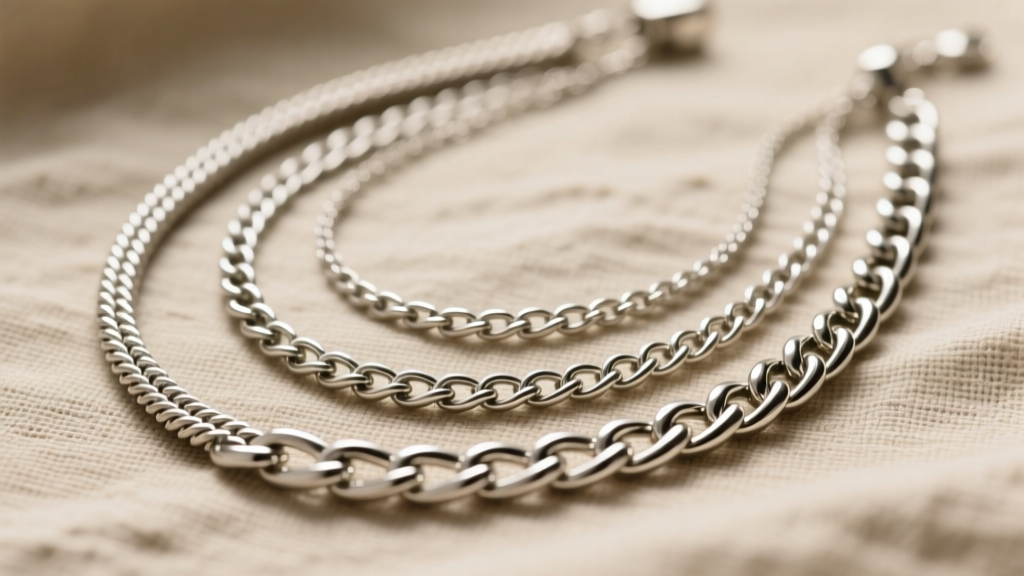
If layering is desired, abandon the "two chains" approach, which often results in tangling and visual confusion. Instead, utilize the Rule of Thirds with a three-piece stack:
- The Base (16-18 inches): A delicate 2mm-3mm cable or rope chain that sits near the collarbone.
- The Bridge (20-22 inches): A medium-weight 5mm-7mm Figaro or bead chain that rests on the upper chest.
- The Anchor (24-26 inches): Your chunky 10mm+ statement piece that anchors the entire composition near the sternum.
This 4-inch to 6-inch drop between layers ensures that each chain's link architecture remains visible, preventing the heavy silver from swallowing the delicate pieces. Ensure all chains in the stack share the same silver finish (e.g., all high-polish or all brushed) to maintain cohesive intentionality.
2026 Trend Forecast: Textures and Mixed Finishes
While the high-polish mirror finish remains a classic, the 2026 trend cycle heavily favors mixed and tactile finishes on heavy chains. Florentine finishes (cross-hatched engraving on the flat surfaces of Cuban links) reduce the blinding glare of large silver surfaces, replacing it with a sophisticated, scattered scintillation. Similarly, oxidized recesses combined with wire-brushed high points give the silver an heirloom, almost industrial feel that pairs exceptionally well with contemporary minimalist wardrobes. This shift toward matte and textured finishes also has the practical benefit of hiding micro-scratches that inevitably accumulate on daily-wear heavy metals, ensuring your investment looks intentional and pristine for years to come.