Six Point Star Necklace Materials: Durability Guide
Compare sterling silver, gold, titanium, and steel for your six point star necklace. Discover which metal prevents bent points and skin irritation.
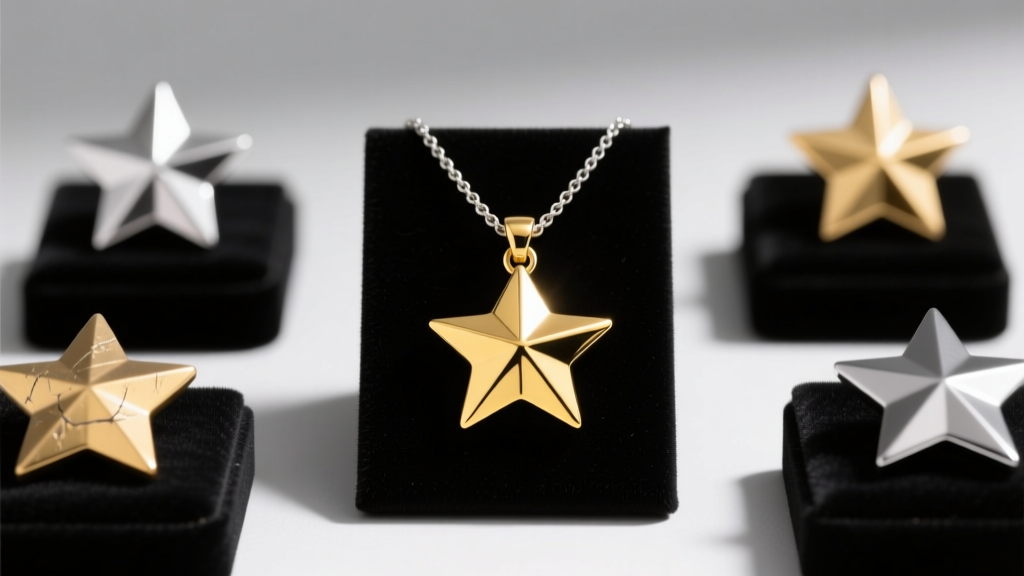
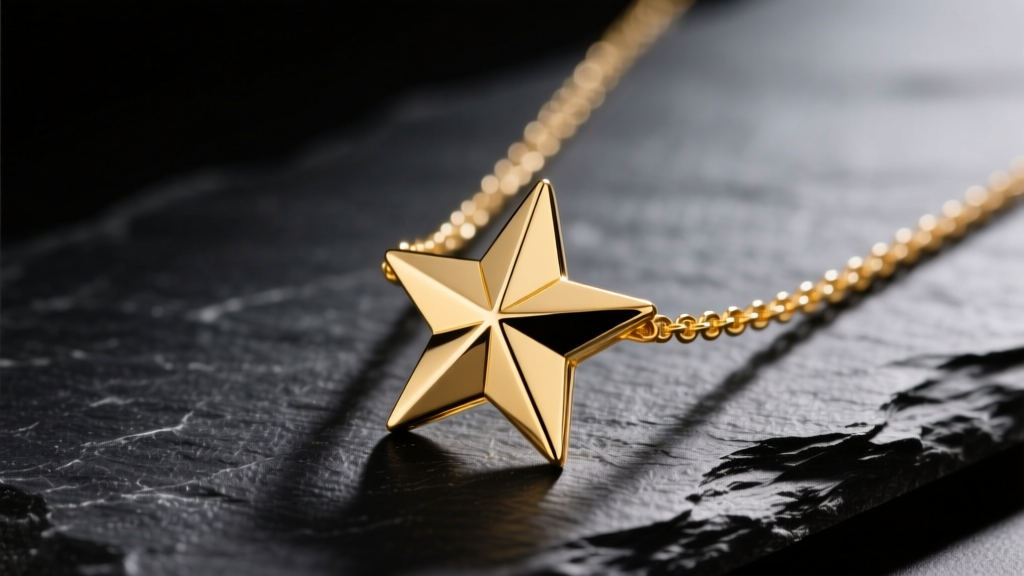
The six point star necklace—whether worn as a celestial motif, a geometric statement, or a symbol of heritage—remains a cornerstone of pendant jewelry. As we navigate the 2026 jewelry landscape, the hexagram silhouette continues to bridge the gap between mystical talismans and sharp, modern minimalism. However, the striking geometry of a six point star presents a unique metallurgical challenge that many buyers overlook. Unlike smooth, circular pendants, the distinct vertices of a star act as microscopic levers, making the choice of metal critical for long-term durability, edge retention, and structural integrity.
The Geometry Problem: Why Metal Choice Matters for Star Pendants
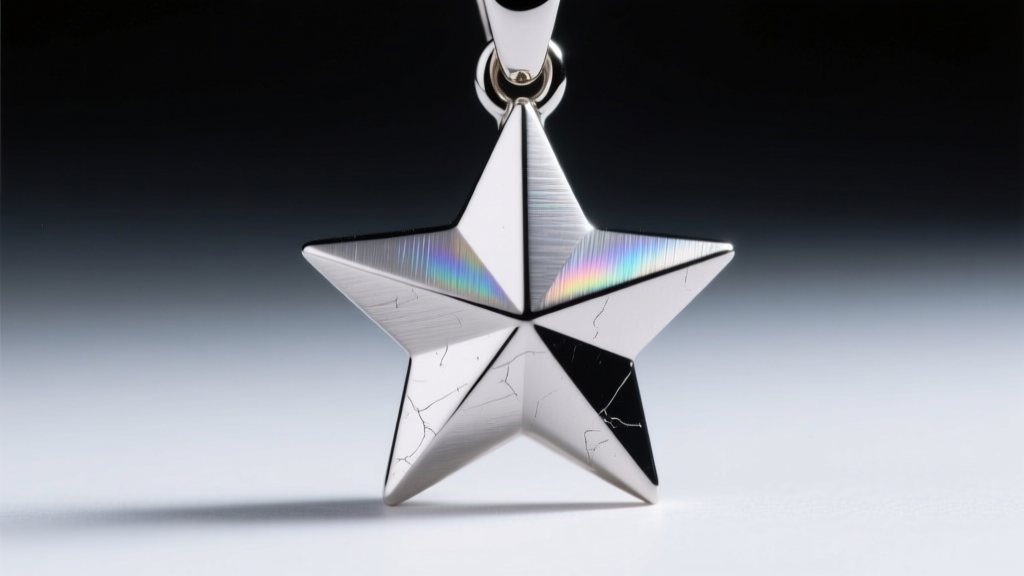
When evaluating a six point star necklace, you must consider the physics of the pendant's shape. The six outer points are highly susceptible to impact, snagging, and bending. If a star point catches on a heavy knit sweater or a seatbelt, the force is concentrated at the tip. In softer metals, this results in immediate deformation. To quantify this risk, jewelers rely on the Vickers Hardness (HV) scale. A metal with an HV below 80 will almost certainly suffer bent points during daily wear, whereas an HV above 140 will resist deformation and maintain the razor-sharp geometry that defines the hexagram aesthetic.
Manufacturing Methods: Casting vs. CNC Machining
The material you choose also dictates how the star is manufactured. Traditional lost-wax casting struggles with the sharp extremities of a six point star due to the surface tension and cooling shrinkage of molten metal, often resulting in slightly rounded or porous tips. Conversely, die-stamping and CNC (Computer Numerical Control) machining yield flawlessly sharp points. Metals like stainless steel and titanium are almost exclusively CNC machined or stamped, guaranteeing perfect edge retention, while gold and silver are typically cast and then painstakingly filed by hand.
Material Breakdown: Hardness, Tarnish, and Point Retention
Sterling Silver (925)
Sterling silver (92.5% pure silver, 7.5% copper alloy) is the most common and accessible choice for a six point star necklace. With a Vickers Hardness of roughly 60-70 HV, it is inherently soft. While the copper alloy provides enough strength for the central body of the pendant, the delicate star points will bend if subjected to lateral pressure. Furthermore, the copper content makes 925 silver highly reactive to sulfur in the air and skin oils, requiring regular polishing. According to the metallurgical experts at Rio Grande, rhodium plating is often applied to silver star pendants to halt tarnish and add a microscopic layer of scratch resistance, though this plating will eventually wear away at the high-friction vertices.
Solid Gold (14k vs. 18k)
Gold offers a luxurious, non-tarnishing alternative, but the karat weight drastically alters the pendant's structural viability. Pure 24k gold is far too soft for a star shape. 18k gold (75% pure gold) boasts a rich, buttery yellow hue but sits at a modest 110-120 HV. It will resist everyday bumps but can still bend if snagged forcefully. 14k gold (58.3% pure gold), alloyed with silver, copper, and zinc, pushes the hardness to 130-150 HV. As detailed in the Gemological Institute of America (GIA) guidelines on gold alloys, 14k gold provides the optimal balance of precious metal value and the tensile strength required to keep star points perfectly straight over decades of wear.
Surgical Stainless Steel (316L)
For an industrial, hyper-durable aesthetic, 316L stainless steel is unmatched. Rated between 150-190 HV, a 316L steel six point star necklace will never bend, warp, or lose its sharp edges. The inclusion of 2-3% molybdenum in the 316L alloy provides exceptional resistance to chlorides and corrosion, making it ideal for beach or poolside wear. However, buyers must be aware of potential nickel allergies. While 316L is considered "surgical grade," it still contains trace nickel. If you have severe contact dermatitis, steel should be avoided in favor of titanium.
Aerospace Titanium (Grade 23)
Titanium is the undisputed champion of durability. Specifically, Grade 23 Titanium (Ti 6Al-4V ELI), standardized by ASTM International, is fully biocompatible, hypoallergenic, and boasts a staggering Vickers Hardness of over 300 HV. A CNC-machined titanium six point star pendant is virtually indestructible. It will not tarnish, it weighs roughly 45% less than steel, and its points will remain dangerously sharp forever. The trade-off is that titanium cannot be resized or easily repaired by traditional jewelers, and its natural color is a muted, gunmetal grey unless anodized.
Comparative Data: Six Point Star Pendant Performance Matrix
| Material | Vickers Hardness (HV) | Point Durability | Tarnish Resistance | Avg. Price Range (Pendant Only) |
|---|---|---|---|---|
| Sterling Silver (925) | 60 - 70 | Low (Prone to bending) | Poor (Oxidizes) | $35 - $120 |
| 18k Solid Gold | 110 - 120 | Medium (Can bend if snagged) | Excellent | $300 - $800+ |
| 14k Solid Gold | 130 - 150 | High (Retains shape well) | Excellent | $180 - $500 |
| 316L Stainless Steel | 150 - 190 | Very High (Impact resistant) | Excellent | $20 - $60 |
| Grade 23 Titanium | 300+ | Maximum (Indestructible) | Excellent | $45 - $150 |
Chain Pairing, Bail Design, and Tensile Strength
Selecting the right metal for the pendant is only half the battle; the chain and bail must complement the hexagram's unique weight distribution. A six point star is inherently "top-heavy" when suspended from its top vertex. If the bail (the loop connecting the pendant to the chain) is too large or poorly positioned, the star will constantly flip upside down, showing its back profile instead of the front geometry.
For optimal drape, seek out a "hidden bail" or a integrated jump ring that sits flush against the top point of the star. This lowers the center of gravity and keeps the pendant anchored flat against the sternum. Furthermore, the chain's tensile strength must match the pendant's mass. A heavy 316L steel star requires a robust 1.5mm to 2.0mm Rolo or Figaro chain secured with a lobster clasp. Delicate 0.9mm Box chains or Spring Ring clasps will inevitably fail under the pendulum-like swinging motion of a solid steel hexagram. For lighter 14k gold or titanium stars, a 1.2mm Cable chain provides an elegant, proportional contrast without sacrificing structural security.
Care and Maintenance for Intricate Star Geometries
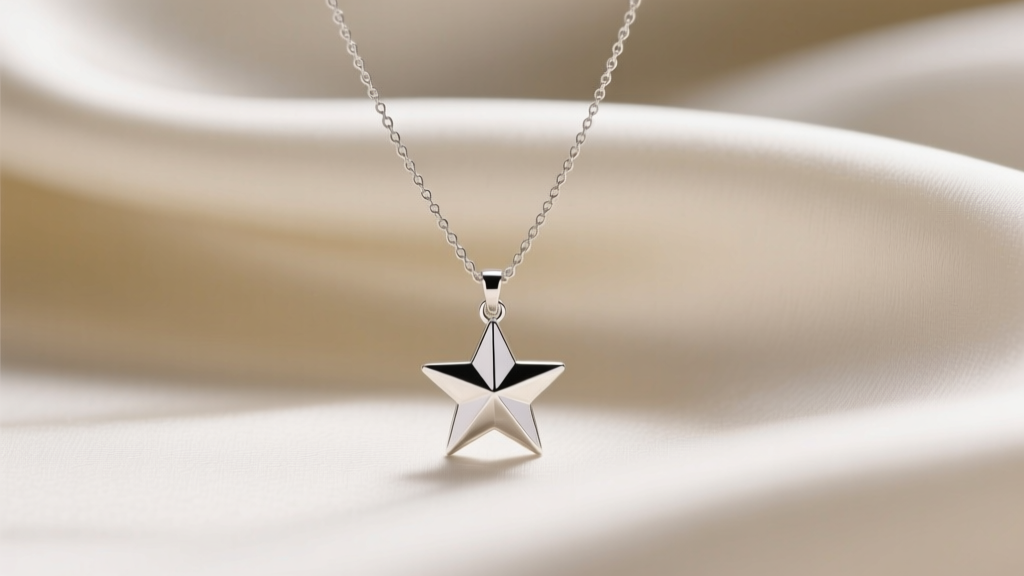
Maintaining a six point star necklace requires specific techniques to avoid damaging the points. When polishing a tarnished sterling silver star, never use a liquid silver dip. These harsh chemicals can pool in the sharp inner angles of the hexagram, leading to localized corrosion and a chalky white residue that is nearly impossible to remove. Instead, use a microfiber polishing cloth, but wipe strictly from the center of the star outward toward the points. Wiping in circular motions or pulling the cloth from the tip inward will cause the fabric to snag, potentially bending the silver or fraying the cloth.
Ultrasonic cleaners are highly effective for removing skin oils and lotions from the crevices of a star pendant, provided the metal is solid gold, platinum, or steel. However, if your six point star features pave-set diamonds or delicate gemstone inlays at the vertices, ultrasonic vibrations can easily loosen the microscopic prongs, resulting in lost stones. For gemstone-adorned stars, stick to a soft-bristled baby toothbrush and a mild solution of warm water and phosphate-free dish soap.
Final Verdict: Choosing Your Ideal Six Point Star Necklace
The perfect material for your six point star necklace ultimately depends on your lifestyle and aesthetic priorities. If you desire a luxurious, heirloom-quality piece and are willing to exercise mild caution to prevent snagging, 14k Solid Gold offers the best intersection of prestige, color, and structural integrity. For those seeking an indestructible, modern, and hypoallergenic talisman that can survive the gym, the ocean, and daily friction without losing its razor-sharp geometry, Grade 23 Titanium is the undisputed technical champion. Finally, if you are drawn to the romantic, vintage appeal of oxidized metals and don't mind occasional maintenance, Sterling Silver remains a beautiful, accessible entry point into geometric jewelry design. By understanding the metallurgical realities of the hexagram shape, you can invest in a piece that remains as sharp and striking as the day you bought it.


