Solid Gold Necklace Metallurgy: Karat Alloys and Chain Durability
Discover the metallurgy behind a solid gold necklace. We analyze karat alloys, chain link tensile strength, and clasp mechanics for lasting durability.

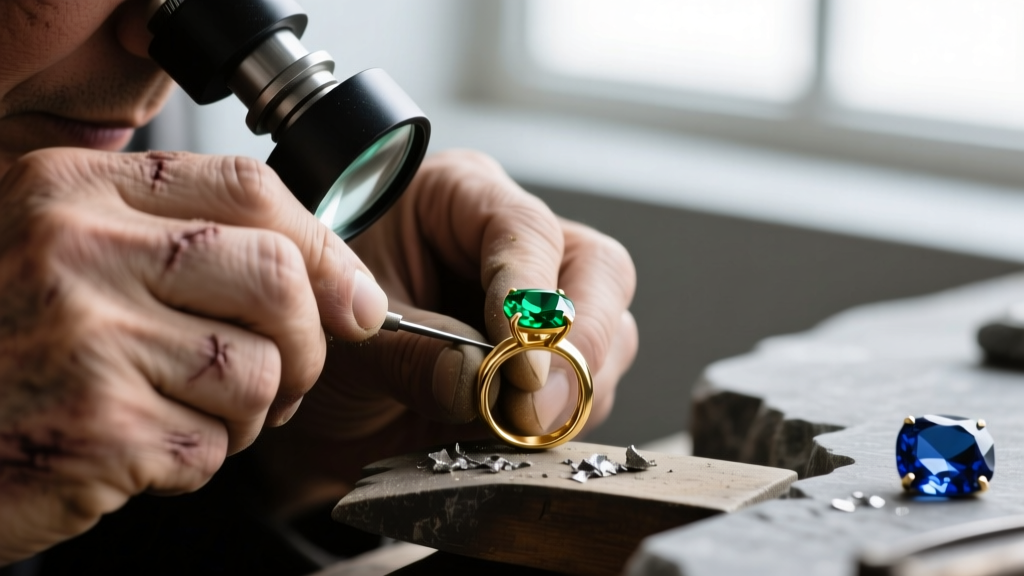
When consumers invest in a solid gold necklace, the primary focus is often placed on karat weight, color, and aesthetic design. However, from a metallurgical and structural engineering perspective, the longevity of a gold necklace is dictated by its precise alloy composition, chain link architecture, and clasp mechanics. A chain is only as strong as its weakest solder joint, and the metal's resistance to deformation relies entirely on its secondary alloying metals. This expert deep dive explores the technical specifications, failure modes, and material science that dictate the lifespan of fine jewelry chains in 2026.
The Metallurgical Reality of Gold Alloys
Pure gold (24k, 99.9% Au) possesses a Vickers hardness (HV) of roughly 25. To put this in perspective, pure lead has an HV of about 5, while a standard steel paperclip sits around 200. Because 24k gold is exceptionally malleable, it is entirely unsuitable for daily wear chains; a 24k gold necklace would stretch, warp, and snap under the mere weight of a moderate pendant. Therefore, gold must be alloyed with secondary metals to increase its tensile strength and yield point.
Standard Karat Compositions and Hardness
- 22k Gold (91.6% Au): HV ~45. Alloyed with small amounts of copper and silver. Still too soft for durable chains, primarily reserved for heavy, rigid bangles or ceremonial pieces.
- 18k Gold (75% Au): HV ~125. The luxury standard. Typically alloyed with 15% copper and 10% silver for yellow gold, or palladium for white gold. It offers excellent tarnish resistance but can still suffer from link stretching if the wire gauge is under 1.5mm.
- 14k Gold (58.3% Au): HV ~170. The optimal balance of durability and precious metal content. According to the Gemological Institute of America (GIA), the higher percentage of copper, zinc, and silver in 14k gold significantly increases its shear strength, making it the premier choice for heavy pendant chains and daily wear.

Chain Link Architecture and Tensile Strength
The structural integrity of a gold necklace is heavily influenced by its link geometry and manufacturing method. Chains are either stamped and folded from flat wire, drawn through dies, or cast. The vulnerability of any chain lies in its solder points—the microscopic joints where the ends of each wire link meet.
As of 2026, advanced laser welding has largely replaced traditional torch soldering in high-end manufacturing. Laser welding allows for highly localized heat application, preventing the annealing (softening) of the surrounding wire. However, the physical geometry of the chain still dictates its failure rate.
| Chain Type | Average Tensile Yield | Solder Point Vulnerability | Best Use Case |
|---|---|---|---|
| Cable (Standard) | Moderate | High (Single stress point per link) | Lightweight pendants under 5 grams |
| Curb / Cuban | High | Low (Flat links distribute tension) | Heavy pendants, standalone daily wear |
| Rope | Low to Moderate | Extreme (Hundreds of micro-solders) | Standalone wear; avoid heavy pendants |
| Wheat (Spiga) | Very High | Low (Interlocking woven structure) | Heavy, high-carat diamond pendants |
| Snake | Very Low | N/A (Kinking is the primary failure) | Light pendants only; requires strict care |
A common misconception is that a thicker rope chain is inherently stronger than a thinner curb chain. In reality, a 2.0mm 14k gold curb chain will often outlast a 3.5mm 14k gold rope chain under pendant-induced tensile stress due to the rope chain's complex, multi-soldered link geometry.
Clasp Mechanics: The Weakest Link in Any Gold Necklace
The clasp is the most frequent point of catastrophic failure in a gold necklace. Understanding the internal mechanics of different clasp types is crucial for preventing the loss of valuable jewelry.
Spring Ring Clasps
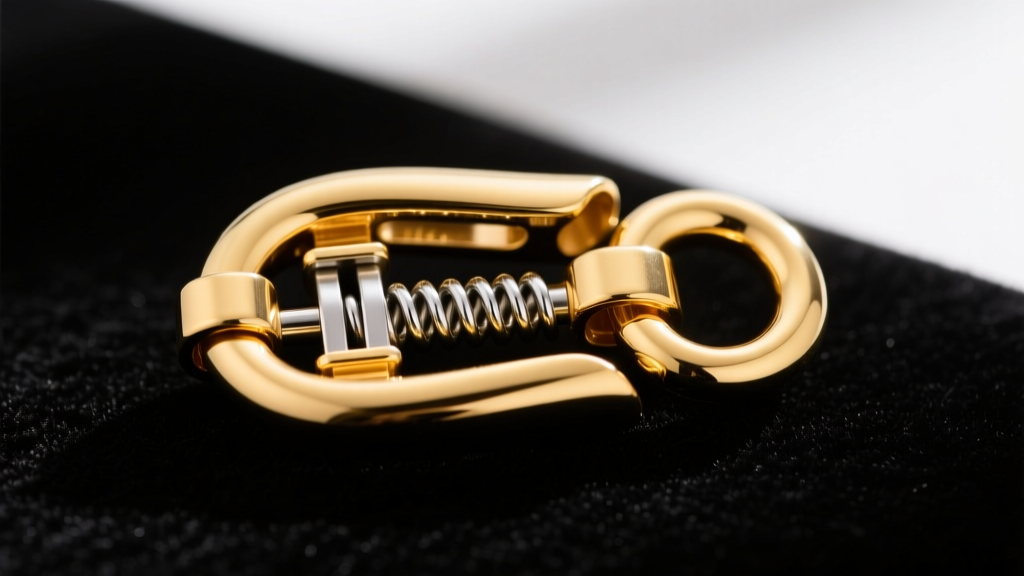
Spring rings rely on a tiny internal steel spring housed within a hollow gold shell. The primary failure mode is not the gold itself, but the internal steel spring, which can corrode if exposed to sweat or humidity, or simply suffer from metal fatigue over thousands of actuation cycles. Furthermore, the tiny gold tab that is pushed back to open the clasp is prone to bending, rendering the clasp useless.
Lobster Claw Clasps
Lobster claws are vastly superior for heavy gold necklaces. They utilize a solid cast or stamped body with a thicker, more robust internal spring mechanism. However, cast lobster claws can be brittle if the gold alloy contains too much zinc or if the casting process introduced microscopic porosity. Stamped and machined lobster claws offer the highest structural reliability. For chains supporting pendants over 15 grams, a minimum 12mm lobster claw is recommended to ensure the latch has adequate surface area to catch the opposing jump ring.
Environmental Degradation and Chemical Vulnerability
While gold itself is a noble metal and highly resistant to oxidation, the secondary alloys in a gold necklace are not. The World Gold Council notes that environmental factors play a massive role in the degradation of lower-karat gold chains.
- Chlorine Exposure: Swimming pools and hot tubs contain high levels of chlorine, which reacts with the copper and silver alloys in 10k and 14k gold. This causes 'stress corrosion cracking,' a phenomenon where the metal becomes incredibly brittle and can shatter or snap under minimal tension.
- Sulfur and Tarnish: White gold (alloyed with nickel or palladium) and rose gold (high copper content) are particularly susceptible to sulfur compounds found in the atmosphere, certain cosmetics, and rubber. This results in surface tarnishing, which requires professional polishing that slowly removes microscopic layers of gold over time.
- Ultrasonic Cleaning Risks: While ultrasonic cleaners are excellent for removing sebum and dirt from diamond pendants, placing a hollow or micro-soldered gold necklace (like a herringbone or fine rope chain) in an ultrasonic bath can vibrate the solder joints loose, leading to chain separation.
Expert Purchasing and Inspection Framework
When evaluating a solid gold necklace for purchase, bypass the marketing terminology and inspect the physical engineering of the piece. First, verify the wire gauge. A chain intended to hold a 10-gram pendant should have a minimum wire thickness of 1.5mm, regardless of the overall width of the chain. Second, inspect the jump rings connecting the clasp to the chain. These should be soldered shut; if the jump ring has a visible split, it is a critical failure point that will eventually pull apart under dynamic loads.
Finally, examine the hallmark. Authentic pieces will bear a stamp indicating purity (e.g., 14K, 18K, 585, 750) and often a maker's mark. By understanding the metallurgical science and structural mechanics detailed above, you can select a gold necklace that will maintain its integrity and beauty for generations, rather than succumbing to premature mechanical failure.


