2026 Spiked Chain Necklace Buying Guide & Style Tips
Discover how to choose the perfect spiked chain necklace in 2026. Learn about metal grades, spike gauges, clasp security, and styling for any neckline.

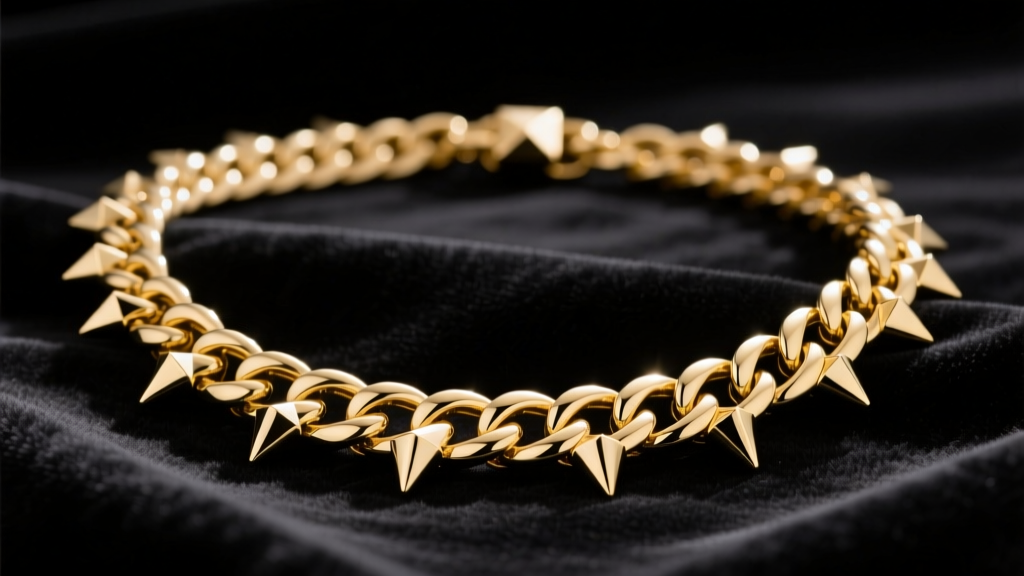
The 2026 Hardware Renaissance: Beyond the Punk Cliché
The spiked chain necklace has transcended its 1970s punk roots and 2010s pop-punk revival to become a staple of modern, architectural jewelry design. In 2026, the trend has shifted away from chaotic, overly aggressive silhouettes toward refined, intentional hardware. Today’s spiked chains are defined by precise geometric spikes, premium metallurgical grades, and sophisticated layering techniques. Whether you are investing in a solid gold statement piece or a surgical steel everyday choker, understanding the structural mechanics of these necklaces is critical. A poorly constructed spiked chain will not only tarnish or break but can physically injure the wearer if a heavy spike detaches. This comprehensive buying guide breaks down the exact specifications, material grades, and engineering details you need to evaluate before purchasing.
Decoding Metals: Weight, Tarnish, and Skin Reactions
The base metal and spike material dictate the necklace’s weight, longevity, and price. Because spikes add significant surface area, they are highly susceptible to environmental tarnishing and skin-acid reactions if the wrong alloy is used. According to the Gemological Institute of America (GIA), understanding karat purity and alloy mixtures is essential for predicting how gold and silver will wear over time.
316L Surgical Stainless Steel
The undisputed king of entry-level and mid-tier hardware. 316L surgical steel contains molybdenum, which provides exceptional resistance to chlorides and sweat. It is heavy, giving the necklace a premium, substantial drape, and is entirely hypoallergenic. However, steel spikes cannot be easily resized or repaired by a traditional jeweler if the threading strips.
925 Sterling Silver (Rhodium Plated)
Raw sterling silver will oxidize rapidly in the crevices where the spike meets the chain link due to trapped sweat and skin oils. If buying silver, ensure the spikes and chain are heavily plated in rhodium. This platinum-group metal creates an impermeable barrier against tarnish, though it will eventually wear off the high-friction edges of the spikes after 2 to 3 years of daily wear.
14k and 18k Solid Gold
For luxury investments, 14k gold is vastly superior to 18k for spiked jewelry. The higher copper and zinc content in 14k gold makes the alloy significantly harder, which is crucial for maintaining the structural integrity of threaded spike posts and the chain links bearing the heavy load.
| Metal Grade | Tarnish Resistance | Weight / Drape | Avg. Price Range (18") | Best For |
|---|---|---|---|---|
| 316L Steel | Excellent | Heavy / Structured | $60 - $180 | Daily wear, streetwear |
| 925 Silver (Rhodium) | Good (Requires replating) | Medium / Fluid | $250 - $600 | Smart-casual, office edge |
| 14k Solid Gold | Excellent | Heavy / Luxurious | $1,200 - $3,500+ | Heirloom, high-fashion |
| Brass (Gold Plated) | Poor (Verdigris risk) | Light / Flimsy | $20 - $50 | Costume, one-time events |
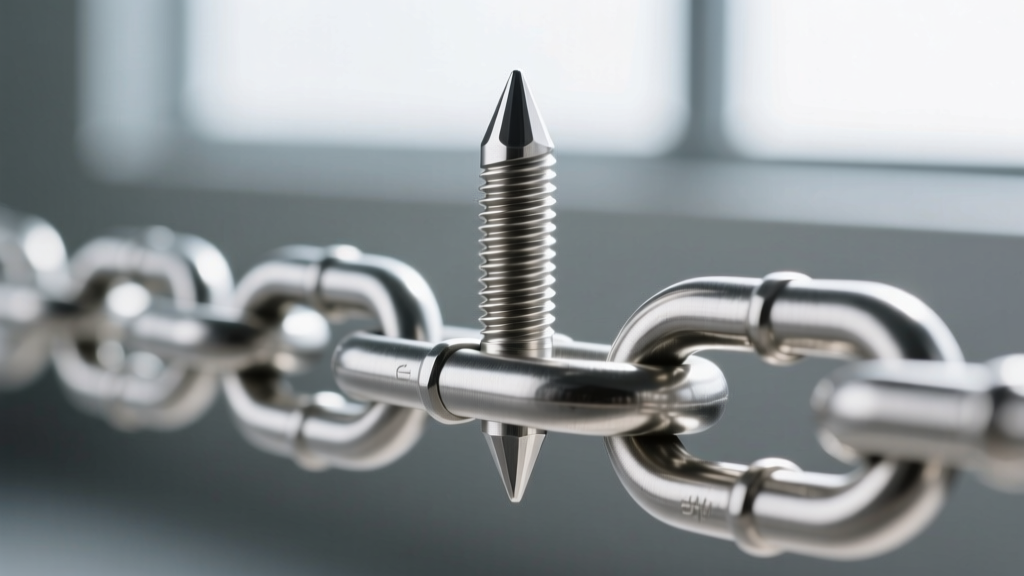
Chain Weave Mechanics: Why the Base Matters
The chain weave is not just an aesthetic choice; it is the structural foundation that dictates how the spikes behave in motion. A spike is only as secure as the link it is attached to.
- Cuban Link: The gold standard for spiked necklaces. The flat, interlocking surface area of a Cuban link provides a stable, wide base for soldering or threading spikes. Because the links lie flat against the collarbone, the spikes point uniformly outward, preventing them from swiveling and scratching the wearer.
- Curb Chain: Similar to the Cuban but with thinner, more uniform links. It offers excellent drape and is lighter, making it ideal for chokers featuring micro-spikes or pyramid studs.
- Rope Chain: Proceed with caution. The twisted nature of a rope chain causes spikes to rotate unpredictably as the chain moves. This rotation can lead to spikes catching on hair or clothing, and the uneven surface makes secure spike attachment nearly impossible without specialized jump rings.
Spike Attachment: The Hidden Failure Points
How the spike connects to the chain is the most common point of catastrophic failure in hardware jewelry. When evaluating a spiked chain necklace, turn the piece over and inspect the base of the spikes.
Soldered (Permanent)
The spike is fused directly to the chain link using high-heat solder. This is the most secure method and is mandatory for heavy, solid gold pieces. The drawback is a lack of customizability; you cannot remove the spikes for a more subdued look, and cleaning the microscopic gap between the spike base and the link requires an ultrasonic cleaner.
Threaded (Screw-In)
The chain link features a tapped hole, and the spike has a threaded post. This allows you to unscrew spikes to change the density of the hardware or swap cone spikes for pyramid studs. Expert Warning: Threaded spikes will naturally loosen over time due to body movement and thermal expansion. You must apply a microscopic drop of blue Loctite (a removable threadlocker) to the spike’s screw post every six months to prevent them from unscrewing and falling off in public.
Glued or Prong-Set
Avoid these at all costs. Some fast-fashion brands use jewelry adhesives to attach lightweight alloy spikes to brass chains. Human sweat, sebum, and temperature fluctuations will degrade these adhesives within weeks, leading to lost spikes and sharp, exposed glue residue.
"Never buy a heavy hardware necklace where the spikes are attached via friction or glue. The kinetic energy of walking alone will shake a friction-fit spike loose within a month. Demand soldered or precision-threaded connections." — Master Jeweler Benchmark Standards, 2025

Proportions and Neckline Pairing
Styling a spiked chain necklace in 2026 is about contrast and proportion. The aggressive nature of the hardware must be balanced by the garment’s silhouette and the chain’s gauge.
The 14-16 Inch Choker (3mm - 5mm Gauge)
Best paired with micro-cones or blunt pyramid studs. A tight choker with long stiletto spikes is dangerous and uncomfortable, as the spikes will dig into the wearer’s jawline or collarbone when looking down. Pair this length with V-neck blouses or off-the-shoulder tops to elongate the neck.
The 18 Inch Princess Length (5mm - 8mm Gauge)
The most versatile length. An 18-inch Cuban chain with alternating 15mm cone spikes sits perfectly at the base of the throat. This length pairs exceptionally well with crewneck sweaters, where the spikes rest on the fabric, or layered over a crisp button-down shirt left unbuttoned at the top.
The 22-24 Inch Matinee (8mm+ Gauge)
Reserved for statement pieces. Heavy, oversized spikes on a long chain act as a pendulum. This length is ideal for streetwear, worn over hoodies or graphic tees, allowing the hardware to swing freely without catching on the neckline of the garment.
Clasp Engineering for Heavy Hardware
A fully spiked stainless steel or gold chain can easily weigh between 150 and 300 grams. Standard jewelry clasps are not engineered for this dynamic load. When the necklace shifts, the kinetic force placed on the clasp can snap a standard spring mechanism.
- Box Clasp with Figure-8 Safety: The absolute best choice for heavy spiked chains. The box mechanism locks the tongue securely into place, and the figure-8 wire catch provides a secondary backup if the primary box latch fails.
- Oversized Lobster Clasp (15mm+): If the piece uses a lobster clasp, ensure it is cast solid (not hollow) and features a heavy-duty internal spring. The jump ring connecting the clasp to the chain must be soldered shut; an open jump ring will easily pull apart under the weight of swinging spikes.
- Magnetic Clasps: Strictly avoid. The shear force of a heavy spiked chain snapping against the chest will easily overcome the magnetic hold, dropping the necklace.
Expert Verdict: Where to Invest Your Budget
If you are buying your first authentic spiked chain necklace, prioritize the chain weave and the clasp over the sheer number of spikes. A 5mm 316L steel Cuban link with five perfectly soldered, architectural cone spikes will look infinitely more luxurious and last decades longer than a flimsy brass chain covered in twenty glued-on micro-studs. Look for brands that publish their metallurgical specs, offer replacement screws for threaded pieces, and utilize soldered jump rings at the clasp connection. By focusing on structural integrity over sheer volume, you secure a piece of hardware that bridges the gap between subculture edge and high-end horology-level craftsmanship.


