The Ultimate Budget Guide to Buying a Staple Necklace
Discover how to evaluate a staple necklace for true value. We break down material grades, cost-per-wear, and pricing tiers for everyday chains.

The True Cost-Per-Wear of a Daily Chain
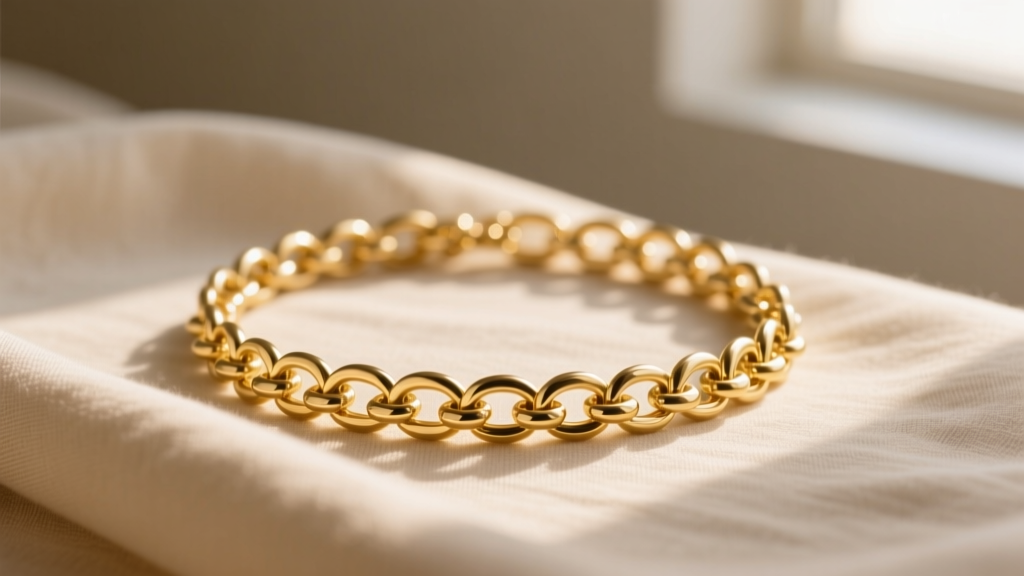
When building a curated jewelry wardrobe, the staple necklace is the undisputed workhorse. Typically defined as a 16-to-18-inch chain in a neutral metal with a width between 2mm and 4mm, it is designed for continuous, everyday wear. However, evaluating the budget and true value of a staple necklace requires looking past the initial price tag and calculating the cost-per-wear (CPW). A $45 gold-plated brass chain that tarnishes and breaks after 60 days of daily wear yields a CPW of $0.75. Conversely, a $650 solid 14k gold chain worn daily for five years (1,825 days) drops the CPW to just $0.35. In the realm of everyday jewelry, buying cheap is often the most expensive route you can take.
Material Grades: Where Your Budget Actually Goes
The price discrepancy in staple necklaces is almost entirely dictated by the base metal and the thickness of the gold overlay. Understanding these material grades is critical for accurate value assessment.
Flash Plating vs. Vermeil vs. Gold-Filled
- Flash Plated (Gold Electroplated): Usually a brass or copper base with a microscopic layer of gold (less than 0.1 microns). It offers the lowest upfront cost ($20–$50) but will wear through to the base metal within weeks of friction and sweat exposure, leading to green skin discoloration and allergic reactions.
- Gold Vermeil: By Federal Trade Commission (FTC) guidelines, vermeil must be a sterling silver base plated with at least 2.5 microns of 10k gold or higher. Priced between $60 and $150, vermeil is a solid mid-tier budget option, though the plating will eventually require professional re-dipping after 1 to 2 years of daily wear.
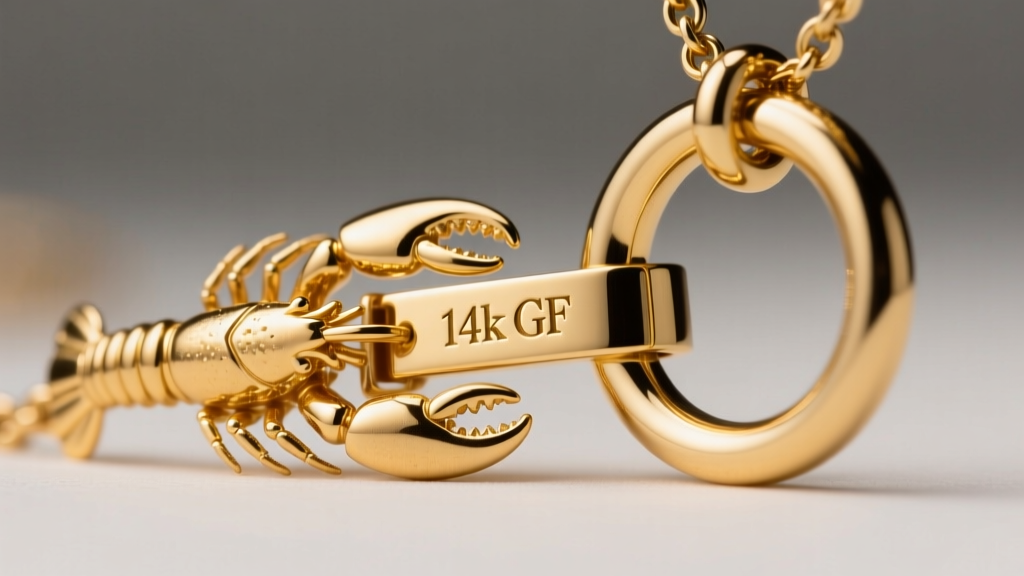
- Gold-Filled: A mechanical bond where a thick layer of gold (at least 5% of the total weight, usually stamped 1/20 14k GF) is heat-bonded to a brass core. Ranging from $80 to $200, gold-filled staple necklaces offer the best budget-to-longevity ratio for non-solid metals, often lasting 5+ years without wearing through.
Solid Gold: The 14k vs. 18k Debate for Staples
For a lifetime staple necklace, solid gold is the ultimate investment. According to the Gemological Institute of America (GIA), 14k gold contains 58.5% pure gold, while 18k contains 75%. While 18k offers a richer, warmer yellow hue, it is significantly softer on the Vickers hardness scale. For a daily-wear chain subjected to pulling, sleeping, and showering, 14k gold provides superior tensile strength and scratch resistance, making it the smarter, more durable budget allocation for a staple piece.
Chain Link Architecture and Durability
The structural integrity of your staple necklace dictates its hidden maintenance costs. A chain that constantly snags, kinks, or breaks will cost you time and jeweler repair fees. When assessing value, examine the link architecture closely:
Soldered vs. Unsoldered Links
This is the most critical failure point in budget chains. Unsoldered links (where the metal wire is simply bent into a circle but not fused shut) will easily pull apart under tension. If your staple necklace catches on a sweater, an unsoldered link will stretch and open, ruining the chain. Always inspect the links under a macro lens or jeweler's loupe; high-value staple necklaces feature laser-soldered links that can withstand up to 15 pounds of tensile pull force.
Link Styles for Everyday Abuse
- Rolo Chains: Featuring uniform, round, thick-gauge links. They are incredibly durable, rarely kink, and offer a substantial, high-value look even at lower gram weights.
- Cable Chains: The classic oval link. While elegant, thinner cable chains (under 1.5mm) are prone to stretching if pulled.
- Box Chains: Avoid these for daily staples. The square, folded links are notorious for kinking, and once a box chain kinks, it is structurally compromised and nearly impossible for a jeweler to repair seamlessly.
Pricing Tiers and What to Expect in 2026
Market fluctuations in raw gold prices have shifted the baseline costs for staple necklaces. Below is a realistic pricing matrix for a standard 16-inch, 2.5mm chain to help you benchmark value.
| Material Tier | Expected Price Range | Estimated Lifespan (Daily Wear) | Cost-Per-Wear (CPW) |
|---|---|---|---|
| Brass / Flash Plated | $25 - $55 | 2 - 4 Months | $0.45 - $0.90 |
| Sterling Silver / Vermeil | $75 - $160 | 1.5 - 3 Years | $0.15 - $0.29 |
| 14k Gold-Filled | $90 - $180 | 3 - 6 Years | $0.08 - $0.16 |
| Solid 14k Yellow Gold | $450 - $850 | Lifetime (Decades) | < $0.05 |
Hardware and Clasp Failure Modes
A staple necklace is only as secure as its weakest hardware component. Budget brands often cut costs by using substandard clasps and ultra-thin jump rings, leading to lost jewelry and frustrated wearers.
The Spring Ring Trap
Spring ring clasps are the hallmark of a low-value chain. They are difficult to operate with one hand, and the internal steel spring is prone to rusting when exposed to shower water, eventually causing the clasp to jam open or snap shut. A high-value staple necklace will always feature a solid 14k or 18k lobster clasp, which utilizes a more robust tension mechanism and offers a secure, one-handed closure.
Jump Ring Gauge
The jump ring is the tiny circular wire that connects the clasp to the chain. On budget necklaces, these are often made from 22-gauge or 24-gauge wire, which is thin enough to bend open with a firm tug. For a secure staple necklace, ensure the jump ring is at least 18-gauge (approx. 1.0mm thick) and, ideally, soldered shut or featuring a split-ring design to prevent accidental unhooking.
Maintenance Costs and Tarnish Prevention
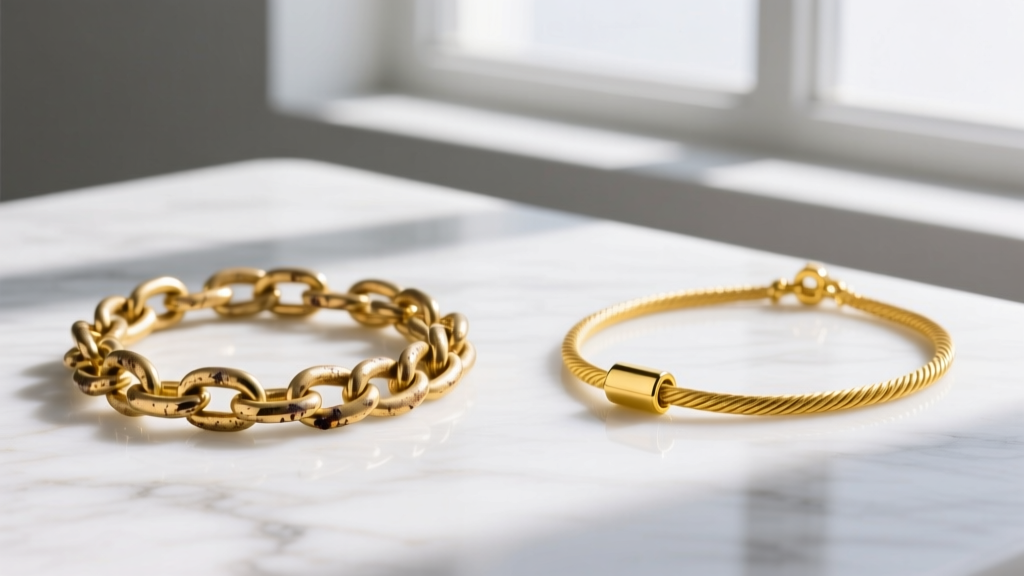
When assessing your budget, factor in the ongoing maintenance required to keep the piece looking pristine. Solid gold requires virtually zero chemical maintenance; a simple wipe with a microfiber cloth removes sebum and lotion buildup. Vermeil and gold-filled pieces, however, require careful management. The sterling silver or brass underneath will oxidize if the gold layer is compromised. To extend the life of a mid-tier budget staple, you must remove it before swimming in chlorinated pools or applying sulfur-based skincare products, as both chemicals rapidly accelerate the degradation of gold alloys and plating.
The Verdict: Building a High-Value Staple Collection
Evaluating a staple necklace for true value requires a shift in perspective from 'accessory' to 'wardrobe infrastructure.' If your budget is strictly under $100, bypass flash-plated brass entirely and invest in a high-quality 14k gold-filled rolo chain with soldered links and a sturdy lobster clasp. If you have the capital to stretch to the $500+ range, a solid 14k gold chain is an heirloom-grade asset that will outlive fast-fashion trends and ultimately cost you pennies per wear. By prioritizing structural integrity, metal purity, and robust hardware, you ensure your staple necklace remains a reliable anchor for your daily style for years to come.


