How to Style a Piggy Necklace: Step-by-Step Layering Guide
Learn how to style and layer a piggy necklace for a sophisticated look. Our step-by-step guide covers chain lengths, metals, and wardrobe pairings.


The Renaissance of the Piggy Necklace
Once relegated to children's jewelry boxes or reserved strictly for the Lunar New Year's zodiac celebrations, the piggy necklace has undergone a massive stylistic renaissance. Today, animal motif jewelry is a staple in high-fashion and everyday luxury layering. Whether you are wearing a solid 14k gold pig pendant as a personal totem, a vintage enamel piece from a European artisan, or a modern minimalist silhouette, styling a piggy necklace requires a strategic approach to avoid looking juvenile. The secret lies in material grades, precise chain gauges, and intentional layering frameworks. This step-by-step guide will teach you how to elevate your piggy necklace into a sophisticated, adult jewelry stack that commands attention.
Step 1: Selecting the Right Metal and Material Grade
Before you begin layering, you must understand the material composition of your pendant. The visual weight and light reflection of your piggy necklace will dictate the supporting chains you choose. According to the Gemological Institute of America (GIA), understanding gold alloys and metal hardness is critical for everyday wearability.
| Material | Durability (Vickers Hardness) | Price Range | Best Styling Application |
|---|---|---|---|
| 14k Solid Gold | High (~170 HV) | $300 - $800 | Everyday layering, water exposure, active lifestyles |
| 18k Solid Gold | Medium (~135 HV) | $500 - $1,200+ | Special occasions, rich color contrast with dark fabrics |
| 925 Sterling Silver | Medium (Prone to tarnish) | $40 - $150 | Cool-toned stacks, budget-friendly layering |
| Cold / Epoxy Enamel | Low (Scratches easily) | $20 - $90 | Seasonal pops of color, novelty fashion stacks |
| Vitreous / Guilloché Enamel | High (Glass-like finish) | $200 - $600 | Heirloom layering, vintage-inspired aesthetics |
Expert Insight: If your piggy necklace features cold enamel (often found in mass-market fashion jewelry), keep it out of direct, prolonged sunlight to prevent the epoxy from yellowing over time. Vitreous enamel, which is fired at over 1400°F, is permanently colorfast but can shatter if dropped on a hard tile floor.
Step 2: Matching Chain Gauges to Pendant Bails
A common styling mistake is pairing a heavy cast-metal pendant with a flimsy, microscopic chain. This not only looks visually unbalanced but risks chain breakage. Most artisan and fine jewelry piggy necklaces feature a standard 4mm to 6mm hidden bail or an oversized jump ring.
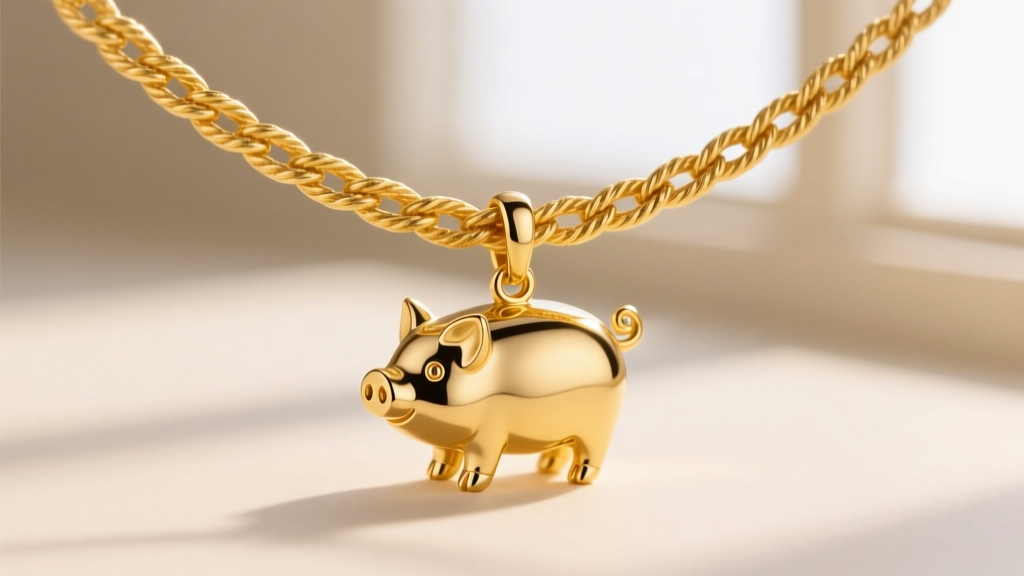
- 1.0mm Box Chain: Ideal for lightweight (under 3 grams) gold or silver pigs. The flat, geometric links reflect light beautifully and provide a modern, clean backdrop for the pendant.
- 1.5mm Rope Chain: Provides excellent tensile strength for heavier, solid-cast metal pieces. The twisted links mimic the organic, curved silhouette of the pig motif.
- 2.0mm Cuban Link: Best reserved for streetwear aesthetics, oversized novelty pendants, or masculine-leaning jewelry stacks.
Troubleshooting Pendant Flip: Does your piggy necklace constantly slide around your neck to the back? This happens when the chain is too long or the bail is too wide. Solution: Add a small, clear silicone pendant stabilizer bead behind the bail, or opt for a chain with a fixed, soldered center link that prevents the pendant from migrating.
Step 3: The 3-Tier Layering Framework
Layering a novelty pendant like a piggy necklace requires the "Rule of Odds" to maintain visual harmony. Styling experts at Vogue consistently recommend intentional spacing to prevent a cluttered, tangled mess. Follow this 3-tier framework to integrate your piece seamlessly.
- Tier 1: The Anchor (14-15 inches): Start with a delicate choker, a 1.0mm snake chain, or a single strand of 3mm freshwater pearls. This frames the collarbone and establishes the top boundary of your stack.
- Tier 2: The Focal Point (16-18 inches): This is where your piggy necklace lives. The pendant should rest precisely in the hollow of the collarbone or just below it. Ensure the chain is at least 2 inches longer than Tier 1 to prevent the clasps from tangling.
- Tier 3: The Elongator (20-24 inches): Finish with a longer, heavier chain featuring a geometric bar pendant, a simple coin, or a lariat drop. This draws the eye downward, balancing the whimsical nature of the pig motif with structured, mature geometry.
Pro Tip: If your piggy necklace features a standard spring ring clasp, use a jewelry loupe to check the tiny lever mechanism annually. Spring rings are the most common point of mechanical failure on delicate 14k gold chains, especially when subjected to the tension of a multi-layered stack.
Step 4: Neckline Pairings for Maximum Impact
The success of your piggy necklace layering stack depends heavily on the neckline of your garment. The pendant needs adequate "negative space" to be appreciated without competing with fabric patterns or structural seams.
- The Scoop Neck: The ideal canvas. A 16-inch piggy necklace will sit perfectly parallel to the curve of a scoop neck tee or knit sweater, creating a harmonious, rounded silhouette.
- The Turtleneck: For winter styling, pair a heavy 18k gold piggy necklace on a 2.0mm rope chain over a black or charcoal turtleneck. The high contrast between the dark wool and the bright gold elevates the piece to a statement artifact.
- The V-Neck: Avoid wearing a single piggy necklace with a deep V-neck, as the pendant will compete with the garment's natural leading lines. Instead, use the 3-tier framework to fill the negative space, ensuring the pig pendant sits above the V-neck's apex.
- The Button-Down Shirt: Unbutton the top two buttons of a crisp white or cream silk blouse. Let the piggy necklace rest against the skin, framed by the structured collar. This juxtaposes the playful motif with professional tailoring.
Step 5: Care and Maintenance Protocols
Because animal motifs often feature intricate crevices—such as the snout, ears, and curled tail—they are magnets for skin oils, lotions, and environmental dust. Proper maintenance is non-negotiable to preserve the metal's luster and the enamel's vibrancy.
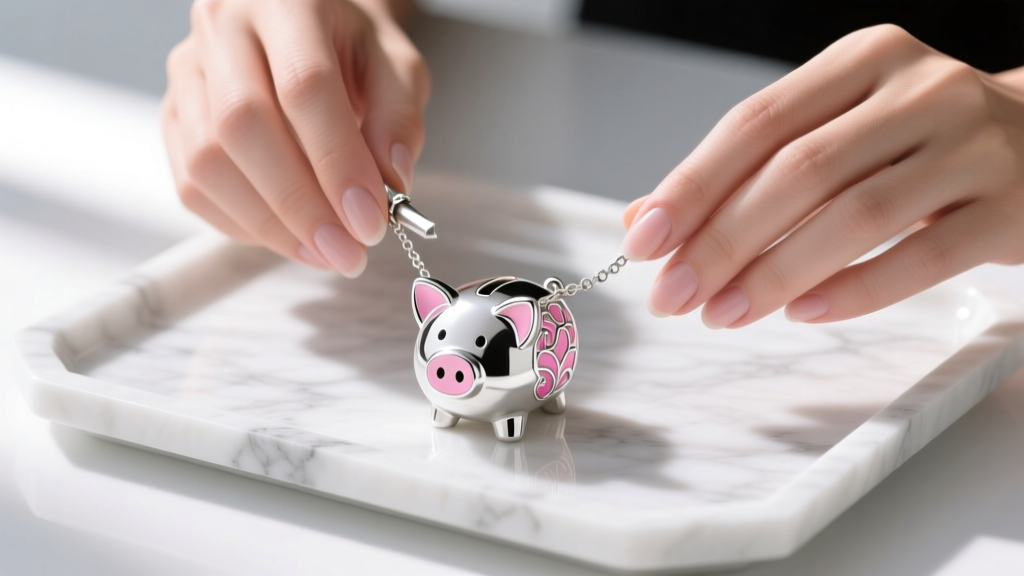
The Cleaning Protocol:
- For Solid Gold and Silver (No Enamel): Mix a few drops of phosphate-free dish soap in lukewarm water. Use an ultra-soft baby toothbrush to gently agitate the crevices of the pig's snout and ears. Rinse with distilled water and pat dry with a lint-free microfiber cloth.
- For Enamel Pieces: Never use an ultrasonic jewelry cleaner on a piggy necklace featuring cold or vitreous enamel. The high-frequency sound waves can cause micro-fractures in the glass-like enamel, leading to chipping or complete delamination from the metal base.
- Storage: Store your layered necklaces individually in anti-tarnish flannel pouches. If you must store them together, fasten the clasps and lay them flat to prevent the chains from weaving through one another.
Final Thoughts on Novelty Styling
The piggy necklace is a testament to the fact that fine jewelry does not always have to be austere or overly serious to be valuable and stylish. By treating the piece with the same material respect and styling rigor as a classic diamond solitaire or a heritage locket, you transform a simple animal pendant into a sophisticated expression of personal style. Pay attention to your chain gauges, respect the layering tiers, and maintain your metals diligently. When executed correctly, your piggy necklace will not just be an accessory; it will be the ultimate conversation starter in your curated jewelry collection.


