How to Style a Women Choker Necklace for Any Neckline
Master the art of styling a women choker necklace. Learn exact lengths, material grades, and step-by-step neckline pairings for a flawless look.

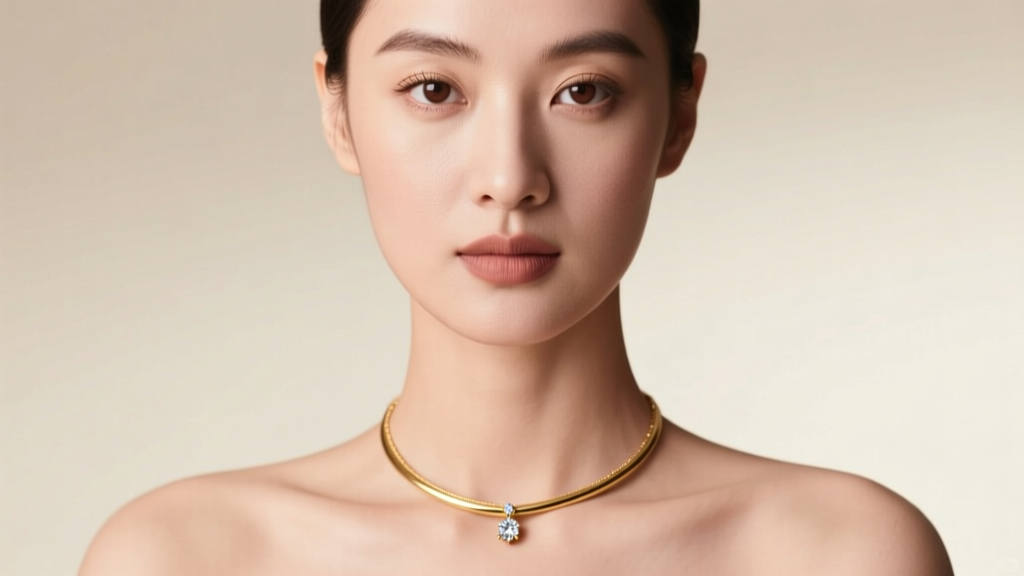
The modern women choker necklace has evolved far beyond its 1990s plastic-tattoo origins. Today, it is a cornerstone of sophisticated jewelry styling, demanding precision in fit, metallurgy, and wardrobe pairing. Whether you are opting for a structured metal collar or a delicate chain, wearing a choker requires a strategic approach to proportions. In this step-by-step guide, we break down the exact measurements, material grades, and neckline pairings you need to master this silhouette in 2026.
Step 1: Measure for the Ideal Choker Length
The most common failure mode when wearing a choker is an improper fit. A necklace that is too tight restricts movement and causes skin irritation, while one that is too loose loses the defining "choker" aesthetic and tangles easily. To find your perfect fit, you must understand the standard industry lengths and how they interact with your unique anatomy.
- 14 Inches (The Tight Choker): This length sits high on the neck, just above the collarbone. It is best suited for individuals with slender necks (under 12.5 inches in circumference) or for velvet and fabric styles that tie at the back.
- 15 Inches (The Standard Choker): The most versatile length, resting comfortably in the hollow of the neck. This is the ideal baseline for a women choker necklace featuring a small pendant or a delicate chain.
- 16 Inches (The Relaxed Choker): Sitting at the base of the neck, this length bridges the gap between a choker and a princess-length necklace. It is highly recommended for broader necks or for rigid metal collar styles that do not drape.
Pro-Tip: Use a soft tailor's measuring tape to measure your neck circumference. Add exactly 1 to 1.5 inches to your raw measurement to achieve the optimal "two-finger" comfort gap, allowing for natural skin movement and swelling.
Step 2: Select the Right Material for Your Skin
Because a choker sits in direct, continuous contact with the sensitive skin of the neck—where sweat and perfume accumulate—material selection is critical. Cheap alloys will oxidize rapidly, leading to contact dermatitis and green skin stains.
Metals That Pass the Skin Test
For daily wear, 316L Surgical Stainless Steel is the gold standard for durability and hypoallergenic properties. It contains virtually no free nickel, making it safe for sensitive skin. If you prefer the look of gold, avoid standard "gold-plated" jewelry, which features a microscopic flash layer that wears off within weeks. Instead, invest in 14k Gold-Filled pieces. According to the Gemological Institute of America (GIA), gold-filled items must contain a gold layer that constitutes at least 1/20th of the total weight of the item, bonded to a brass core under high heat and pressure. This ensures the choker will not tarnish or flake even with daily friction.
Fabrics and Textiles
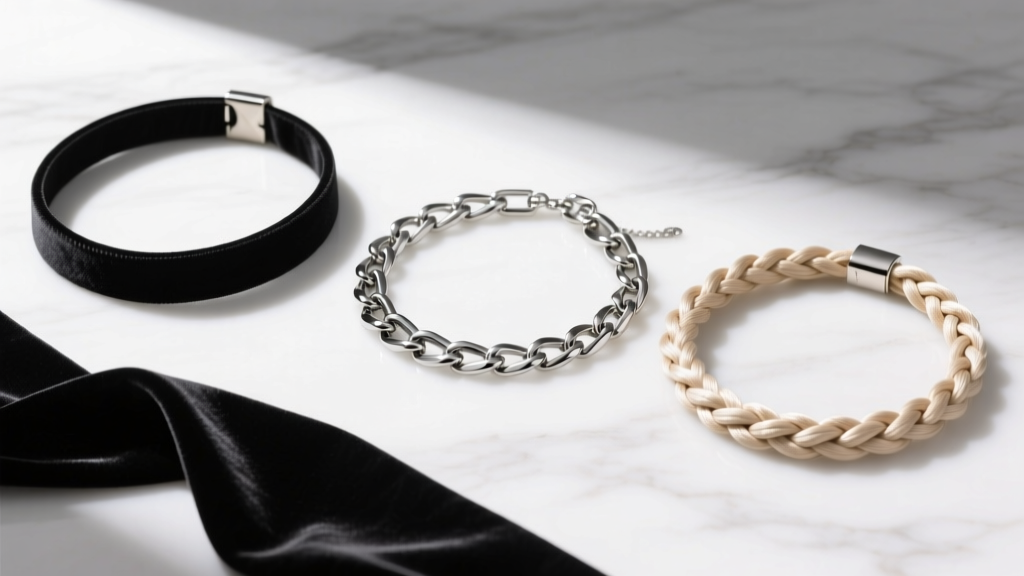
For velvet or silk ribbon chokers, ensure the backing is lined with a non-porous material or a hypoallergenic metal clasp. Unlined porous fabrics trap moisture and bacteria against the neck. For comprehensive advice on metal allergies, the American Academy of Dermatology (AAD) recommends avoiding any jewelry containing nickel, a common culprit in cheap brass alloy castings often disguised as silver or gold.
Step 3: Match the Choker to Your Neckline
A women choker necklace should never compete with your clothing; it should frame it. The geometry of your neckline dictates the width, texture, and weight of the choker you should select. Use the following decision matrix to pair your jewelry with your wardrobe.
| Neckline Style | Ideal Choker Type | Width & Material Recommendation | Styling Notes |
|---|---|---|---|
| V-Neck | Y-Drop or Pendant Choker | 1mm - 2mm delicate chain (Gold or Silver) | The pendant should follow the V-shape of the fabric, elongating the neck without cluttering the chest. |
| Boatneck (Bateau) | Structured Metal Collar | 5mm - 10mm rigid metal or thick velvet | Since the boatneck covers the collarbone, a thick, structured choker creates a bold, architectural contrast. |
| Scoop Neck | Layered Chain or Beaded | 2mm - 4mm chain with small charms | The wide curve of a scoop neck provides ample canvas for a slightly wider, textured choker. |
| Off-Shoulder | Velvet Ribbon or Pearl | 10mm+ velvet or 4mm freshwater pearls | Draws the eye upward to the face, balancing the exposed shoulders and collarbones. |
Step 4: The 2026 Layering Formula
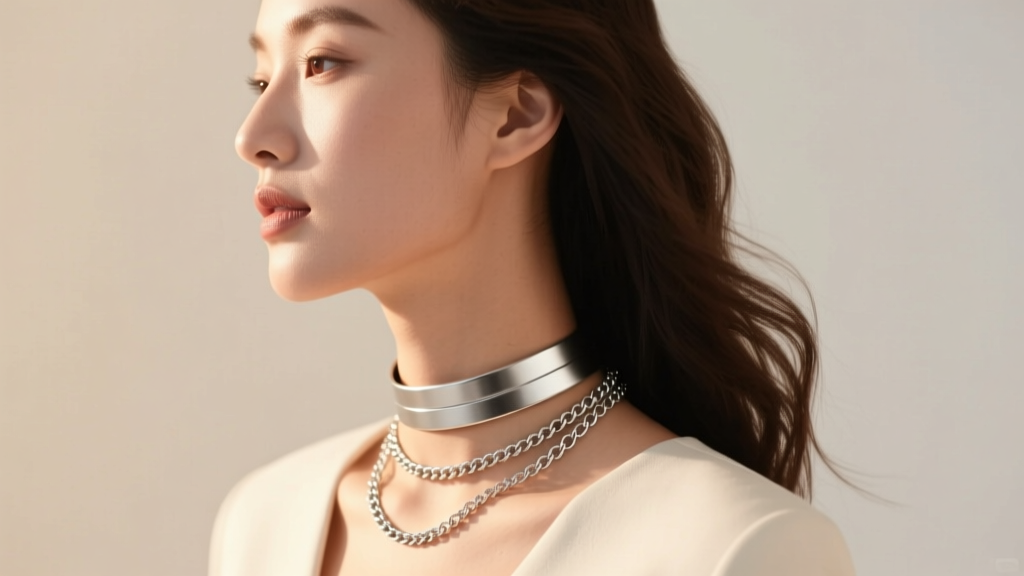
While a standalone choker is elegant, the prevailing trend in 2026 is the "Cascade Stack." Layering a women choker necklace with longer chains requires strict adherence to the 2.5-Inch Drop Rule to prevent the chains from tangling and abrading each other.
- Base Layer (The Choker): 14 or 15 inches. Keep this layer minimal—a simple chain or thin velvet band.
- Second Layer (The Princess): 17.5 or 18 inches. This layer should feature a medium-sized pendant or coin to anchor the visual weight.
- Third Layer (The Matinee): 20 to 22 inches. Opt for a heavier chain link (like a 3mm Cuban or paperclip link) to provide a solid foundation for the stack.
Stylist Note: Never mix chain textures in a tight stack. A snake chain layered directly over a herringbone chain will cause severe micro-scratching and eventual structural failure of the softer metal. Stick to uniform link styles or separate them with bead stations.
Troubleshooting: Irritation, Tarnish, and Tangling
Even with the perfect fit and material, environmental factors can compromise your choker. Here is how to troubleshoot the most common issues encountered by jewelry enthusiasts.
Combating Tarnish and Oxidation
If you wear a sterling silver (925) choker, the sulfur in human sweat will cause it to oxidize and turn black within weeks. To prevent this, ensure your silver choker is rhodium-plated. Rhodium is a platinum-group metal that creates an inert, highly reflective barrier against moisture and sulfur. If your silver has already tarnished, avoid abrasive pastes; instead, use a chemical dip bath specifically formulated for silver, followed by a thorough rinse in distilled water to halt the chemical reaction.
Preventing Chain Tangles
Thin choker chains (under 1.5mm) are notorious for twisting and forming micro-knots. To prevent this, always store your choker with the clasp fastened. An open clasp acts as a microscopic hook that will catch on other links in your jewelry box. Furthermore, when unclasping a delicate chain, lay it flat on a hard surface rather than letting it bunch up in your palm, which introduces structural twists into the metal links.
Managing Skin Irritation
If you develop a red, itchy ring around your neck, remove the choker immediately. Clean the area with a mild, fragrance-free cleanser. If you must wear a specific piece that causes mild irritation, apply a thin layer of clear, flexible nail polish to the inside of the metal band. This creates a temporary, waterproof barrier between the alloy and your epidermis, though upgrading to 316L steel or titanium remains the only permanent solution.
Mastering the women choker necklace is about understanding the intersection of anatomy, metallurgy, and fashion geometry. By measuring accurately, selecting skin-safe materials, and respecting neckline proportions, you can elevate this iconic silhouette from a fleeting trend to a permanent fixture in your curated jewelry wardrobe.


