Technical Guide to Buying a Red Ruby Heart Necklace
Master the gemological and metallurgical details of selecting a red ruby heart necklace, from cut symmetry and heat treatments to prong settings.

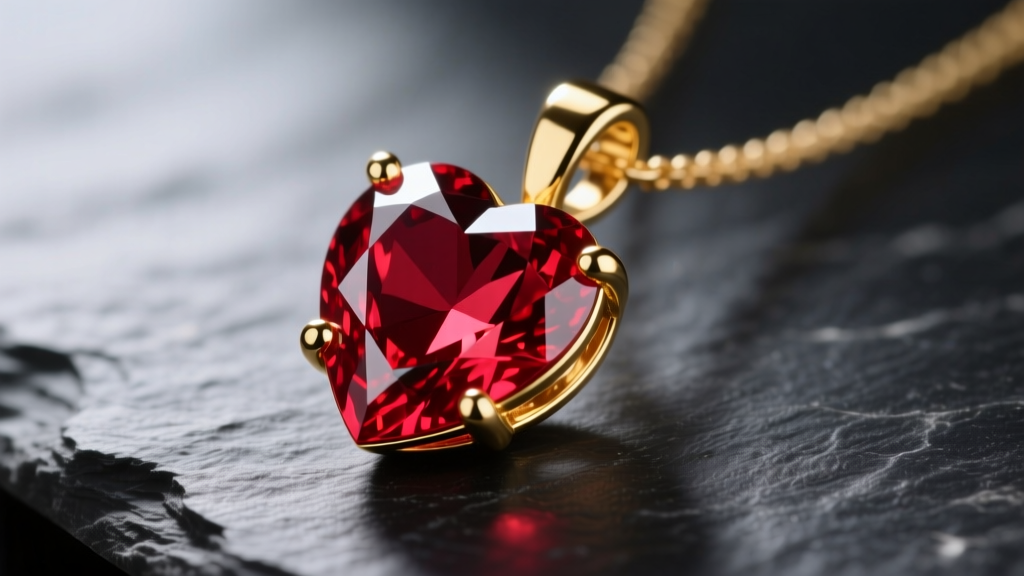
When evaluating a red ruby heart necklace, most consumers focus solely on carat weight and superficial color. However, from a gemological and metallurgical perspective, the heart cut is one of the most unforgiving shapes to execute, and ruby (corundum) presents unique structural vulnerabilities that demand specialized setting engineering. As of 2026, with the market saturated by treated stones and lab-grown alternatives, understanding the technical specifications of your jewelry is no longer optional—it is essential for making a sound investment.
This deep dive explores the precise gemological grading, lapidary proportions, and structural setting requirements necessary to select a high-performance, heirloom-quality ruby pendant.
The Gemological Profile: Corundum Chemistry and Origin
Ruby is the red variety of corundum (aluminum oxide, Al2O3). Its signature red hue is caused by trace amounts of chromium (Cr3+) substituting for aluminum in the crystal lattice. The technical challenge in evaluating a ruby lies in the chromium-to-iron ratio. High iron content quenches the stone's natural UV fluorescence, resulting in a darker, less vibrant appearance.
Burmese vs. Mozambican Spectral Differences
Historically, the Mogok Valley in Myanmar produced 'pigeon blood' rubies characterized by high chromium and low iron content, yielding intense red fluorescence under UV light. However, as of 2026, Mozambican rubies from the Montepuez region dominate the commercial market. Mozambican stones typically possess higher iron content, which reduces fluorescence but often results in superior baseline clarity and larger carat yields. When reviewing a GIA Ruby Quality Factor report, pay strict attention to the origin determination and the presence of 'rutile silk'—fine, needle-like inclusions that, when properly oriented, scatter light and enhance the stone's velvety glow without compromising transparency.
Thermal Enhancements and Lattice Diffusion
Over 95% of natural rubies undergo thermal enhancement. Standard heat treatment (typically between 1,600°C and 1,800°C) dissolves rutile silk and improves clarity; this is a permanent, universally accepted practice. However, you must rigorously avoid lattice diffusion (where beryllium is introduced during heating to artificially induce red color) and lead-glass fracture filling. Glass-filled rubies are structurally compromised and can be destroyed by mild acids like lemon juice or standard ultrasonic cleaning. Always demand a lab report from a tier-one institution like GIA or SSEF confirming 'No indications of heating' or 'Standard heat only'.
Anatomy of the Heart Cut: Proportions and Symmetry
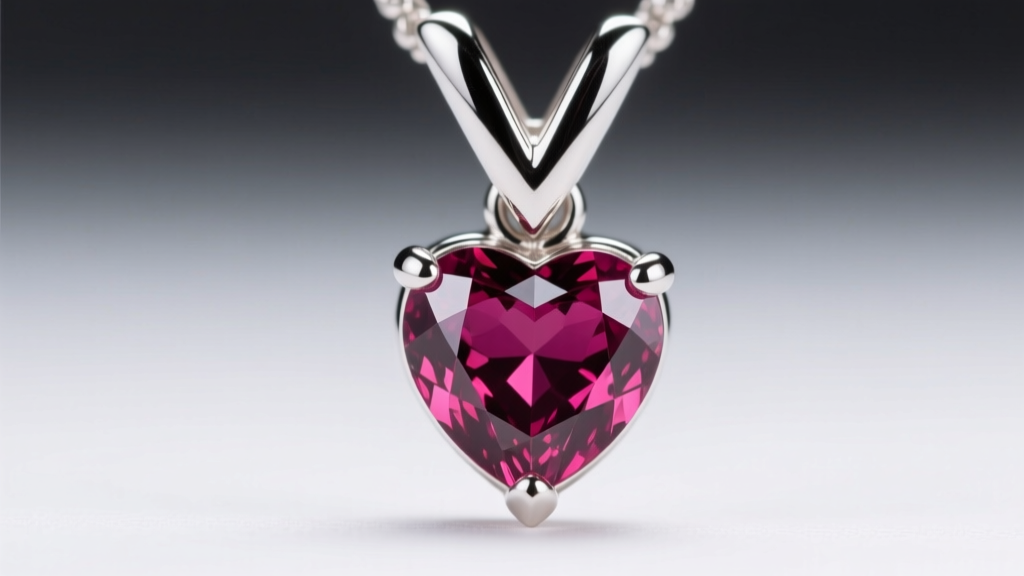
The heart cut is a modified brilliant cut, typically featuring 59 facets. It is notoriously difficult to execute because the lapidary must balance the cleft (the valley at the top) and the point (the culet at the bottom) while maintaining optimal light return. A poorly cut heart will exhibit 'light leakage' in the wings, appearing dead or glassy in the center.
Ideal Proportions Matrix
To ensure maximum brilliance and structural integrity, evaluate the stone against the following technical parameters:
| Parameter | Ideal Range | Technical Consequence of Deviation |
|---|---|---|
| Table Percentage | 53% - 63% | Over 65% causes windowing; under 50% creates a bow-tie extinction effect. |
| Total Depth | 58% - 65% | Excessive depth hides carat weight in the pavilion; shallow cuts chip easily. |
| Cleft Depth | 10% - 15% | Too shallow looks like a pear; too deep creates a stress-fracture zone. |
| Wing Symmetry | Perfect Mirror | Asymmetrical wings ruin the optical balance and distort light refraction. |
Expert Insight: Always view a heart-shaped ruby face-up under diffused daylight-equivalent lighting (5500K). Rotate the stone 360 degrees to check for 'extinction' (dark areas where light fails to return to the eye). A premium heart cut will maintain a uniform, glowing red saturation throughout the rotation.
Setting Engineering: Protecting the Cleft and Point
While ruby ranks 9 on the Mohs hardness scale, making it exceptionally resistant to scratching, it possesses distinct basal parting planes and twinning lamellae. This means a sharp impact can cleave or chip the stone. The heart shape features two highly vulnerable zones: the sharp bottom point and the thin walls of the top cleft.
Prong Placement Strategies
Never purchase a heart-shaped ruby set in a standard bezel or a poorly designed prong setting. The bottom point must be protected by a custom V-prong. A V-prong wraps around the acute angle of the culet, distributing mechanical stress and shielding the tip from impacts. For the cleft, jewelers typically use two rounded prongs placed precisely on the upper lobes. Placing a prong directly inside the cleft valley creates a wedge effect; if the prong is tightened excessively, it will split the stone along its natural twinning plane. For a comprehensive breakdown of corundum durability and setting risks, refer to the GIA Ruby Description and Care Guide.
Chain Metallurgy and Bail Mechanics
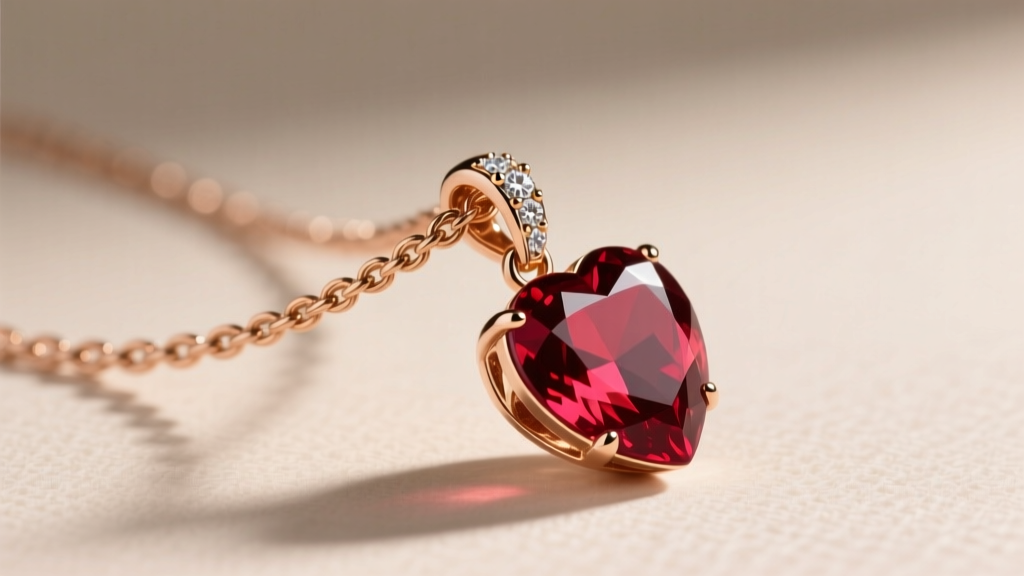
A red ruby heart necklace is inherently top-heavy due to the concentration of mass in the upper lobes of the stone and the metal setting. If the chain and bail are not engineered correctly, the pendant will constantly flip backward, requiring tedious adjustments.
Gauge Thickness and Alloy Selection
For pendants weighing between 2.0 and 5.0 carats (approximately 1.5 to 4.0 grams of stone, plus 3 to 5 grams of gold setting), you need a chain with adequate tensile strength. Avoid delicate 0.8mm chains. Instead, opt for a 1.2mm to 1.5mm cable, curb, or rope chain. When selecting the alloy, understand that 18k gold (75% pure gold) offers superior tarnish resistance and a richer color but has a lower Vickers hardness (approx. 125 HV) compared to 14k gold (approx. 160 HV). If you lead an active lifestyle, a 14k gold chain provides higher yield strength, reducing the risk of the links stretching or the clasp spring-ring failing under dynamic loads. For more on jewelry metal durability, consult the American Gem Society Metals Guide.
Bail Clearance and Center of Gravity
The bail (the loop connecting the pendant to the chain) must be weighted and positioned to counterbalance the stone. A 'hidden bail' attached to the back of the setting often causes the pendant to tilt forward awkwardly. The optimal configuration is a top-drilled bail or a tapered shepherd's hook bail that threads directly through the cleft, allowing the pendant to hang perfectly plumb against the sternum.
Final Technical Checklist for Buyers
- Verify the Lab Report: Ensure the stone is natural corundum with no beryllium diffusion or glass filling.
- Inspect the V-Prong: Confirm the bottom point is fully encapsulated by a V-shaped metal jacket.
- Check Cleft Clearance: Ensure no prongs are wedged tightly inside the top valley of the heart.
- Assess the Chain Gauge: Select a minimum 1.2mm chain with a secure lobster clasp to support the pendant's mass.
By prioritizing these gemological and metallurgical specifications over mere aesthetics, you ensure your red ruby heart necklace is not only visually stunning but structurally engineered to endure for generations.


