Technical Breakdown of Types of Men's Necklaces & Links
Explore the technical types of men's necklaces, from chain link architecture and metal grades to clasp mechanics and tensile strength data.

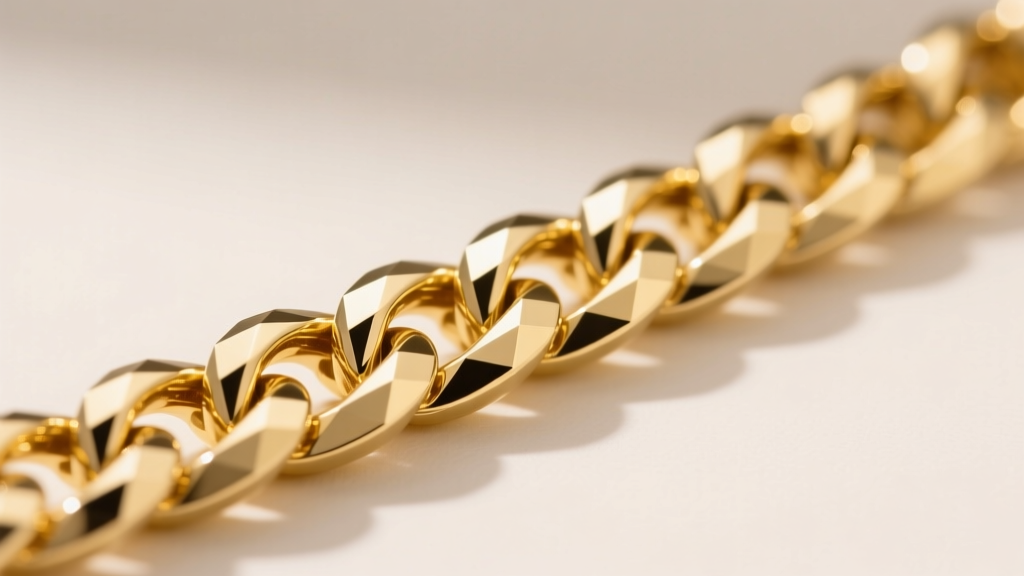
When evaluating the various types of men's necklaces, most style guides stop at superficial aesthetics—matching a pendant to a t-shirt or layering chains for a streetwear look. However, as a domain expert in jewelry engineering, I approach men's necklaces from a perspective of precision metallurgy, tensile mechanics, and structural longevity. A premium men's chain is not merely an accessory; it is a wearable feat of micro-engineering. In this deep dive, we will bypass the fluff and examine the technical specifications, alloy compositions, and failure modes that dictate the true quality and lifespan of men's neckwear.
The Metallurgy of Men's Chains: Beyond Basic Stainless Steel
The foundation of any durable necklace lies in its base alloy. While fast fashion relies on brass or zinc alloys plated with microns of precious metal, high-caliber men's necklaces utilize specific metallurgical grades designed to resist galvanic corrosion and work hardening.
316L vs. 904L Stainless Steel
Surgical stainless steel (316L) is the industry standard for premium men's steel chains. The 'L' denotes low carbon, which prevents carbide precipitation during the high-heat soldering of chain links. It contains molybdenum, providing exceptional resistance to pitting from chlorides (like sweat and seawater). Conversely, 904L steel—famously used by Rolex—contains higher nickel and chromium content. While 904L offers a brighter polish and marginally better acid resistance, it is significantly harder to machine into intricate chain links, making it rare in the chain manufacturing sector outside of bespoke luxury horology crossovers.
Argentium Silver vs. Traditional 925 Sterling
Traditional sterling silver (92.5% silver, 7.5% copper) is prone to firescale during manufacturing and rapid tarnishing due to the copper content reacting with atmospheric sulfur. Modern premium types of men's necklaces increasingly utilize Argentium silver. By replacing a portion of the copper with germanium, Argentium creates a transparent, self-healing oxide layer that dramatically slows tarnish and eliminates firescale. For a silver chain intended for daily wear without constant polishing, Argentium is the superior technical choice.
Chain Link Architecture: Tensile Strength & Wear Profiles
The structural integrity of a necklace is dictated by its link architecture. Different weaves distribute mechanical stress differently, directly impacting the chain's tensile yield and susceptibility to stretching.
Cuban and Curb Links: The Flat Profile
Cuban links are a subset of curb chains, characterized by their uniform, interlocking oval links that have been CNC-machined or hand-filed to sit perfectly flat. The flat profile distributes friction evenly across the collarbone, reducing localized link wear. However, because the links are compressed, the structural integrity relies entirely on the precision of the soldered joint at the base of each oval. Unsoldered Cuban links will rapidly deform under heavy pendants.
Rope Chains: Helical Tensile Dynamics
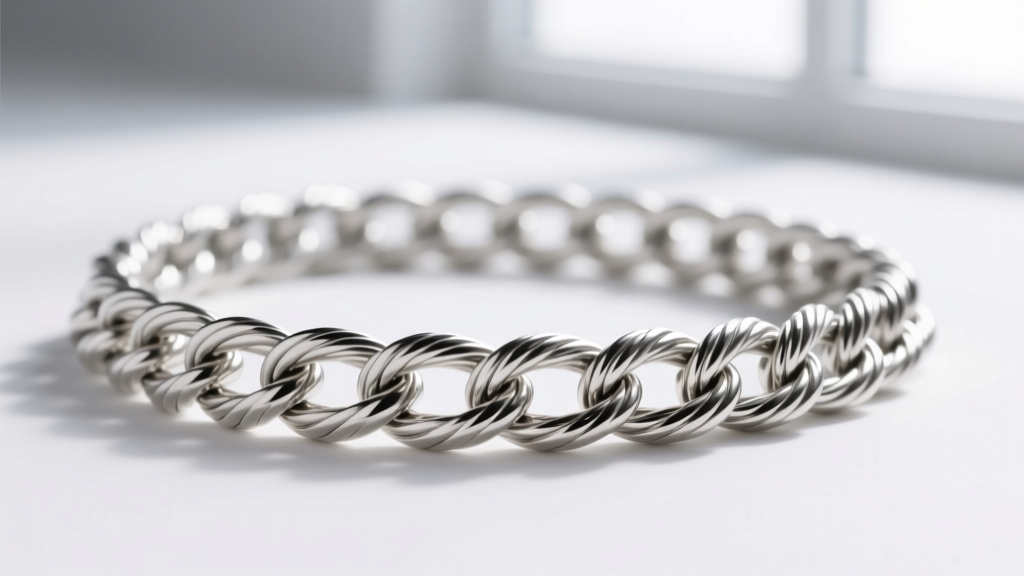
Rope chains are constructed by twisting oval links into a continuous helix, mimicking the structure of a wire rope. This architecture provides immense tensile strength along the vertical axis, making rope chains highly resistant to snapping. However, the twisted profile creates microscopic crevices that trap skin oils and debris, and the complex geometry makes them notoriously difficult to repair if a link fractures.
Figaro Chains: Patterned Stress Distribution
The Figaro chain alternates between three small circular links and one elongated oval link. From an engineering standpoint, the elongated links act as stress concentrators. When subjected to sudden lateral force (yanking), the Figaro chain is most likely to fail at the junction where the small circular links meet the elongated oval. Therefore, Figaro chains should be rated for a lower maximum pendant weight compared to a uniform Cuban link of the same gauge.
| Chain Type | Avg. Tensile Yield (4mm) | Solder Requirement | Repair Difficulty | Optimal Clasp Type |
|---|---|---|---|---|
| Cuban Link | ~45 lbs | Mandatory | Moderate | Lobster / Box |
| Rope Chain | ~65 lbs | Mandatory | High | Box with Safety |
| Figaro | ~30 lbs | Recommended | Low | Lobster |
| Wheat (Spiga) | ~55 lbs | Mandatory | Very High | Box with Safety |
Clasp Mechanics: The Weakest Point in Any Necklace
A chain is only as strong as its clasp. The Jewelers Vigilance Committee frequently notes that clasp failure accounts for the vast majority of lost jewelry claims. Understanding clasp mechanics is crucial when selecting heavy men's chains.
Spring Ring vs. Lobster Claw
Spring ring clasps rely on a tiny internal coil spring. Under the weight of a heavy men's chain (over 30 grams), the continuous tension causes coil fatigue, eventually leading to the spring snapping or the trigger mechanism jamming. Lobster claw clasps utilize a solid cam-and-lever mechanism, offering vastly superior shear strength and longevity. For any men's chain exceeding 3mm in width, a spring ring is technically inadequate.
Box Clasps and the Figure-8 Safety Latch
For heavy chains (50g+), the box clasp is the industry gold standard. It features a V-shaped tongue that compresses and clicks into a square metal housing, relying on friction and geometric locking rather than spring tension. However, if the tongue bends, the clasp can slide open. Therefore, a secondary mechanical fail-safe—specifically a figure-8 safety latch that hinges over a secondary peg—is absolutely mandatory for high-value, heavy-gauge necklaces.

Weight, Gauge, and Proportion: A Technical Sizing Framework
Visualizing chain thickness can be deceptive due to varying link densities. A 4mm hollow rope chain will look identical in width to a 4mm solid Cuban link but will possess less than 20% of the mass and structural integrity. Experts evaluate chains by gram weight per inch rather than just millimeter gauge.
- 2mm - 3mm (4 to 8 grams per 20 inches): Ideal for supporting lightweight pendants (under 5g). Offers high flexibility but low resistance to lateral snapping.
- 4mm - 6mm (15 to 35 grams per 20 inches): The optimal middle ground for men's standalone chains. Provides substantial visual presence and enough tensile strength to support medium-weight medallions.
- 8mm - 12mm+ (60 to 150+ grams per 20 inches): Statement pieces. At this gauge, the chain's own weight requires heavy-duty box clasps and reinforced end-jump rings to prevent the terminal links from stretching out of oval shapes.
Maintenance and Failure Modes in Men's Neckwear
Even the finest types of men's necklaces will degrade if subjected to improper environmental or mechanical stress. Recognizing these failure modes allows for proactive maintenance.
Work Hardening and Link Stretching
Precious metals like gold and silver are malleable. When a chain is repeatedly subjected to micro-tugs (common during sleep or athletic activity), the metal undergoes work hardening. The crystalline structure of the alloy becomes brittle, and the links will slowly elongate from perfect ovals into stretched teardrops. Once a link stretches, it cannot be compressed back; it must be replaced. Always remove heavy chains before physical exertion.
Galvanic Corrosion and Abrasive Wear
According to metallurgical guidelines outlined by the Gemological Institute of America (GIA), exposing lower-karat gold alloys (like 10k or 14k) to harsh chemicals can lead to galvanic corrosion, where the base metals (copper, zinc) oxidize faster than the gold, leaving the chain brittle. Furthermore, wearing multiple chains of different karats (e.g., a 14k chain layered with an 18k chain) results in abrasive wear. The softer 18k gold will act as an anode and wear away rapidly against the harder 14k alloy. Always layer chains of identical metallurgical composition or separate them with non-metallic spacers.
"The longevity of a men's chain is rarely determined by the precious metal content alone, but rather by the precision of the solder joints, the geometry of the link weave, and the mechanical adequacy of the clasp assembly."
By shifting your focus from mere brand names to the underlying metallurgy, link architecture, and mechanical hardware, you can accurately evaluate the true engineering quality of the various types of men's necklaces on the market. A well-constructed chain is an investment in micro-mechanical artistry that will easily outlast fleeting fashion trends.


