Three Piece Friendship Necklace: Best Materials Guide
Discover the best metals for a three piece friendship necklace. Compare titanium, steel, and gold for durability, allergies, and daily wear.

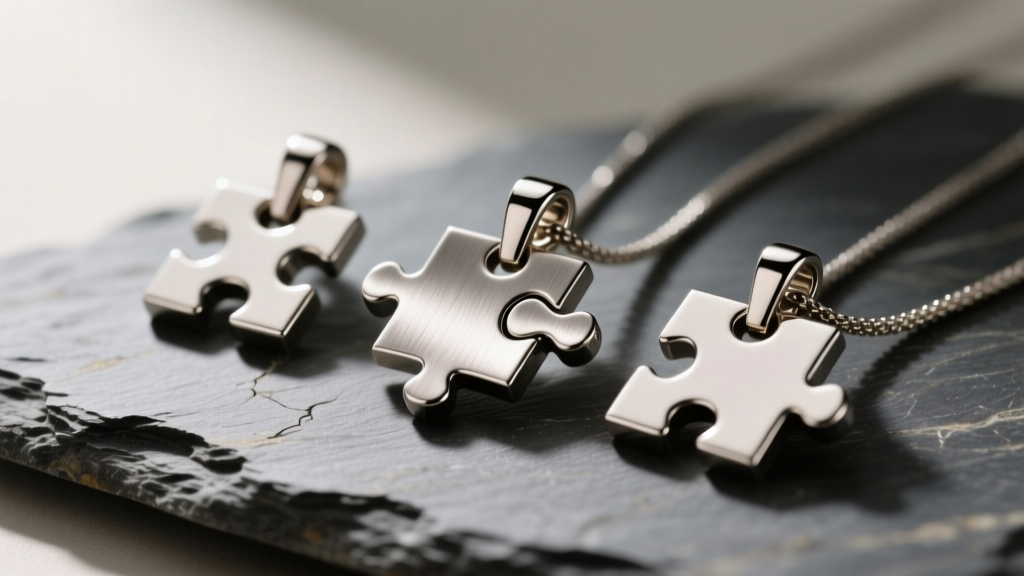
A three piece friendship necklace is more than just an accessory; it is a tactile, daily reminder of a triad bond. Whether you are splitting a puzzle heart, an interlocking clover, or a custom geometric triad among three best friends, the physical reality of sharing a single design across three separate bodies introduces unique wear-and-tear challenges. Unlike standard pendants, multi-piece friendship jewelry features irregular, interlocking edges that experience constant friction against the skin, clothing, and the chain itself.
As of 2026, jewelry metallurgy has advanced significantly, yet the market remains flooded with low-grade alloys that tarnish, snap, or cause contact dermatitis within weeks. Choosing the right material for a three piece friendship necklace requires a deep understanding of metal hardness, corrosion resistance, and hypoallergenic properties. This comprehensive guide breaks down the exact material grades, chain gauges, and failure modes you need to consider before investing in a tri-split keepsake.
The Durability Matrix: Comparing Top Metals
When evaluating metals for daily wear, jewelers look at the Vickers Hardness (HV) scale and corrosion resistance. A three piece friendship necklace often features sharp or beveled puzzle edges; if the metal is too soft, these edges will warp, preventing the pieces from fitting together perfectly when the three friends reunite.
| Material | Specific Grade | Hardness (HV) | Tarnish Resistance | Avg. Price Range |
|---|---|---|---|---|
| Implant-Grade Titanium | ASTM F136 | 300-350 | Excellent | $50 - $90 |
| Surgical Stainless Steel | 316L | 150-190 | Very Good | $25 - $45 |
| Gold-Filled | 1/20 14k GF | 120-150 | Good | $65 - $120 |
| Sterling Silver | 925 | 60-70 | Poor | $40 - $85 |
| Gold Vermeil | 2.5μm over 925 | 60-70 | Fair | $55 - $100 |
Expert Insight: Avoid commercial-grade titanium or generic 'stainless steel' listings. Always look for ASTM F136 (for titanium) or 316L (for steel). These specific grades guarantee the absence of harmful alloying elements and ensure the metal can withstand daily exposure to sweat and sebum.
Hypoallergenic Properties & The Nickel Trap
The most common failure of friendship jewelry isn't physical breakage; it's biological rejection. Contact dermatitis from nickel exposure is a widespread issue. According to the National Center for Biotechnology Information, nickel allergy affects up to 17% of women and 3% of men globally. When a necklace rests in the hollow of the collarbone—a high-sweat zone—nickel ions can leach from cheap alloys, causing severe, itchy rashes.
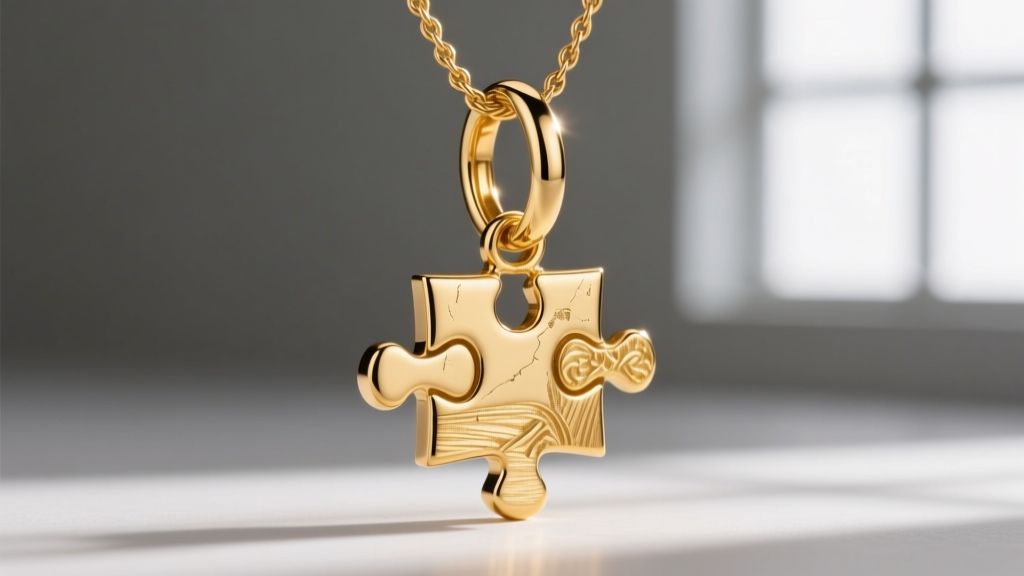
316L Stainless Steel vs. Titanium
While 316L surgical steel is marketed as 'hypoallergenic,' it actually contains trace amounts of nickel (typically 8-10%). The nickel is tightly bound within the chromium-oxide matrix, making it safe for most people. However, if you or your friends have severe, clinically diagnosed nickel allergies, 316L steel is a risk.
For absolute biological safety, ASTM F136 Implant-Grade Titanium is the undisputed champion. It contains zero nickel, is completely biocompatible (the same metal used in surgical joint replacements), and is incredibly lightweight. The only drawback is that titanium cannot be easily soldered by traditional bench jewelers, meaning if a jump ring breaks, the entire chain or pendant loop must be mechanically replaced rather than fused.
The Gold-Filled Advantage Over Vermeil
If your triad prefers the warm aesthetic of gold, you must understand the difference between vermeil and gold-filled. The Gemological Institute of America (GIA) notes that gold vermeil is merely a thick plating (minimum 2.5 microns) over a sterling silver base. Over time, the friction of a three piece puzzle pendant rubbing against the skin will wear through this layer, exposing the silver beneath, which will then oxidize and turn the skin green or black.
14k Gold-Filled (1/20 14k GF), on the other hand, involves mechanically bonding a thick sheet of solid 14k gold to a brass core using heat and pressure. By law, the gold must constitute at least 5% of the total weight. This creates a surface that will not flake, peel, or tarnish for decades, making it vastly superior for a lifelong friendship keepsake.
Chain Gauge & Clasp Mechanics for Tri-Splits
A heavy, solid-metal three piece friendship necklace will easily weigh between 4 and 8 grams per pendant. Suspending this weight requires a chain and clasp system engineered for tensile strength.
- Chain Gauge: Avoid delicate 0.8mm or 1.0mm chains. The weight of a puzzle pendant will cause thin links to stretch and eventually snap at the soldering points. Opt for a 1.5mm to 2.0mm cable or rope chain. Rope chains offer superior tensile strength due to their twisted, interlocking link structure.
- Jump Rings: The jump ring connecting the pendant to the chain is the primary failure point. Ensure the jump ring is soldered closed or made of heavy-gauge (18g or 16g) wire. If it is a simple split ring, the pendant will eventually work its way through the gap and be lost.
- Clasps: Spring-ring clasps are notorious for failing under the tension of heavier pendants. Always upgrade to a lobster claw clasp with a sturdy internal spring mechanism, or a magnetic neodymium clasp for ease of use.

Real-World Pricing & Brand Benchmarks
When shopping for a high-quality three piece friendship necklace in 2026, price is a reliable indicator of material integrity. Mass-market fast-fashion retailers typically sell tri-split necklaces for $12 to $18. These are almost exclusively made of zinc alloy or brass with a microscopic flash-plating that will degrade within a month of daily wear.
For a piece meant to symbolize a lasting bond, expect to invest in the following tiers:
- Entry-Level Durability ($25 - $45): 316L Stainless Steel with PVD (Physical Vapor Deposition) gold or rose-gold coating. PVD is highly scratch-resistant and won't flake like electroplating.
- Mid-Tier Longevity ($50 - $90): Solid 925 Sterling Silver (requires maintenance) or Implant-Grade Titanium (zero maintenance).
- Premium Heirloom ($100 - $180+): 14k Gold-Filled chains with solid 14k gold puzzle pendants, or custom-cast pieces from independent bench jewelers.
Care Protocols Based on Material
Even the most durable metals require specific care protocols to maintain their luster, especially when dealing with the intricate crevices of a three piece puzzle design where skin cells and lotions can accumulate.
Titanium & Stainless Steel
These metals are virtually maintenance-free. However, if the puzzle edges become dull from soap scum, simply soak the necklace in a bowl of warm water with a drop of mild dish soap for 10 minutes. Use a soft-bristled baby toothbrush to gently clean the interlocking joints. Never use bleach or chlorine-based cleaners, as these can pit the surface of stainless steel.
Sterling Silver & Gold Vermeil
Silver sulfide tarnish is inevitable when silver is exposed to sulfur in the air and human sweat. To combat this, store the necklace in an anti-tarnish cloth pouch when not in use. For cleaning, avoid harsh chemical dips which can strip the rhodium plating often found on vermeil. Instead, use a specialized silver polishing cloth infused with micro-abrasives to gently buff the puzzle edges back to a high shine.
Final Thoughts on Triad Jewelry
A three piece friendship necklace is a beautiful investment in your shared history. By prioritizing material science over fast-fashion trends—opting for ASTM F136 titanium, 316L steel, or 1/20 14k gold-filled metals, and insisting on 1.5mm+ chain gauges—you ensure that the physical token of your friendship will survive the elements, the years, and the beautiful chaos of daily life. Choose wisely, and your interlocking pieces will fit together just as perfectly a decade from now as they do today.


