Turquoise Tassel Necklace Material Guide: Natural vs Stabilized
Discover how to evaluate a turquoise tassel necklace. Compare natural, stabilized, and dyed stones, plus tassel thread grades and hardware durability.

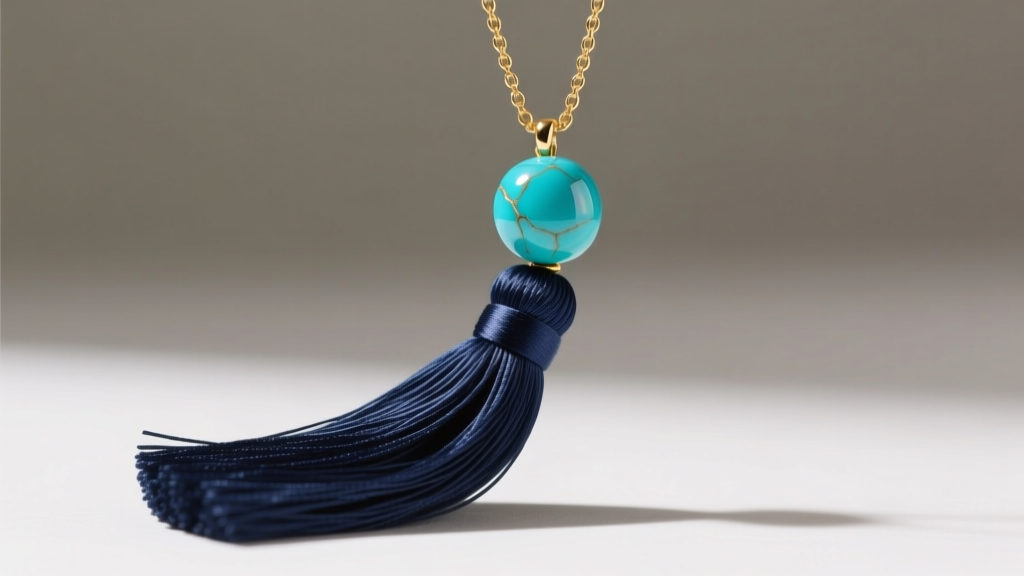
The turquoise tassel necklace is a staple in bohemian and contemporary jewelry design, yet its structural integrity relies on a complex interplay of three distinct material zones: the focal gemstone, the fibrous tassel assembly, and the metallic hardware. As a jewelry style radar tracking material innovations and market shifts into 2026, we frequently see consumers misled by vague product descriptions. Understanding the exact mineralogical properties of turquoise, combined with the tensile strength of tassel threads and the corrosion resistance of chain hardware, is critical for making an informed investment.
This guide deconstructs the material science behind these necklaces, providing a practical framework for evaluating quality, predicting wear patterns, and avoiding common failure modes.
Decoding the Core Stone: Turquoise Mineralogy and Treatments
Turquoise is a hydrous phosphate of copper and aluminum (CuAl6(PO4)4(OH)8·4H2O). According to the Mindat.org Mineral Database, natural turquoise registers between 5 and 6 on the Mohs hardness scale. Its defining vulnerability is its porosity; untreated stones readily absorb skin oils, cosmetics, and environmental pollutants, which can alter their chemical composition and shift their color from vibrant blue to a dull, mottled green over time.
Natural and Untreated Turquoise
Genuinely natural, untreated turquoise is increasingly rare in 2026, especially from historically significant sources like the Sleeping Beauty mine in Arizona (which ceased primary production years ago, driving up secondary market prices). Untreated stones are prized for their pure, unadulterated matrix and natural luster. However, because they remain porous, they require meticulous care. A high-grade natural turquoise tassel necklace will typically feature stones backed with a polymer or epoxy membrane to prevent skin oils from penetrating the cabochon from the rear.
Stabilized Turquoise
Stabilization is an accepted and necessary industry practice for lower-grade, chalky turquoise. As detailed by the Gemological Institute of America (GIA), the stabilization process involves placing the porous stone in a vacuum chamber and introducing a liquid polymer, epoxy, or resin (such as Opticon). The resin penetrates the microscopic pores and hardens, raising the stone's Mohs hardness to 6 or 7, enhancing its color saturation, and rendering it impervious to oils and water. Stabilized turquoise is highly durable and ideal for everyday wear, though it lacks the premium investment value of untreated stones.
Reconstituted and Imitation Stones
Reconstituted turquoise is manufactured by binding turquoise dust and chalk with resins and dyes, then molding it into blocks. Imitations often consist of dyed howlite or magnesite. While visually similar in low-resolution online photos, these materials lack the intricate matrix webbing of genuine stone and are prone to chipping and color bleeding when exposed to harsh chemicals.
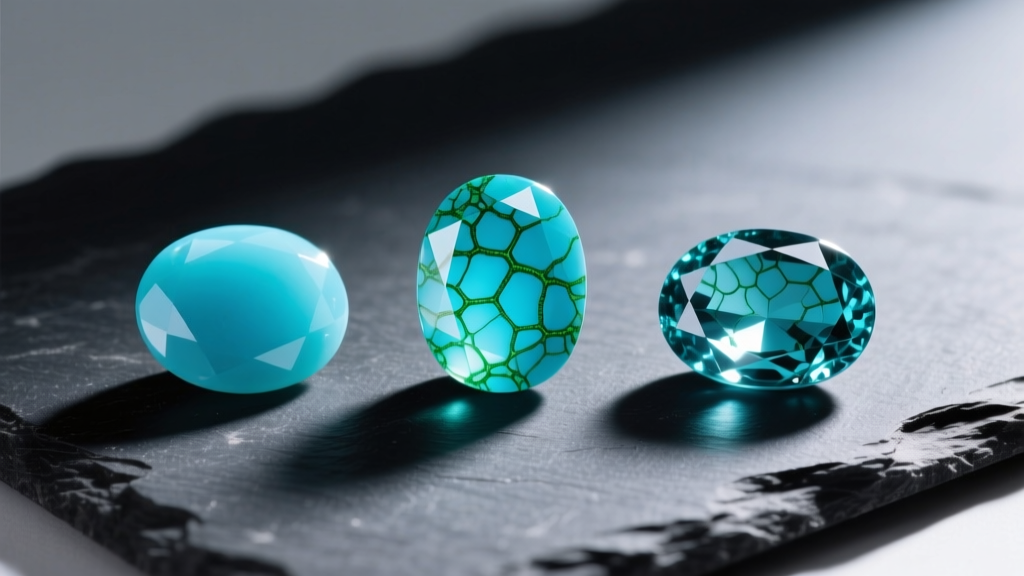
Material Comparison Chart: Turquoise Treatments
| Treatment Type | Mohs Hardness | Porosity | Market Value (per carat) | Durability & Wear Profile |
|---|---|---|---|---|
| Natural (Untreated) | 5.0 - 6.0 | High | $10.00 - $50.00+ | Fragile; requires strict avoidance of oils, perfumes, and water. |
| Stabilized | 6.0 - 7.0 | None (Sealed) | $2.00 - $8.00 | Highly durable; suitable for daily wear and resistant to color shift. |
| Reconstituted | 4.0 - 5.0 | Low | $0.10 - $0.50 | Prone to chipping; resin matrix can yellow or degrade under UV exposure. |
| Dyed Howlite | 3.5 - 4.5 | Moderate | $0.05 - $0.20 | Poor; dye bleeds with sweat; scratches easily against metal hardware. |
The Tassel Element: Thread Composition and Wearability
The tassel is not merely a decorative afterthought; it is a structural component that dictates the necklace's drape, movement, and lifespan. The material used for the tassel threads drastically affects how the piece ages.
Silk Threads
Silk is a natural protein fiber renowned for its high tensile strength and natural luster. High-end turquoise tassel necklaces often utilize Z-twist silk threads, which reflect light beautifully and mimic the waxy luster of polished turquoise. However, silk is highly sensitive to alkaline substances and prolonged UV exposure. Perspiration (which can be alkaline) will degrade silk fibers over time, causing them to fray and snap at the tassel cap binding.
Cotton and Linen
Cotton offers a matte, organic aesthetic that pairs well with heavily webbed, rustic turquoise matrixes. As a cellulose fiber, cotton is highly absorbent. While this makes it incredibly soft, it also means the tassel will readily absorb ambient humidity, skin oils, and spilled cosmetics. Over time, cotton tassels tend to mat together and lose their individual thread definition, requiring careful combing and occasional gentle washing.
Synthetic Fibers (Nylon and Polyester)
Synthetic tassels dominate the mid-tier market. Nylon offers exceptional abrasion resistance and maintains its structural integrity indefinitely. However, nylon lacks the premium drape of silk and can appear overly glossy or 'plastic' under direct sunlight. Polyester is a middle-ground option, offering decent colorfastness and resistance to biological degradation, though it is prone to static cling, which can cause the tassel strands to stick uncomfortably to the wearer's clothing.
Hardware and Assembly: Where Tassel Necklaces Fail
The most common point of catastrophic failure in a turquoise tassel necklace is not the stone or the thread, but the tassel cap and its connection to the chain.
- Adhesive Caps: Many mass-produced necklaces use cyanoacrylate (super glue) to secure the tassel threads inside a metal cone cap. This adhesive becomes brittle over time and dissolves instantly upon contact with acetone, alcohol, or even heavy concentrations of perfume. If you pull gently on the tassel and feel a rigid, unyielding connection that looks slightly cloudy inside the cap, it is likely glued.
- Crimped and Wire-Wrapped Caps: Premium assemblies use a mechanical crimp or a wire-wrapped binding hidden inside the metal cone. The threads are looped over a heavy-gauge jump ring or secured with a copper wire wrap before the cap is slid over and pinched shut. This mechanical bond will not fail due to chemical exposure.
- Chain and Jump Rings: Ensure the jump ring connecting the tassel cap to the chain is soldered shut or features a split-ring mechanism. An open, unsoldered jump ring will easily warp under the pendulum-like weight of a heavy turquoise stone, eventually sliding off the chain.
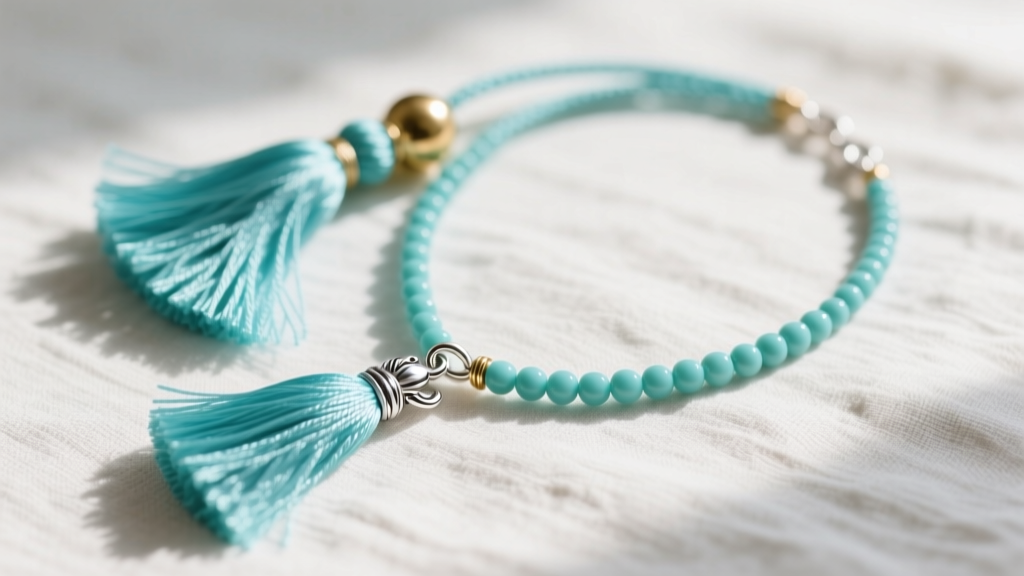
Real-World Troubleshooting and Care Protocols
Maintaining the structural and aesthetic integrity of your necklace requires a targeted approach based on its specific material makeup.
Pro-Tip for Stone Care: Never use ultrasonic cleaners or commercial jewelry dips on any form of turquoise. The high-frequency vibrations can shatter natural stones along their matrix fault lines, while harsh chemicals will strip the polish from stabilized stones and cause dyed imitations to bleed.
Addressing Tassel Fraying
If a silk or cotton tassel begins to fray at the bottom, do not pull the loose threads. Use a pair of sharp, precision embroidery scissors to trim the stray fibers at a slight angle. To restore the tassel's shape, wrap it tightly in a piece of parchment paper, secure it with a rubber band, and gently steam it over boiling water for 30 seconds. Allow it to cool and dry completely before unwrapping; this resets the memory of the fibers.
Preventing Hardware Tarnish
Brass and copper tassel caps are popular for their warm, earthy tones, but they oxidize rapidly when exposed to the sulfur compounds in human sweat. To slow this process, apply a micro-thin layer of museum wax or clear nail polish to the inside and outside of the base metal cap before the first wear. If the hardware is sterling silver, store the necklace in an airtight anti-tarnish bag with a silica gel packet to prevent the silver sulfide layer from forming, which can otherwise transfer black smudges onto the porous turquoise or light-colored tassel threads.
By critically evaluating the stone treatment, thread composition, and mechanical assembly, you can confidently select a turquoise tassel necklace that not only elevates your style but withstands the physical demands of daily wear.


