Versace Gold Necklace Care: Cleaning & Maintenance
Learn expert cleaning and maintenance tips for your Versace gold necklace. Discover safe methods for Medusa pendants, PVD plating, and solid 18k gold.


The Anatomy of a Versace Gold Necklace: Plated vs. Solid
Owning a Versace gold necklace is an investment in bold, iconic Italian luxury. However, maintaining its high-polish luster requires a nuanced understanding of its construction. Before applying any cleaning solution, you must identify whether your piece belongs to the brand's fashion jewelry line or its fine jewelry collection. This distinction dictates the chemical and mechanical limits of your maintenance routine.
Versace's fashion jewelry typically features a brass or surgical stainless steel base coated with a gold finish. In recent years, the brand has increasingly utilized PVD (Physical Vapor Deposition) coating. PVD is a vacuum-chamber process that bonds gold molecules to the base metal at a microscopic level, resulting in a finish that is vastly more resistant to sweat and friction than traditional electroplating. Conversely, Versace Fine Jewelry pieces are crafted from solid 18k gold (75% pure gold alloyed with copper and silver for durability). While solid gold will not flake or wear away to reveal a base metal, it is still susceptible to surface dulling from sebum, cosmetic residues, and environmental sulfur.
Step-by-Step Cleaning Guide for the Medusa Motif
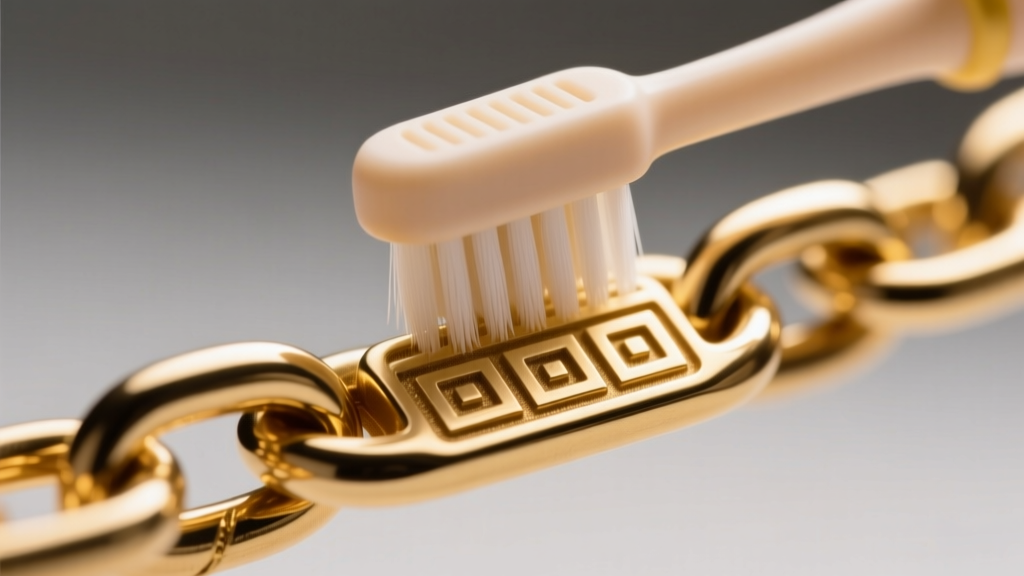
The iconic Medusa head pendant and the intricate Greek Key (Meander) chain links are hallmarks of Versace design. Unfortunately, their deep, 90-degree angular crevices act as magnets for dead skin cells, silica dust from makeup, and natural body oils. Standard wiping is entirely insufficient for these architectural details.
The Safe Soak and Agitation Method
- Prepare a Neutral Bath: Mix three drops of pH-neutral, phosphate-free dish soap (like Dawn Ultra) into a bowl of lukewarm distilled water (approximately 98°F or 37°C). Avoid tap water, as trace chlorine and heavy minerals can leave micro-deposits on high-polish surfaces.
- The 3-Minute Soak: Submerge your Versace gold necklace for exactly three minutes. This softens the sebum and cosmetic binders without compromising the PVD coating or the structural integrity of any resin or enamel accents.
- Targeted Agitation: Using an extra-soft baby toothbrush, gently brush the chain links in a linear motion. For the Medusa pendant, use a wooden toothpick to carefully dislodge debris from the eyes, hair strands, and jawline. Never use metal needles or safety pins, as they will leave permanent micro-scratches on the gold finish.
- The Rinse and Dry: Rinse thoroughly under a gentle stream of distilled water. Pat dry with a lint-free microfiber cloth. Do not air dry, as water spots will form on the mirror finish.
Material-Specific Care Matrix
Using the wrong cleaning agent is the fastest way to ruin a luxury necklace. Ammonia-based cleaners (like Windex) or harsh jewelry dips will strip the protective clear coats on fashion pieces and dull the alloyed metals in fine jewelry. Refer to the matrix below to ensure your methodology matches your material.
| Material Type | Base / Composition | Recommended Cleaning Agent | Mechanical Tool | Ultrasonic Safe? |
|---|---|---|---|---|
| Fashion (PVD Plated) | Brass or Steel + PVD Gold | pH-Neutral Dish Soap + Distilled Water | Extra-Soft Baby Toothbrush | No (Causes peeling) |
| Fashion (Electroplated) | Brass + Flash Gold Plating | Dry Microfiber Polishing Cloth Only | Wooden Toothpick for Crevices | No (Strips plating) |
| Fine Jewelry (Solid) | 18k Solid Gold Alloy | Mild Ammonia-Free Jewelry Cleaner | Soft Nylon Brush | Yes (If no porous gems) |
Environmental Hazards and Storage Protocols
The longevity of your Versace gold necklace is heavily influenced by how it is stored and what it is exposed to during wear. Gold, particularly when alloyed or plated over reactive base metals, is highly sensitive to specific chemical triggers.
The Chlorine Threat
Never wear your necklace in a swimming pool or hot tub. Chlorine reacts with the copper and silver alloys in 18k gold, and it can completely dissolve the microscopic binders in PVD coatings. This reaction creates gold chloride, a water-soluble compound that literally washes the gold away from the surface, leading to irreversible pitting and structural weakness in the chain links.
Cosmetic and Fragrance Degradation
Alcohol and volatile organic compounds (VOCs) found in perfumes, hairsprays, and setting sprays can degrade the luster of gold plating over time. Always follow the golden rule of jewelry dressing: your Versace necklace should be the last thing you put on and the first thing you take off.
Advanced Storage Techniques
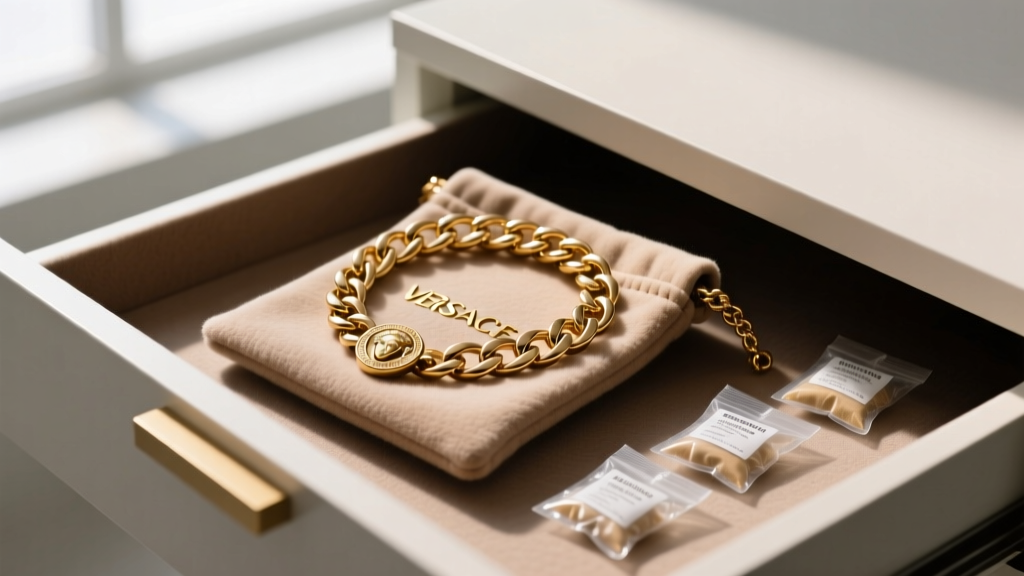
Tossing your necklace into a standard velvet box often leads to tangling and exposure to ambient humidity, which accelerates tarnishing of the underlying metals if the plating has micro-fissures. For optimal preservation:
- Use Treated Flannel: Store the piece in a Pacific Silvercloth or similarly treated anti-tarnish flannel pouch. These fabrics are embedded with microscopic silver and zinc particles that absorb sulfur gases before they can reach your jewelry.
- Control Humidity: Include a 5-gram silica gel desiccant packet in your storage drawer or safe to keep ambient relative humidity below 40%.
- Prevent Mechanical Friction: Never store multiple necklaces in the same compartment. The diamond-cut edges of a Greek Key chain can easily scratch the high-polish surface of a Medusa pendant.
When to Seek Professional Restoration
Even with meticulous care, a heavily worn Versace fashion necklace may eventually show signs of brass bleeding through the gold plating, particularly on the back of the pendant and the clasp mechanism where skin friction is highest. According to the Federal Trade Commission's Jewelry Guides, the thickness of gold plating dictates its lifespan, and everyday friction will inevitably wear down flash-plated items.
If your piece is a solid 18k Versace Fine Jewelry necklace, a professional jeweler can perform a high-speed buffing with a rouge wheel to remove superficial scratches and restore the factory mirror finish. For PVD-plated fashion pieces, traditional buffing will destroy the finish. Instead, seek out a specialist who offers PVD re-coating services. While sending the piece back to an authorized Versace customer care center is the safest route for authentic restoration, specialized local horologists and jewelers with vacuum-deposition chambers can often re-plate the brass base for a fraction of the cost of replacement, typically ranging from $75 to $150 depending on the chain's surface area.
Expert Insight: Always photograph your necklace's hallmark, serial number, and the exact stamping inside the clasp before sending it out for any professional restoration or re-plating. This guarantees the return of your authentic luxury asset and provides a baseline for quality control.
For further reading on the metallurgical properties of luxury jewelry alloys and safe home maintenance, the Gemological Institute of America (GIA) provides excellent foundational guidelines on handling karat gold and plated alternatives. By respecting the material science behind your Versace gold necklace, you ensure its bold, iconic aesthetic remains flawless for years to come.


