Vintage Diamond Pendant Necklace: Value & Budget Guide
Discover how to evaluate a vintage diamond pendant necklace. Learn pricing tiers, antique diamond cut values, and negotiation tips for estate jewelry.

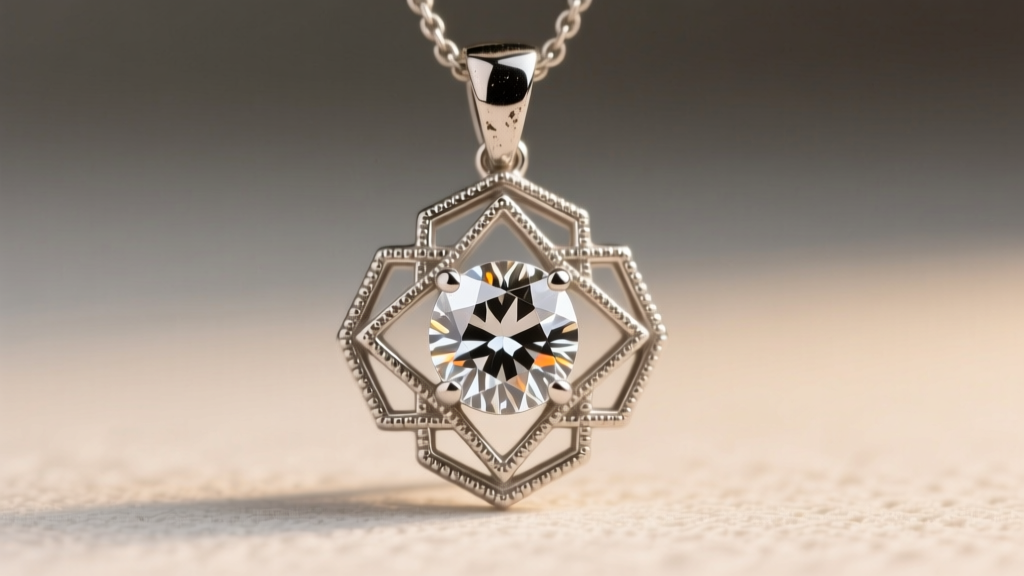
The True Cost of a Vintage Diamond Pendant Necklace
Acquiring a vintage diamond pendant necklace is rarely just a jewelry purchase; it is an investment in history, craftsmanship, and稀缺ity (scarcity). However, the estate jewelry market is notoriously opaque. Unlike modern diamonds, which are priced against the highly standardized Rapaport Diamond Report, antique diamonds and vintage settings are subject to wild price fluctuations based on provenance, cut geometry, and metal composition. In today's market, buyers often overpay by 20% to 40% simply because they mistake "old" for "valuable" without understanding the underlying gemological metrics.
To accurately assess the budget and true market value of a vintage piece, you must deconstruct the necklace into three distinct value components: the center stone's antique cut grade, the historical integrity of the mounting, and the hidden restoration costs that estate jewelers rarely disclose upfront. According to the Gemological Institute of America (GIA), evaluating antique jewelry requires a separate framework from modern brilliant-cut diamonds, as the light performance goals of the 19th and early 20th centuries were vastly different.
Decoding Vintage Diamond Cuts: Where the Value Hides
The most critical factor in pricing a vintage diamond pendant necklace is identifying the specific cut of the center stone. Modern round brilliant diamonds are cut to maximize brilliance and fire, but antique diamonds were cut by hand to maximize carat weight retention from the rough crystal. This results in distinct facet patterns that command specific premiums in the collector's market.
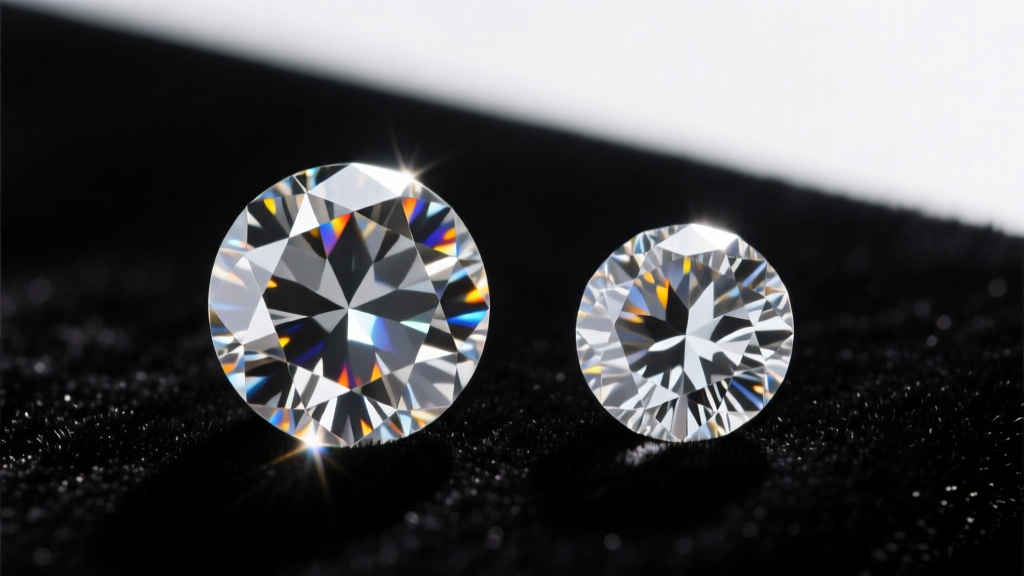
Old European Cut (OEC) vs. Old Mine Cut (OMC)
The Lang Antiques University notes that the Old European Cut (prevalent from the 1890s to the 1930s) features a high crown, small table, and 58 facets, culminating in an "open culet"—a flat point at the bottom of the stone visible to the naked eye. OECs are highly prized for their "chunky" flash and romantic scintillation. A well-proportioned 1.00-carat OEC in a genuine Art Deco platinum setting will routinely command a 15% to 25% premium over a modern equivalent due to collector demand.
Conversely, the Old Mine Cut (prevalent in the Victorian and Edwardian eras) is squarish with rounded corners, resembling a modern cushion cut. OMCs often feature asymmetrical faceting and a very large open culet. While beautiful, OMCs are generally priced 10% to 15% lower than OECs of the same carat weight, primarily because their light return is less predictable and they often suffer from "extinction" (dark areas where light escapes).
The "Spread" vs. "Carat Weight" Trap
A common budgeting mistake is paying for carat weight that is hidden in the stone's depth. Many vintage diamonds were cut shallow to face up larger (more "spread") on the finger or chest. A shallow-cut 1.50-carat vintage diamond may face up like a 2.00-carat stone, but it will lack the internal fire and scintillation of a well-proportioned cut. When assessing value, always measure the stone's millimeter diameter and compare it to ideal proportions. If a stone is overly spread, you should negotiate the price down by 10% to 20%, as it will appear glassy or "sleepy" in low lighting conditions.
Budget Tiers: What to Expect in Today’s Estate Market
When budgeting for a vintage diamond pendant necklace, it is essential to align your expectations with current market realities. The following table outlines realistic price ranges for authenticated, unrestored estate pieces based on era, metal, and center stone weight.
| Era & Style | Center Stone (Cut / Carat) | Metal Composition | Estimated Market Value (USD) | Primary Value Drivers |
|---|---|---|---|---|
| Victorian (1880s-1900) | Old Mine Cut / 0.50 - 0.75ct | 14k/15k Yellow Gold, Silver-topped | $1,800 - $3,500 | Hand-engraving, closed-back foiling, provenance |
| Art Deco (1920s-1930s) | Old European Cut / 1.00 - 1.50ct | Platinum or Platinum over Gold | $5,500 - $9,500 | Milgrain detailing, calibré-cut accent stones, geometric symmetry |
| Retro (1940s-1950s) | Transitional Cut / 1.50 - 2.50ct | 14k/18k Rose or Yellow Gold | $4,000 - $7,000 | Scrollwork motifs, illusion settings, bold gold volume |
| Mid-Century (1960s-1970s) | Early Modern Brilliant / 1.00ct+ | 18k White or Yellow Gold | $3,000 - $6,000 | Textured gold bark finishes, starburst settings, maker's marks |
Metal & Setting Appraisal: Don't Overpay for the Mounting
The mounting of a vintage diamond pendant necklace can account for up to 40% of its total asking price. However, not all antique metals hold their value equally. Platinum is the gold standard for Art Deco and Edwardian pieces. Its strength allowed jewelers to create the impossibly fine, lace-like filigree and milgrain edges that define the era. A genuine platinum setting will bear the "PT", "Plat", or "950" hallmark. If a piece from the 1920s is stamped "14k" or lacks a platinum mark, it is likely white gold, which was used as a cheaper substitute and does not command the same collector premium.
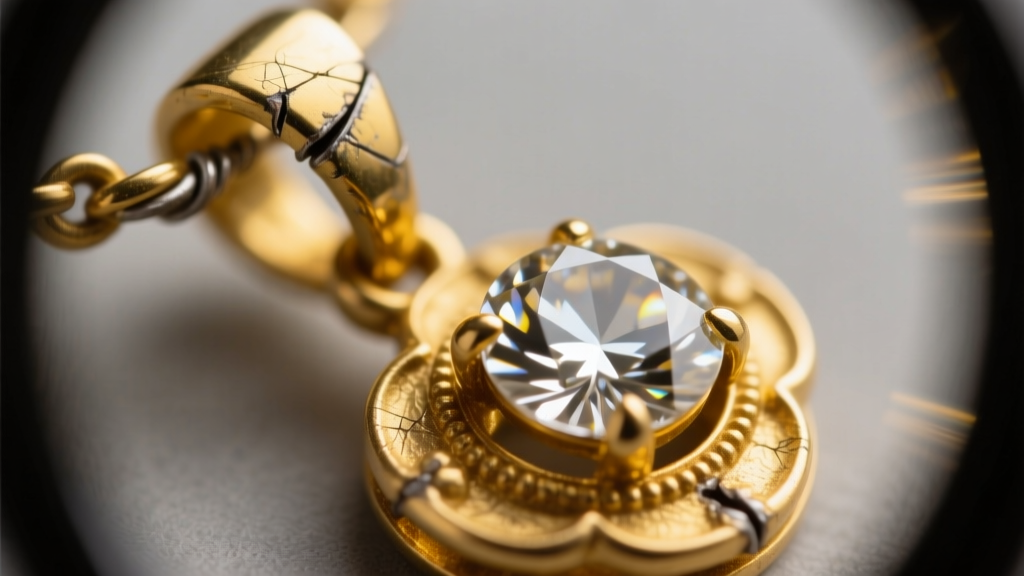
Red Flags in Vintage Settings
When inspecting a potential purchase, you must look for structural compromises that will require immediate, out-of-pocket restoration. According to GIA clarity and treatment guidelines, structural integrity is paramount for antique stones, which are often more brittle due to their large, open culets.
- Re-tipped Prongs: Century-old prongs wear down. If you see a globular, shiny bump on the tip of a prong, it has been re-tipped. While functional, it detracts from the original craftsmanship and should lower the price by $100 to $250.
- Soldered Bails: The bail (the loop that holds the chain) is a high-stress area. Many vintage pendants have had their bails replaced or heavily soldered with lead-based alloys. Lead solder can cause long-term degradation to gold and platinum and is a major red flag for serious collectors.
- Fracture-Filled Melee: In multi-stone vintage pendants, the smaller accent diamonds (melee) were sometimes fracture-filled in the 1980s and 90s to improve apparent clarity. Look for a "flash effect" (purple or green iridescence) inside the small stones under a loupe. Fracture-filled melee severely diminishes the value of a high-end antique piece.
Authentication & Certification: Is the Premium Worth It?
A major budgeting decision is whether to pay the premium for a vintage diamond pendant necklace that comes with a modern GIA dossier versus an older EGL certificate or an in-house jeweler's appraisal.
"Never pay modern market premiums based on an EGL or in-house appraisal for an antique diamond. These labs historically grade color and clarity two to three tiers softer than the GIA. An EGL 'G/VS2' Old European Cut is frequently a GIA 'J/SI2' in reality, meaning you could be overpaying by thousands of dollars."
If a piece is uncertified, factor the cost of sending the stone to the GIA for an Antique Diamond Report (approximately $150 to $300, plus the jeweler's fee for safely unmounting and remounting the stone) into your maximum offer. Many estate jewelers will agree to a "subject to GIA grading" contingency, where the final sale price is adjusted based on the official color and clarity grades returned by the lab.
Final Negotiation Tactics for Estate Jewelers
Negotiating for estate jewelry requires a different vocabulary than haggling at a modern retail counter. Estate jewelers respect buyers who understand the mechanics of antique restoration. To secure the best value on a vintage diamond pendant necklace, use the following negotiation levers:
- The Chain Contingency: Original antique chains (like hand-forged cable or belcher chains) are incredibly fragile and often unsuitable for daily wear. If the pendant is paired with a modern, machine-made chain, point out that you will need to source a period-correct chain or a heavy-duty modern alternative, deducting $200 to $500 from the asking price.
- Rhodium Depletion: If the piece is white gold from the Retro or Mid-Century era, it will likely need rhodium plating to look its best. Use the $75 to $120 cost of professional rhodium plating as a micro-negotiation point.
- Maker's Mark Absence: High-end Art Deco pieces from houses like Cartier, Boucheron, or Van Cleef & Arpels carry massive premiums. If a piece is stylistically similar but lacks a definitive maker's mark or French eagle head hallmark, politely remind the dealer that it must be priced as "unattributed period jewelry," not as a signed designer piece.
By shifting your focus from the emotional romance of a vintage diamond pendant necklace to the hard metrics of cut geometry, metallurgical integrity, and lab-verified grading, you transform from a passive consumer into an informed collector. This analytical approach is the only reliable way to secure genuine heirloom value in today's competitive estate market.


