2026 Gift Guide: Choosing the Perfect Vintage Lapis Necklace
Discover how to choose, authenticate, and gift a vintage lapis necklace for milestones. Explore eras, grading, and styling tips in our 2026 guide.

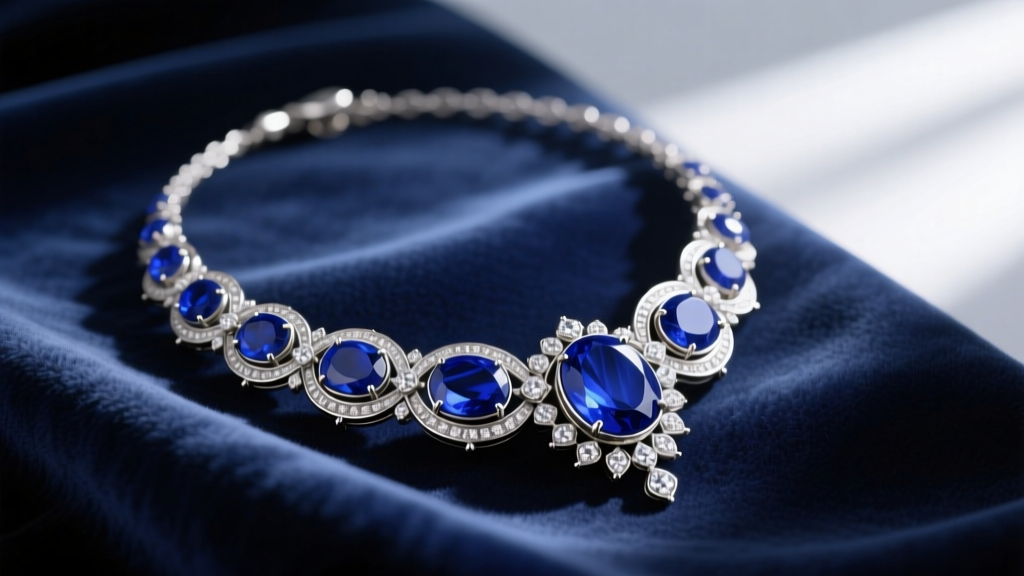
The Enduring Allure of Gifting Vintage Lapis Lazuli
Gifting jewelry is an exercise in storytelling, but presenting a vintage lapis necklace elevates the gesture into the realm of historical legacy. Lapis lazuli, mined from the Sar-e-Sang mountains of Afghanistan for over 6,000 years, has been prized by Egyptian pharaohs, Renaissance painters, and Art Deco jewelers alike. In 2026, as consumers increasingly prioritize sustainable, pre-owned luxury over mass-produced fast jewelry, vintage lapis pieces have seen a 34% surge in estate market demand. However, gifting this opaque gemstone requires a nuanced understanding of gemological grading, historical eras, and authentication protocols to ensure your investment holds its emotional and financial value.
Whether you are marking a 9th wedding anniversary (the traditional year for lapis and pottery), celebrating a creative milestone, or passing down an heirloom, this guide provides the exact frameworks needed to select, verify, and style a vintage lapis necklace for your recipient.
Decoding Eras: Matching the Vintage Piece to the Occasion
The term "vintage" spans multiple distinct jewelry periods, each carrying a unique aesthetic and symbolic weight. Understanding these eras allows you to align the necklace's design language with the recipient's personality and the specific occasion.
Art Deco (1920s–1930s): For Milestone Anniversaries & High-End Gifting
Art Deco lapis necklaces are characterized by bold geometric contrasts. Jewelers like Cartier and Boucheron frequently paired deep blue lapis with stark white diamonds, black onyx, and carved coral in platinum settings. Gifting context: These pieces are investment-grade, typically ranging from $4,500 to over $25,000. They are the ultimate gift for 20th or 25th anniversaries, or major professional retirements, signaling prestige and timeless elegance.
Mid-Century & 1970s Bohemian: For Creative Graduations & 30th Birthdays
The 1970s saw a massive revival of lapis lazuli, heavily influenced by global travel and the Native American jewelry boom. Squash blossom necklaces, heavy sterling silver collars, and large bezel-set cabochon pendants define this era. Gifting context: Priced accessibly between $350 and $1,800, these statement pieces are perfect for artists, designers, or graduates entering creative fields. The bohemian aesthetic conveys a spirit of independence and worldly wisdom.
Victorian & Etruscan Revival (1860s–1890s): For Heirloom & Sympathy Gifting
Victorian lapis jewelry often features Etruscan-style granulation, woven 15k yellow gold, and enamel accents. These pieces are intimate, highly detailed, and carry a sense of mourning or deep remembrance, as lapis was historically associated with truth and the afterlife. Gifting context: Ideal for passing down to a daughter on her wedding day, or as a sophisticated sympathy gift that conveys enduring memory and respect.
The Gemologist’s Grading Chart: What to Look For
Not all lapis lazuli is created equal. The presence of calcite (white streaks) and pyrite (gold flecks) dramatically alters the value. When evaluating a vintage piece, use this 2026 market grading framework to ensure you are paying a fair price. For deeper gemological specifications, refer to the Gemological Institute of America (GIA) guidelines on lapis lazuli quality factors.
| Grade | Color Profile | Inclusions & Matrix | 2026 Estate Value Range |
|---|---|---|---|
| AAA (Afghan Origin) | Intense, uniform royal blue to violet-blue | Zero calcite, 10-15% evenly distributed pyrite | $3,000 – $15,000+ |
| AA (Chilean/Russian) | Medium to dark blue, slight color zoning | Visible calcite veins, sparse or clumped pyrite | $800 – $3,500 |
| A (Commercial) | Light blue, greenish or grayish tints | Heavy calcite webbing, dull or absent pyrite | $150 – $600 |
Expert Tip: While pure blue is highly valued, many collectors actively seek out the "starry night" effect, where bright, metallic pyrite flecks are evenly scattered across a deep blue background without any dulling calcite.
Authentication: Avoiding Dyed Howlite and Sodalite Fakes
The vintage market is unfortunately saturated with dyed howlite, dyed jasper, and synthetic spinel passed off as antique lapis. Before finalizing a purchase from an estate dealer or online auction, employ these three non-destructive authentication tests.
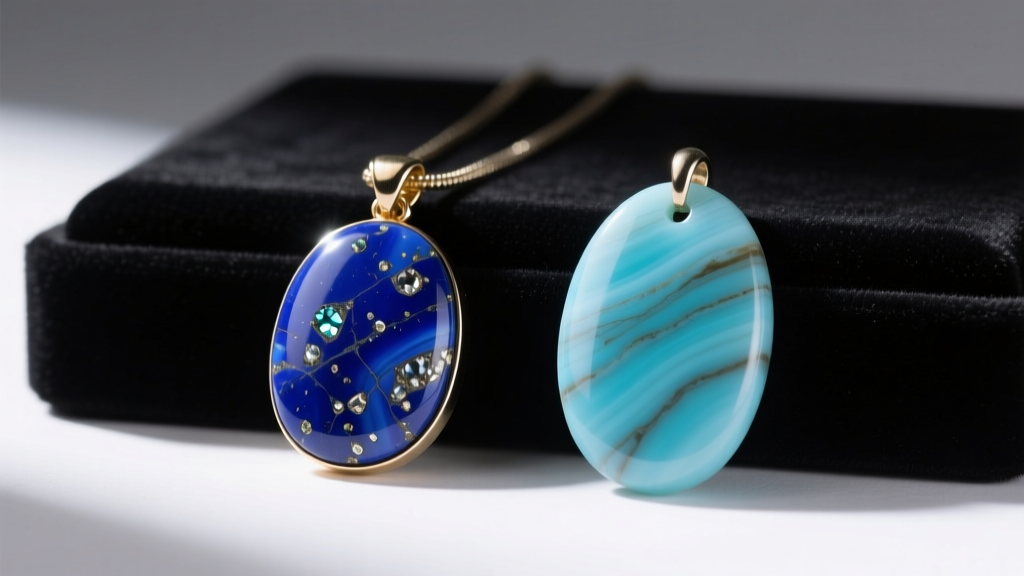
1. The Acetone (Q-Tip) Test
Dyeing lapis to hide white calcite veins was common in the mid-20th century. Dip a cotton swab in pure acetone (nail polish remover) and rub it discreetly on the back or edge of the stone. If the swab turns blue, the stone is dyed. Genuine lapis lazuli is completely colorfast and will not bleed.
2. The Magnification & Pyrite Check
Using a 10x jeweler's loupe, examine the gold flecks. In genuine lapis, pyrite has a sharp, metallic, crystalline structure with distinct edges. In fake lapis (often made of glass or resin), the "gold" flecks are usually painted on, appear rounded, or lack metallic luster. Furthermore, true pyrite will not scratch easily with a steel pin, whereas brass flakes in imitations will dent.
3. The UV Fluorescence Test
Under long-wave UV light, the calcite matrix in natural lapis lazuli will often fluoresce a bright white or pale green. If the stone is heavily dyed, the dye will mask this fluorescence, resulting in dead, dark patches under UV light. For more on identifying antique jewelry materials, the Lang Antiques University offers excellent visual databases on period-specific gem treatments.
Styling & Neckline Matching for the Recipient
A vintage lapis necklace is a bold, opaque statement piece that absorbs light rather than reflecting it like a diamond. To ensure the recipient can integrate it seamlessly into their wardrobe, consider the chain length and pendant drop in relation to common necklines.
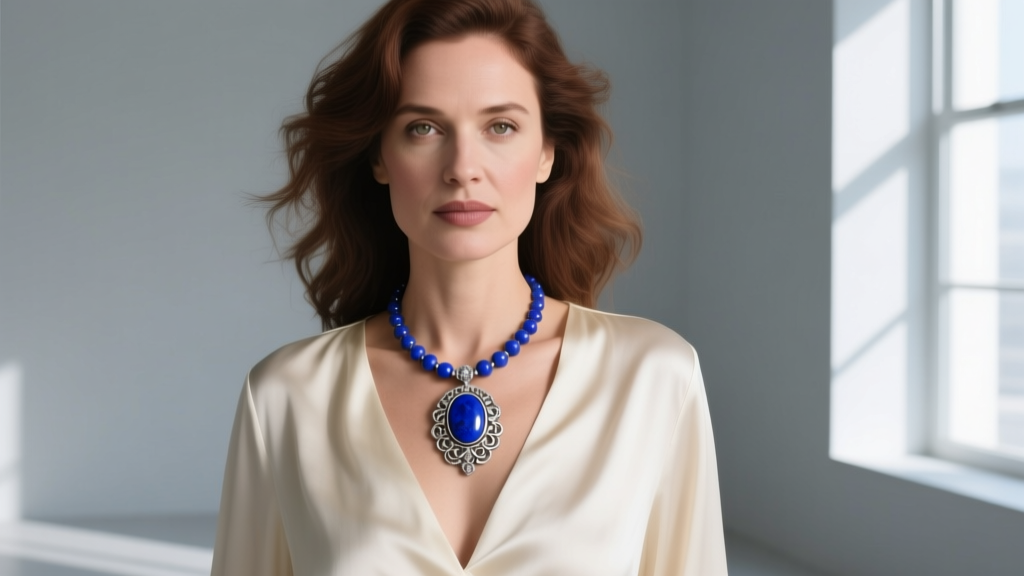
- The 16-Inch Choker (Art Deco Collars): Best paired with V-necks, scoop necks, or off-the-shoulder gowns. The rigid geometry of an Art Deco lapis collar frames the collarbone perfectly but will clash with high turtlenecks or detailed ruffled blouses.
- The 20-to-24-Inch Pendant (Mid-Century & Victorian): Ideal for crew necks, boat necks, and button-down shirts. A heavy silver squash blossom or a gold Etruscan pendant resting on the upper chest provides a striking contrast against crisp white cotton or cream silk.
- The 30-Inch Opera Length (1920s Sautoirs): Designed for layering or doubling. These long, beaded lapis strands are perfect for evening wear, draped over a solid-color sheath dress or a deep-V velvet top.
Final Gifting Considerations: Sizing, Provenance, and Maintenance
When presenting a vintage lapis necklace, the unboxing experience should reflect the history of the piece. Always request a provenance card or a detailed receipt from the dealer that notes the estimated decade of origin, the metal purity (e.g., 14k vs. 18k gold, or sterling silver hallmarks), and the geographic origin of the lapis if known.
Maintenance Warning: Lapis lazuli is relatively soft, ranking 5 to 6 on the Mohs hardness scale. It is highly porous and sensitive to acids, harsh chemicals, and ultrasonic cleaners. Include a care note with your gift advising the recipient to never clean the necklace in an ultrasonic bath (which can shatter the stone or dissolve the dye in treated pieces) and to avoid spraying perfume directly onto the cabochons. Instead, a simple wipe with a soft, damp microfiber cloth is all that is required to maintain the stone's waxy, polished luster.
Finally, inspect the chain's jump rings and clasp. Vintage chains often suffer from metal fatigue at the connection points. Budget an extra $150 to $300 to have a master jeweler replace the clasp with a period-appropriate lobster or spring-ring mechanism, ensuring the heirloom remains secure for the next generation of wearers.


