Wooden Crucifix Necklace Value: 2026 Pricing Guide
Discover the true value of a wooden crucifix necklace in 2026. We break down pricing tiers, wood types, and how to spot quality craftsmanship.

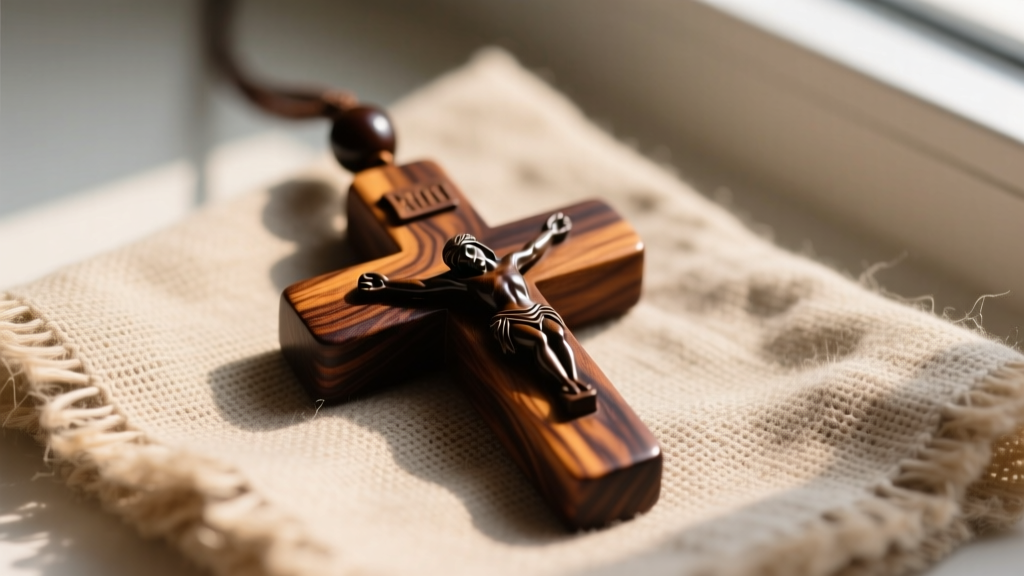
The Anatomy of Value: Why Wood Type Dictates Price
A wooden crucifix necklace is a timeless piece of devotional and fashion jewelry, but the market in 2026 is heavily saturated with mass-produced imitations masquerading as artisan craftsmanship. When assessing the budget and true value of these pendants, the primary cost driver is the botanical species of the wood used. Wood density, measured by the Janka hardness scale, directly impacts how finely the piece can be carved, how well it resists everyday wear, and ultimately, its price tag.
Entry-Level Woods (Pine, Basswood, Plywood)
Pendants priced between $8 and $25 are typically crafted from softwoods like pine or basswood, or worse, layered plywood. These materials have low Janka ratings (often under 500 lbf), meaning they dent easily if bumped against a hard surface. While they are lightweight and budget-friendly, they lack the intricate grain patterns of premium woods and are usually coated in thick, plastic-like polyurethane to prevent splintering.
Mid-Tier Hardwoods (Oak, Walnut, Cherry)
Stepping into the $35 to $85 range, you will find domestic hardwoods. Black walnut (1010 lbf) and cherry (950 lbf) offer a fantastic balance of durability and workability. These woods take hand-sanding beautifully, allowing for smooth, contoured edges that feel organic against the skin. They are excellent choices for buyers seeking a quality wooden crucifix necklace without venturing into luxury pricing.
Premium & Exotic Woods (Ebony, Rosewood, Olive Wood)
True luxury wooden crosses start around $120 and can exceed $400. Gaboon ebony (3220 lbf) is so dense it sinks in water and requires specialized carbide tooling to carve. Olive wood, deeply tied to Bethlehem and Mediterranean heritage, is highly prized for its swirling, high-contrast grain. When purchasing exotic or heritage woods, always look for pendants certified by the Forest Stewardship Council (FSC) to ensure the timber was harvested ethically and sustainably, rather than contributing to illegal deforestation.
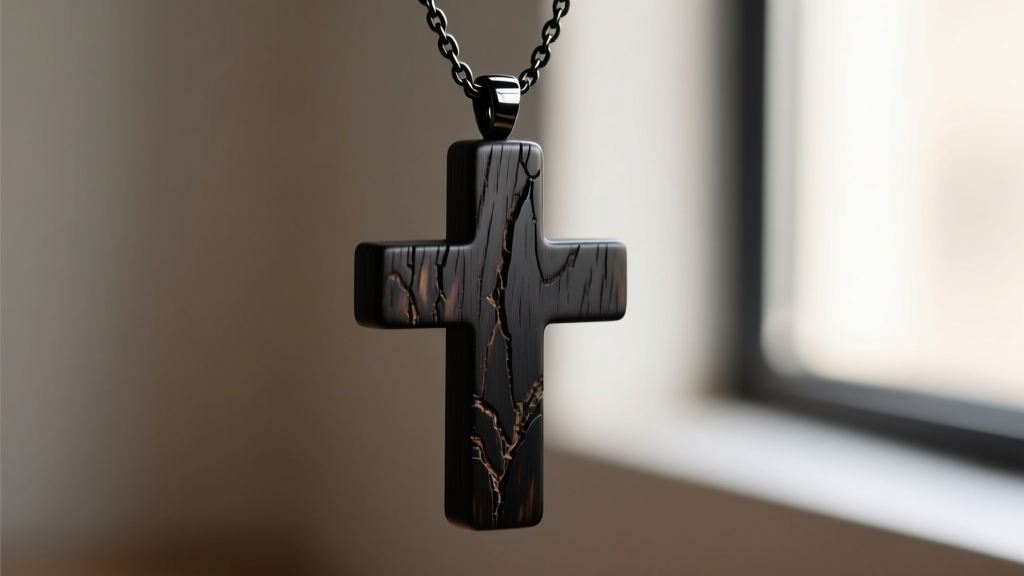
Craftsmanship: Laser-Cut vs. Hand-Carved
The manufacturing method is the second major value indicator. In 2026, CNC (Computer Numerical Control) routing and laser cutting dominate the budget sector. While laser cutting is incredibly precise, it leaves carbonized, burnt edges on the wood. Unscrupulous sellers will sand these edges down, but the burn marks often remain in the deeper crevices of the crucifix, which can eventually stain your skin or clothing when exposed to sweat.
Conversely, a genuine hand-carved wooden crucifix necklace will bear subtle facet marks from chisels and gouges. These tool marks are not flaws; they are the hallmark of human artistry and justify a premium price. Hand-carving also allows the artisan to follow the natural grain of the wood, ensuring the structural integrity of the cross's thinner arms, which are prone to snapping if cut against the grain on a machine.
2026 Pricing Matrix: What You Should Actually Pay
To help you navigate the market and avoid overpaying, we have compiled a comprehensive value assessment matrix based on current 2026 retail data, material costs, and artisan labor rates.
| Value Tier | Wood Species | Crafting Method | Typical Hardware | Fair Price Range |
|---|---|---|---|---|
| Budget | Pine, Plywood, MDF | Laser-Cut, Stamped | Cotton cord, base metal bail | $8 - $25 |
| Mid-Tier | Walnut, Cherry, Oak | CNC Routed, Hand-Sanded | Leather cord, steel bail | $35 - $85 |
| Premium | Olive Wood, Mahogany | Hand-Carved, Oiled | Sterling silver chain/bail | $120 - $250 |
| Luxury | Ebony, Desert Ironwood | Master Artisan Carved | Gold-filled or solid gold | $300 - $600+ |
Hardware & Chain Pairings: The Hidden Cost Multiplier
A common mistake buyers make is evaluating the wooden pendant in isolation. A $150 hand-carved olive wood crucifix loses its aesthetic and monetary value if strung on a cheap, hollow alloy chain that tarnishes and turns your neck green within a week. The hardware must match the quality of the wood.
Evaluating the Bail and Chain
The bail (the loop connecting the pendant to the chain) is a critical stress point. Budget necklaces often use a simple glued-on metal loop, which will inevitably detach when exposed to humidity and skin oils. High-value pieces feature a hidden sterling silver bail, a wire-wrapped metallic cap, or a precision-drilled horizontal channel for a cord. For chains, insist on 316L surgical stainless steel, Grade 23 titanium, or solid 925 sterling silver. According to The Wood Database, the natural acids in human sweat can degrade both untreated wood and cheap metal alloys simultaneously, making hypoallergenic, non-corrosive chains a mandatory investment for longevity.
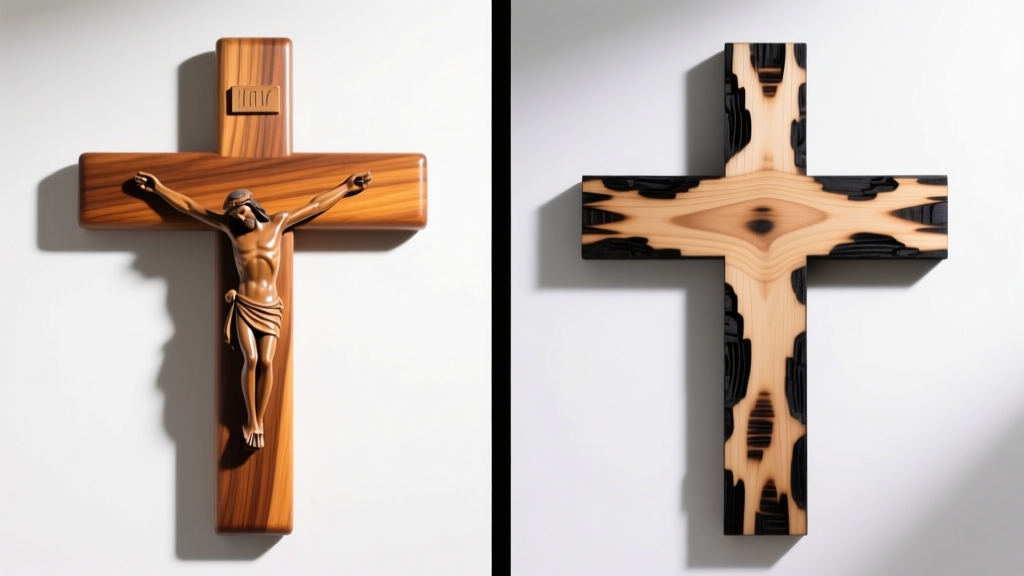
Red Flags: Spotting Overpriced or Poorly Made Pieces
When shopping for a wooden crucifix necklace, train your eye to spot the following failure modes and deceptive marketing tactics:
- The "Plastic" Feel: If the wood feels unnaturally glossy, cold, or thick with a surface film, it has been dipped in cheap polyurethane. This finish will eventually peel, flake, and trap moisture underneath, causing the wood to rot. True value lies in penetrating finishes like polymerized tung oil, linseed oil, or carnauba wax, which nourish the wood fibers and leave a soft, matte, organic sheen.
- Unsealed End-Grain: Look closely at the bottom and top tips of the cross. The end-grain acts like a bundle of microscopic straws. If the artisan failed to seal the end-grain with extra coats of oil or wax, the pendant will rapidly absorb sweat and sebum, turning black and degrading over time.
- Fake Grain Painting: Some ultra-budget pendants are made from resin or cheap composite materials that have been painted with faux wood grain. You can spot these by checking the weight (resin is often unnaturally heavy or perfectly uniform) and looking for repeating grain patterns, which never occur in nature.
Long-Term Care and Value Retention
Unlike gold or platinum, wood is an organic, hygroscopic material. It expands and contracts with changes in humidity. The Getty Conservation Institute notes that fluctuating environmental conditions and acidic skin oils are the primary enemies of organic artifacts. To protect your investment, never wear a wooden crucifix in the shower, pool, or ocean. Chlorine and saltwater will instantly strip the protective oils and cause the wood fibers to raise and splinter.
To maintain the pendant's value and luster, gently wipe it with a dry microfiber cloth after wearing it to remove skin acids. Once every six months, apply a microscopic drop of food-grade mineral oil or specialized wood wax, let it absorb for ten minutes, and buff it dry. By understanding the nuances of wood density, carving techniques, and proper hardware pairings, you can confidently assess the true value of a wooden crucifix necklace and select a piece that will endure as a meaningful heirloom for decades.


