How to Get Tarnish Off Jewelry: Safe Methods for Silver & Gems
Learn exactly how to get tarnish off jewelry using safe, science-backed methods for sterling silver, argentium, and delicate gemstones.

The Chemistry of Silver Tarnish: Why It Happens
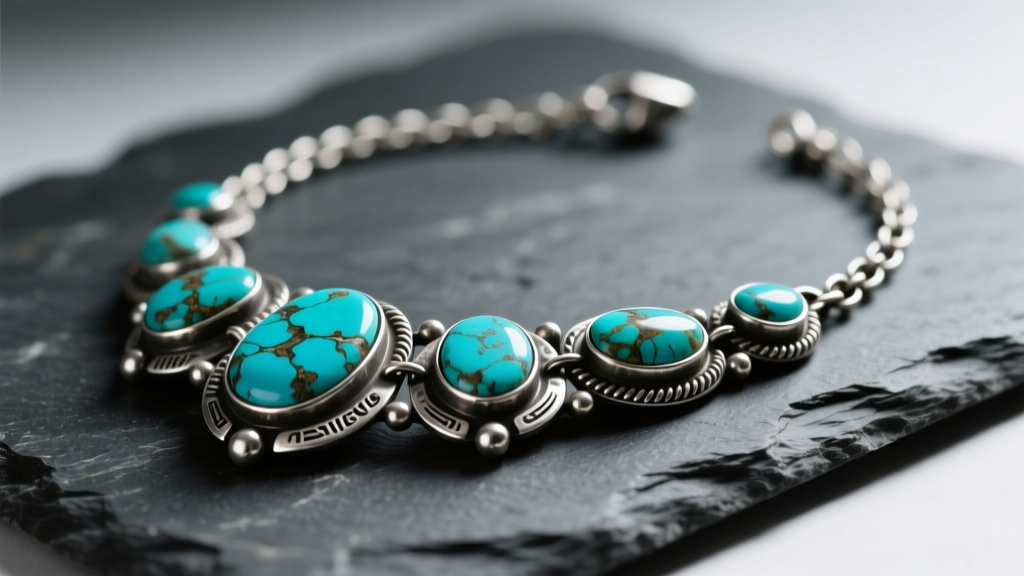
Before you can effectively learn how to get tarnish off jewelry, you must understand what tarnish actually is. Tarnish is not dirt, grime, or a sign of poor-quality metal. It is a surface-level chemical reaction. When sterling silver (an alloy of 92.5% silver and 7.5% copper) is exposed to hydrogen sulfide (H2S) in the atmosphere, it forms silver sulfide (Ag2S). This compound manifests as a yellowish, brown, or black film on the metal's surface.
Urban environments, high humidity, and even everyday items like rubber bands, wool, and certain foods (such as eggs and onions) accelerate the off-gassing of sulfur compounds. The copper in sterling silver also reacts with oxygen and moisture, creating copper oxide, which contributes to the darkening effect. Understanding this chemistry is crucial because the method you choose to remove the silver sulfide layer will dictate whether you preserve the underlying metal or inadvertently destroy it.
The Electrochemical Bath: The Aluminum Foil Method
The most popular DIY method for removing heavy tarnish relies on electrochemical reduction rather than abrasion. This method reverses the chemical reaction, converting silver sulfide back into elemental silver without removing any of the base metal.
The Science and the Recipe
To create a galvanic cell, you need an anode (aluminum), a cathode (the tarnished silver), and an electrolyte solution (baking soda and hot water). The aluminum has a higher oxidation potential than silver, meaning it will sacrifice itself, pulling the sulfur atoms away from the silver and forming aluminum sulfide.
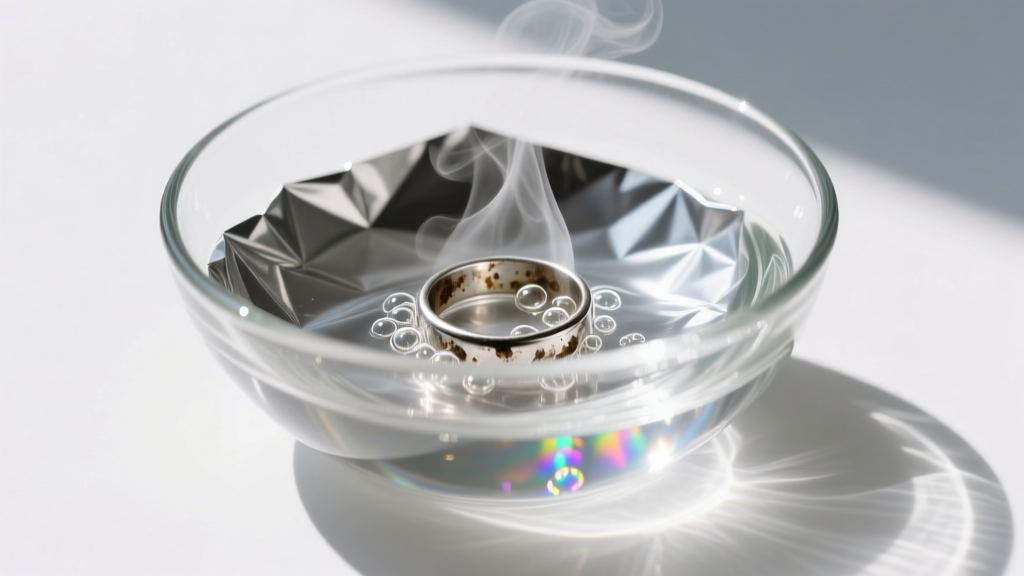
- Step 1: Line a glass or ceramic bowl with heavy-duty aluminum foil, shiny side up.
- Step 2: Add 1 tablespoon of sodium bicarbonate (baking soda) per cup of water.
- Step 3: Pour boiling water into the bowl to dissolve the baking soda and activate the reaction.
- Step 4: Submerge the silver jewelry, ensuring it physically touches the aluminum foil. You will see bubbles and smell a distinct sulfur (rotten egg) odor.
- Step 5: Remove after 3 to 5 minutes, rinse thoroughly with distilled water, and pat dry with a microfiber cloth.
Critical Warnings for the Electrochemical Method
While highly effective for plain chains and solid silver bands, this method is destructive to intentional oxidation. Many artisanal and vintage pieces feature darkened crevices (antiquing) designed to highlight textures. The electrochemical bath will strip this intentional patina, leaving the piece looking flat and overly bright. Furthermore, the boiling water required for this reaction can cause thermal shock, potentially cracking temperature-sensitive gemstones or melting resin-based adhesives used in costume jewelry.
Mechanical Polishing: Micro-Abrasive Cloths
For routine maintenance and pieces with delicate gemstone settings, mechanical polishing is the safest approach to get tarnish off jewelry. This involves physically wiping away the silver sulfide layer using micro-abrasives.
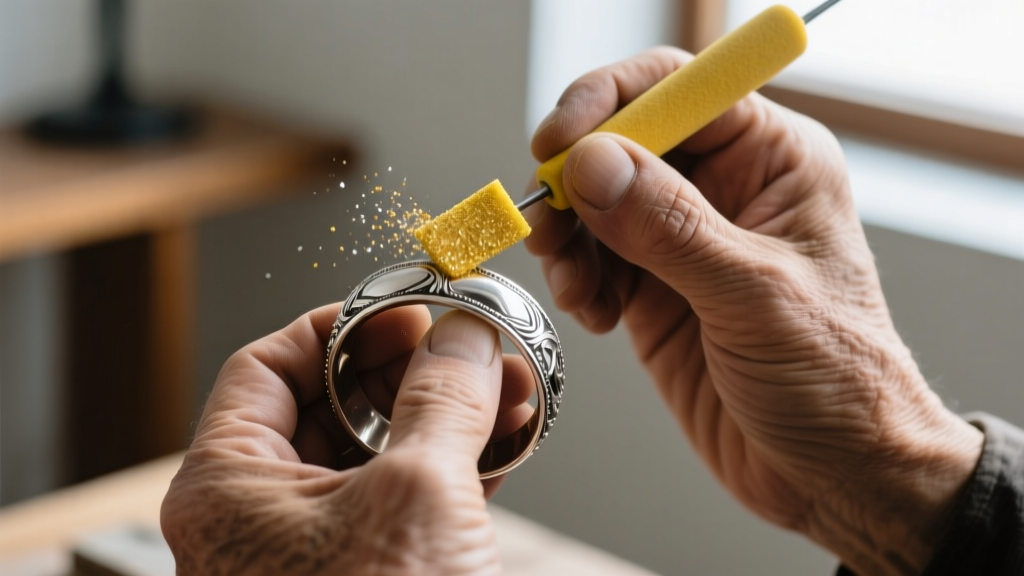
Professional jewelers rely on treated polishing cloths, such as the industry-standard Sunshine Polishing Cloths. These cloths are impregnated with jeweler's rouge (iron oxide) and a mild tarnish-inhibiting chemical. When you rub the cloth against the silver, it microscopically abrades the tarnished layer.
Expert Insight: Every time you use an abrasive cloth, you are removing a microscopic layer of silver—typically 1 to 2 microns per pass. While negligible for solid cast pieces, frequent aggressive polishing will eventually wear through the thin silver layer on silver-plated jewelry or strip the rhodium plating off white gold and anti-tarnish sterling silver.
For heavily tarnished items with deep scratches, a multi-stage polishing compound is required. Start with a medium-cut rouge (like tripoli) on a muslin wheel, followed by a fine-cut red rouge for the final mirror finish. However, for at-home care, stick to treated cloths and use a soft-bristled horsehair brush to work the polish into intricate filigree.
Chemical Dips: The Hidden Dangers of Thiourea
Commercial liquid tarnish removers (often marketed as "instant silver dips") rely on harsh chemicals, primarily thiourea and sulfuric or hydrochloric acid. These solutions strip tarnish in seconds, but they come with severe long-term consequences for your jewelry.
Acidic dips do not reverse the tarnish; they dissolve it. In doing so, they leave behind a microscopically pitted surface on the silver. This increased surface area actually accelerates future tarnishing, creating a vicious cycle where the jewelry requires more frequent and aggressive cleaning. Furthermore, thiourea is a known carcinogen and toxic to aquatic environments. According to conservation guidelines from institutions like the Smithsonian Museum Conservation Institute, chemical dips should be avoided on museum-quality, antique, or high-value heirloom silver due to the irreversible micro-pitting and loss of historical patina.
Gemstone Safety Matrix: What Can Handle Tarnish Removal?
Learning how to get tarnish off jewelry safely requires a deep understanding of gemstone mineralogy. The methods used to clean the metal can easily destroy the stones set within it. Below is a structural matrix detailing how common gemstones react to various tarnish removal protocols.
| Gemstone | Mohs Hardness | Porosity / Sensitivity | Electrochemical Bath (Boiling) | Chemical Dips (Acidic) | Mechanical Polishing |
|---|---|---|---|---|---|
| Diamond | 10 | Non-porous, high thermal shock resistance | Safe | Safe | Safe |
| Sapphire / Ruby | 9 | Non-porous, generally heat safe | Safe (unless fracture-filled) | Safe | Safe |
| Opal | 5.5 - 6.5 | High water content (3-21%), heat sensitive | DANGER: Causes crazing/cracking | DANGER: Destroys play-of-color | Safe (avoid direct pressure) |
| Turquoise | 5 - 6 | Highly porous, absorbs chemicals | DANGER: Discoloration | DANGER: Ruins stone permanently | Safe (polish metal only) |
| Pearl | 2.5 - 4.5 | Organic, calcium carbonate, acid soluble | DANGER: Destroys nacre | DANGER: Dissolves surface | Safe (keep cloth off pearl) |
| Emerald | 7.5 - 8 | Heavily included, usually oil-treated | DANGER: Strips oils, causes fractures | DANGER: Strips oils | Safe (gentle pressure) |
As highlighted by the Gemological Institute of America (GIA), porous and organic gems require extreme isolation during the cleaning process. If a turquoise or pearl piece requires heavy tarnish removal, the safest protocol is to mask the gemstone with a protective, water-resistant barrier (like specialized jeweler's tape) before applying any liquid solutions, or rely exclusively on precise mechanical polishing with a Q-tip and a treated cloth.
Preventative Maintenance: Anti-Tarnish Storage
The most effective way to manage tarnish is to prevent the silver sulfide reaction from occurring in the first place. Proper storage is a cornerstone of jewelry maintenance.
Active Tarnish Inhibitors
- 3M Anti-Tarnish Strips: These small paper strips contain copper-based particles that act as a sacrificial anode, absorbing ambient hydrogen sulfide gas before it can reach your jewelry. They are effective for 6 to 12 months in an enclosed space.
- Pacific Silvercloth: This specialized flannel is embedded with microscopic silver particles. The embedded silver tarnishes first, acting as a shield for the jewelry stored inside it. Unlike treated polishing cloths, Pacific Silvercloth should never be washed or cut, as this destroys its protective properties.
- Silica Gel Packets: Because moisture acts as a catalyst for both silver sulfide and copper oxide formation, maintaining a low-humidity environment (below 40% relative humidity) in your jewelry box drastically slows the tarnishing process.
Expert Verdict: Choosing Your Cleaning Protocol
Figuring out how to get tarnish off jewelry is not a one-size-fits-all endeavor. For solid sterling silver chains and plain bands without intentional oxidation, the aluminum foil electrochemical bath is the most efficient, zero-metal-loss method available. For intricate vintage pieces, oxidized designs, or jewelry set with porous gemstones like turquoise and opals, mechanical polishing with a micro-abrasive cloth remains the safest, most controlled approach. Avoid commercial chemical dips entirely to preserve the microscopic integrity and long-term value of your precious metals. By combining the correct removal technique with proactive anti-tarnish storage, you can keep your collection pristine for generations.


