Clear Jewelry Box Care: How to Clean Without Scratching
Learn how to clean and maintain your clear jewelry box without scratching. Expert tips for acrylic and glass care to protect your precious gems.

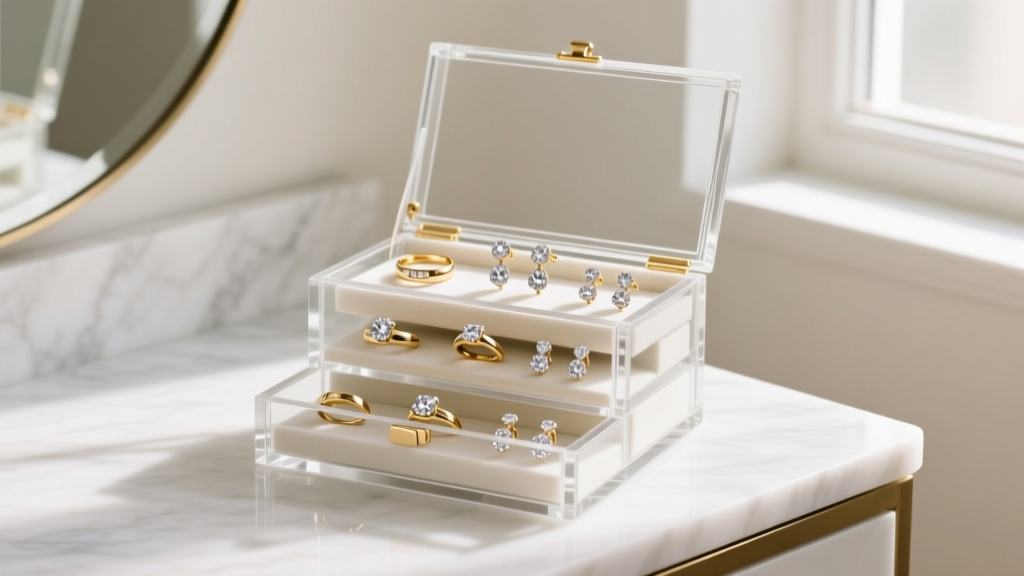
The Hidden Dangers of Cloudy and Dirty Clear Storage
Clear jewelry boxes have surged in popularity because they allow collectors to inventory their pieces at a glance while adding a modern, gallery-like aesthetic to any vanity. However, the very transparency that makes these organizers so appealing also makes them magnets for fingerprints, dust, and micro-scratches. Beyond mere aesthetics, neglecting the maintenance of your clear storage can actually harm the jewelry inside.
When cheap, degraded plastics are exposed to UV light and fluctuating humidity, they can off-gas volatile organic compounds (VOCs) and plasticizers. According to the Gemological Institute of America (GIA), improper storage environments and chemical off-gassing are leading culprits behind accelerated silver tarnishing and the degradation of porous organic gems like pearls and coral. To protect your investment, you must treat your clear jewelry box not just as a container, but as a controlled micro-environment that requires specific, material-aware cleaning protocols.
Acrylic vs. Glass: Knowing Your Clear Material
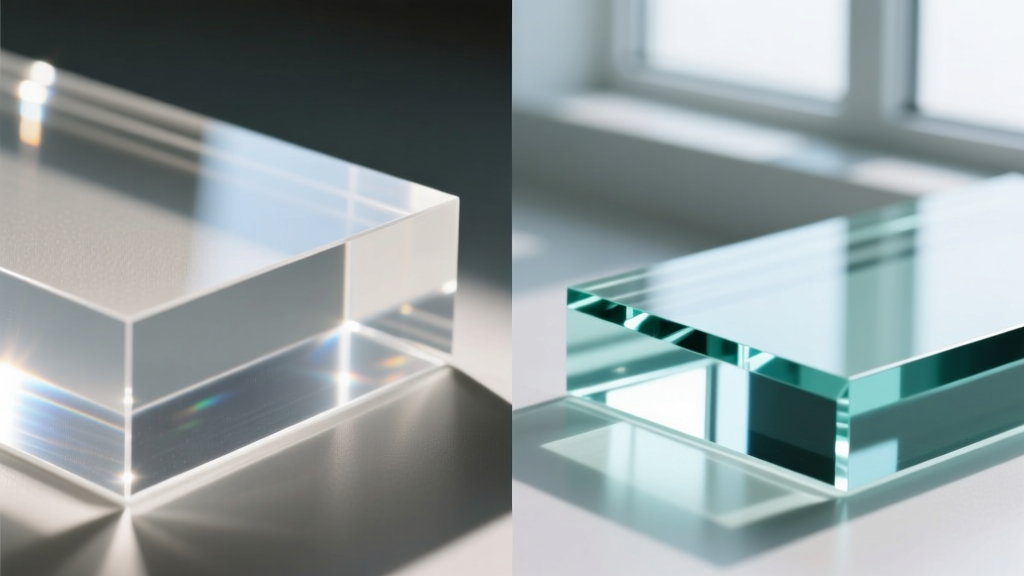
The most critical mistake jewelry owners make is treating all clear boxes identically. The cleaning agents that will make a glass box sparkle will permanently ruin an acrylic one. Before applying any solution, you must identify your material.
| Material | Mohs Hardness | Optical Clarity | Chemical Vulnerability | Best Cleaning Agent |
|---|---|---|---|---|
| Cast Acrylic | 3.0 | 92% Light Transmission | Ammonia, Solvents | Mild Dish Soap + Distilled Water |
| Extruded Acrylic | 2.5 - 3.0 | 88% Light Transmission | High Heat, Alcohol | Specialty Plastic Cleaner (e.g., Novus) |
| Soda-Lime Glass | 5.5 - 6.0 | 89% Light Transmission | Hydrofluoric Acid | Isopropyl Alcohol or Glass Cleaner |
| Borosilicate Glass | 6.0 - 6.5 | 91% Light Transmission | Extreme Thermal Shock | Isopropyl Alcohol or Glass Cleaner |
The Mohs Hardness Scale and Your Storage
Understanding the Mohs scale is vital for clear box maintenance. Acrylic sits at a mere 3.0 on the scale, meaning it is softer than a copper coin. Glass sits around 5.5 to 6.0. If you toss a diamond ring (Mohs 10) or a quartz-based gemstone (Mohs 7) loosely into an acrylic compartment, the gem will easily gouge the plastic. Always ensure jewelry is placed gently into designated velvet-lined or felt-padded slots within your clear acrylic housing to prevent internal scarring.
Step-by-Step Cleaning Protocol for Acrylic Clear Boxes
Acrylic (often sold under brand names like Plexiglas or Lucite) is highly susceptible to chemical stress cracking, also known as crazing. This occurs when harsh chemicals break down the polymer chains, leaving a web of permanent micro-fractures that look like internal spiderwebs. The official Plexiglas care guidelines explicitly warn against using ammonia-based cleaners.
What to NEVER Use on Acrylic
- Windex or Ammonia: Causes immediate chemical crazing and clouding.
- Paper Towels or Tissues: Made of wood pulp, these will leave thousands of microscopic swirl marks.
- Isopropyl Alcohol: Can dry out extruded acrylic, leading to brittleness and edge-cracking over time.
- Tap Water: Contains dissolved minerals that leave hard water spots, which require abrasive rubbing to remove.
The Safe Acrylic Cleaning Method
- Remove all jewelry and place it on a soft, lint-free jeweler's mat.
- Dust first: Use a clean, dry 300+ GSM microfiber cloth to gently lift surface dust. Never wipe a dusty acrylic surface wet, as you will grind the silica dust into the plastic.
- Prepare the solution: Mix a few drops of mild, lotion-free dish soap (like original Dawn) into a spray bottle filled with distilled water.
- Mist and wipe: Lightly mist the microfiber cloth (not the box directly, to prevent liquid from seeping into the hinges or velvet linings). Wipe in straight, overlapping lines rather than circles to minimize the visibility of any potential micro-marring.
- Dry: Use a second, completely dry microfiber cloth to buff the surface to a streak-free shine.
Step-by-Step Cleaning Protocol for Glass Clear Boxes
Glass is vastly more forgiving than acrylic. Its higher Mohs hardness means it resists scratching from everyday dust and jewelry contact, and it is entirely impervious to ammonia and alcohol.
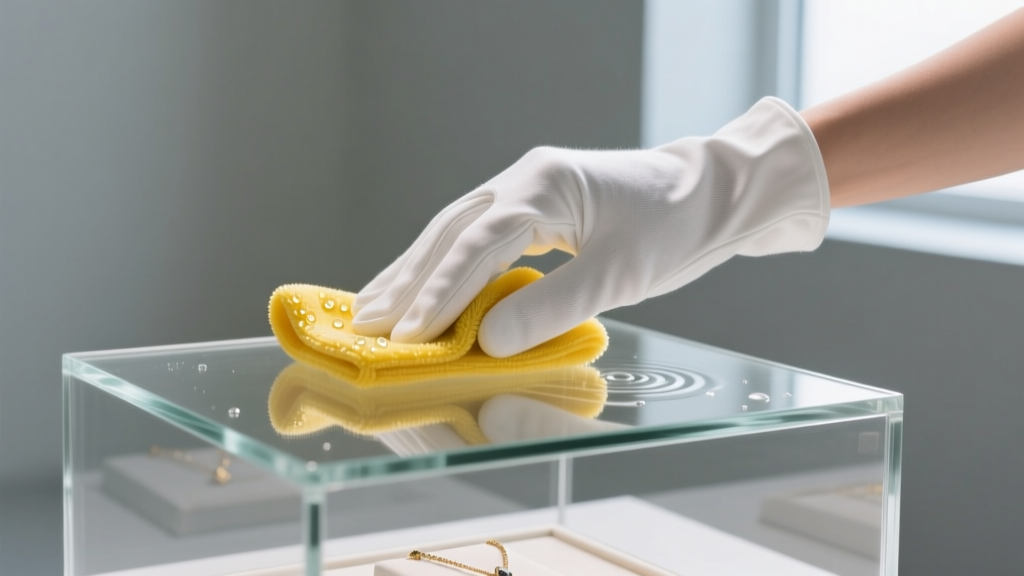
- Empty the display case completely.
- Apply cleaner: Spray a 70% isopropyl alcohol solution or a dedicated ammonia-free glass cleaner onto a microfiber cloth.
- Wipe the glass panels: You can use circular motions on glass without fear of swirl marks. Pay special attention to the corners where skin oils and makeup residue accumulate.
- Address the hardware: Use a cotton swab dipped in rubbing alcohol to clean the metal hinges and clasps, removing oxidized oils that can transfer to your jewelry.
- Buff dry with a clean, lint-free cloth to prevent water spots.
Protecting the Jewelry Inside: Anti-Tarnish and Off-Gassing
Cleaning the outside of your clear jewelry box is only half the battle. The interior environment must be managed to protect the pieces housed within. Clear boxes, especially those made from lower-grade plastics, can trap humidity and off-gas chemicals that accelerate tarnishing.
Implementing Interior Defenses
- Silica Gel Packets: Place 2-3 small silica gel desiccant packets in the bottom corners of the box to maintain a relative humidity below 50%, which is critical for preventing silver sulfide formation (tarnish).
- Anti-Tarnish Strips: Insert 3M Anti-Tarnish Strips into the compartments. These strips absorb airborne sulfur compounds before they can react with your silver, copper, or brass jewelry. Replace them every 6 months.
- UV Protection: If your clear box is made of standard acrylic or glass, it will not block UV rays. Prolonged direct sunlight will fade vulnerable gems like amethyst, kunzite, and topaz. Always position your clear box away from direct window light.
Troubleshooting Common Clear Box Issues
Even with meticulous care, clear jewelry boxes can develop issues over time. Here is how to troubleshoot the most common problems without causing further damage.
Removing Light Scratches from Acrylic
If your acrylic box has accumulated light swirl marks, you can polish them out using a dedicated plastic polish system, such as the Novus Plastic Clean & Shine kit. Apply Novus #2 (Fine Scratch Remover) with a clean microfiber cloth, buffing in a circular motion with moderate pressure until the scratches disappear. Follow up with Novus #1 to restore the anti-static shine. Note: This process removes a microscopic layer of acrylic, so it should only be done once or twice a year.
Removing Hard Water Spots from Glass
If tap water was used previously and left white, chalky mineral deposits on your glass box, standard glass cleaner will not remove them. Instead, soak a cotton pad in white vinegar and press it against the hard water spot for five minutes. The acetic acid will dissolve the calcium carbonate buildup. Wipe clean with distilled water and buff dry.
Cloudy or Yellowing Acrylic
If an older acrylic box has developed a yellow tint or deep internal cloudiness, this is a sign of UV degradation and polymer breakdown. Unfortunately, this chemical change is irreversible. At this stage, the plastic may begin to off-gas more aggressively. To protect your valuable jewelry, it is highly recommended to retire the degraded box and upgrade to a UV-stabilized cast acrylic or glass alternative.
Expert Takeaway: A clear jewelry box is a functional display piece that requires the same level of material respect as the gems it holds. By matching your cleaning chemistry to the specific substrate—whether cast acrylic or soda-lime glass—you ensure both the optical brilliance of your storage and the chemical safety of your jewelry collection.


