How to Store Jewelry: Budget Options vs Premium Value
Discover how to store jewelry on any budget. We assess the true value of cheap organizers versus premium anti-tarnish boxes to protect your collection.

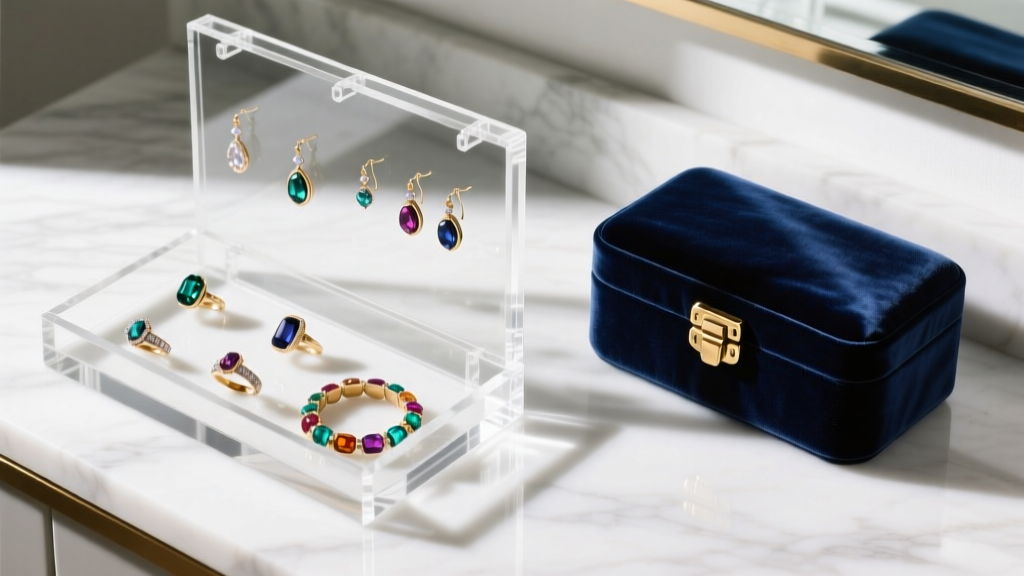
The Hidden Cost of Cheap Jewelry Storage
When figuring out how to store jewelry properly, most collectors face a common dilemma: should you invest in a high-end, specialized armoire, or make do with an affordable acrylic organizer from a big-box store? The answer requires a deep dive into material science and long-term value assessment. While a $15 cardboard and velvet box might seem like a bargain, the hidden costs of cheap jewelry storage often manifest in the form of irreversible chemical damage to your precious metals and gemstones.
The primary culprit in budget jewelry boxes is the use of Medium-Density Fiberboard (MDF) and synthetic adhesives. These materials frequently contain urea-formaldehyde resins and sulfur-based compounds that off-gas over time. When hydrogen sulfide gas interacts with sterling silver, it triggers a rapid chemical reaction, forming silver sulfide—the black tarnish that plagues neglected collections. Furthermore, the 'velvet' lining in budget boxes is often a polyurethane blend glued down with acidic adhesives that can pit soft gemstones like pearls and opals. Understanding these failure modes is the first step in conducting a true budget versus value assessment for your storage solutions.
Budget vs. Premium: A Value Assessment Matrix
To determine the actual return on investment (ROI) for jewelry storage, we must look beyond the initial price tag and evaluate the cost per year of protection. Below is a comprehensive breakdown of common storage materials, their price ranges, and their protective efficacy.
| Material Type | Price Range | Anti-Tarnish Life | Scratch Risk | Value Verdict |
|---|---|---|---|---|
| Cardboard / Paperboard | $5 - $15 | 0 Months | High (micro-abrasions) | Poor: Acidic lignin damages metals |
| Standard Clear Acrylic | $15 - $35 | N/A (Inert) | Medium (dust ingress) | Fair: Good for display, poor for climate |
| Polyurethane Velvet | $30 - $60 | 3 - 6 Months | Low | Good: Acceptable budget pick with strips |
| Tarnish-Resistant Flannel | $80 - $150 | 2 - 5 Years | Zero | Excellent: Premium long-term investment |
| Hardwood with Silica Core | $200 - $500+ | Lifetime | Zero | Superior: Heirloom-grade protection |
As the data illustrates, spending $100 on a tarnish-resistant flannel box yields a significantly lower cost-per-year of protection compared to replacing $20 cardboard boxes annually, not to mention the cost of professional silver polishing and gemstone re-oiling.
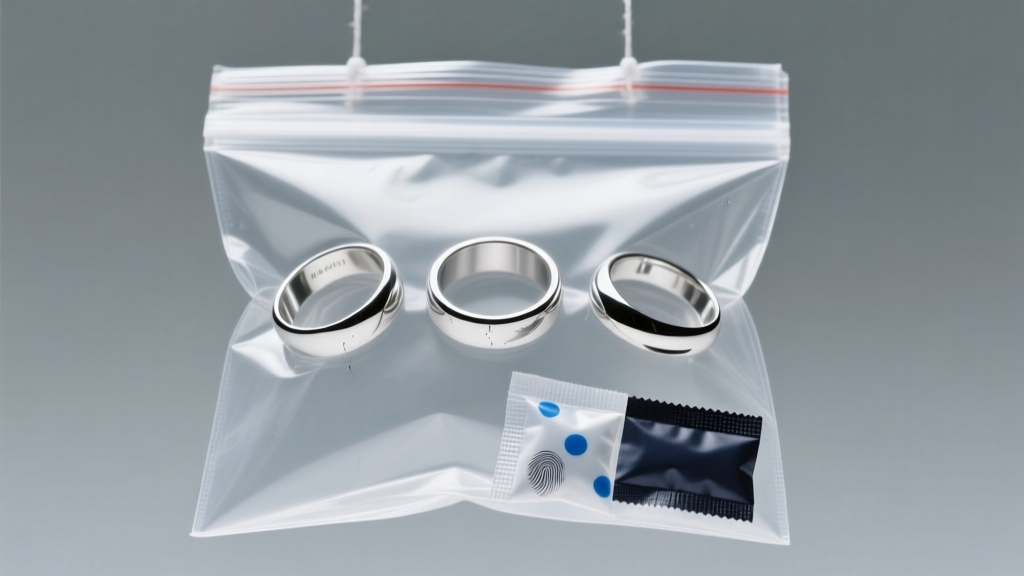
How to Store Jewelry Using DIY Anti-Tarnish Hacks
If your budget currently restricts you from purchasing premium heritage brands like Wolf or Mele & Co., you can engineer a highly effective, low-cost storage environment using a few specialized materials. The goal is to create a microclimate that neutralizes sulfur and controls ambient humidity.
The Ziploc and Silica Method
For under $25, you can assemble a museum-grade temporary storage solution. Start with heavy-duty, archival-quality polyethylene ziplock bags (avoid PVC plastics, which emit plasticizers that degrade pearls). Inside each bag, place your jewelry, a small packet of indicating silica gel (which changes color when saturated with moisture), and a 3M Anti-Tarnish Strip. These strips contain copper particles engineered to absorb airborne sulfur compounds before they reach your silver. According to conservation guidelines from the Smithsonian Museum Conservation Institute, controlling the immediate microclimate is far more effective than relying on ambient room conditions. This method costs roughly $0.75 per bag setup and provides up to 12 months of active tarnish prevention.
Upcycling Glass Jars with Silicone Mats
Glass is entirely inert and will not off-gas harmful chemicals, making it an exceptional budget storage medium for rings and stud earrings. By upcycling wide-mouth glass mason jars and lining the bottom with a 1mm platinum-cure silicone mat, you create a scratch-proof, airtight vault. Simply drop a silica gel packet into the jar before sealing the lid. This is particularly valuable for storing oxidized silver pieces where you want to preserve the intentional dark patina in the crevices without exposing the metal to fluctuating humidity.
When to Invest in Premium Storage Solutions
While DIY methods are excellent for everyday sterling silver and gold-filled pieces, certain high-value materials demand the engineered environment of a premium jewelry armoire. If your collection includes the following, the budget approach poses a severe financial risk:
- Opals (5.5-6.5 Mohs): Opals contain up to 20% water. Storing them in airtight bags with aggressive silica gel can cause 'crazing'—a network of fine cracks that destroys the stone's structural integrity and value. Premium boxes use breathable, untreated flannel that maintains stable humidity.
- Emeralds: Most commercial emeralds are fracture-filled with cedar oil or synthetic resins. Extreme dryness or heat from poorly insulated storage can cause the oil to leach out, leaving the stone looking cloudy and heavily included.
- High-Karat Gold (22k/24k): Pure gold is exceptionally soft. Budget boxes with tight, poorly stitched elastic loops will cause micro-scratches and surface abrasion over time. Premium boxes feature individual, soft-sided compartments that prevent metal-to-metal contact.
- Natural Pearls: Pearls require moisture and air circulation. Storing them in airtight plastic or safety deposit boxes without a damp cloth will cause the nacre to dry out, crack, and peel. The Gemological Institute of America (GIA) specifically advises against airtight storage for organic gems.
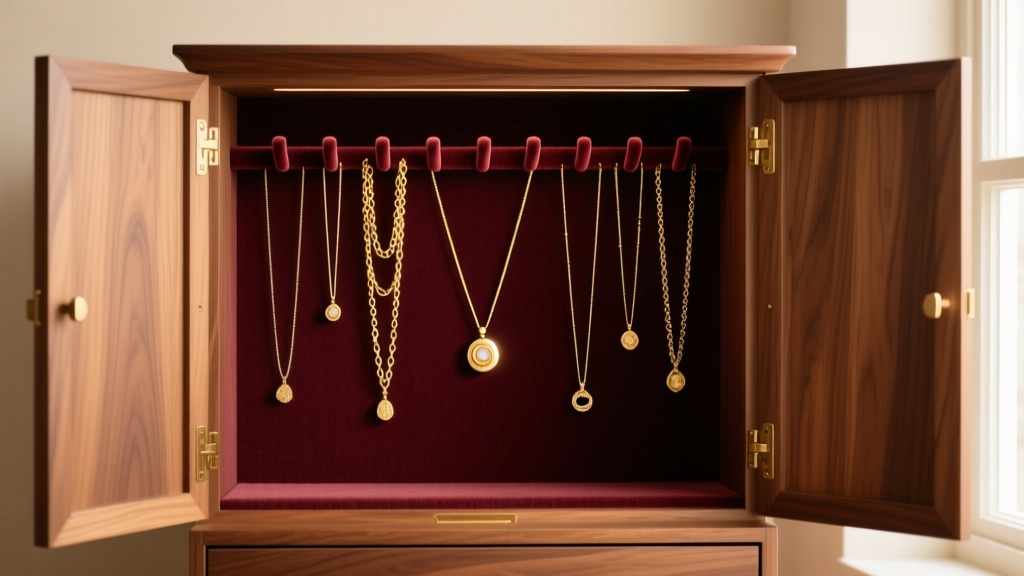
Material Breakdown: What to Avoid at All Costs
Regardless of your budget, certain materials should never come into contact with your jewelry. Eliminating these from your storage routine costs nothing but saves hundreds in restoration fees.
Never use rubber bands to bundle jewelry or secure clasps. The vulcanization process used to make rubber involves sulfur, which will cause severe, localized black tarnishing on silver and gold alloys within days.
Additionally, avoid storing jewelry in original cardboard shipping boxes or wrapping them in newsprint. The acidic lignin in cheap paper and newspaper ink can transfer to porous gemstones like turquoise and malachite, causing permanent staining. Finally, steer clear of polyvinyl chloride (PVC) plastic organizers. Over time, PVC breaks down and releases hydrochloric acid and plasticizers, which will leave a sticky, irremovable film on pearls and amber.
Final Verdict: Maximizing Your Storage ROI
Ultimately, figuring out how to store jewelry is an exercise in risk management. If your collection consists primarily of durable, lower-cost fashion jewelry or solid 14k gold pieces, a $30 acrylic organizer paired with $12 worth of 3M anti-tarnish strips provides exceptional value and adequate protection. However, if you are safeguarding heirloom silver, organic gemstones, or high-karat investments, bypassing premium, chemically inert storage solutions is a false economy. By matching the storage material to the specific vulnerabilities of your jewelry, you ensure that your collection remains as pristine as the day you acquired it, maximizing both its sentimental and financial value for decades to come.


